Table of Contents |
The yakshi figures date from the same period as the Great Stupa at Sanchi, discussed in the previous lesson, and in fact, the specific figures covered in this lesson are from the toranas, or gates, outside of the Great Stupa. Remember that this structure was originally constructed under the reign of the emperor Ashoka during the 3rd century BCE. Sanchi, where this stupa and its toranas are located, is situated roughly in the middle of the Indian subcontinent.
Yakshi are female earth spirits that have ties to Buddhism, Hinduism, and Jainism. They are common sculptural elements worked into the architectural motifs of religious structures, such as stupas. Often depicted as voluptuous female figures with wide hips, these figures are spirits associated with fertility and protection.
Below is a Yakshi holding a fly whisk.
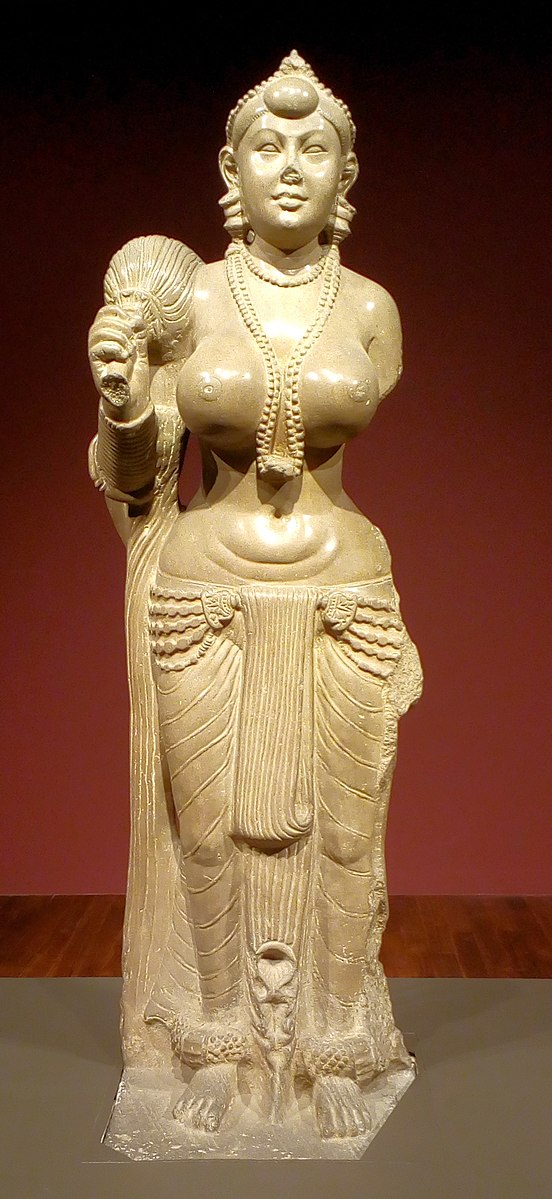
Didarganj Yakshi
Bihar Museum, Patna, Bihar, India
3rd - 2nd BCE, Mauryan period
Polished sandstone
Particular yakshi could be seen as an embodiment of the dharma, or Buddhist law. She could be considered a protector of the law or an embodiment of the law and its abundance.
Notice how the two examples of yakshi figures below emphasize physical features such as wider hips and the enlarged bosom.
The first image is of a yakshi located at the eastern torana of the Great Stupa of Sanchi.
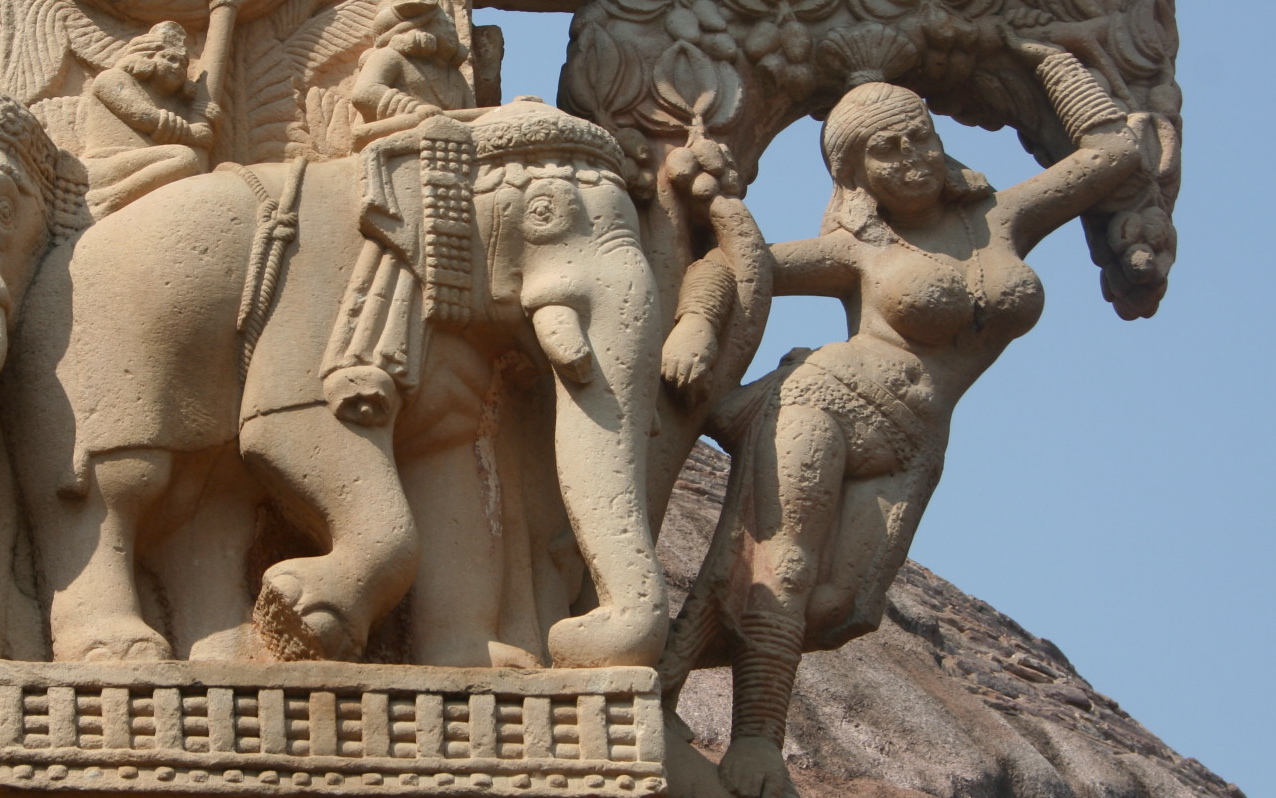
Yakshi on the east torana of the Great Stupa
Sanchi, Madhya Pradesh, India
3rd century BCE
Stone
The second image is of a yakshi located at the northern torana of the Great Stupa of Sanchi.
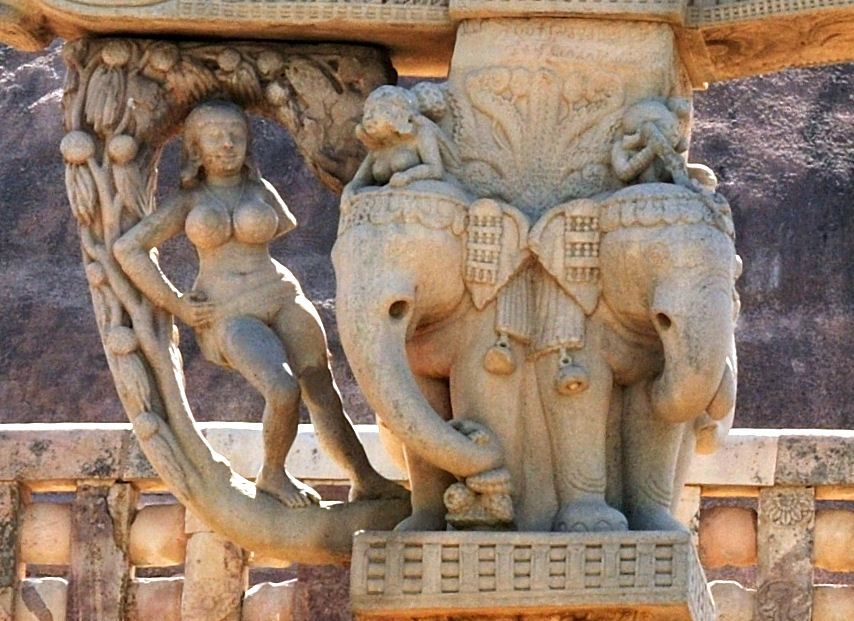
Yakshi on the northern torana of the Great Stupa
Sanchi, Madhya Pradesh, India
3rd century BCE
Stone
Source: THIS TUTORIAL WAS AUTHORED BY IAN MCCONNELL FOR SOPHIA LEARNING. Please see our Terms of Use.



