Table of Contents |
Achieving and maintaining a healthy weight includes healthy eating, physical activity, optimal sleep, stress reduction, as well as several other factors. Physical activity and nutrition habits can be a good place to start. Healthy eating features a variety of healthy foods. Fad diets may promise fast results, but such diets limit your nutritional intake, can be unhealthy, and tend to fail in the long run. How much physical activity you need depends partly on whether you are trying to maintain weight or lose weight. Walking is often a good way to add more physical activity to your lifestyle.
By avoiding weight gain, you avoid higher risks of many chronic diseases, such as heart disease, stroke, type 2 diabetes, high blood pressure, osteoarthritis, and some forms of cancer. Even losing 5-10% of total body weight is likely to produce health benefits.
EXAMPLE
If you weigh 200 pounds, a 5 percent weight loss equals 10 pounds. While this weight may still be in the “overweight” or “obese” range, this weight loss can decrease risk factors for chronic diseases related to obesity.In addition to healthy eating, consistent physical activity can reduce risks for many chronic diseases and help maintain your weight. Physical activity is an integral part of weight management and a vital part of general health. Self-monitoring by weighing yourself on a regular basis as well as tracking food and activity in a journal make it more likely that you’ll lose weight or maintain a healthy weight.
If you have questions about weight loss programs or your personal goals, talk to your healthcare provider or a registered dietitian. Below are some things to think about before your visit.
If a healthcare professional says you should lose weight, you may want to ask for a referral to a registered dietitian. A registered dietitian can help you find a program that works for you. A successful weight-loss program should promote healthy behaviors that help you lose weight safely, that fits with your daily goals, and that you can sustain indefinitely.
IN CONTEXT
Safe and successful weight-loss programs should include:
- behavioral treatment, also called lifestyle counseling, that can teach you how to develop healthier eating and physical activity habits like keeping food and activity records or journals
- information about getting enough sleep, managing stress, and the benefits and drawbacks of weight-loss medicines
- ongoing feedback, monitoring, and support throughout the program, either in person, by phone, online, or through a combination of these approaches
- slow and steady weight-loss goals that are usually 1 to 2 pounds per week
- a plan for keeping the weight off, including goal setting, self-checks such as keeping a food journal, and counseling support
Although some commercial weight-loss programs may have these components, they may not help people keep the weight off long term. Fast weight loss programs have related health risks.
IN CONTEXT
Many weight-loss programs are offered partly or completely online and through apps for mobile devices. Experts suggest that these weight-loss programs should provide the following:
- organized, weekly lessons, offered online or by podcast, and tailored to your personal goals
- support from a registered dietitian to meet your goals
- a plan to track your progress on changing your lifestyle habits, such as healthy eating and physical activity, using tools such as cellphones, activity counters, and online journals
- regular feedback on your goals, progress, and results provided by a counselor through email, phone, or text messages
- the option of social support from a group through bulletin boards, chat rooms, or online meetings
Whether a program is online or in person, you should get as much background as you can before you decide to join.
Regardless of the format, weight-loss program staff should be able to answer questions about the program’s features, safety, costs, and results. Here are some other things to consider:
Nutrition:
For some people who have extreme obesity, weight loss (bariatric) surgery may be an option. Weight-loss surgery encompasses a group of operations that help you lose weight by making changes to the digestive system.
Bariatric surgery can cost between $15,000 and $25,000 or even more, depending on what type of surgery and if there are complications. Medicare and some Medicaid programs may cover the major types of weight-loss surgery if you have a healthcare professional’s recommendation and you meet certain criteria. Most insurers require proof you were unable to lose weight by completing a nonsurgical weight-loss program.
In the United States, surgeons most often perform three types of operations:
With the gastric sleeve, a surgeon removes most of the stomach, leaving only a banana-shaped section that is closed with staples. The surgery reduces the amount of food that can fit in the stomach. Taking out part of the stomach affects hormones and bacteria in the gastrointestinal tract that impact appetite and metabolism. This type of surgery cannot be reversed because some of the stomach is permanently removed.
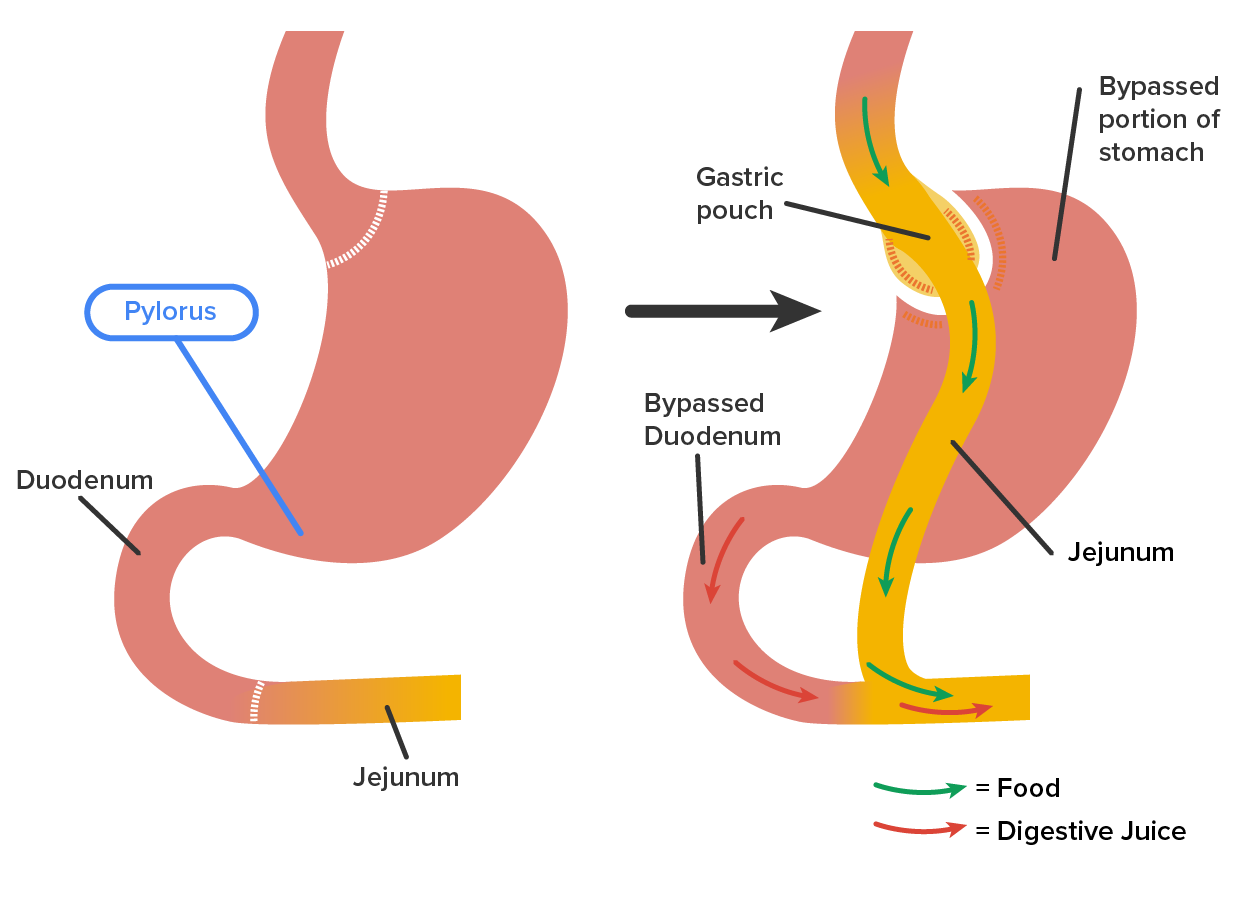
Gastric bypass surgery, also called Roux-en-Y gastric bypass, is done in three steps.
The bypass changes hormones, bacteria, and other substances in the gastrointestinal tract that may affect appetite and metabolism. Gastric bypass is difficult to reverse, although a surgeon may do it if medically necessary.
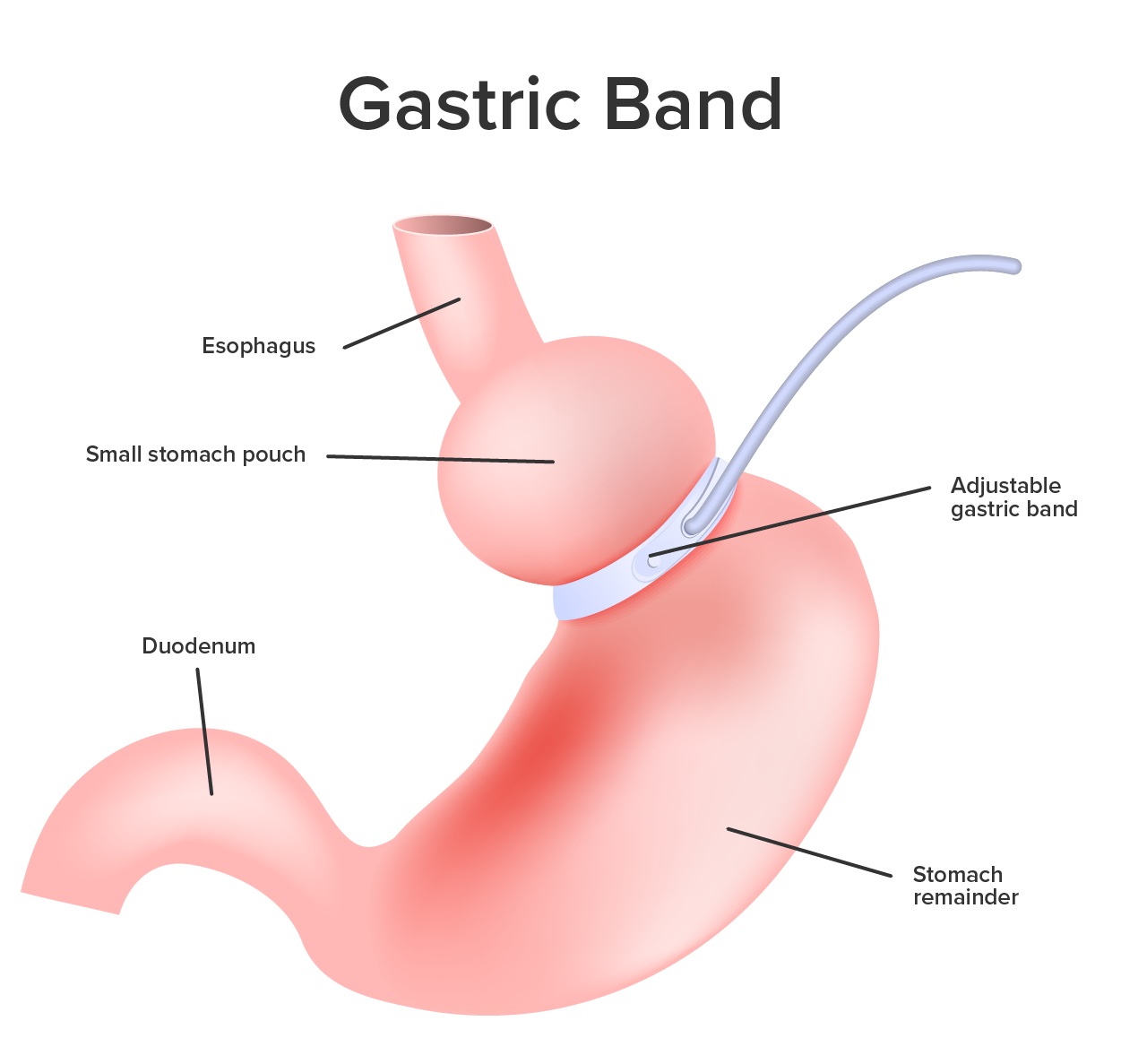
In this type of surgery, the surgeon places a ring with an inner inflatable band around the top of the stomach to create a small pouch. Like gastric sleeve and gastric bypass surgery, the gastric band makes you feel full after eating a small amount of food. The inner band has a circular balloon inside that is filled with saline. The surgeon can adjust the inner band to resize the opening from the pouch to the rest of your stomach by injecting or removing the saline solution through a small device, called a port, that is placed under your skin. After surgery, you will need several follow-up visits to adjust the size of the band opening. If the band causes problems or is not helping, the surgeon may remove it.
This complicated and risky surgery involves two separate procedures. The first procedure is similar to gastric sleeve surgery. A second surgical procedure divides the small intestine into two tracts. Food moves through one tract, bypassing most of the small intestine. This reduces the number of calories and amount of nutrients absorbed. Digestive juices flow from the stomach through the other intestinal tract and mix with food as it enters the colon.
Source: THIS TUTORIAL HAS BEEN ADAPTED FROM Lumen Learning "NUTRITION FLEXBOOK". ACCESS FOR FREE AT courses.lumenlearning.com/suny-nutrition/. License: CREATIVE COMMONS Attribution 4.0 International. Accessed by January 2022.
REFERENCES
U.S. Department of Health and Human Services. (n.d.). Types of weight-loss surgery. National Institute of Diabetes and Digestive and Kidney Diseases. Retrieved June 10, 2022, from www.niddk.nih.gov/health-information/weight-management/bariatric-surgery/types
U.S. Department of Health and Human Services. (n.d.). Weight-loss (bariatric) surgery. National Institute of Diabetes and Digestive and Kidney Diseases. Retrieved June 10, 2022, from www.niddk.nih.gov/health-information/weight-management/bariatric-surgery
Centers for Disease Control and Prevention. (2021, March 19). External Resources. Centers for Disease Control and Prevention. Retrieved June 10, 2022, from www.cdc.gov/healthyweight/tools/index.html



