Table of Contents |
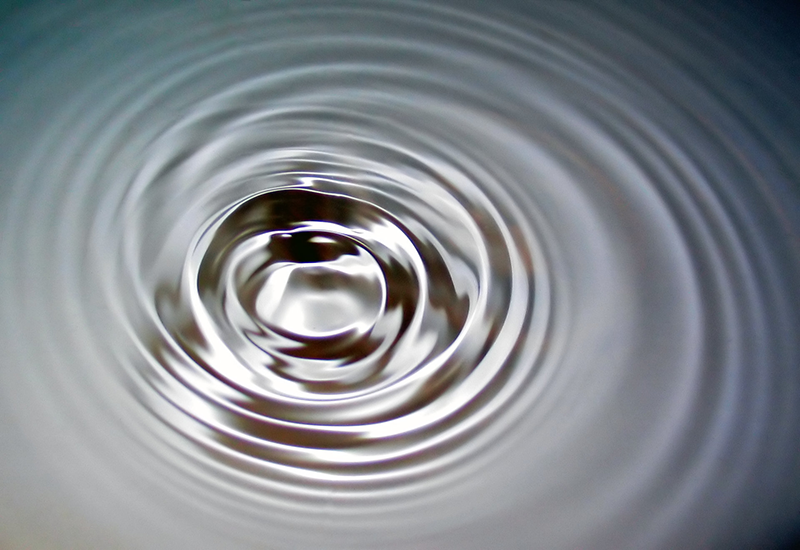
Have you ever wondered how a ripple in a pond, the sound of your favorite song, and the light from distant stars are all connected? They are all examples of waves, which can be defined as a disturbance—a temporary change or variation in a medium caused by an external influence—that travels through a medium or space, carrying energy from one point to another without transporting matter. One of the easiest examples to picture is a ripple spreading across a calm pond after a pebble drops in. The disturbance moves outward, as shown to the right, even though the water itself doesn’t travel with the ripple.
But waves aren’t limited to water. When you pluck a guitar string, the vibration creates sound waves. Tiny pressure variations that move through the air to your ears. Light waves, on the other hand, are electromagnetic disturbances that race through space at incredible speeds, allowing us to see the world around us. Even the shimmering patterns of heat rising from a road on a hot day are waves of energy moving through air.
What makes waves fascinating is that, despite their different forms, they share common characteristics: amplitude, frequency, period, and energy. These properties can be described by a few fundamental principles that apply to all waves, whether they ripple across water, vibrate through air, or travel through the vacuum of space.
Objects in waves often move in a way that resembles simple harmonic motion, repeating their motion in cycles. Imagine a floating leaf on a calm lake as a gentle ripple passes by. It moves up and down rhythmically as each crest and trough rolls beneath it. The figure illustrates how hypothetical springs would oscillate in simple harmonic motion simultaneously to generate a wave, and this wave propagates forward as the disturbance moves through the medium.
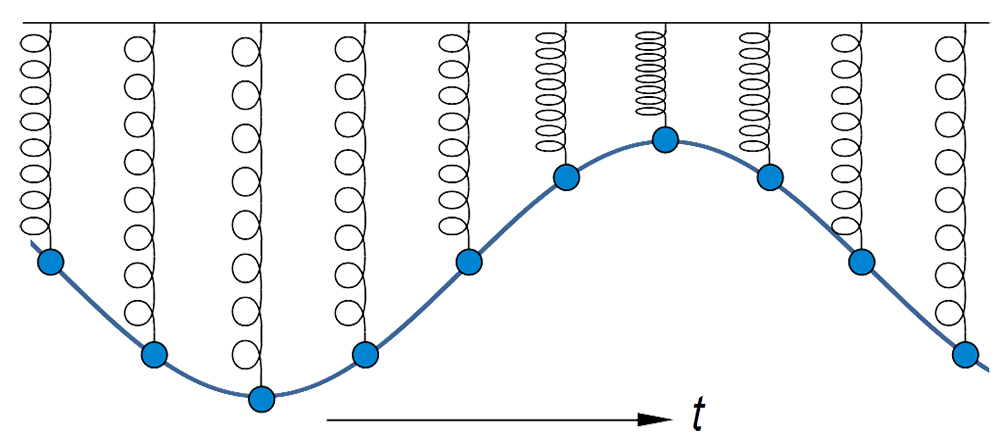
Let’s consider an idealized ocean wave passes under a seagull that bobs up and down.
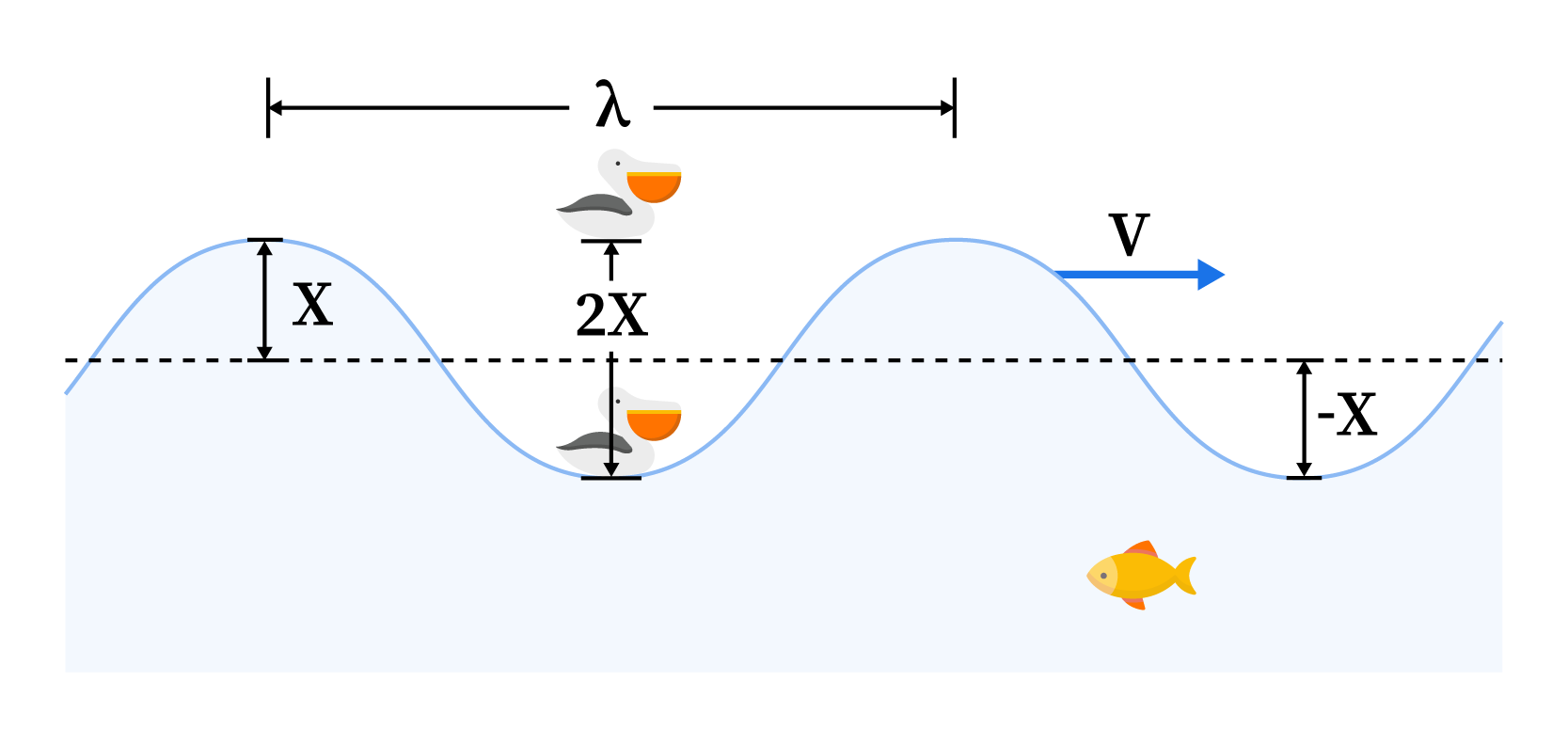
According to the figure, a seagull is resting on the ocean. When a wave passes beneath, the bird moves up and down in a smooth, rhythmic motion, much like simple harmonic motion. The time it takes for the seagull to complete one full rise and fall is called the wave’s period, or the time for one complete cycle. The number of these cycles per second is its frequency, which is the inverse of the period.
Every wave also has a wavelength, the distance between two identical points on consecutive cycles, such as crest to crest. Although the wave moves forward across the water, the seagull doesn’t drift along with it. That is because the wave’s motion represents the propagation of the disturbance, not the movement of the water itself. The speed at which this disturbance travels is known as the wave velocity, or propagation speed, because the energy moves from one point to another while the water particles (or the seagull) mostly stay in place.

When the frequency (f) is measured in hertz (Hz), the wavelength (λ) is measured in meters (m), and the SI unit of wave speed is meters per second 
This equation applies to all waves. whether it’s ripples on water, sound traveling through air, or light racing through space.
 Do you think the particles that vibrate in a wave move along with the wave?
EXAMPLE
A wave on a string has a wavelength of and a frequency of
  Find the speed of the wave.


 But the matter remains in the same place with vibrating up and down or back and forth.
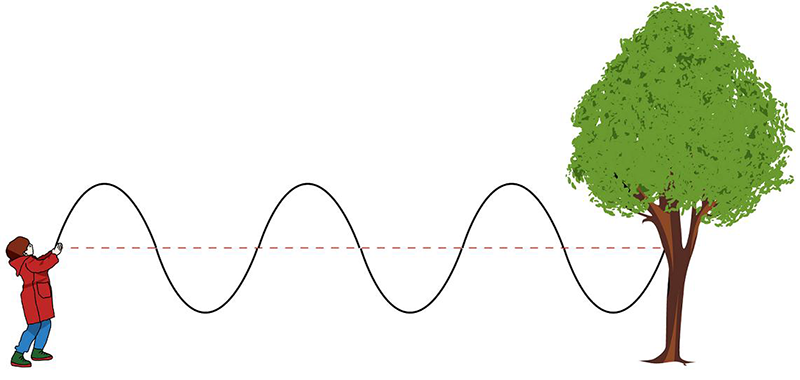
A simple wave is a repeating disturbance that moves from one point to another, carrying energy along the way. Imagine a rope tied to a tree. If you shake one end up and down, as in the image below, a wave travels horizontally along the rope while the rope itself moves vertically. This type of wave is called a transverse wave, which is a type of wave in which the particles of the medium move perpendicular to the direction the wave travels. Other examples include light waves, water surface waves, and waves on a stretched string.
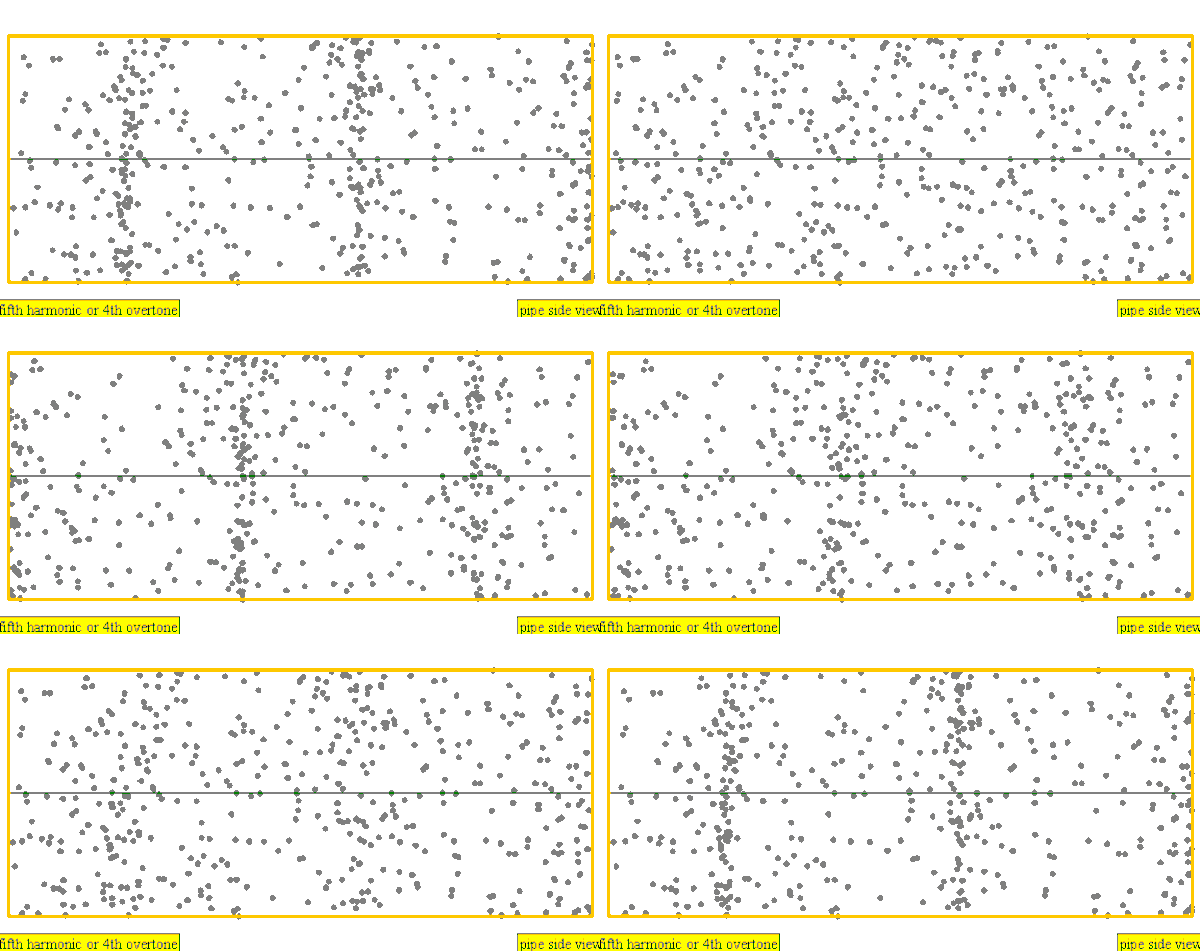
In contrast, consider sound traveling through air. Here, the air molecules vibrate back and forth in the same direction the wave moves, creating regions of compression and rarefaction. This is a longitudinal wave—a type of wave in which the particles of the medium vibrate parallel to the direction of wave propagation.
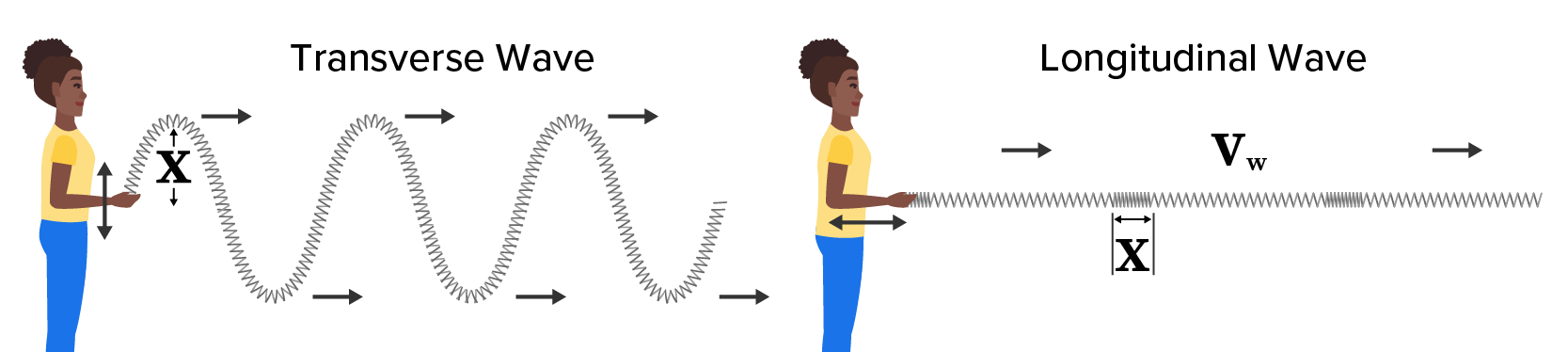
Whether it’s a longitudinal or transverse wave, the size of the disturbance is called its amplitude (marked as x in the figure), and it determines the wave’s energy. However, it does not affect the speed of propagation.
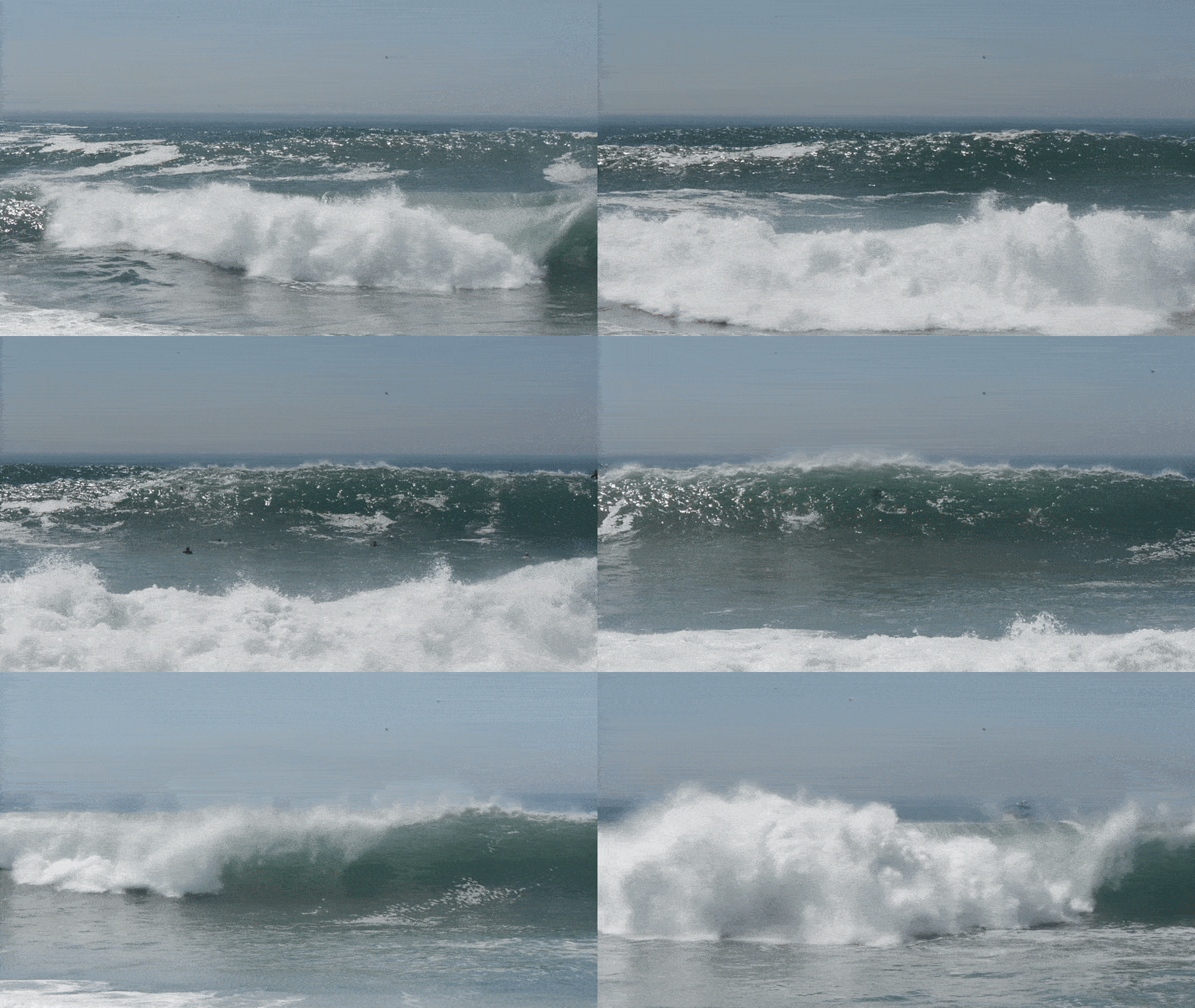
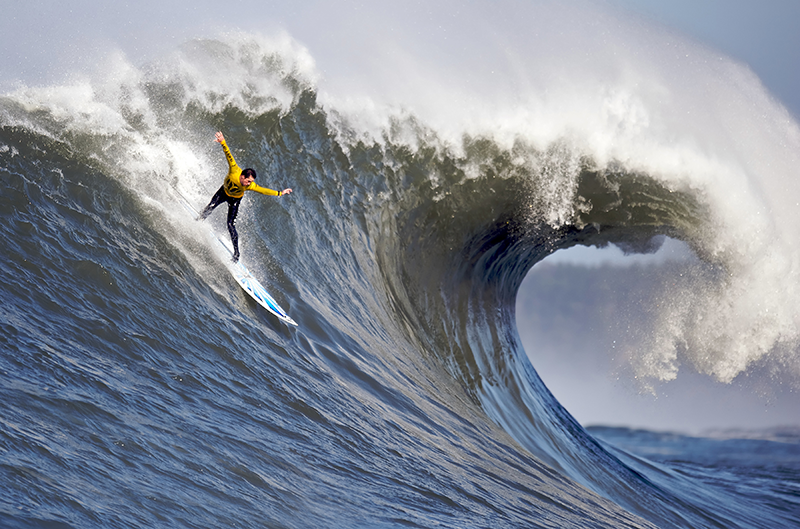 When surfers ride ocean waves, like in the image to the right, they’re not moving forward with the water itself. They are gliding on energy. Ocean waves are created by wind transferring energy to the water’s surface, and that energy travels across the sea while the water particles mostly move in small circles, staying in place. So, when you surf, you are actually riding the energy of the wave, not a mass of water rushing toward the shore.
Waves are everywhere, from the gentle ripple on a pond to the light that lets us see distant galaxies. They carry energy without moving matter, and their properties, like wavelength, frequency, and amplitude, shape how they behave in different mediums. But here’s something to think about: if waves can travel through water, air, and even empty space, what other hidden waves might exist around us that we can’t see or hear? Could there be waves carrying information across the universe right now? The more we learn about waves, the more we realize they are not just a concept in physics. They are a key to understanding the world and beyond.
Source: THIS TUTORIAL HAS BEEN ADAPTED FROM (1) OPENSTAX "PHYSICS HIGH SCHOOL." ACCESS FOR FREE AT OPENSTAX.ORG/DETAILS/BOOKS/PHYSICS/. (2) OPENSTAX "COLLEGE PHYSICS 2E." ACCESS FOR FREE AT OPENSTAX.ORG/DETAILS/BOOKS/COLLEGE-PHYSICS-2E. LICENSING (1 & 2): CREATIVE COMMONS ATTRIBUTION 4.0 INTERNATIONAL. Accessed by August 2025.

Where v is the speed of the wave, f is the frequency, lambda (λ) is the wavelength of the wave.



