Table of Contents |
External environments of business are simply defined as the conditions outside of a business that affect how it operates, which include, but are not limited to, the following:
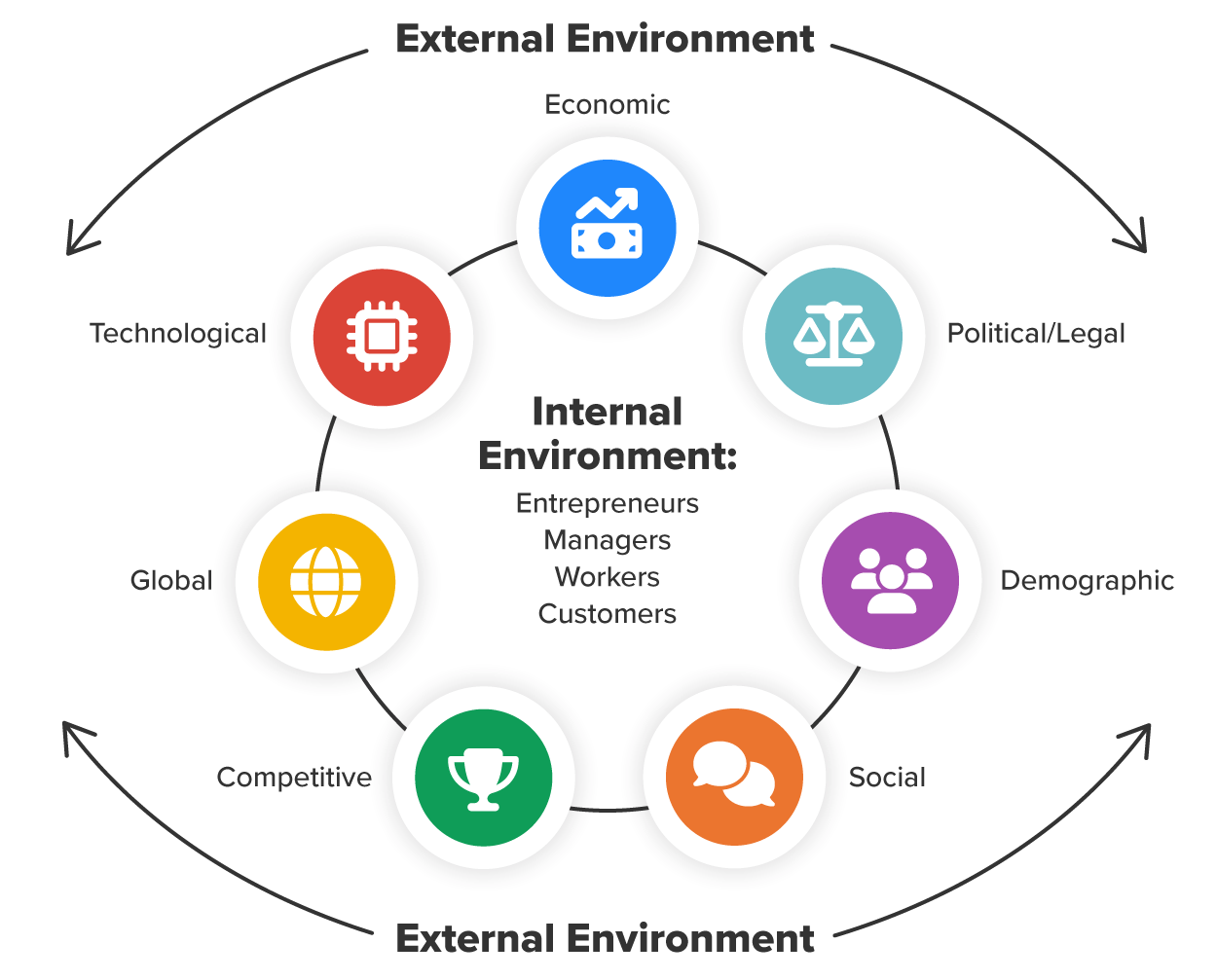
In addition, an environment doesn’t stand alone. What happens in one environment can directly affect what happens in another environment.
The external environments are different from the internal environments, as the internal environments are something a business has control over—and these areas will be addressed throughout this course. Internal factors could include things such as:
There are six major types of external environments that can affect a business in vastly different ways. These environments are:
A domestic business environment refers to business done within a company’s own nation. In this situation, the company has a distinct advantage working locally. It has a better understanding of not only the geography, laws, and taxes but also the currency and culture of the people within that nation that it does business with on a regular basis. Therefore, it has a distinct advantage over other companies coming in from different countries.
EXAMPLE
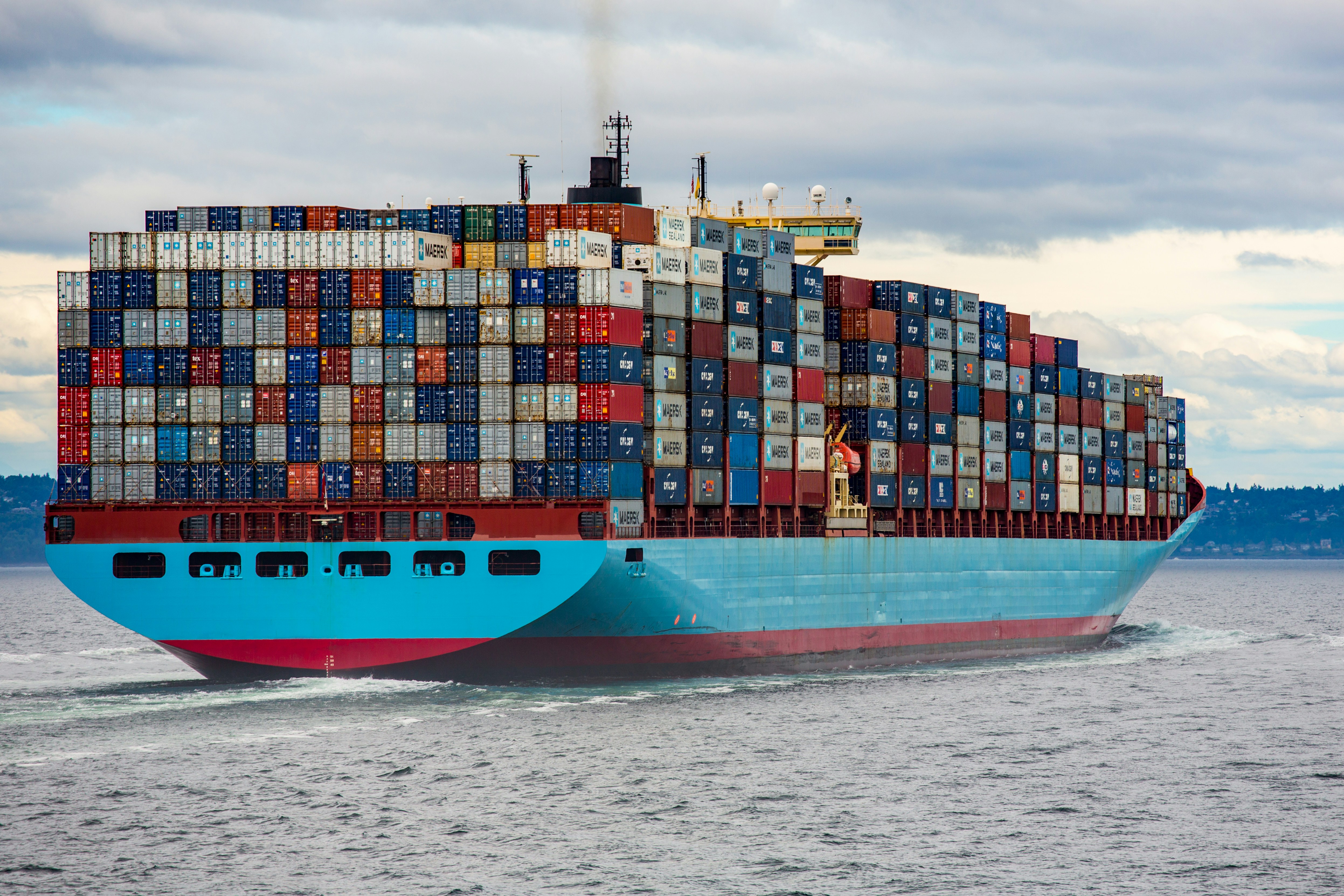
The Ford Motor Company makes cars in the United States based on the feedback it receives from consumers regarding what they want in a car. Similarly, in Germany, Volkswagen and BMW make cars that best suit the population that these companies serve locally.A global business environment refers to the dynamic and complex set of external conditions and forces that affect how businesses operate on an international scale. These are business activities that occur worldwide. The trend we’re seeing here is that emerging markets have been becoming huge, which has allowed them to become much more powerful players on the world stage.
We are also seeing demographic shifts around the globe. As people become more mobile, they spend their entire lives in a single country less frequently. In some cases, it’s as easy as getting on a plane and going somewhere else. The global middle class has also been rising. More people have more wealth and disposable incomes that they can use to purchase products that are provided on a global scale.
Outside factors in technology that affect a business are its technological environment. These factors fundamentally change the way the business operates around the world. We are seeing an increased use of mobile technology that is really driving change within this particular environment. Places that, until recently, had never seen a line attached to a phone suddenly have access to smartphones and cell phones and can now communicate and see the world around them.
A political-legal environment refers to governmental decisions that affect business operations. One of the trends we see here is more free trade between countries. Those old barriers and tariffs that dominated the political world are coming down, and as a result, businesses are better able to attract customers from different countries and serve that growing global middle class that we talked about earlier. In 2025, with additional tariffs and trade barriers in place, it will be interesting to see how trade between countries continues.
A sociocultural business environment encompasses various factors that influence a company’s operations, including religion, language, education norms, social systems, and demographics. It can exist within one particular country, within one particular industry, or globally. In this course, we’ll examine it as it exists within a particular country, with a focus on the social and cultural practices and norms of a particular population.
IN CONTEXT: Worker Mobility
In the United States, we’ve seen an increase in worker mobility and remote work. From a sociocultural business perspective, worker mobility has both pluses and minuses. Some of the pluses are that you have a more flexible workforce and it can be cheaper for companies, depending on how long they can retain the workers. However, some of the negatives are that it’s less stable, as the workers tend to go away, and the companies have fewer benefits for the workers on some occasions, depending on how much they move. This requires ongoing training from the companies involved.
These are the economic environments or factors that affect the purchasing of goods and services, such as a nation’s employment levels or gross national product, wealth, inflation, and interest rates—its monetary policy.
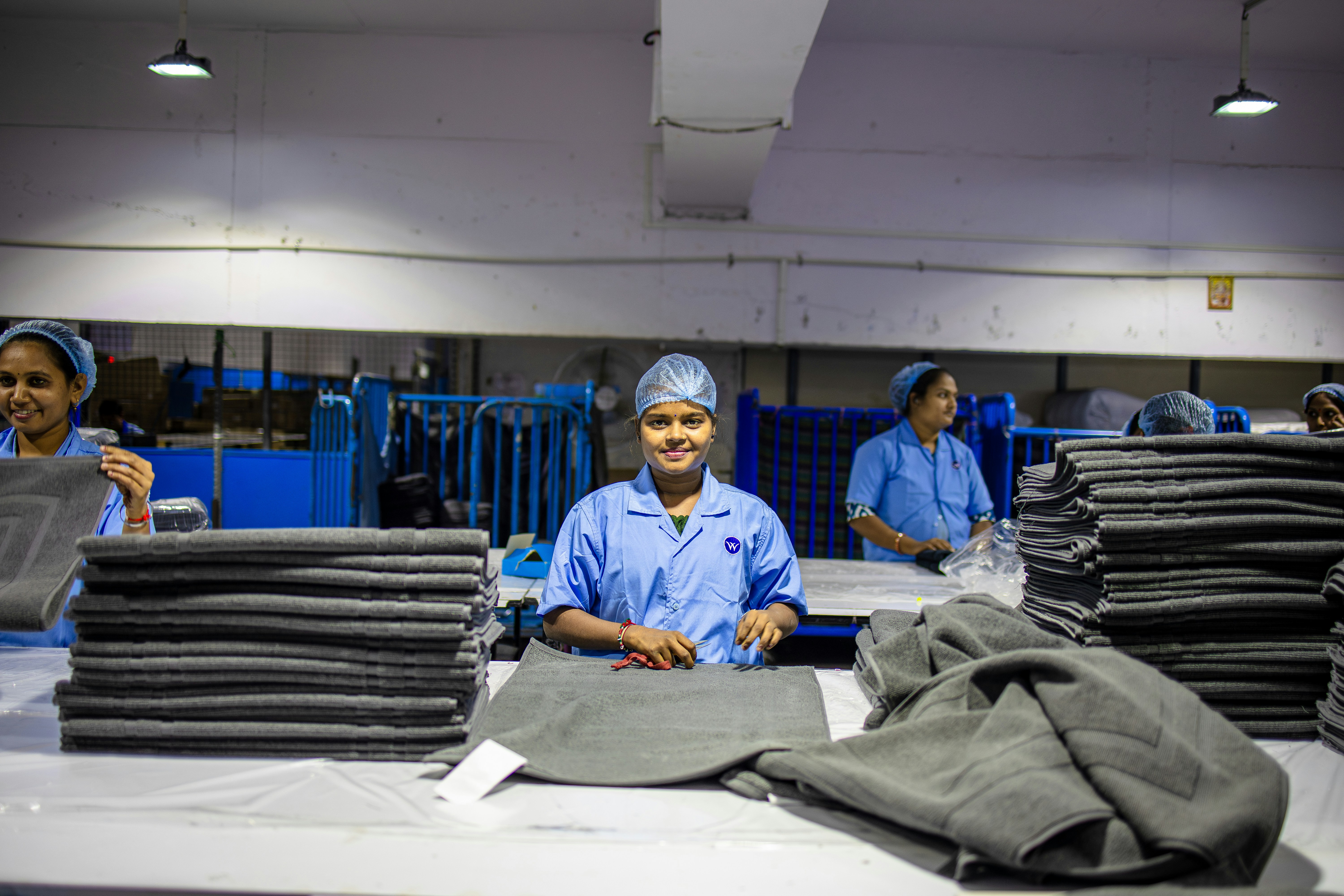
Again, we’re going to look at those emerging markets as a trend. Emerging markets are becoming more powerful and having a greater say in national wealth, inflation rates, and exchange rates between nations, as well as in how each nation interacts with another on an economic scale. Nations that at one time had very little wealth are now enjoying vast opportunities for wealth and production.
EXAMPLE
Source: THIS CONTENT HAS BEEN ADAPTED FROM RICE UNIVERSITY’S “INTRODUCTION TO BUSINESS”. ACCESS FOR FREE AT OpenStax. LICENSE: CREATIVE COMMONS ATTRIBUTION 4.0 INTERNATIONAL.



