In this lesson, you will learn about employer, self-employed, and individual retirement accounts. Specifically, this lesson will cover the following:
1. Employer and Self-Employed Retirement Accounts
Retirement planning doesn’t have to be complicated. In fact, once you understand the basics, it’s actually pretty simple. The key to a successful retirement isn’t just about saving—it’s about putting your money in the right places so it can grow as much as possible.
That’s where retirement accounts come in.
-
Think of retirement accounts like special containers designed to hold your money and help it grow faster. But unlike a regular savings account, these containers come with perks—like tax breaks, employer contributions, and investment growth—that make them the best place to save for your future.
But not all retirement accounts are the same. Some are offered through your job, while others you open on your own.
In this lesson, we’ll break retirement accounts into two main types:
- Employer and self-employed retirement accounts (like 401(k)s and SEP IRAs)
- Individual retirement accounts (like IRAs and Roth IRAs)
By the end of this lesson, you’ll know how each one works and which one might be the best fit for you.
Let’s start with three work-based retirement accounts—these are accounts offered through your employer or for self-employed people. If you have access to one of these, they’re usually the best place to start.
1. 401(k): The Most Common Employer Plan
If you work for a company, there’s a good chance they offer a 401(k). This is one of the easiest and most powerful ways to save for retirement because it allows you to automatically save money from your paycheck before taxes are taken out.
How It Works:
- You decide how much of your paycheck to contribute (e.g., 5% of your salary).
- That money is taken out before taxes, reducing your taxable income.
- Your employer invests it in stocks, bonds, and mutual funds to help it grow.
- You pay taxes only when you withdraw the money in retirement.
Employer Matching = Free Money
Many employers match a portion of your contributions, meaning they give you extra money just for saving. We’ve covered this in a previous lesson, but let’s review.
-
EXAMPLE
Let’s say you earn $50,000 per year and your company offers a 100% match for up to 5% of your salary.
- You contribute 5% ($2,500 per year).
- Your employer also contributes $2,500 per year—for free!
- That’s an extra $2,500 every year going toward your retirement.
If your employer offers a match, always contribute at least enough to get the full match—it’s free money.
-
Things to Know About a 401(k):
- Contribution Limit: These limits change yearly, so it’s best to look up the current limits. For example, in 2024, you can contribute up to $23,000 per year ($30,500 if you’re over 50).
- Withdrawals Before Age 59½: If you withdraw money early, you’ll pay taxes plus a 10% penalty.
2. 403(b): The 401(k) for Teachers and Nonprofits
A 403(b) is almost the same as a 401(k), but it’s offered by schools, hospitals, and nonprofit organizations. It works the same way—your money goes in before taxes, it grows over time, and your employer may offer a match.
3. SEP IRA & Solo 401(k): For Self-Employed People
If you work for yourself, you won’t have a 401(k) through an employer—but you still have great options!
- Simplified Employee Pension IRA (SEP IRA):
- This is ideal for freelancers, small business owners, and self-employed people.
- It allows you to save up to 25% of your income (up to $69,000 per year in 2024).
- Contributions are tax deductible, meaning you save on taxes now.
- Solo 401(k):
- It works just like a regular 401(k) but is designed for self-employed individuals.
- You can contribute as both the employee and employer, allowing for higher contributions.
- It is great for business owners with no employees.
-
EXAMPLE
Let’s compare Emma, a freelance graphic designer, and James, a self-employed consultant, to see how a SEP IRA and a Solo 401(k) work differently.
Emma’s SEP IRA (Best for Simplicity & Higher Business Income):
Emma is a one-person business earning $100,000 per year. She wants a simple retirement plan without much paperwork.
- With a SEP IRA, she can contribute up to 25% of her income.
- That means she can contribute $25,000 to her SEP IRA this year.
- This lowers her taxable income to $75,000, reducing her tax bill.
Why the SEP IRA Works for Emma:
- It is simple to set up and manage.
- It is great for business owners with no employees.
- Contributions are tax deductible, so she saves on taxes now.
James’s Solo 401(k) (Best for Maximizing Contributions):
James is a self-employed marketing consultant earning $100,000 per year. He wants to maximize his retirement savings.
- With a Solo 401(k), James can contribute in two ways:
- As the employee: He can contribute up to $23,000 (2024 limit).
- As the employer: He can contribute 25% of his salary (another $25,000).
- In total, James can contribute $48,000 this year—almost double what Emma can in her SEP IRA!
Why the Solo 401(k) Works for James:
- It allows higher contributions than a SEP IRA, especially at lower incomes.
- It offers a Roth option, so he could choose tax-free withdrawals later.
- It works best if he doesn’t plan to hire employees (since it’s only for business owners and spouses).
|
Key Differences Between SEP IRA & Solo 401(k)
|
|---|
|
Feature
|
SEP IRA
|
Solo 401(k)
|
|
Best for
|
Simplicity, high-income earners
|
Maximizing contributions, flexibility
|
|
Contribution limit
|
25% of income (up to $69,000 in 2024)
|
Up to $69,000, but allows employee + employer contributions
|
|
Roth option?
|
No
|
Yes
|
|
Employees allowed?
|
No (unless contributing for all employees)
|
No (only owner & spouse)
|
|
Administrative work
|
Easy, minimal paperwork
|
More paperwork, but higher contribution potential
|
- If you want something simple and have a higher income, go with a SEP IRA.
- If you want to contribute more (especially with lower income) or want a Roth option, choose a Solo 401(k).
-
Both are great for self-employed people—it just depends on your business structure and how much you want to save.
If you’re self-employed, opening a SEP IRA or Solo 401(k) is one of the best ways to reduce taxes and build wealth for retirement.
Now that we’ve covered employer-sponsored retirement plans like 401(k)s, 403(b)s, and SEP IRAs, let’s talk about one of their biggest benefits—tax advantages. These plans aren’t just a place to save money; they also help you reduce your tax bill and grow your wealth faster.
But how exactly do taxes work for these accounts? Do you pay taxes now, later, or never? Let’s break it down so you know what to expect when contributing, growing, and withdrawing money from an employer-sponsored retirement plan.
-
- 403(b)
- A retirement plan for teachers, hospital workers, and nonprofit employees that lets you save pretax money and grow it tax deferred.
1a. Taxes
One of the biggest benefits of employer-sponsored retirement plans like 401(k)s and 403(b)s is the tax advantage they offer. These plans help you lower your taxable income today while saving for the future. Here’s how taxes work for these plans:
1. Traditional 401(k) and 403(b): Tax-Deferred Growth
- Contributions are made before taxes, reducing your taxable income.
- You don’t pay taxes on the money while it grows inside your account.
- You pay taxes later when you withdraw the money in retirement.
-
EXAMPLE
- Alex earns $60,000 per year and contributes $6,000 to his 401(k).
- His taxable income is now $54,000, so he pays less in taxes today.
- When he retires, he’ll pay income taxes on the money he withdraws.
2. Roth 401(k): Pay Taxes Now, Tax-Free Later
Some employers offer a Roth 401(k), which works differently from a traditional 401(k):
- You pay taxes on contributions now (no tax deduction today).
- Your money grows tax-free inside the account.
- Withdrawals in retirement are completely tax-free.
-
EXAMPLE
- Lisa contributes $6,000 to a Roth 401(k).
- She pays taxes on that $6,000 now, but it grows tax-free.
- When she retires, she can withdraw everything without paying taxes.
3. Taxes on Withdrawals
- If you withdraw money from a traditional 401(k) before age 59½, you’ll pay income tax plus a 10% penalty.
- With a Roth 401(k), withdrawals are tax-free after age 59½, as long as you’ve had the account for at least 5 years.
-
Normally, withdrawing money from a 401(k), 403(b), or traditional IRA before age 59½ comes with a 10% early withdrawal penalty plus income taxes. However, there are some exceptions where you can take money out early without paying the penalty (though you may still owe income taxes). You can learn more here on the
IRS website.
Some common exceptions are as follows:
- Medical Expenses: You can withdraw early if you have unreimbursed medical expenses that exceed 7.5% of your adjusted gross income (AGI).
- First-Time Home Purchase: You can withdraw up to $10,000 from an IRA (not a 401(k)) for a first-time home purchase.
- Higher Education Costs: IRA funds (not 401(k)) can be used for college tuition, fees, books, and supplies.
- Permanent Disability: You can withdraw early if you become totally and permanently disabled.
- Rule of 55: If you leave your job at age 55 or older, you can withdraw from your 401(k) or 403(b) without the penalty (but not from an IRA).
- Military Service: Certain withdrawals are allowed for active-duty military members during deployment.
These exceptions can help in emergencies, but early withdrawals should be a last resort since they reduce your future retirement savings.
4. Required Minimum Distributions (RMDs)
- Traditional 401(k) holders must start withdrawing money at age 73, and these withdrawals are taxed as income.
- Roth 401(k)s do not require RMDs, so your money can keep growing tax-free.
Employer-sponsored plans like 401(k)s and 403(b)s offer big tax benefits, whether you’re saving now with a traditional plan or choosing tax-free withdrawals later with a Roth option.
But what if you don’t have a job with a retirement plan or want to save even more? That’s where IRAs come in—giving you a way to grow your retirement savings on your own. Let’s dive into how they work.
-
- Tax-Deferred Growth
- Your money grows without being taxed until you withdraw it in retirement.
- Required Minimum Distribution (RMD)
- The minimum amount you must withdraw from certain retirement accounts each year after age 73.
2. Individual Retirement Accounts
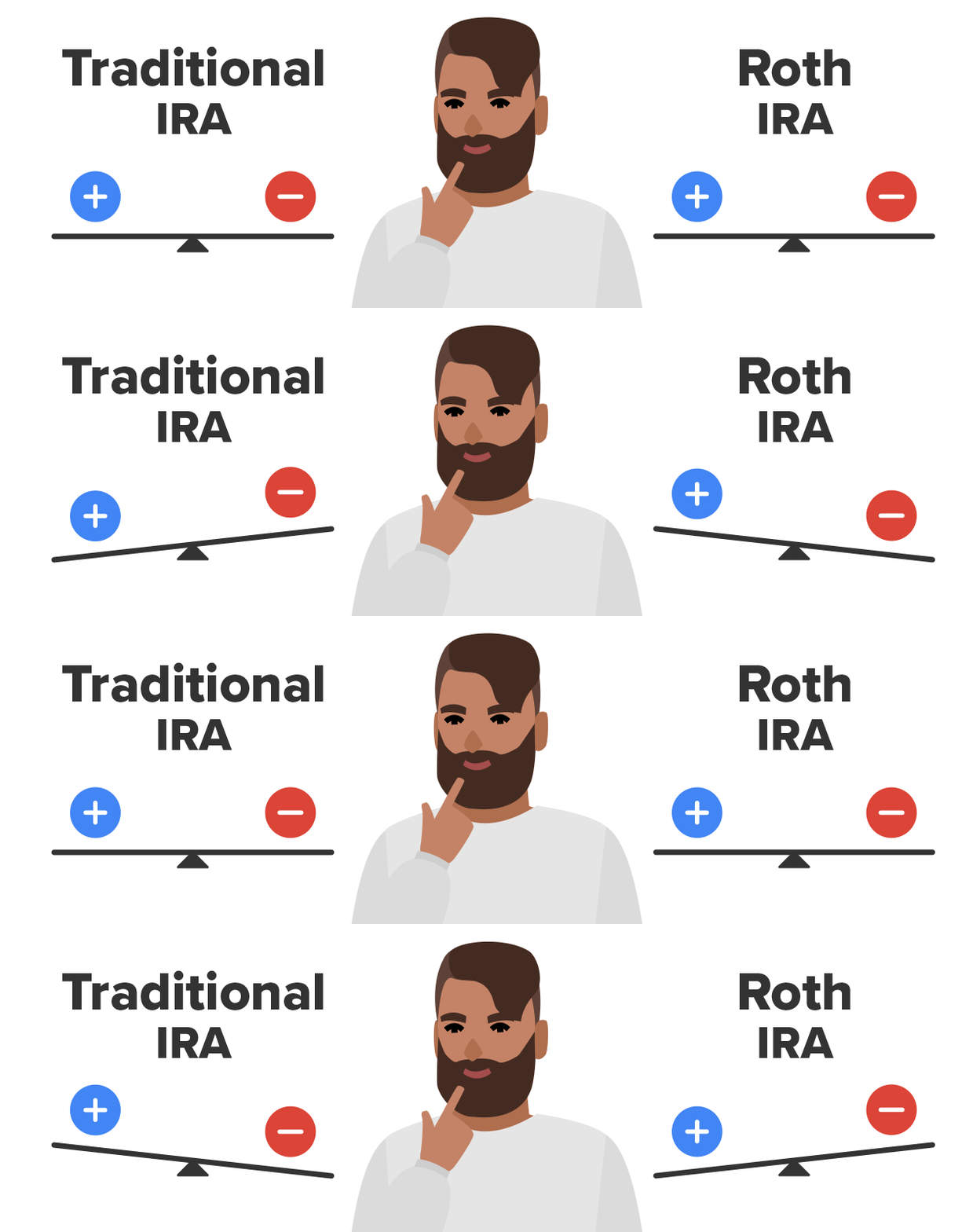
If you don’t have a 401(k) or 403(b) through work, or you just want another way to save, Individual Retirement Accounts (IRAs) are a great option. These accounts allow you to invest for retirement on your own, with tax benefits to help your money grow faster.
There are two main types of IRAs:
- Traditional IRA: Get a tax break now, but pay taxes later.
- Roth IRA: Pay taxes now, but withdraw tax-free later.
Both accounts help you build wealth, but they work differently. Let’s break them down so you can decide which one is right for you.
1. Traditional IRA: Tax Savings Now
A traditional IRA works like a 401(k)—you contribute money before taxes, which lowers your taxable income. Then, your money grows tax deferred, meaning you don’t pay taxes on investment gains until you withdraw the money in retirement.
How It Works:
- You contribute pretax money, lowering your taxable income for the year.
- Your money grows tax-free inside the account.
- When you retire, you pay income taxes on withdrawals.
-
EXAMPLE
- Jake earns $60,000 per year and contributes $6,500 to a traditional IRA.
- His taxable income is now $53,500, which means he pays less in taxes today.
- His money grows for decades without taxes.
- When he retires, he pays taxes when he withdraws the money.
Things to Know About a Traditional IRA:
- Contribution Limit: You can contribute up to $7,000 per year ($8,000 if you’re over 50) in 2025, but these numbers change each year.
- Taxes: You don’t pay taxes now, but you will pay income tax when you withdraw in retirement.
- RMDs: You must start withdrawing money at age 73, even if you don’t need it.
-
A traditional IRA is great if you want a tax break now and expect to be in a lower tax bracket in retirement.
2. Roth IRA: Tax-Free Growth
A Roth IRA is different because you pay taxes on your contributions up-front, but the money grows tax-free, and you never pay taxes on withdrawals in retirement.
How It Works:
- You contribute after-tax money (you don’t get a tax break now).
- Your money grows tax-free.
- When you retire, all withdrawals are tax-free, including your earnings.
-
EXAMPLE
- Sarah contributes $6,500 to a Roth IRA.
- She pays taxes on that money now, but it grows tax-free.
- When she retires, she can withdraw everything tax-free, no matter how much it grows.
Things to Know About a Roth IRA:
- Contribution Limit: This is the same as a traditional IRA—$7,000 per year ($8,000 if over 50).
- Income Limits: If you earn over $153,000 (single) or $228,000 (married) in 2024, you may not be able to contribute.
- No Required Withdrawals: Unlike a traditional IRA, there are no RMDs. Your money can keep growing tax-free for as long as you want.
-
A Roth IRA is great if you want tax-free withdrawals in retirement and expect to be in a higher tax bracket later.
Which IRA Should You Choose?
Not sure which one is right for you? Here’s a simple way to decide:
- Want a tax break now? → Choose a traditional IRA.
- Want tax-free withdrawals later? → Choose a Roth IRA.
- Expect to be in a lower tax bracket in retirement? → Choose a traditional IRA.
- Expect to be in a higher tax bracket later? → Choose a Roth IRA.
Pro Tip: If you’re not sure, you can split your contributions between both types for more flexibility in retirement.
IRAs are one of the best ways to save for retirement, especially if you don’t have a 401(k) through work. Whether you choose a traditional IRA for tax savings now or a Roth IRA for tax-free growth later, the most important thing is to start saving as early as possible.
Even small contributions can grow into hundreds of thousands of dollars over time. The key is to stay consistent and let your money grow.
In this lesson, you compared the different types of retirement accounts, including employer, self-employed, and individual. You also learned about the taxes associated with employer and self-employed retirement accounts.



