In this lesson, you will learn about stocks, mutual funds, and exchange-traded funds (ETFs). Specifically, this lesson will cover the following:
1. What Are Stocks, Mutual Funds, and ETFs?
Investing is one of the most powerful ways to grow your wealth over time. However, with so many different investment options out there, it can feel overwhelming to know where to start. In this lesson, we’ll break down three of the most common investment choices—stocks, mutual funds, and ETFs—so you can understand how they work, their pros and cons, and how they fit into your financial goals.
By the end of this lesson, you’ll have a clear understanding of these investment types and feel confident about choosing the right option for your needs. There are the three common investments.
1. Stocks
When you buy stock, you are purchasing a small ownership stake in a company. Stocks, also called shares, represent a piece of that company. If the company grows and becomes more valuable, so does your investment.
Owning stock means you are a partial owner of that business, and in some cases, you might even get a vote for certain company decisions. Stocks are traded on stock exchanges like the New York Stock Exchange (NYSE) and Nasdaq, where investors buy and sell shares every day.

-
The concept of stock investing goes back more than 400 years. In 1602, the Dutch East India Company issued the world’s first publicly traded stock to raise money for its trading voyages. Investors could buy shares in the company and receive a share of its profits.
Fast forward to today, stock markets play a critical role in the global economy. Companies use stocks to raise money for expansion, and investors use stocks to grow their wealth.
There are two main ways you can make money from stocks:
-
Capital gains: This happens when the stock price increases, and you sell it for more than you paid. For example, if you bought Apple stock at $50 per share and it rises to $200 per share, you’ve made a profit of $150 per share.
-
Dividends: Some companies share their profits with investors by paying dividends, which are cash payments distributed to shareholders. Not all companies pay dividends, but some, like Coca-Cola and Johnson & Johnson, have been paying them for decades.
-
EXAMPLE
Imagine you invested $1,000 in Amazon stock in 2000 when the share price was around $5. Today, Amazon shares are worth over $3,000 each. That means your $1,000 investment would now be worth over $600,000!
This is the power of long-term investing—by buying and holding quality stocks over time, you allow your money to grow exponentially.
Pros
- High growth potential: Stocks have historically provided the highest returns over the long run.
- Ownership in a company: You share in the company’s success.
- Liquidity: Stocks can be bought and sold quickly, making them easy to access.
Cons
- Market volatility: Stock prices fluctuate daily, and downturns can be stressful.
- No guaranteed returns: A company’s stock can decline, and you can lose money.
- Need for research: Picking individual stocks takes time and knowledge.
2. Mutual Funds
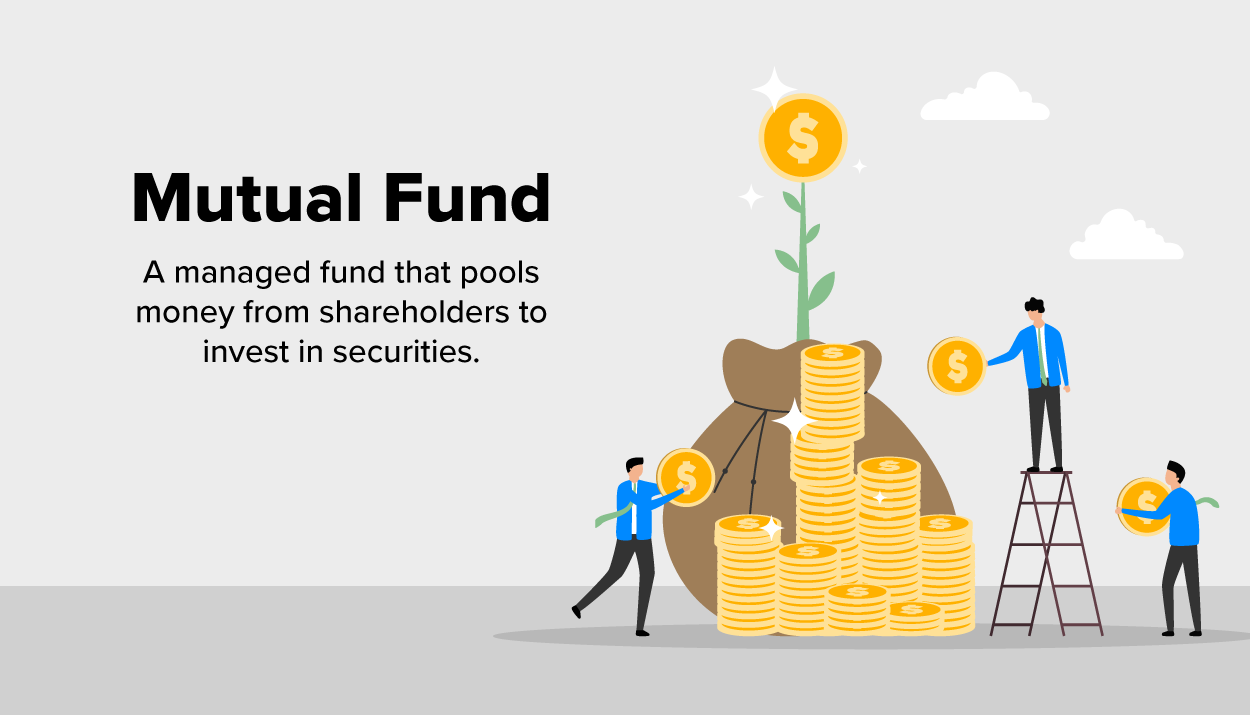
A mutual fund is an investment that pools money from many investors to buy a diversified portfolio of stocks, bonds, or other assets. Instead of picking individual stocks yourself, a mutual fund allows you to invest in many companies at once.
A professional fund manager decides which stocks or bonds to buy and sell within the fund. Because of this, mutual funds are considered a hands-off way to invest, making them a great choice for beginners.
-
The first mutual fund was created in 1924 in Boston by the Massachusetts Investors Trust. It was designed to help everyday investors gain access to a diversified portfolio without needing a lot of money. Today, mutual funds are a popular investment option worldwide.
There are two ways investors earn money from mutual funds:
- Capital gains: Just like stocks, if the value of the fund’s investments increases, the price of the mutual fund shares also rises, allowing you to sell for a profit.
- Dividends and interest: Many mutual funds pay out earnings from dividends and interest to investors.
-
EXAMPLE
Let’s say you invest $5,000 in a mutual fund that tracks the S&P 500 index, which includes the 500 largest companies in the United States. If the S&P 500 grows by an average of 8% per year, your investment could double in about 9 years without you having to pick individual stocks.
Let’s look at the pros and cons of mutual funds:
Pros
- Diversification: Your money is spread across multiple stocks, reducing risk.
- Professional management: A fund manager makes investment decisions for you.
- Ease of investing: They are good for beginners who don’t want to research individual stocks.
Cons
- Management fees: Many mutual funds charge fees that can eat into returns.
- Less control: You don’t decide which stocks are bought or sold.
- Not as flexible: Some funds limit when you can buy or sell shares.
3. Exchange-Traded Funds (ETFs)
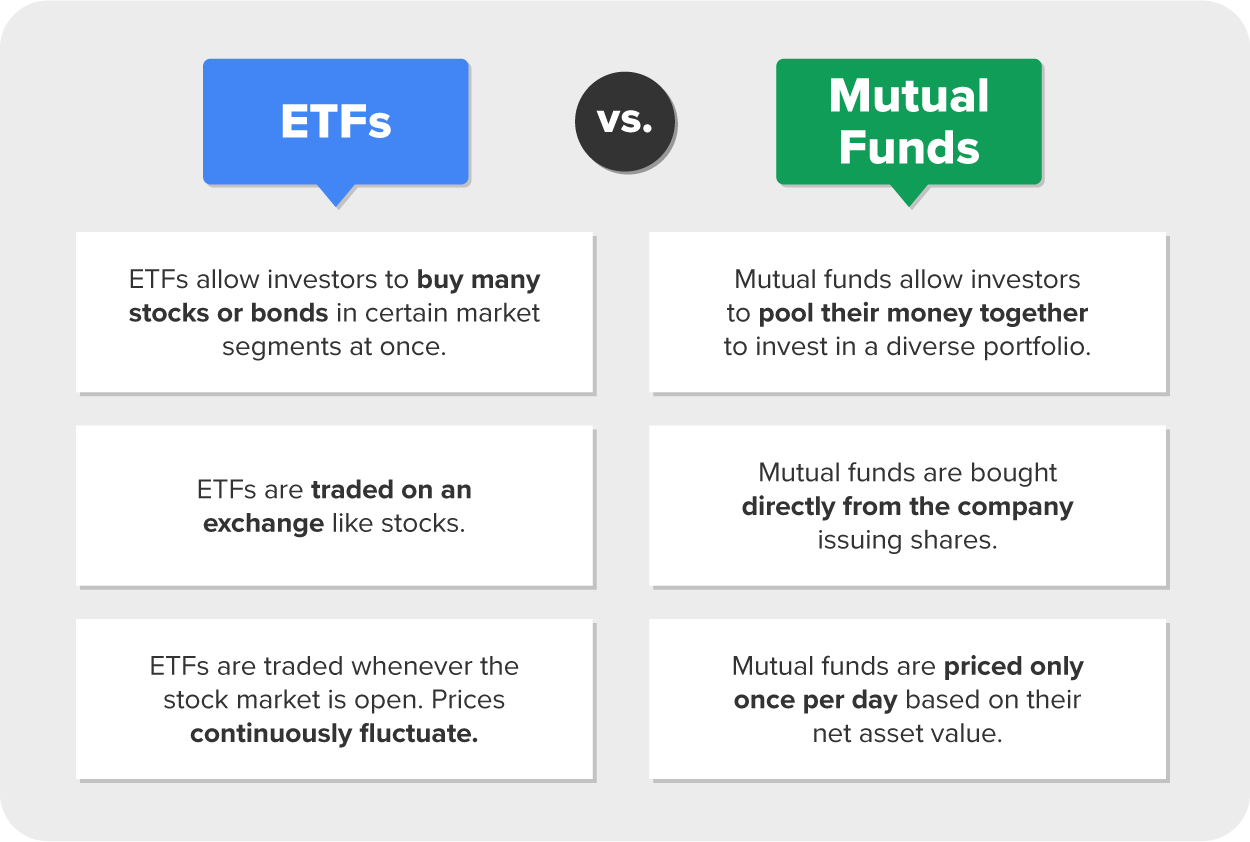
ETFs are similar to mutual funds, but they trade like stocks on an exchange. ETFs hold a basket of investments, such as stocks or bonds, and they allow investors to gain instant diversification with one simple purchase.
ETFs are passively managed, meaning they track a market index instead of being actively managed by a fund manager. This often makes ETFs cheaper than mutual funds.
-
The first ETF was introduced in 1993 as a way for investors to gain exposure to the S&P 500 index without having to buy all 500 individual stocks. Since then, ETFs have exploded in popularity due to their low fees, flexibility, and ease of use.
-
EXAMPLE
Let’s say you buy shares of an S&P 500 ETF for $100 each. With this one purchase, you instantly own a small piece of 500 different companies, including Apple, Microsoft, and Tesla. If the index grows over time, so does your investment.
Pros
- Diversification: Like mutual funds, ETFs invest in multiple stocks.
- Lower costs: Most ETFs have lower fees than mutual funds.
- Flexibility: ETFs trade like stocks, so you can buy and sell throughout the day.
Cons
- Market fluctuations: Since ETFs follow the market, they can still lose value.
- No active management: Some investors prefer a fund manager’s guidance.
-
Here is a video that helps break down these three common investment choices:
Now that you know what stocks, mutual funds, and ETFs are, let’s talk about how to research them before you start investing.
-
- Shares
- A small piece of ownership in a company.
- Stock Exchange
- The marketplace where stocks are bought and sold.
- New York Stock Exchange (NYSE)
- One of the biggest stock markets where companies trade their stocks.
- Nasdaq
- A stock market known for tech companies like Apple and Google.
- Capital Gains
- Profit made when you sell an investment for more than you paid.
- Dividends
- Cash payments some companies give to shareholders.
- Mutual Funds
- A mix of stocks and/or bonds managed by a company.
- Diversified Portfolio
- A mix of different investments to reduce risk.
- Fund Manager
- The person who decides what a mutual fund invests in.
- Passively Managed
- A fund that follows the market instead of being actively managed.
2. How to Research Stocks, Mutual Funds, and ETFs
Now that you know what stocks, mutual funds, and ETFs are, the next big question is “How do you choose the right ones to invest in?”
With thousands of options out there, it’s easy to feel stuck. But here’s the good news: You don’t need to be a financial expert to make smart choices. You just need to know what to look for. This section will walk you through how to research investments step by step, so you can invest confidently instead of blindly following trends or social media hype.
Step 1: Researching Stocks (Picking Individual Companies to Invest In)
If you want to invest in individual stocks, think of it as choosing a business to own. You wouldn’t buy a business without knowing how it makes money, how much debt it has, and whether it’s growing or shrinking. Investing in stocks works the same way.
Here are three key things to look for when picking stock:
1. Company Fundamentals (How Strong Is the Business?)
- Revenue and earnings growth: Is the company making more money each year? A growing company is more likely to have an increasing stock price over time.
-
Profit margins: How much of a company’s revenue turns into actual profit? A company that makes $10 billion in sales but only keeps $50 million in profit isn’t as efficient as one that keeps $2 billion.
- Debt levels: Too much debt can be a red flag. If a company has more debt than it can handle, it might struggle when the economy slows down.
2. Stock Performance Metrics (Is It Overpriced or a Good Deal?)
-
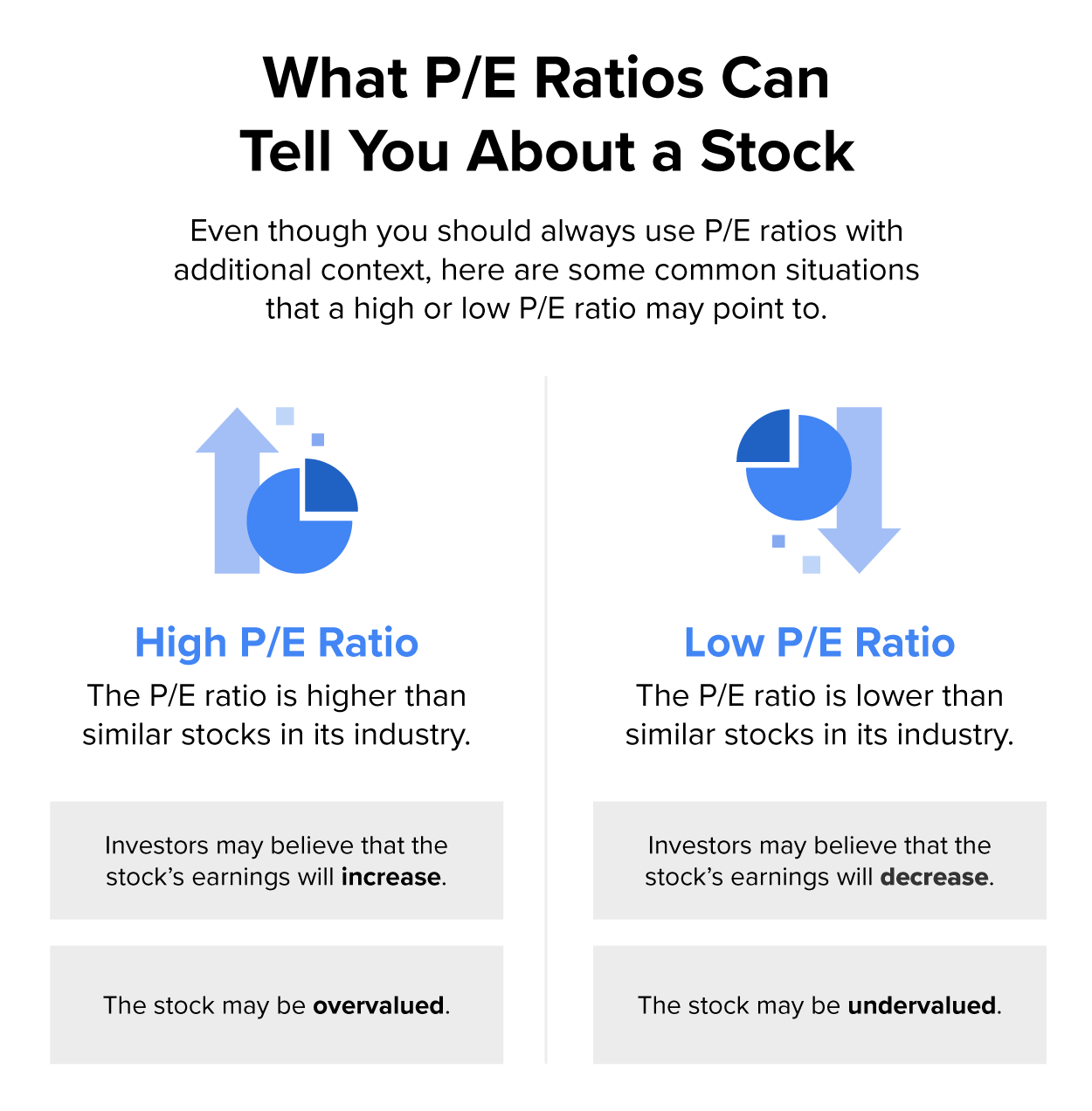
Price-to-earnings (P/E) ratio: This tells you how much people are willing to pay for every dollar the company earns.
- A P/E ratio of 10 means investors are paying $10 for every $1 the company earns.
- A high P/E ratio (like 30+) could mean the stock is expensive (or that investors expect big growth).
- A low P/E ratio (under 10) might mean it’s a bargain—or that the company is struggling.
-
- Price-to-Earnings (P/E) Ratio

-
You can easily find earnings per share data on websites like Yahoo Finance, Google Finance, Bloomberg, and CNBC. You can also find it on apps like E*Trade, Fidelity, TD Ameritrade, and Robinhood.
-
You’re thinking about investing in a company, and you have two options:
- Company A:

- Company B:

Question 1: Calculate the P/E ratio.
The P/E ratio is calculated using this formula:

.
Answer:
- Company A:

- Company B:

Question 2: Which company would you invest in?
Answer:
- You would invest in Company A because it has a lower P/E ratio (20) compared to Company B (40).
- A P/E ratio of 40 means investors are paying $40 for every $1 of earnings, which may suggest strong future growth expectations or that the stock is potentially overvalued.
- A lower P/E ratio (20) suggests Company A might be a better value investment if everything else is equal.
-
-
Dividend yield: Some companies share their profits with investors by paying dividends. If you’re looking for passive income, check how much they pay and whether they’ve been growing over time. All of this info is available on stock market apps and financial websites.
-
Market capitalization: Market capitalization (market cap) is the total value of a company’s stock, found by multiplying its stock price by the number of shares available. It helps investors understand a company’s size, with larger market caps usually meaning more stability and smaller ones often having higher growth potential but more risk.
- Companies come in different sizes:
- Large companies (blue chip stocks) like Apple, Microsoft, and Coca-Cola are stable but may grow more slowly.
- Smaller companies (small cap stocks) might have higher growth potential but are riskier.
3. Industry and Market Trends (Is This a Good Industry to Be In?)
- Is the company in a growing industry? Example: Tech and renewable energy are growing, while traditional print media is declining.
- Does the company have an advantage over competitors? Example: Amazon dominates online retail, giving it an edge over smaller retailers.
-
Here are some resources you can use to easily find out information about stocks:
- Yahoo Finance, Google Finance, Bloomberg, and Morningstar: They’re great for checking stock prices, earnings, and news.
- Company websites (the Investor Relations pages): Look at financial statements and reports directly from the source.
The best stocks belong to profitable, growing companies with a strong competitive advantage in an industry that’s doing well.
Step 2: Researching Mutual Funds and ETFs (A Simpler, Safer Option)
If picking individual stocks sounds too risky or time consuming, mutual funds and ETFs are a great way to invest in many companies at once. But how do you choose the right one?
Here are four items to look for:
1. Expense Ratio (How Much Are You Paying in Fees?)
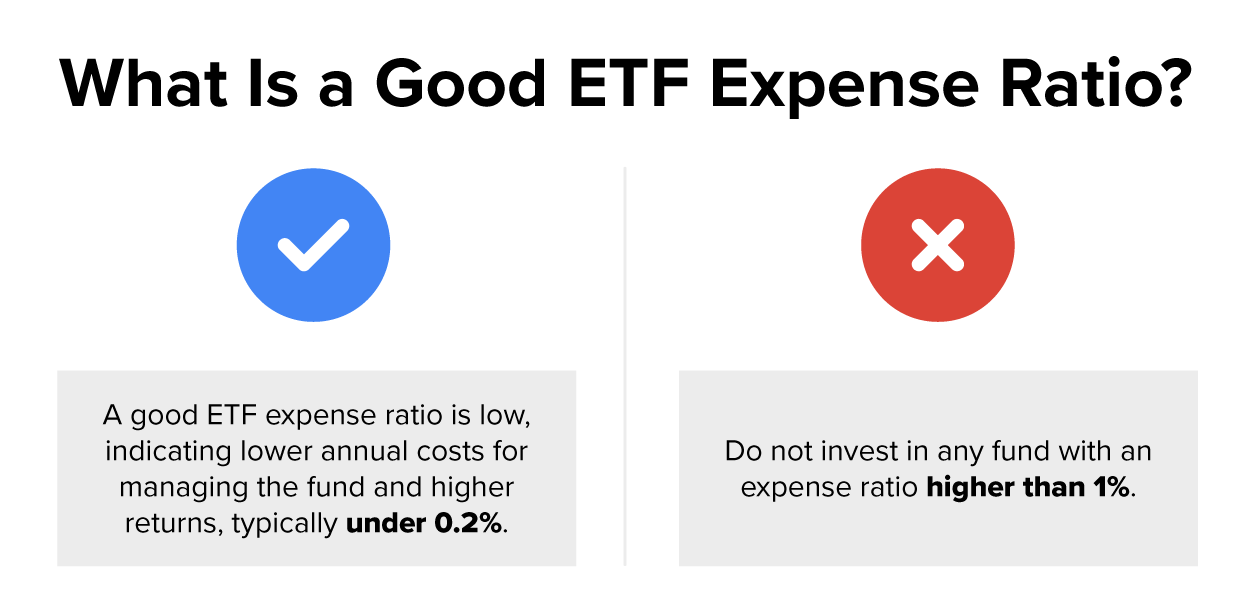
- a. Every mutual fund or ETF charges an annual expense ratio, which is a small percentage of your investment.
- b. Lower is better—look for ETFs with expense ratios under 0.5% and mutual funds under 1%.
-
- Mutual Fund Annual Fee

-
You’re comparing two mutual funds to invest in, and you want to understand how much you’ll pay in fees over time. Here are your options:


You plan to invest

in one of these funds.
Question 1: Calculate the fees.
The expense ratio tells you how much you’ll pay in fees each year as a percentage of your total investment.
Use the mutual fund annual fee formula:

.
Answer 1:
-

-

Question 2: Which fund has lower fees?
Answer 2: Fund A has lower fees
2. Performance History (Has It Grown Over Time?)
- a. Past performance doesn’t guarantee future success, but you want to see a consistent upward trend over 10+ years.
- b. Check how the fund performed during market crashes (like 2008 or 2020) to see if it bounced back.
3. What Does It Invest In?
- a. An S&P 500 index fund invests in 500 of the biggest U.S. companies, making it a safe long-term choice.
- b. A dividend ETF focuses on stocks that pay consistent dividends for passive income.
- c. A sector ETF might focus on industries like technology, health care, or clean energy.
4. Fund Type: Active Versus Passive
- a. Actively managed funds: A fund manager picks and trades stocks (higher fees, more buying and selling).
- b. Passive funds (like index funds): These track a market index (lower fees, usually better performance over time).
-
EXAMPLE
Let’s say you invest $5,000 in an S&P 500 ETF. This means your money is instantly spread across 500 different companies, including Apple, Google, and Tesla.
- If the stock market grows by 8% per year (historical average), your investment could double in about 9 years.
- You don’t have to worry about picking stocks—the index fund does all the work for you.
-
Here are some resources you can use to easily find out information about ETFs:
- Morningstar: Provides fund ratings and performance history
- Vanguard, Fidelity, Schwab, and iShares: Companies that offer ETFs and mutual funds
- ETF.com: A great site for comparing ETFs
ETFs and mutual funds simplify investing, letting you buy many stocks at once with lower risk than picking individual stocks.
-
Many people believe they need thousands of dollars to start investing, but that’s a myth. Thanks to modern investing platforms, you can start with as little as $10 and build wealth over time.
Step 1: Use an Investing App or Brokerage
Platforms like Vanguard, Fidelity, and Charles Schwab allow you to invest with small amounts. Some brokerages also offer commission-free trades, so you don’t pay extra fees when buying stocks, ETFs, or mutual funds.
Fractional Shares: Investing in Expensive Stocks for Less
Many investing apps now allow you to buy
fractional shares, which means you can own a portion of a stock instead of buying a full share.
EXAMPLE
- Amazon stock costs $3,000 per share, but with fractional shares, you can invest $50 and own a small piece of it.
- This makes investing in large, successful companies accessible to everyone.
Step 2: Start With ETFs or Index Funds
For beginners, ETFs and index funds are the easiest way to invest with small amounts because they provide instant diversification at a low cost.
Step 3: Take Advantage of Retirement Accounts
If your goal is long-term investing, use tax-advantaged accounts like a 401(k) or Roth IRA, where your money grows tax-free.
- 401(k): This is employer sponsored and often includes company matching (free money!).
- Roth IRA: Contributions are taxed up-front, but withdrawals in retirement are tax-free.
You will learn a lot more about retirement accounts in upcoming lessons.
Investing in stocks, mutual funds, and ETFs doesn’t have to feel overwhelming. It’s really about knowing what works for you—whether you want to pick individual stocks, go the set-it-and-forget-it route with ETFs, or have a mix of both.
-
- Earnings Growth
- How much a company’s profits increase over time.
- Profit Margins
- The percentage of money a company keeps after expenses.
- Price-to-Earnings (P/E) Ratio
- A stock’s price compared to its earnings; shows if it’s over- or undervalued.
- Dividend Yield
- The percentage of a stock’s price paid out in dividends.
- Market Capitalization
- A company’s total value based on its stock price.
- Blue Chip Stock
- A big, stable company with a long history of success.
- Small Cap Stock
- A smaller company with high growth potential but more risk.
- Expense Ratio
- The percentage of a fund’s assets used for management and operating costs. A lower expense ratio means fewer fees, leaving more money invested for growth.
- Sector ETF
- A fund that invests in a specific industry, like tech or health care.
- Actively Managed Funds
- Funds where experts pick and adjust investments regularly.
- Fractional Shares
- Buying a piece of stock instead of a whole share.
In this lesson, you gained an in-depth understanding of stocks, mutual funds, and ETFs. You also learned how to research stocks, mutual funds, and ETFs to find an investing option you prefer.





