Table of Contents |
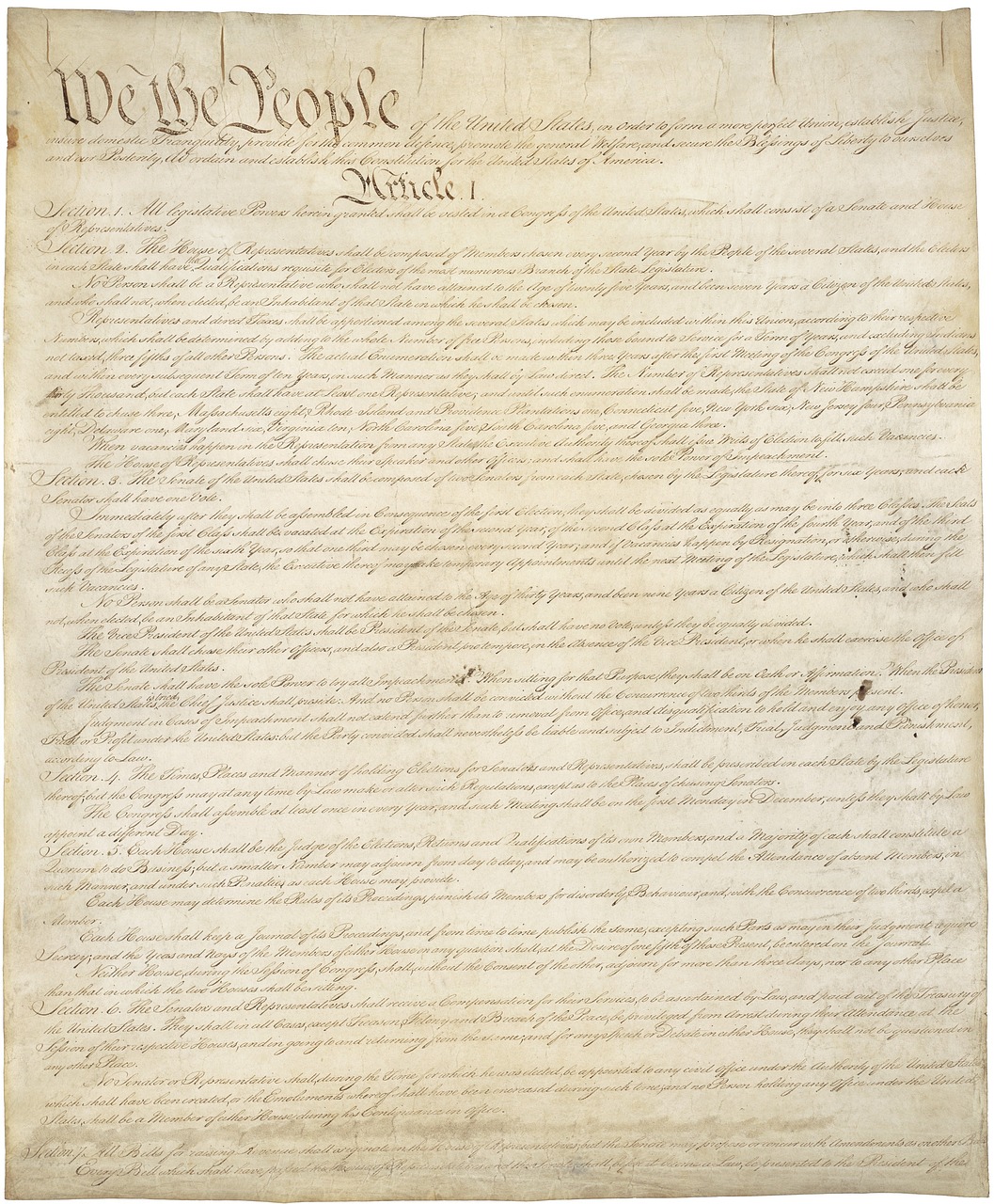 The U.S. Constitution was originally adopted in 1787. The text of the Constitution contains a handful of procedural guarantees to protect citizens from government overreach.
Procedural guarantees found within the Constitution include:
By the late 1700s, this idea was deemed so important that the framers of the U.S. Constitution included the concept in the first article. Article I, Section 9, Clause 2 provides that:
The Great Writ is considered "the fundamental instrument for safeguarding individual freedom against arbitrary and lawless state action" (Harris v. Nelson, 1969, pp. 290–291).
IN CONTEXT: The Case of Boumediene v. Bush (2008)
In 2008, the U.S. Supreme Court delivered a landmark ruling in Boumediene v. Bush. The case centered around Lakhdar Boumediene, a detainee at Guantanamo Bay who, along with other foreign nationals, sought to challenge their detention. The U.S. government argued that these detainees, held at a facility outside the continental United States, were not entitled to habeas corpus rights. However, the Supreme Court disagreed, ruling that constitutional habeas corpus protections extend to non-citizens held in territories under U.S. control. The Court asserted that denying these detainees a meaningful opportunity to challenge their imprisonment would undermine the very essence of procedural justice.
This case illustrates the enduring power and relevance of habeas corpus. It reaffirmed that the Great Writ is a fundamental safeguard against arbitrary detention, even for individuals held far from U.S. soil. The ruling underscored the principle that no government entity, regardless of location or circumstance, can escape judicial scrutiny when it comes to the legality of imprisoning individuals.
A bill of attainder is a legislative act declaring someone guilty of a crime and imposing punishment in absence of a trial. Because the determination of guilt is delegated only to the judicial system, the Constitution prohibits Congress and states from passing bills of attainder. This is to ensure that all people will have their day in court and that courts will hold all responsibility for determining whether people are guilty based on evidence introduced at trial. This is important to the concept of procedural justice because it prevents “legislative oppression of those politically opposed to the majority in control” (Pound, [1930] 1998, p. 133).
The Constitution also prohibits ex post facto laws. An ex post facto law is any law that punishes an act that was not criminal at the time it was committed. The prohibition of ex post facto laws ensures that guilt can be assigned only after offenders know their behavior was criminalized (Owen et al., 2019).
The Constitution also guarantees that trials for all federal crimes (other than impeachment) shall be by jury.
The only crime defined in the U.S. Constitution (Article III, Section 3, Clause 1) is treason:
The framers were concerned that simply supporting unpopular views in a new democracy might be considered treasonous or being guilty of the crime of betraying one's country.
Most of the other limitations are found within the Bill of Rights, the first ten amendments to the U.S. Constitution, which were adopted in 1791. The Bill of Rights also places certain limits on what behaviors may or may not be criminalized by the government. These limitations are covered in the First and Second Amendments.
Sometimes the Constitution doesn’t explicitly state a protection or right that the courts have nevertheless found to be inherent or found within the Constitution. The concept of implied rights within the Constitution stems from penumbras—or zones created by the explicit guarantees outlined in the Bill of Rights. This legal interpretation, notably articulated in Griswold v. Connecticut (1965), identified a constitutional right to privacy, which was not explicitly stated but inferred from other rights. Over the years, this interpretation has shaped the legal landscape, influencing key rulings on issues like:
Justice Douglas, who crafted the majority opinion in Griswold v. Connecticut (1965), wrote that the specific rights in the Bill of Rights have additional protections that help make them stronger. These protections create areas of privacy, or implied rights, like:
| Amendment | Right(s) |
|---|---|
| First | The right to gather with others. |
| Third | Soldiers can’t stay in someone’s house without permission during peace time, and so this also protects privacy. |
| Fourth | People have the right to be safe in their homes, papers, and belongings from unreasonable searches. The Fourth Amendment creates a “right to privacy, no less important than any other right carefully and particularly reserved to the people.” |
| Fifth | The rule against self-incrimination allows people to keep certain information private. The Fourth and Fifth Amendments were described as protection against all governmental invasions “of the sanctity of a man’s home and the privacies of life.” |
| Ninth | Just because some rights are listed in the Constitution, it doesn’t mean people don’t have other rights too. |
Representatives can’t make laws that let the government invade people’s privacy, even if there’s no specific amendment that says so. From 1965 to 2015, the Supreme Court decided many landmark cases that referenced the right to privacy:
| Case | Right(s) |
|---|---|
| Eisenstadt v. Baird (1972) | The right of married people to have contraceptives. |
| Griswold v. Connecticut (1965) | Struck down a ban on contraceptives. |
| Stanley v. Georgia (1969) | The right to view and possess adult pornography. |
| Lawrence v. Texas (2003) | The right of adults to engage in consensual sexual activities. |
| Obergefell v. Hodges (2015) | The right to privacy also played a role in this case decision, which required states to allow and recognize same-sex marriages. |
However, the existence of a constitutional right to privacy suffered a dramatic setback in June 2022, when the Supreme Court overturned its own precedent in Roe v. Wade (1972), deciding that the state of Mississippi could restrict access to abortion. While the written decision in Dobbs v. Jackson Women’s Health Organization (2022) claims that other freedoms underwritten by the right to privacy (such as same-sex marriage, interracial marriage, and access to contraception) were not at risk, legal scholars generally agree that these guarantees may also be subject to judicial revision in the future.
Source: THIS TUTORIAL HAS BEEN ADAPTED FROM LOUIS: The Louisiana Library Network'S “CCRJ 1013: Introduction to Criminal Justice”. ACCESS FOR FREE AT LOUIS. LICENSE: CREATIVE COMMONS ATTRIBUTION 4.0 INTERNATIONAL.
REFERENCES
Harris v. Nelson, 394 U.S. 286 (1969).
Owen, S. S., Fradella, J. P. H. F., Burke, T. W., & Jopkins, J. W. (2019). Foundations of criminal justice (3rd ed.). Oxford University Press Academic US.
Pound, R. (1998). Criminal Justice in America. (Original work published 1930). New Brunswick, NJ: Transaction Publishers.



