Table of Contents |
The construction of the Parthenon took place from about 448 BCE to 432 BCE, during what came to be referred to as the Golden Age of Athens. The geographical region that this lesson covers is the city-state of Athens, of ancient Greece.
This is a map of the geographical region covered in this lesson:
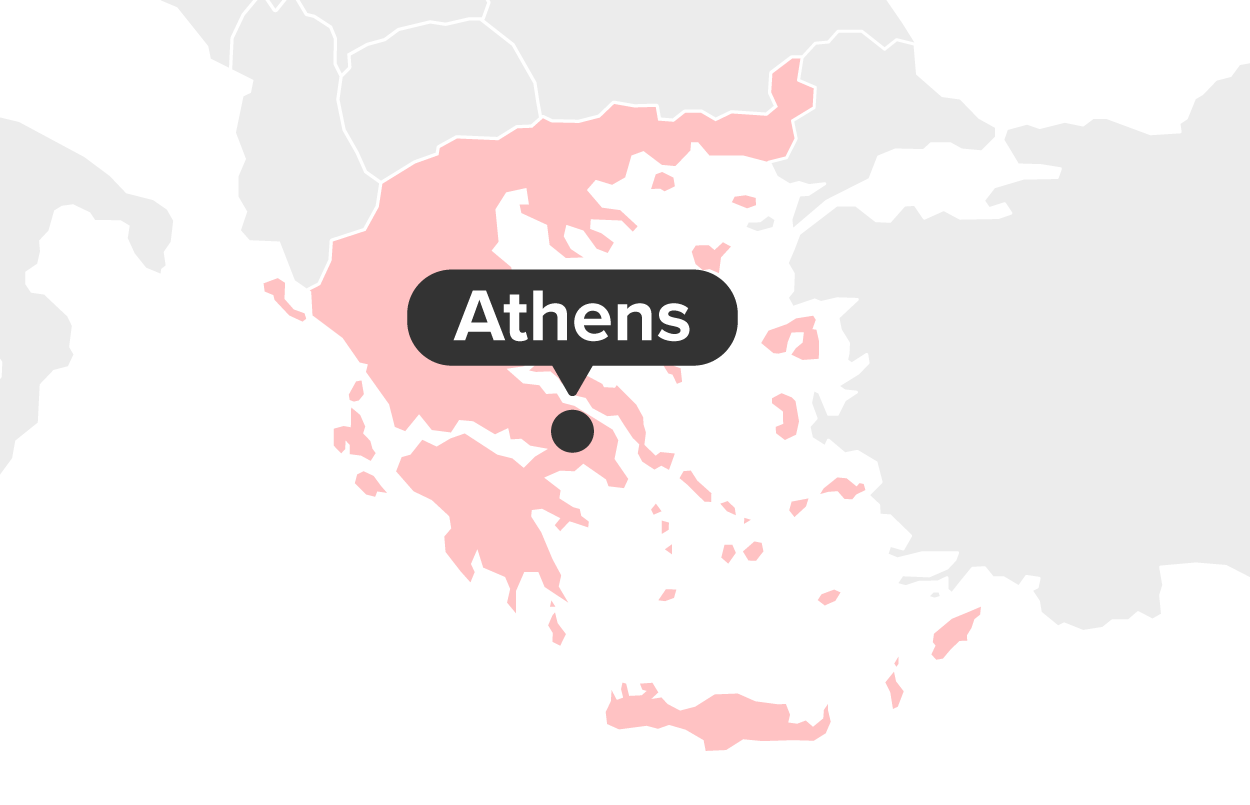
Periclean Greece refers to the years from 461 to 429 BCE, during which Pericles ruled the city-state of Athens. This is also known as the Golden Age of Athens.
IN CONTEXT
Pericles was a gifted orator and politician, among other things. He is remembered for his efforts to make Athens the most important, influential, and powerful city in ancient Greece. Athens grew to become not only a powerful city-state in terms of military, but Pericles’s leadership also made it the most powerful politically and aesthetically.
Part of his political strategy was to restructure the democratic system in Athens. The idea of democracy existed before Pericles in some form; he didn’t invent it. However, he did refine it into a form that was more representative of the population. Pericles introduced a system of radical democracy, in which people were paid for their public service. This financial incentive—the need to earn money—brought in people who would otherwise not have been involved in politics.
Militarily, Pericles built up the Athenian navy into the most formidable navy of the time. He used this leverage to sell protection to other city-states.
He was also responsible for the rebuilding of the Acropolis, which had been damaged during the Greco-Persian Wars, and constructing the Parthenon, which is the focus of this lesson.
The Parthenon is a religious temple built to honor the patron deity and namesake of Athens, the goddess Athena. It may not look all that impressive today due to 2,500 years of environmental abuse, but in its time, it was a true marvel. It represents the epitome of classical Greek architecture.
Its construction began in 448 BCE and ended in 432 BCE. Architects Iktinos and Kallikrates were responsible for its design and supervising its construction.
Below is a picture of the Parthenon.
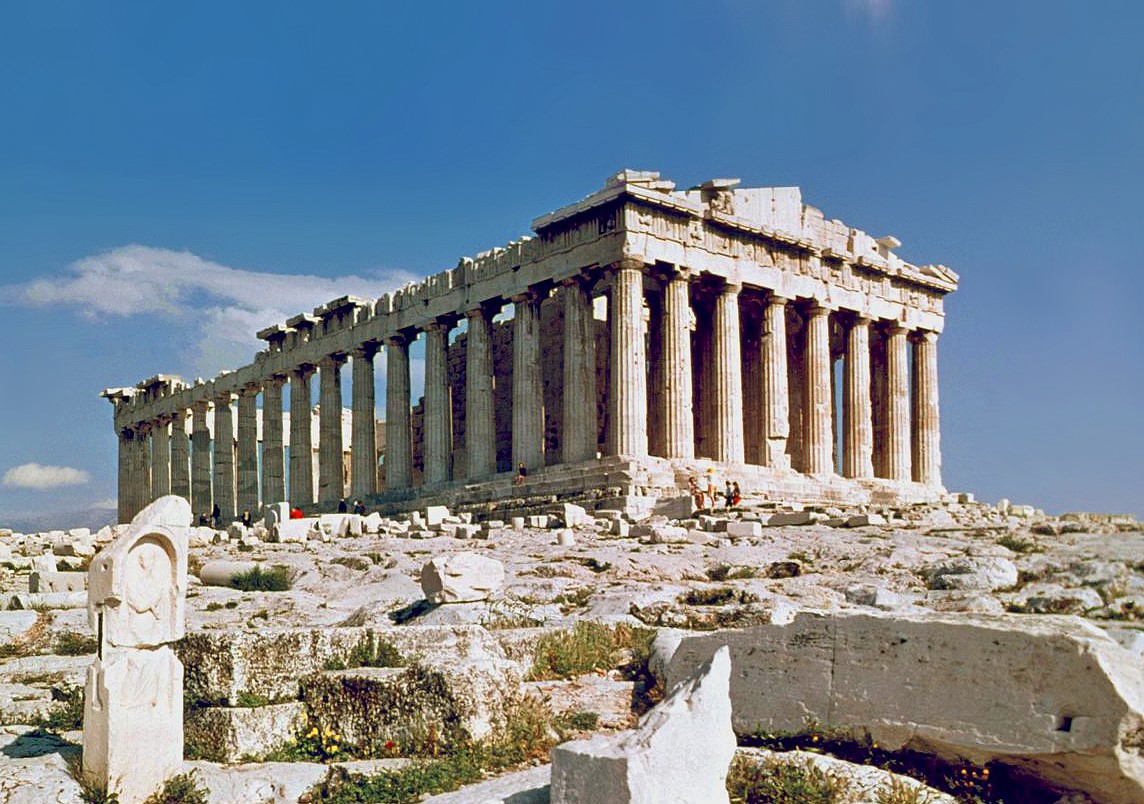
The Parthenon
Athens, Greece
447 - 432 BCE
Pentelic Marble
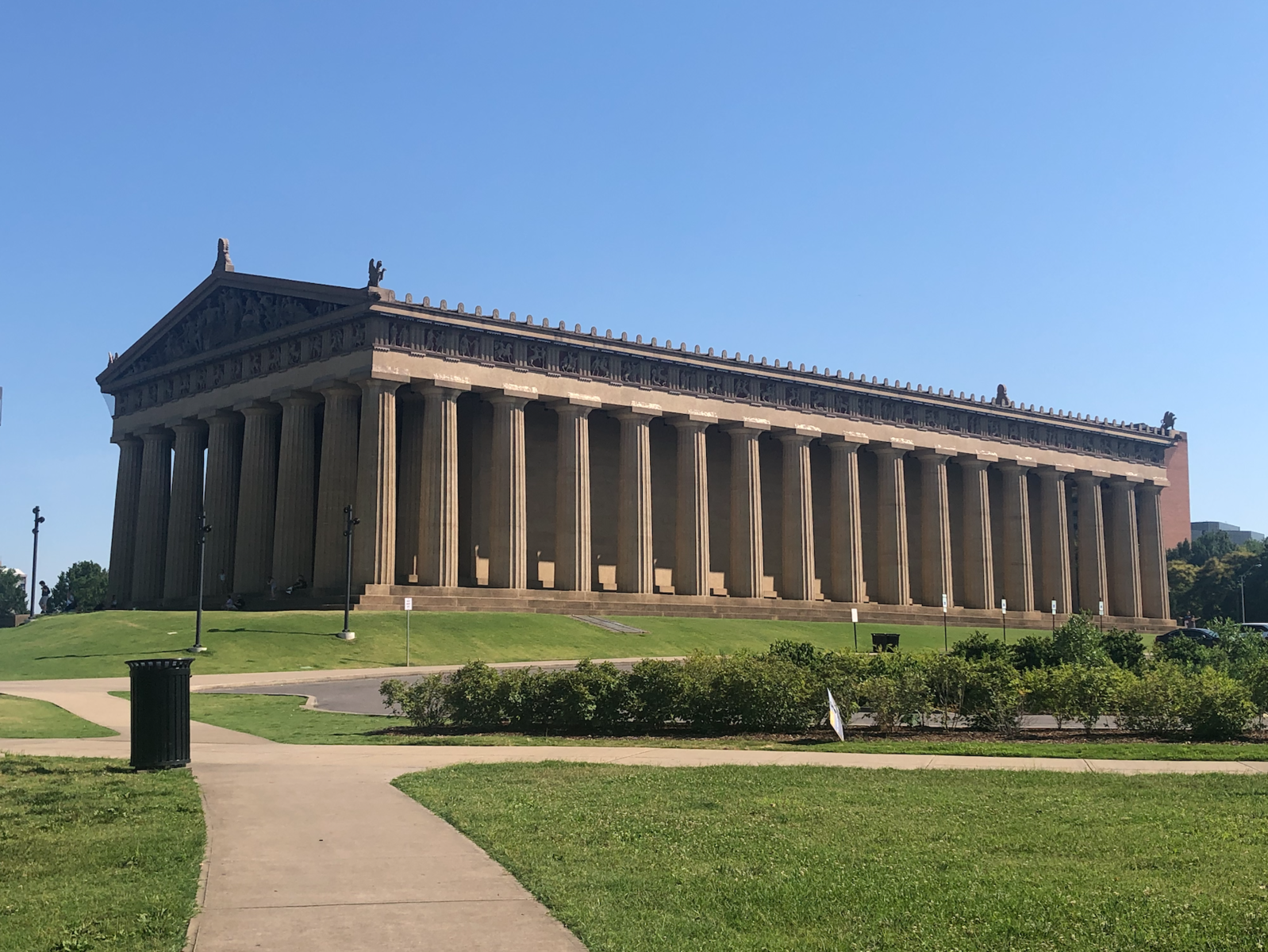
There is an exact, or almost exact, replica of the Parthenon in Nashville, Tennessee:
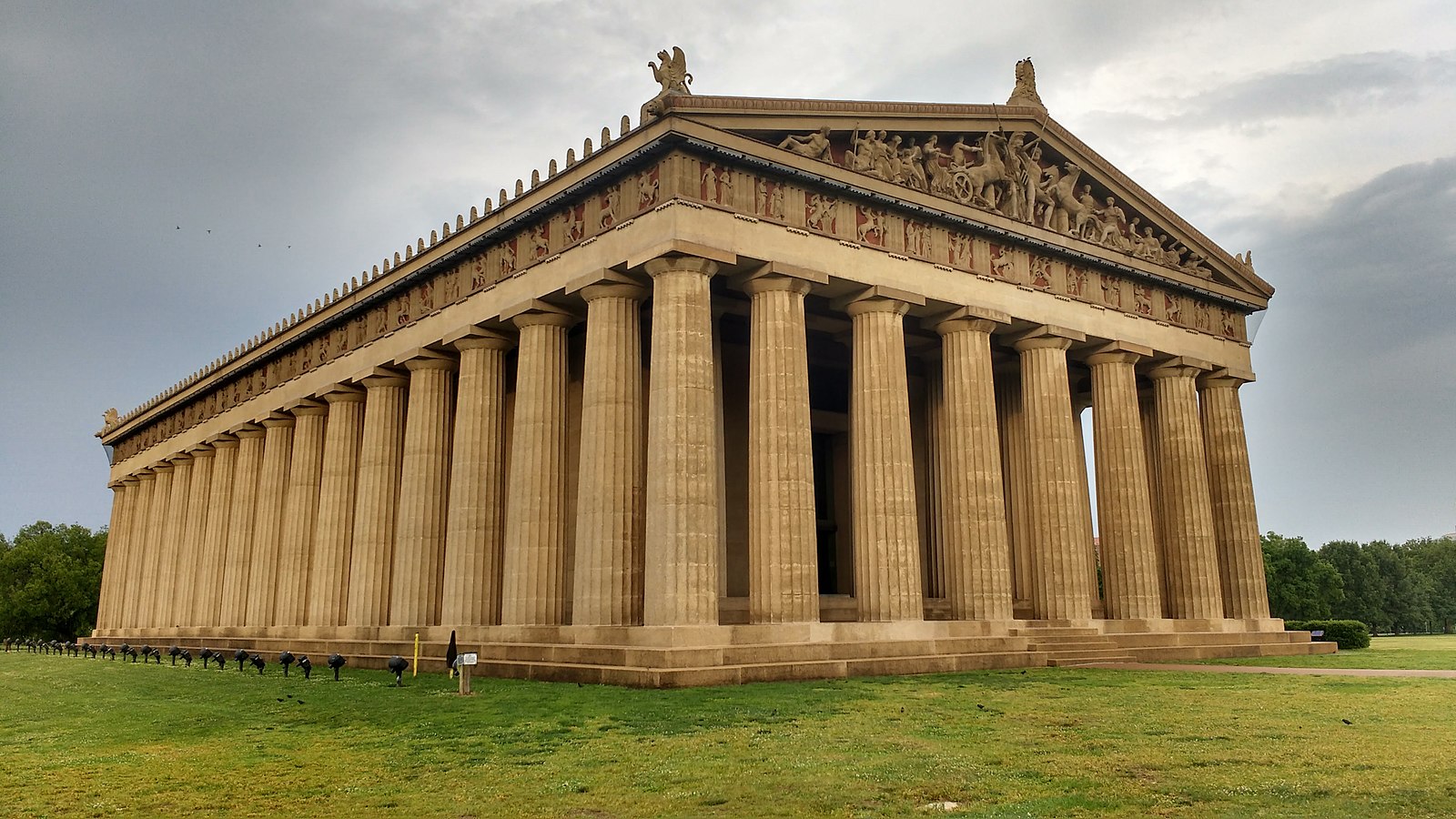
The Parthenon
Nashville, Tennessee
1897 CE
Plaster, wood, and brick
In its day, the original Parthenon would have had painted friezes and artwork adorning the upper sections. It’s constructed almost entirely in the Doric order, with a series of Doric-style columns providing the means of support.
The Parthenon is probably the best example of the Grecian use of entasis, or bulging, in the design of the columns. This bulging gives an impression of a great amount of weight on top of the columns, and suggests an almost organic quality to them, as if they’re buckling under the weight.
The Parthenon was intended to be visually perfect rather than mathematically perfect, according to Roman architect Vitruvius. Attention to detail and consideration of the viewer is what makes the Parthenon such an amazing example of ancient architecture.
Vitruvius said that the Greeks were aware that long horizontal lines can appear to sag in the middle. The architects designed these sections of the building to ever-so-slightly arch upwards to compensate for this effect.
The spacing between the columns isn’t uniform, either. If you look closely at images of the Parthenon, you might see how the columns in the front corner are slightly closer together than along the front entrance. This was another compensation that, ironically, gives the impression that the columns were evenly spaced.
The Parthenon was constructed primarily in the Doric order, but the interior treasury is one place where it’s actually supported by Ionic columns. Some scholars have suggested that this had a political motivation as a way of uniting design elements from west and east. The Doric order evolved in Greece, which became modern-day Greece, whereas the Ionic column and the Ionic order developed in Ionia, which is in modern-day Turkey.
Below is an aerial diagram of the interior of the Parthenon:
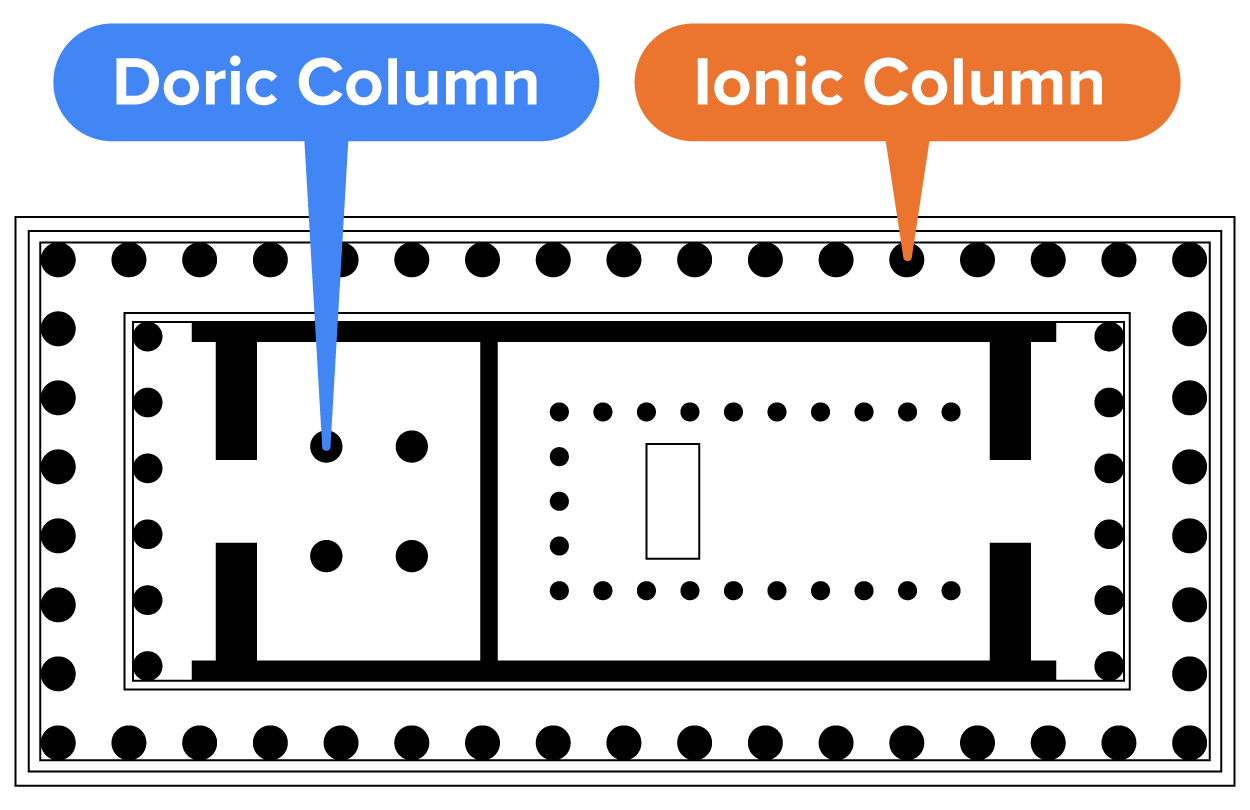
The interior of the Parthenon would have included a treasury, a statue of Athena, and solid interior walls.
Notice in the image below, the highlighted repeated use of the rectangle, which was a key design element in the Parthenon. You can see how the rectangles are inlaid within one another in this image:
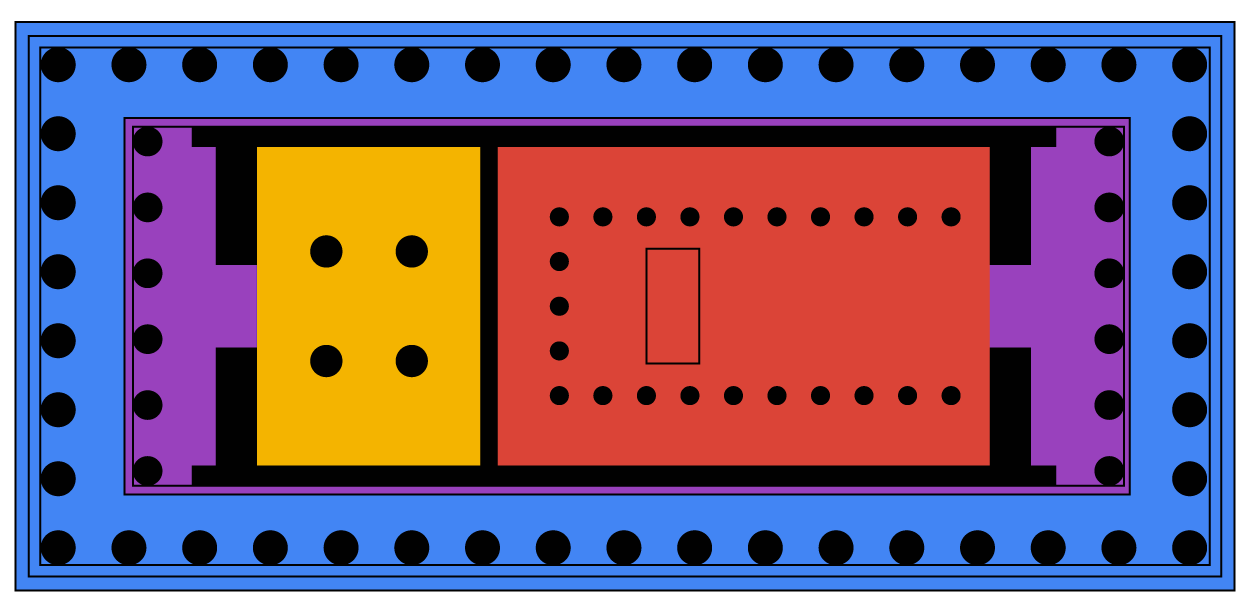
The Parthenon was not just a marvel of architecture but was adorned with an abundance of sculpture that comprised the sculptural program of the Parthenon. The program consisted of the visual account of mythical stories related to Greece and Athens.
Originally, the metopes would have lined the Doric frieze pictured below.
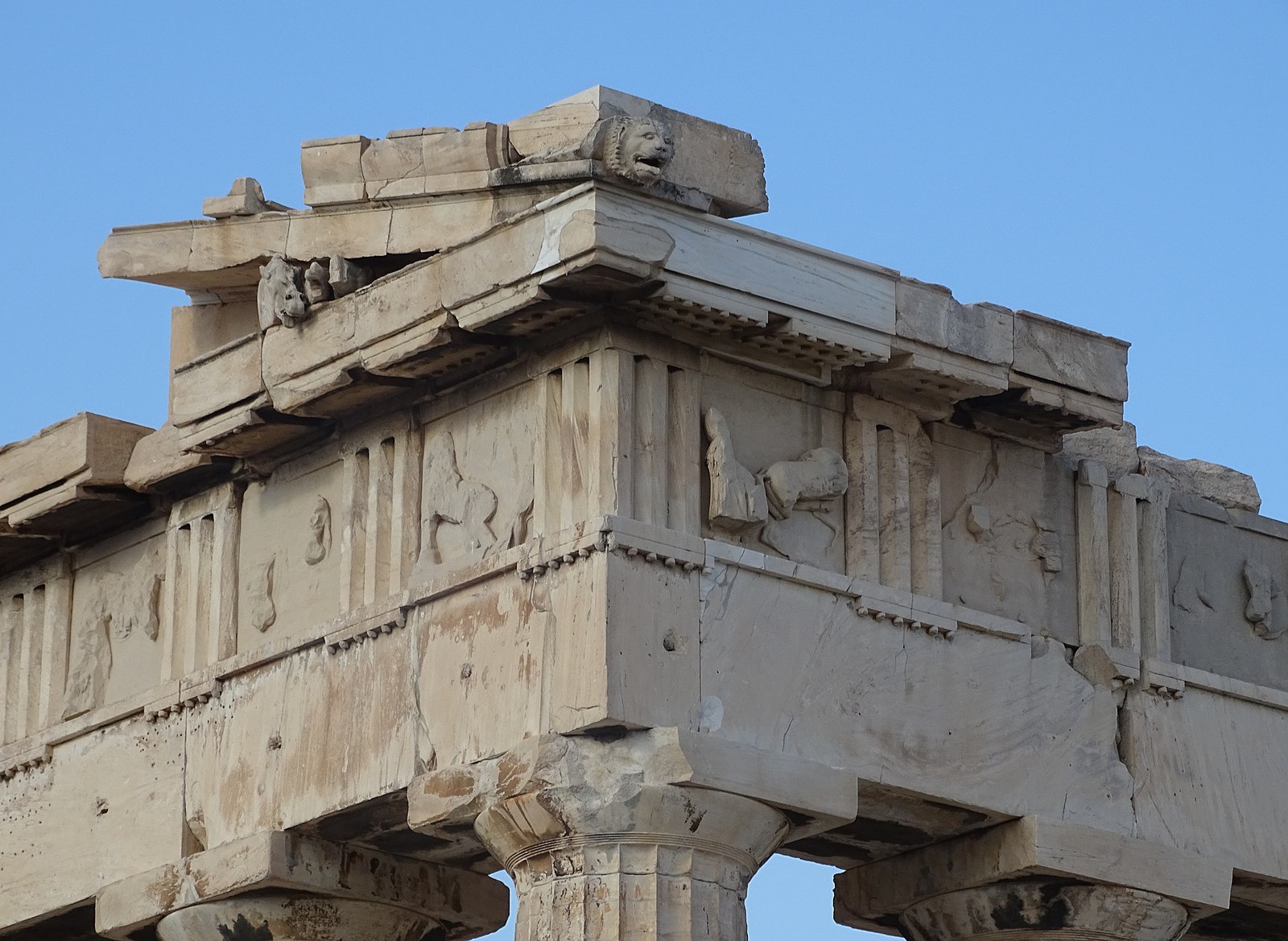
North metope 1 from the Parthenon
Athens, Greece
445-440 BCE
Pentelic Marble
Each side referenced a different story. The western metope was about the Amazons battling the Athenians. It has been suggested that all the metopes are representations of the civility and superiority of Greece over the barbarism in the rest of the world.
Below is an original sculpture from the southern metope of the Parthenon, from the mythical story about a battle between the centaurs and the Lapiths. The centaurs had been invited to a wedding, where they got drunk and attempted to abduct the bride. The Lapiths responded by fighting the centaurs and defeating them:
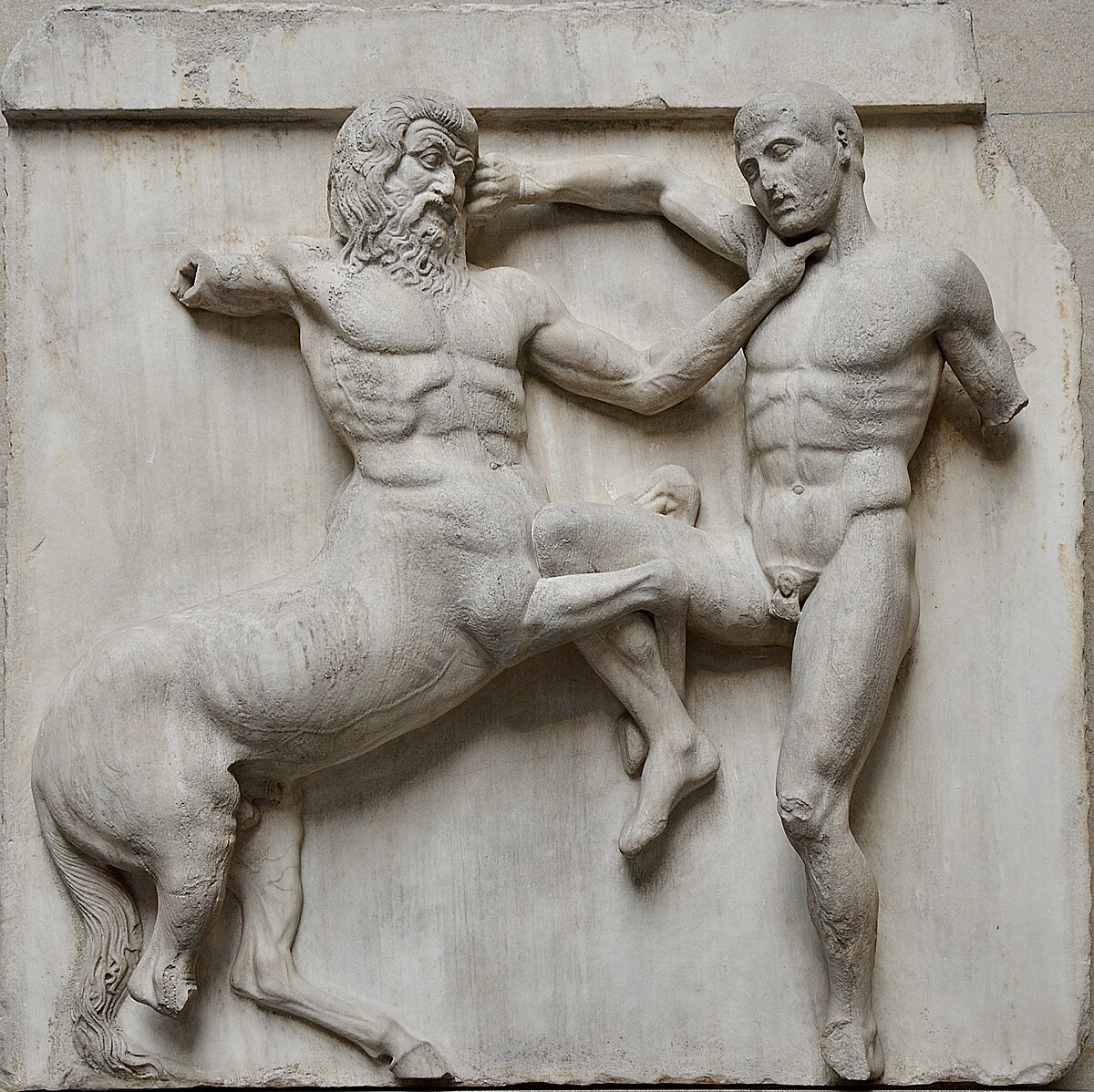
South metope XXXI (Centaurs and Lapiths) from the Parthenon
Athens, Greece
447-438 BCE
Pentelic Marble
The Parthenon pediment sculptures are heavily damaged today, but in their time, they would have clearly shown two different stories related to Athena and the founding of the city. The west pediment, which is not shown, depicts the contest between Poseidon and Athena to determine who would become the patron deity of Athens.
The east pediment, shown below, depicts the birth of Athena, who burst forth from Zeus’s forehead fully formed and clad in armor.
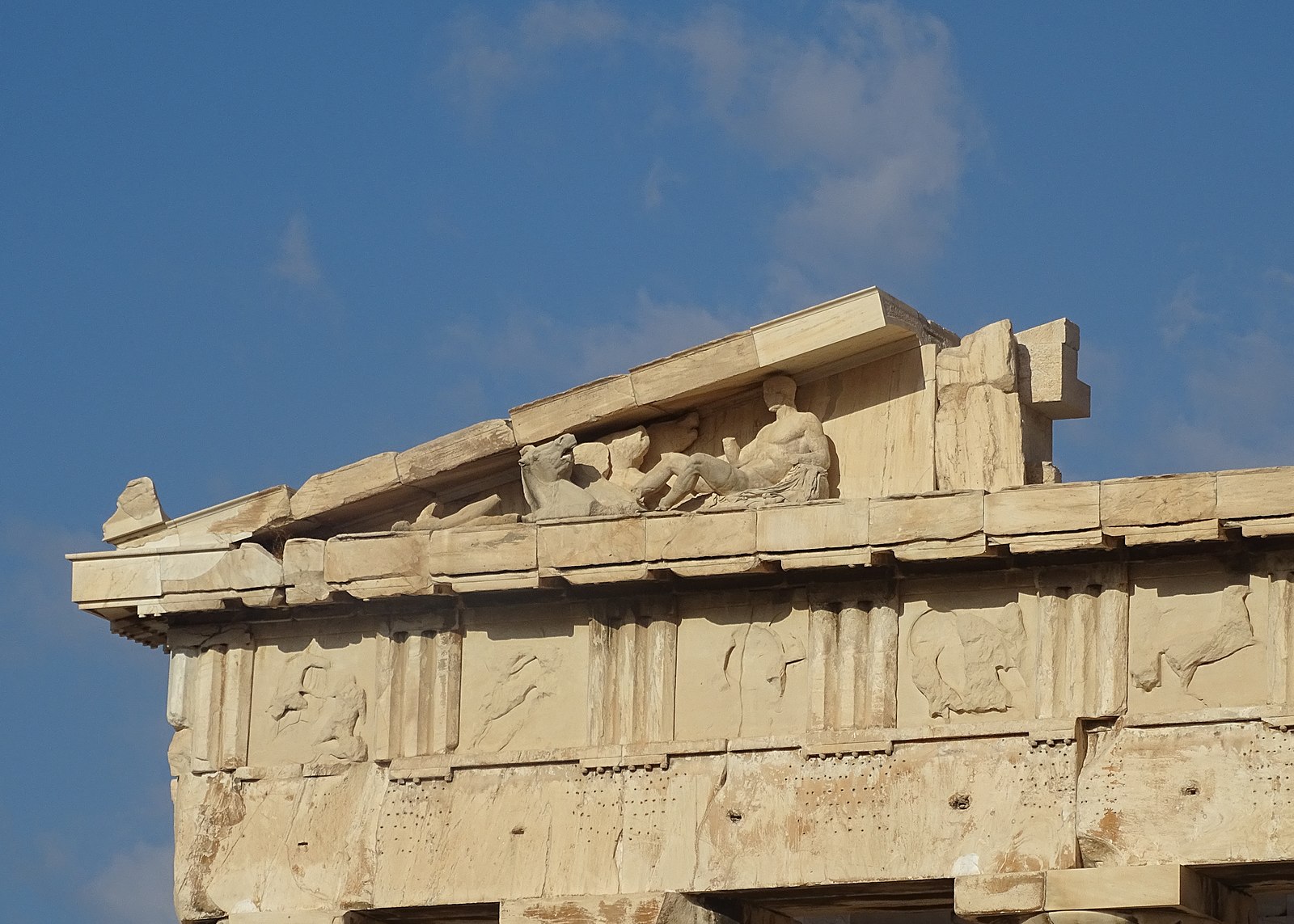
East pediment (Birth of Athena) from the Parthenon
Athens, Greece
437-432 BCE
Pentelic Marble
Take a look at the part that is sticking out. That is a horse head, which would have been one of the horses of the deity Helios rising from the bottom of the pediment. As you can see, it’s highly damaged today.
The reclining figure is possibly Heracles. You might be familiar with his Roman equivalent, Hercules or Dionysus. They are the same character.
There is also a scene represented on an Ionic frieze along the inside of the temple that depicts the Panathenaic procession. The Panathenaic procession sculpture is a sculpture on the frieze of the Parthenon, celebrating a festival honoring Athena and involving the ritual of bringing a new peplos, or cloak, to the statue of Athena, as shown below.
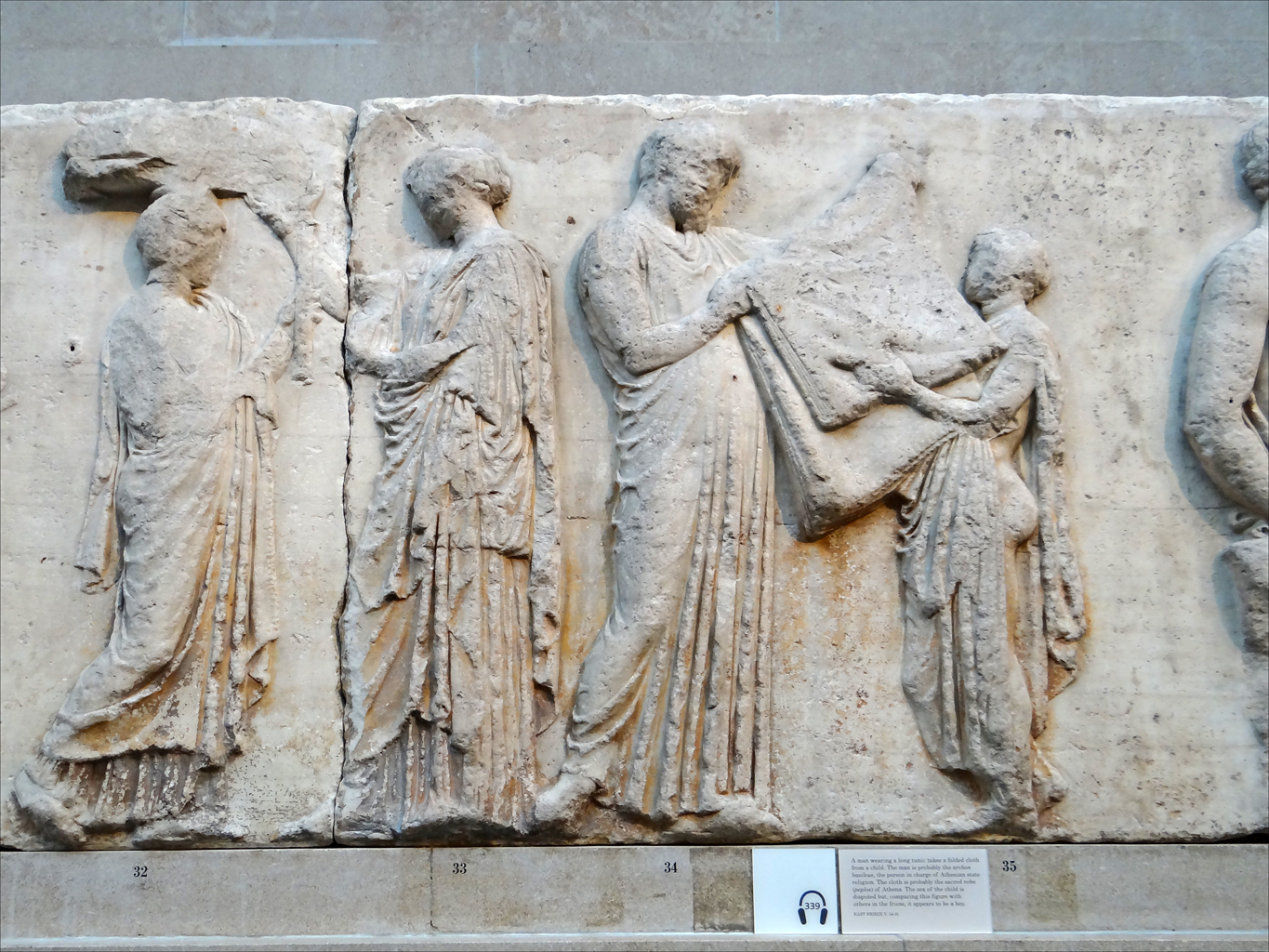
Peplos scene from the Panathenaea (Parthenon) frieze
Athens, Greece
449-440 BCE
Pentelic Marble
Also in the Parthenon are pediment sculptures, which are examples of Phidian wet drapery, which is a type of drapery first used by the sculptor Phidias, that clings to the human figure and appears to be wet. It was not a convention in Greek art to show the female nude, so there was a sensuality that emerged in these images of Greek goddesses where the drapery appears wet and clings to the body and gives it this really dynamic quality that wouldn't be there otherwise.
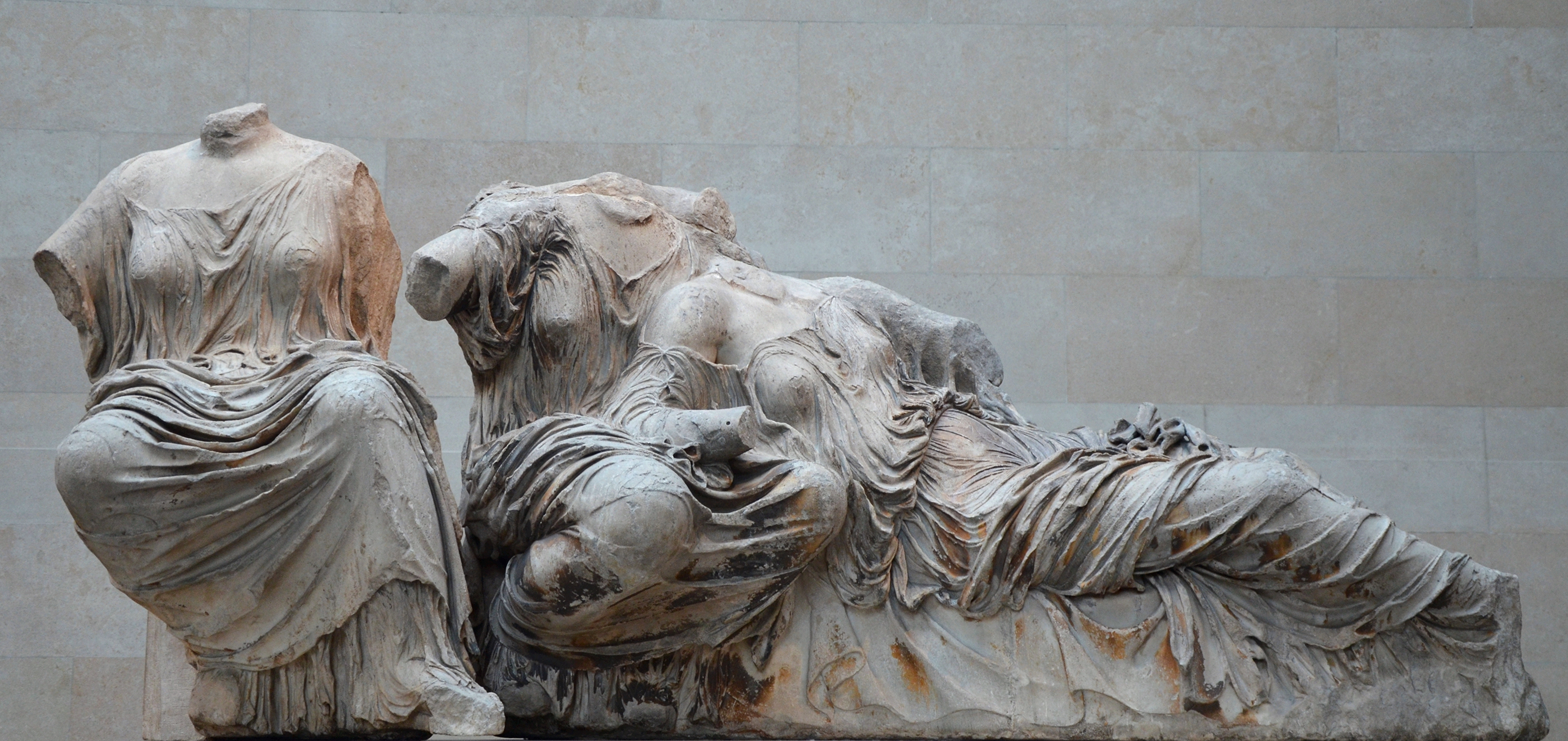
East pediment (statues depicting three goddesses), from the Parthenon
Athens, Greece
437-432 BCE
Pentelic Marble
Finally, this last image is a recreation of the original chryselephantine statue located within the Parthenon. It is made from ivory and gold. The original, like this recreation, would have been about 40 feet tall. This is one of the largest sculptures of its type in the world.
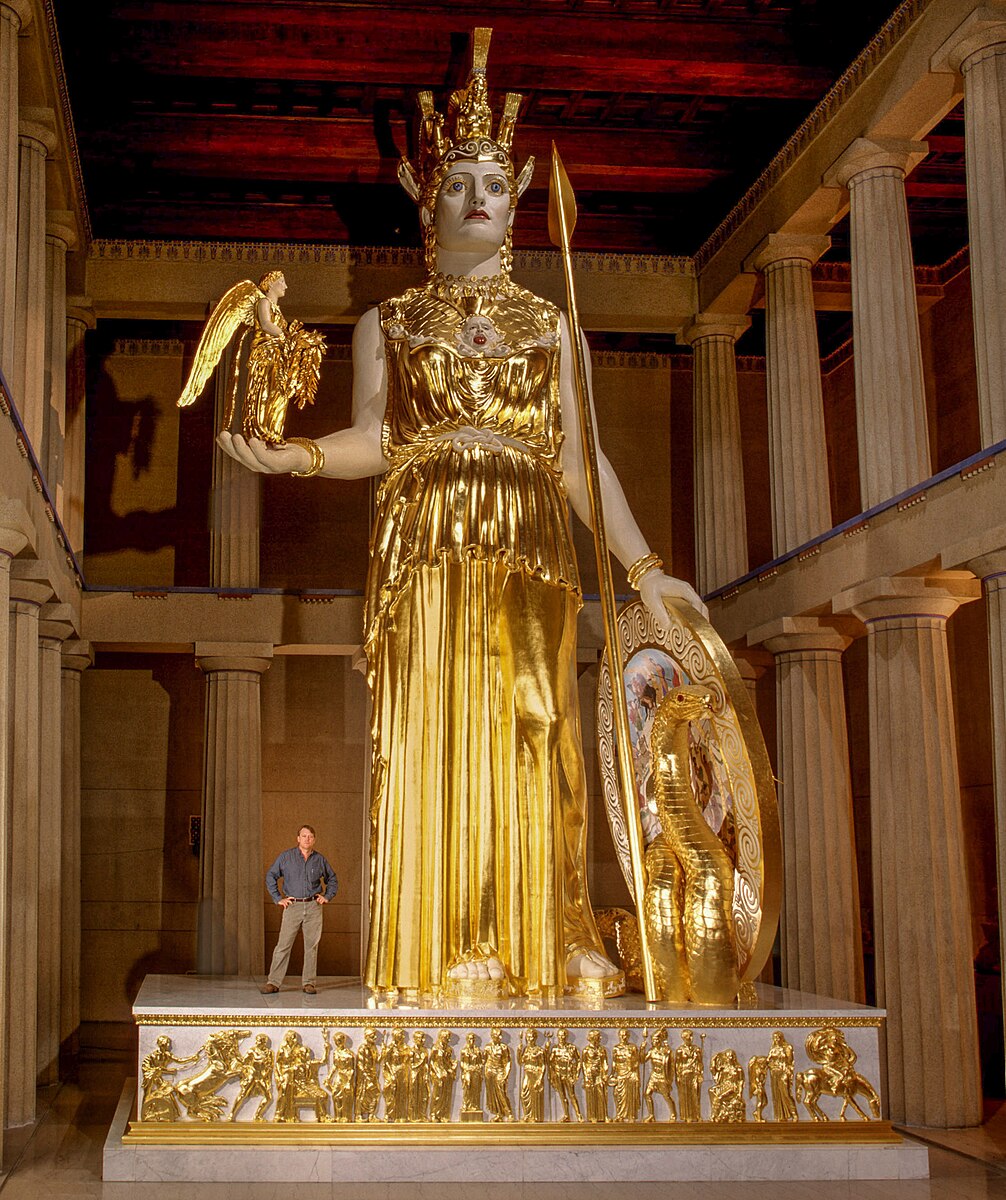
Athena Parthenos (Full-scale replica of 448-432 BCE original)
Parthenon, Nashville, Tennessee
1982 - 1990 CE
Chryselephantine
Source: THIS TUTORIAL WAS AUTHORED BY SOPHIA LEARNING. PLEASE SEE OUR TERMS OF USE.