Table of Contents |
The art and architecture from today dates from the 6th to the 10th centuries CE. This lesson will explore temple architecture and sculpture from two locations in India, Deogarh and Khajuraho.
Hinduism is an extremely old (roughly 4,000 years old) system of beliefs. It is essentially considered a polytheistic religion that includes the worship of many variations or manifestations of many different deities. These many manifestations and many forms of deities appear to be simultaneously faces of a single god while retaining the individual characteristics of multiple gods.
This idea of multiple perspectives is fundamental to Hinduism, as it helps explain how Hinduism appears to weave between polytheism and monotheism.
Hindu temples were considered a god’s home on earth. The layout of many Hindu temples is based on the concept of a mandala, or a cosmic diagram. The garbhagriha, or womb room, where the statue of the deity is housed, is positioned over the mandala. This, along with the sculptures located on the exterior of the temple, provides spiritual protection for the image of the deity. The mountain shape shikhara, referring to the peak of a mountain, is typical of northern-style temples.
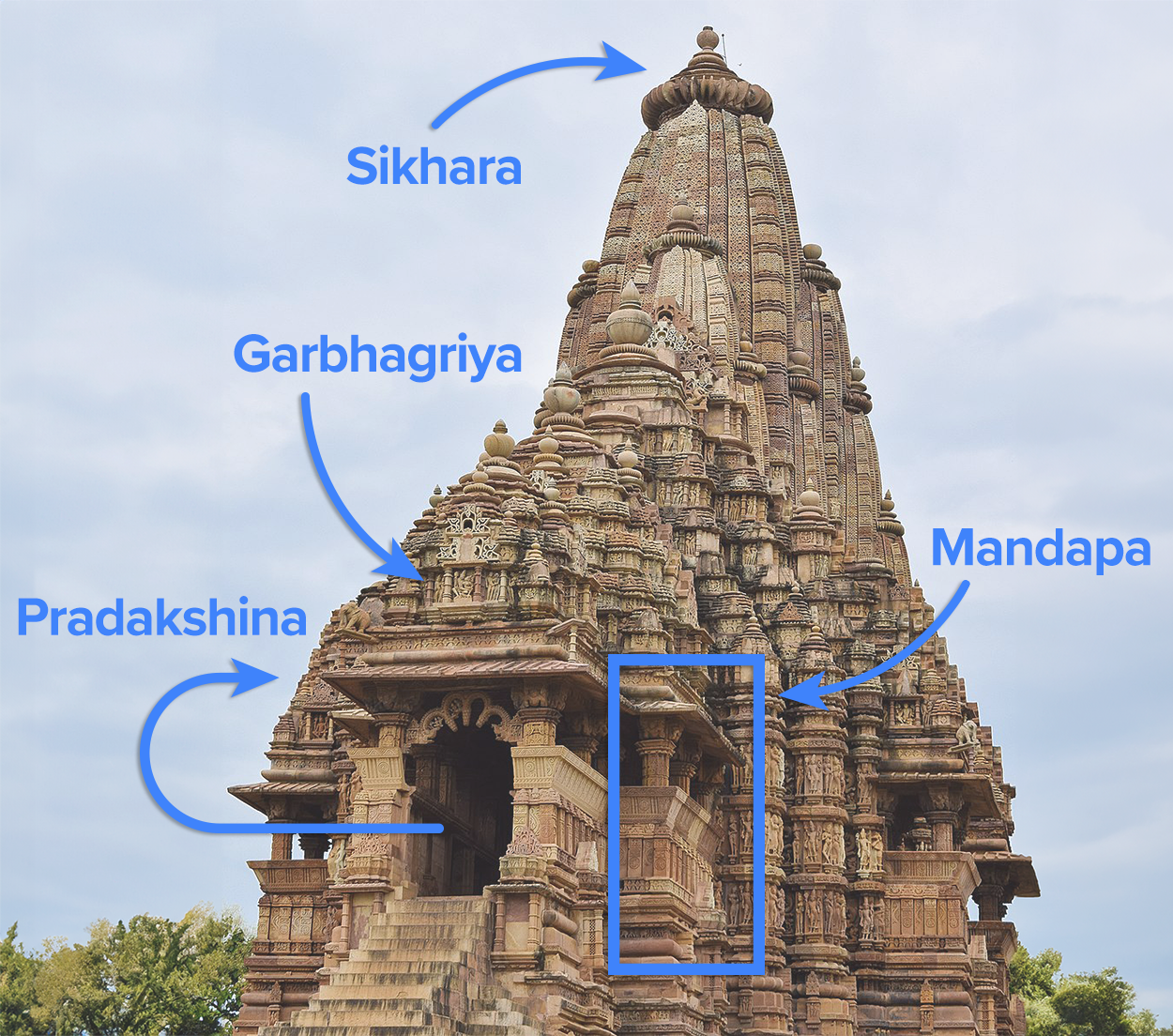
Ordinary worshippers stand near the entrance and mandapa, which is a public gathering place. The most sacred inner chamber, the garbhagriha, is essentially a “womb room” where the deities, idols, or icons are located. These rooms are usually only accessible by high priests, or brahman. Certain temples focus on bhakti, or loving devotion to the deity. At these temples, devotees provide service to the deity, leaving offerings of food, flowers, clothing, incense, or praying. The goal of these actions is also known as darshan, or making eye contact with the deity.
The Dashavatara Temple is an old structure with construction dating from the 5th to 6th centuries. It is an example of a Gupta-style Hindu temple. It’s rectangular with a tower that originally would have been about 40 feet tall. Even though the building is rather simple in its design, it’s decorated with elaborate sculptural reliefs, in particular, the sculptural guardians that protect the entrance.
Below is an image of the Dashavatara temple from Deogarh.
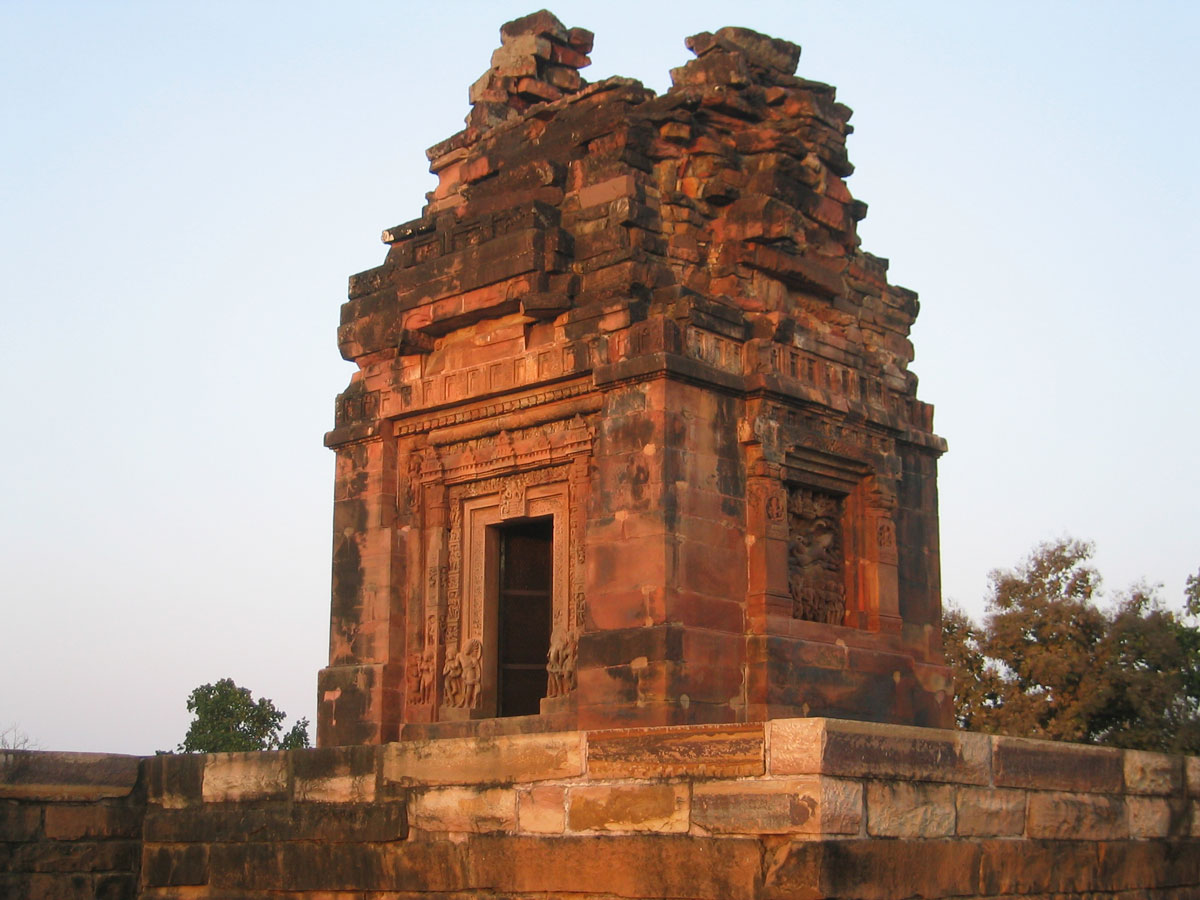
Dashavatara Temple
Deogarh, Uttar Pradesh, India
500 CE
Stone and masonry brick
This temple is dedicated to ten avatars of Vishnu, some of which are depicted in sculptures on the exterior. The sculpture that was originally housed in the temple interior has been lost.
The Kandariya Mahadeva Temple complex is one of a group of Hindu and Jain temples at Khajuraho, India. Originally, there were around 85 temples here, of which 25 have survived.
Below is an outer view of the Kandariya Mahadeva temple complex.
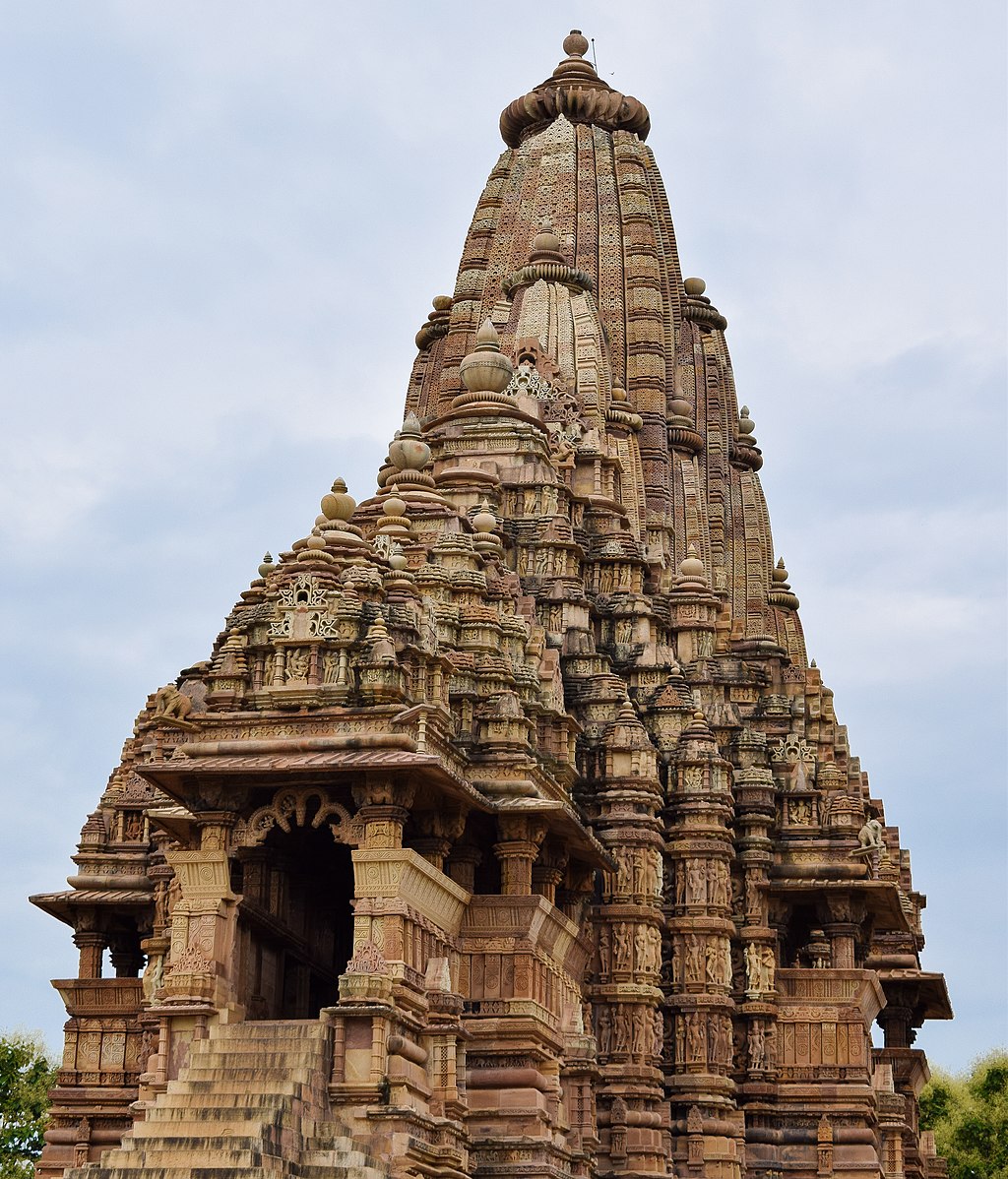
Kandariya Mahadeva Temple
Khajuraho, Madhya Pradesh, India
c. 1025-1050 CE
Sandstone
This is an example of the northern style of temple design in India and is made of sandstone. The progressive dome shapes that culminate with the large shikhara, which is the mountain-shaped roof, are the most distinguishing features of the northern-style temple.
The Himalayan mountain range in the north of India was believed to be the home of Shiva, another principal deity. The temple design was symbolic of the gradual assent from foothill to the highest mountaintop in the Himalayas. In the interior, a garbhagriha under the shikhara contains the image of Shiva.
The temples at this complex are notable for the elaborate, vibrant, and erotic sculptural reliefs adorning the exterior.
The below images, from the north side of the temple, are called the maithuna reliefs, which is a Sanskrit term related to sexual union. The idea is that these sculptures are auspicious since they are associated with fertility and creation, and that they bring positive energy and protection to the temple, particularly at the locations that are considered “weak,” such as where the mandapa and the garbhagriha meet.
Here’s an image of some of the exterior sculpture at Kandariya Mahadeva:
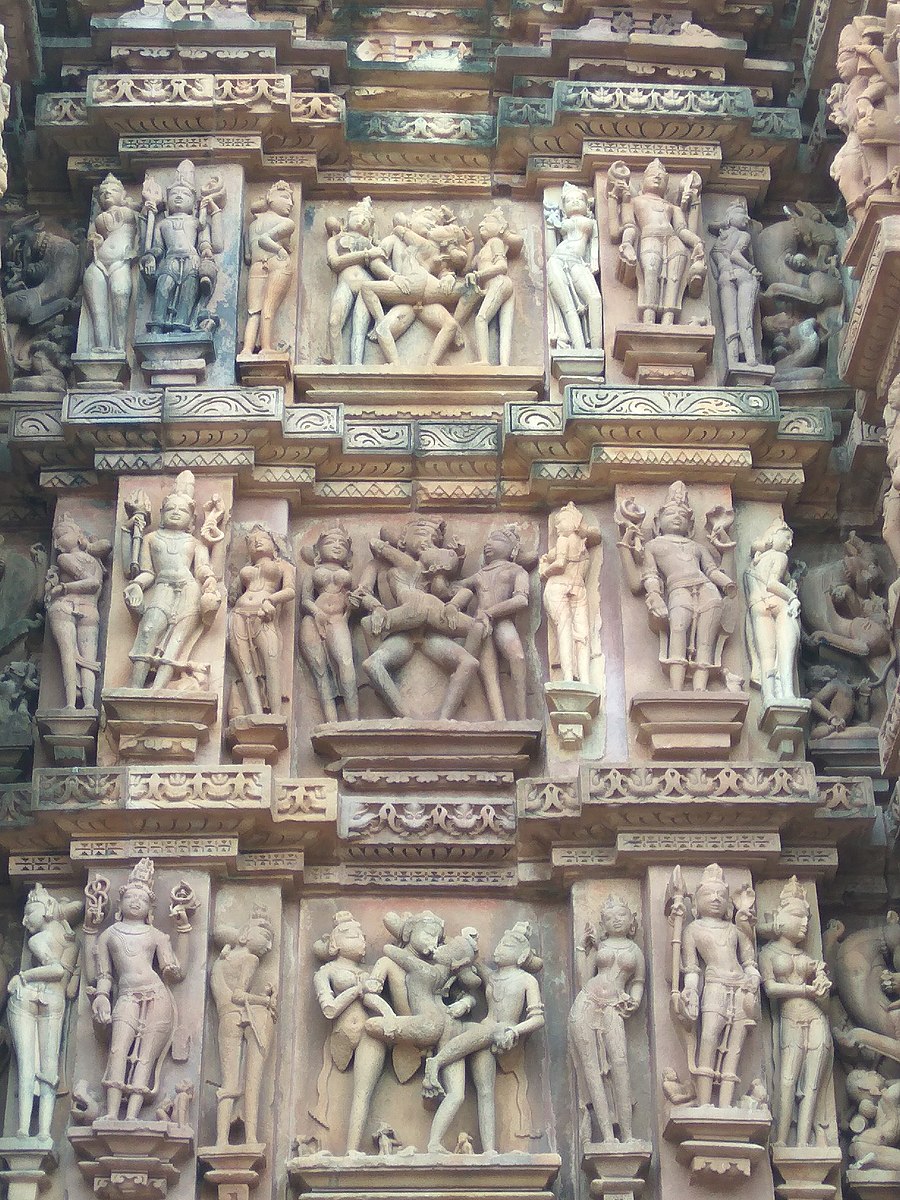
Exterior sculpture from the Kandariya Mahadeva Temple
Khajuraho, Madhya Pradesh, India
c. 1025-1050 CE
Sandstone
And here is an image from another temple at Khajuraho, called the Visvanatha Temple:
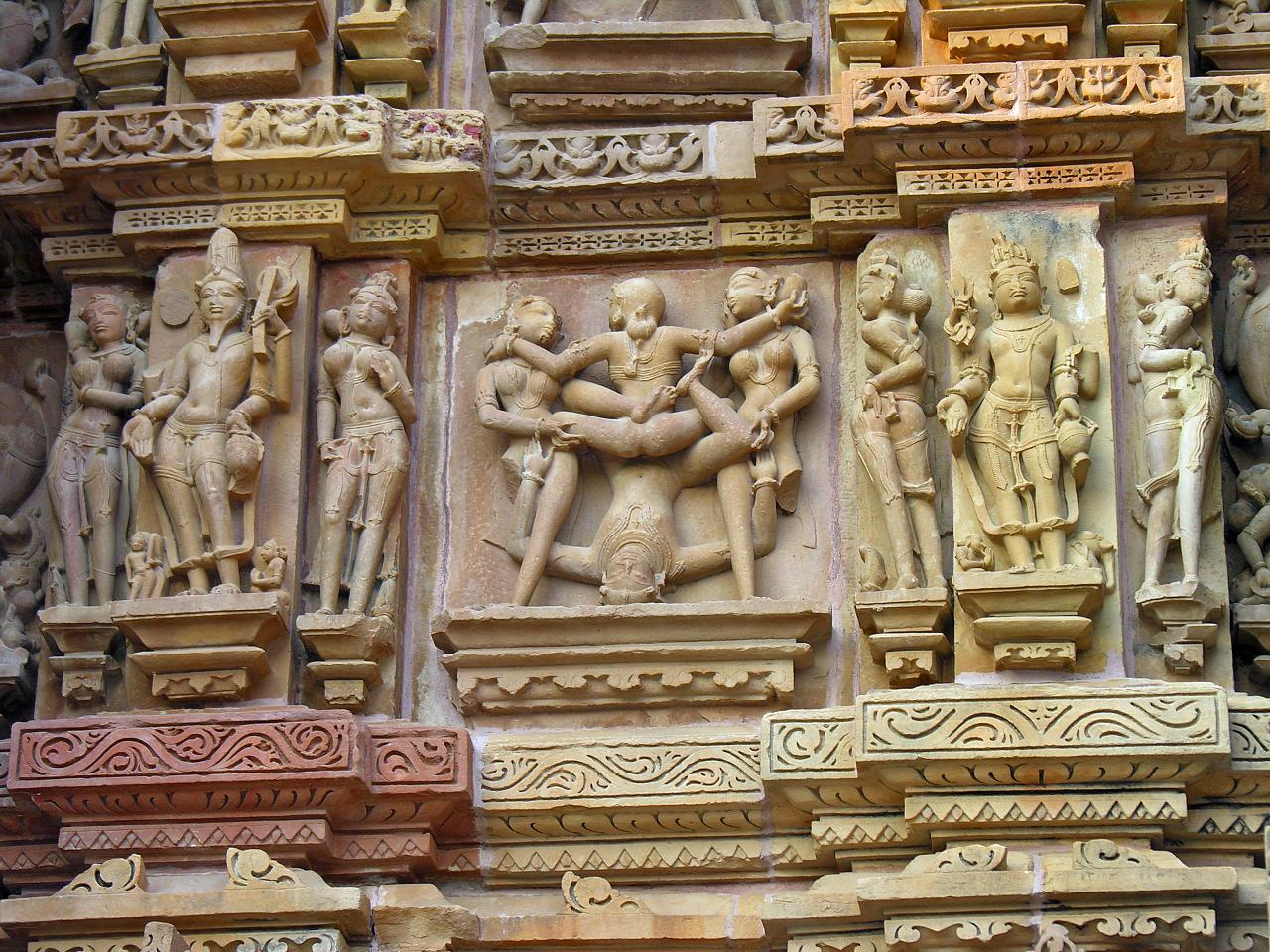
Exterior sculpture from the Visvanatha Temple
Khajuraho, Madhya Pradesh, India
c. 999 CE or 1002 CE
Sandstone
The sculpture below is intended to be portable and is considered a physical embodiment of the deity, not just a sacred image. Smaller, portable images of deities are often taken out of the temple on special occasions, draped with wreaths of flowers and robes, and carried on platforms during processions. These sculptures are treated as the actual deity and cared for like a real person, or a personal god. This personification is intended to encourage the bhakti, or active involvement, on the part of the worshipper. Bhakti was also a common form of worship that has a close association with Hindu temples and distinguishes Hinduism from other religions.
This solid bronze sculpture is called the Shiva Nataraja, which means "lord of the dance."
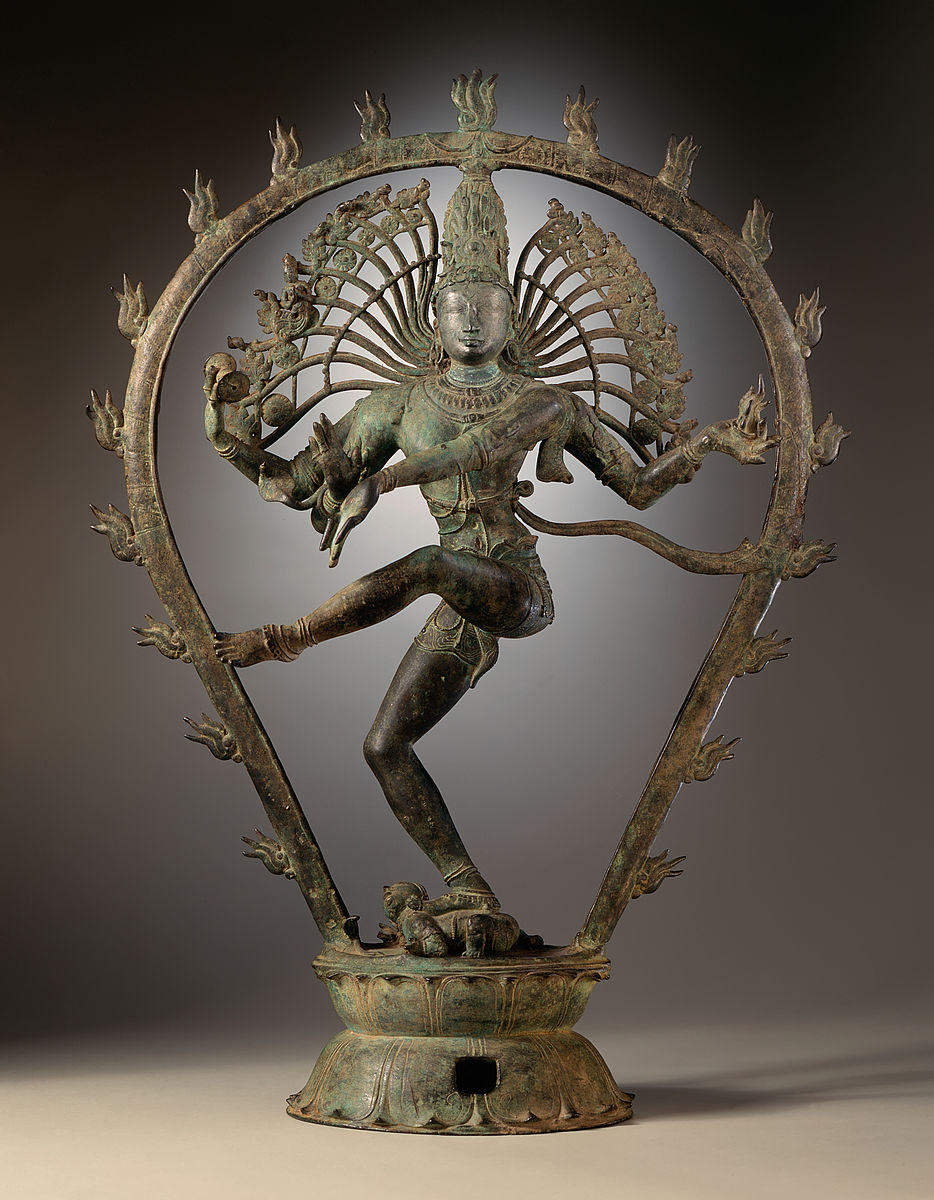
Shiva Nataraja (Lord of the Dance)
Tamil Nadu, India
c. 950 -1000 CE, Chola Dynasty
Copper alloy
This sculpture of Shiva references the idea of time being an endless cycle, with Shiva both destroying and creating it. He is dancing within a flaming halo and trampling a dwarf that represents illusion or ignorance. In one hand he holds the drum that makes the first sounds of creation, and in another, the fire that will destroy it. Yet another of his hands is held in the "do not fear" mudra, suggesting that cycles of creation and destruction should not be feared, and neither should Shiva. He has a tranquil facial expression, but his hair is flying out behind his head.
Source: THIS TUTORIAL WAS AUTHORED BY SOPHIA LEARNING. PLEASE SEE OUR TERMS OF USE.