Table of Contents |
The Great Stupa at Sanchi was originally constructed under the reign of the King Ashoka during the 3rd century BCE. There have been renovations and additions over the centuries, but the first major reconstruction began in the 2nd century BCE, after it was severely damaged. Sanchi, where the stupa is located, is situated roughly in the middle of the Indian subcontinent.
The map below shows the Great Stupa’s location.

Stupas are structures built to hold Buddhist sacred physical objects, or relics. According to tradition, when the Buddha died, his body was cremated and the ashes were used to make nine stupas, including the Great Stupa at Sanchi. Later stupas included the relics of Buddhist monks and nuns.
Below is an image of the Great Stupa at Sanchi that was built to house some of the cremated remains of the Buddha.
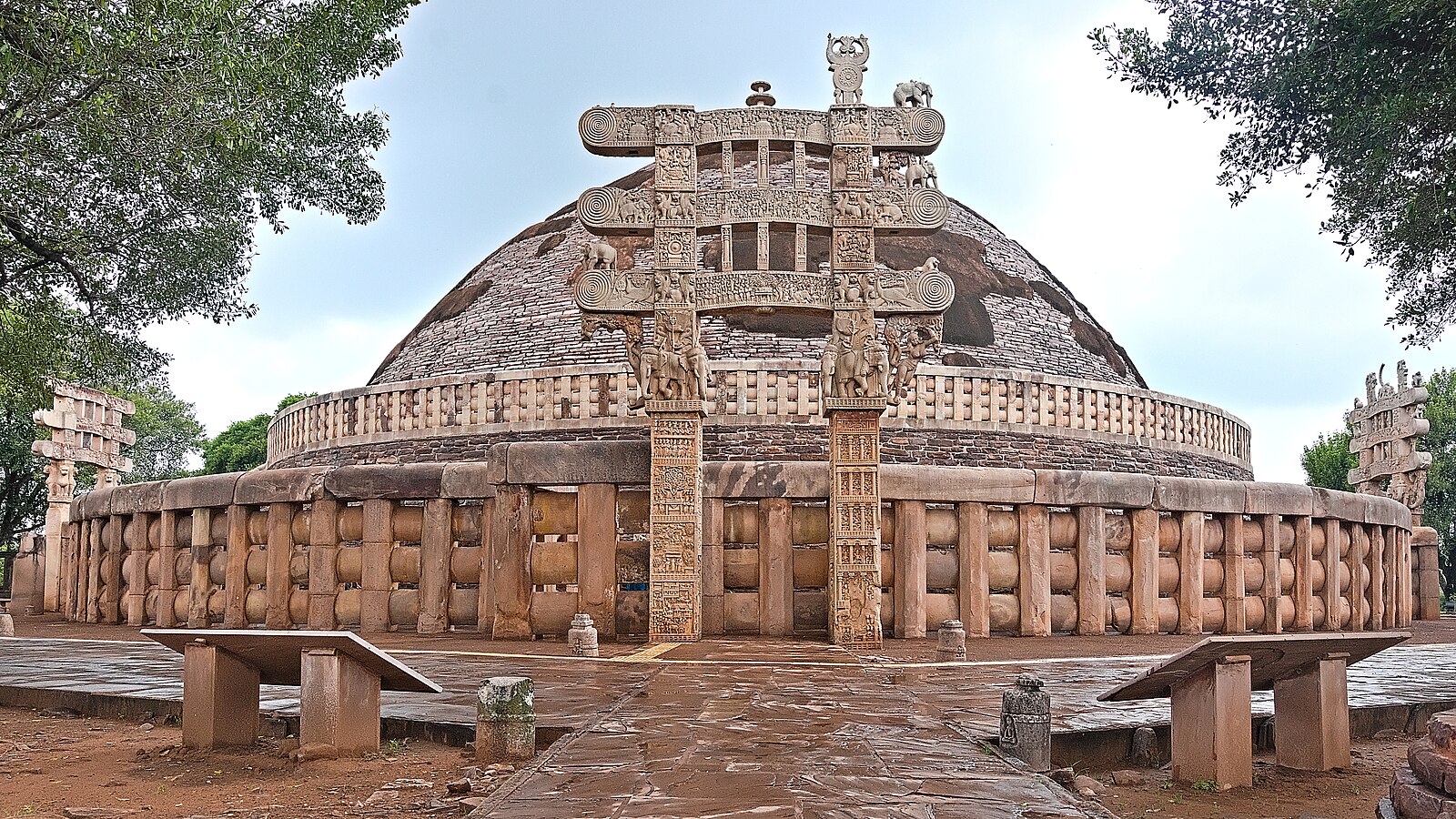
The Great Stupa
Sanchi, Madhya Pradesh, India
3rd century BCE
Dirt burial mound faced with stone
The stupa pictured above is a mound of earth about 50 feet high. It is faced with stone, and the relic is housed within it. Unlike later Christian relics, which were on display, these relics weren't intended for public viewing and are essentially buried within the stupa. The stupa itself functions as a place for meditation.
There are four toranas, or gates, that correspond to the four cardinal directions: north, east, south, and west. The southern gate is the oldest, while the northern gate is the best preserved. Elaborate sculpture depicting stories from the life of the Buddha covers the gates.
Below is a close-up of part of the northern torana, or gate, from the Great Stupa at Sanchi.
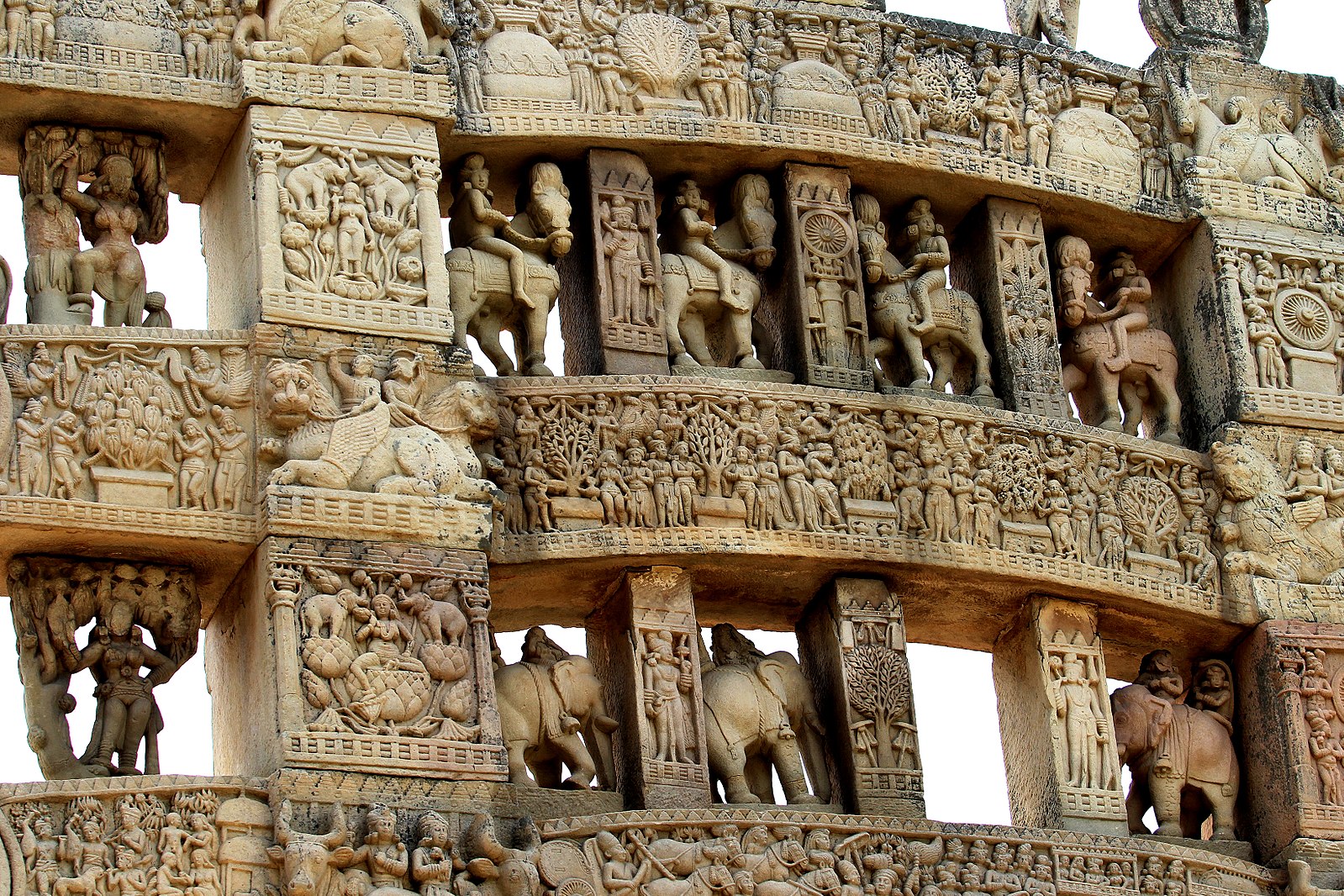
Detail of the Northern Torana of the Great Stupa
Sanchi, Madhya Pradesh, India
3rd century BCE
Stone
The wheel was a form of symbolism used to represent the Buddha, rather than a physical likeness. Take a look at the above image one more time. Can you see the wheels in the artwork?
The next image is an exterior view of the Great Stupa at Sanchi. Here you can clearly see the dome and some scaffolding. This structure is most likely a renovation project.
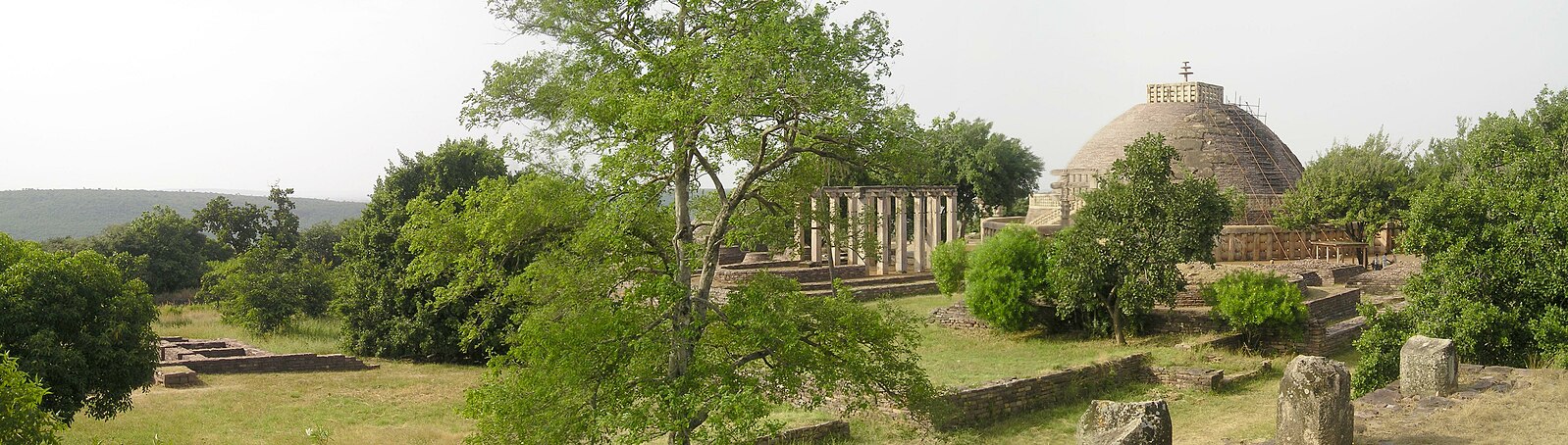
Here’s an even better picture of the stone face of the dome, as well as one of the toranas forming the exterior stone wall:
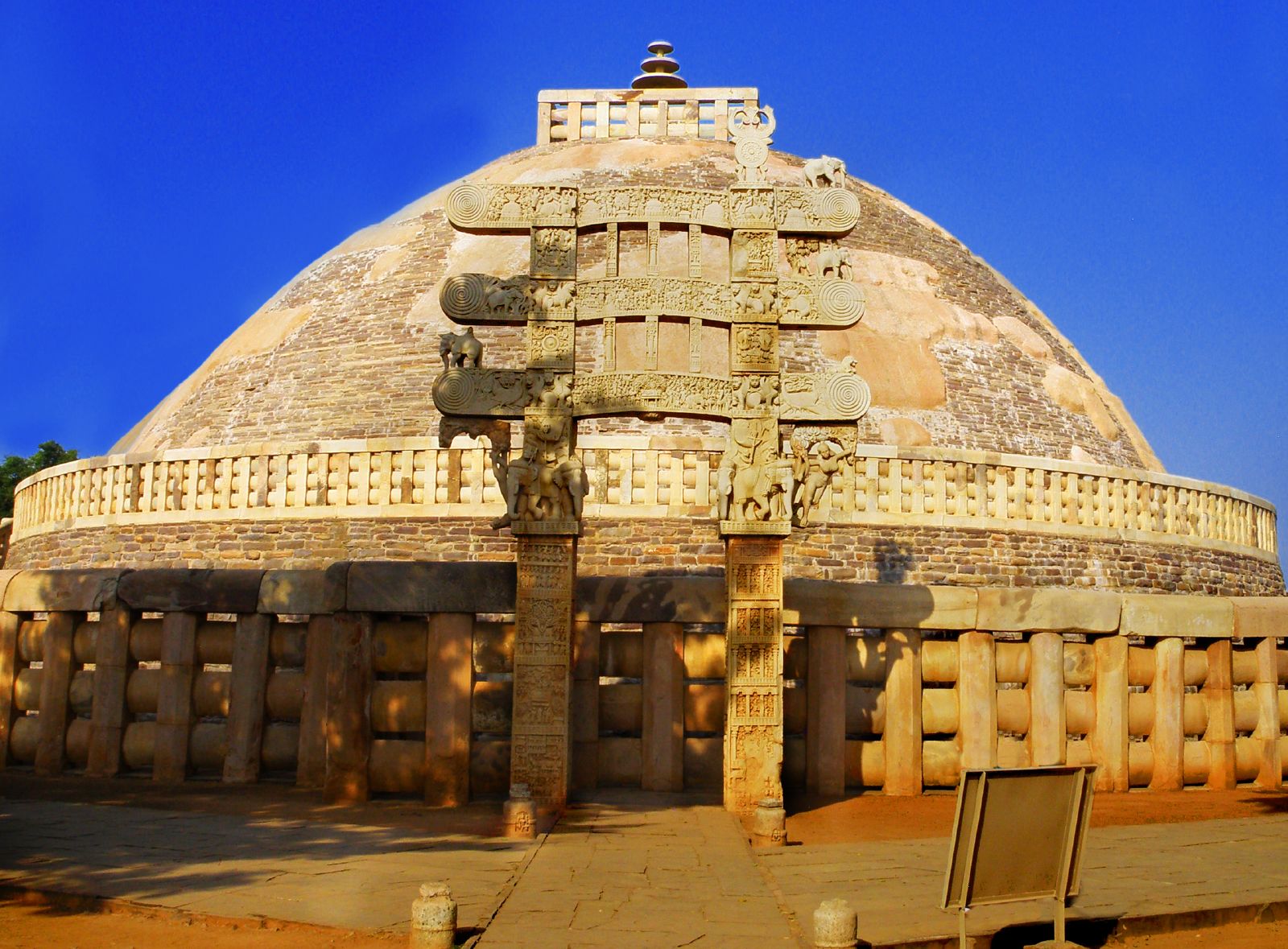
Dome of the Great Stupa
Sanchi, Madhya Pradesh, India
3rd century BCE
Stone
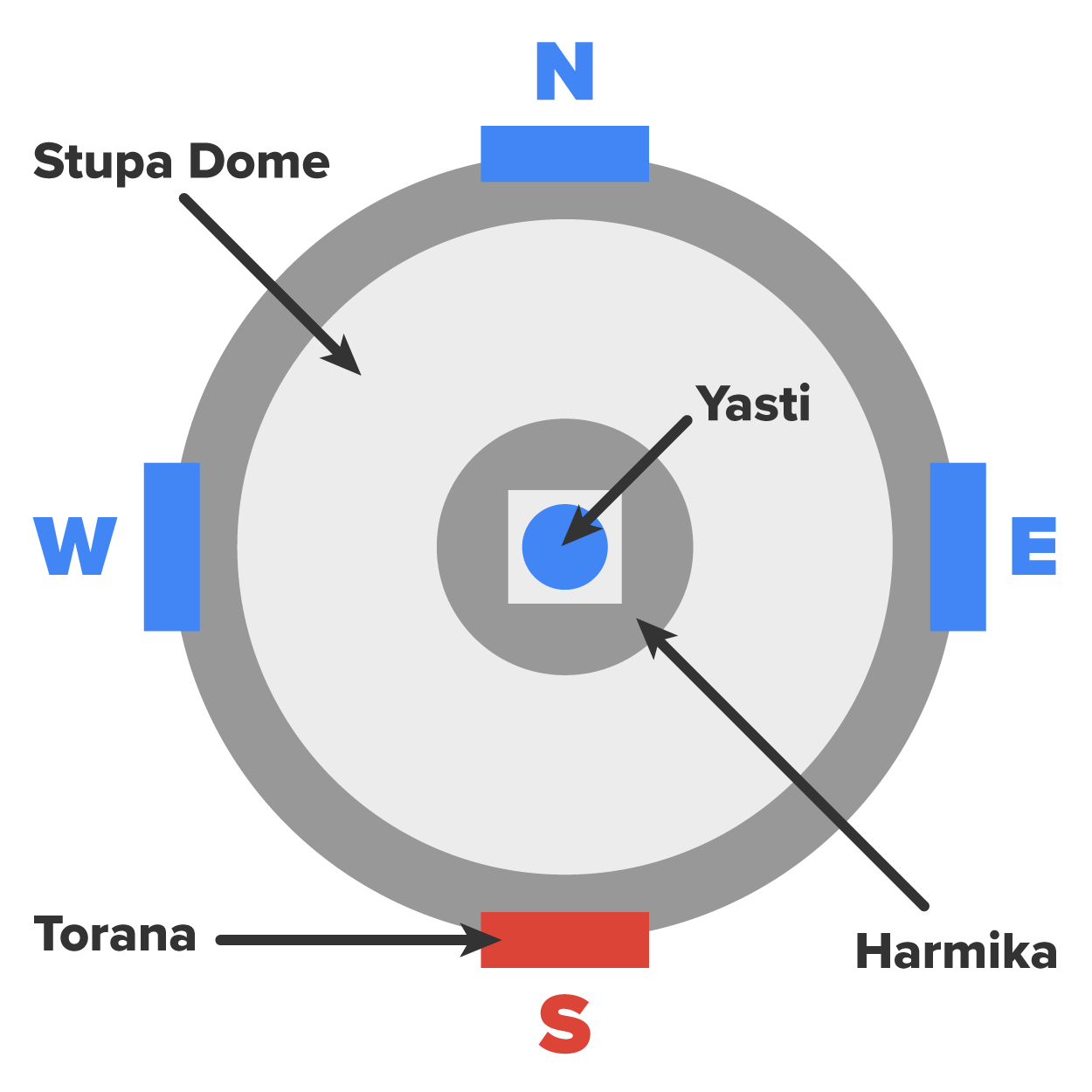
The diagram below of the Great Stupa illustrates many of the key terms in this lesson (noted with arrows).

The yasti is the pole that’s extended up from the top of the dome, and the three circular stone plates attached to the east are called chatras. The harmika is the gated section on top of the stupa, and it is a sacred space not to be entered. A torana is a gate. Finally, note the stupa dome itself.
The diagram below gives a better idea of how the stupa functions as a three-dimensional mandala, with its concentric layout. The purpose of the stupa wasn’t to display the sacred relic, but to function as a place of meditation in the presence of the sacred relic.
Here is an overhead diagram of the Great Stupa:
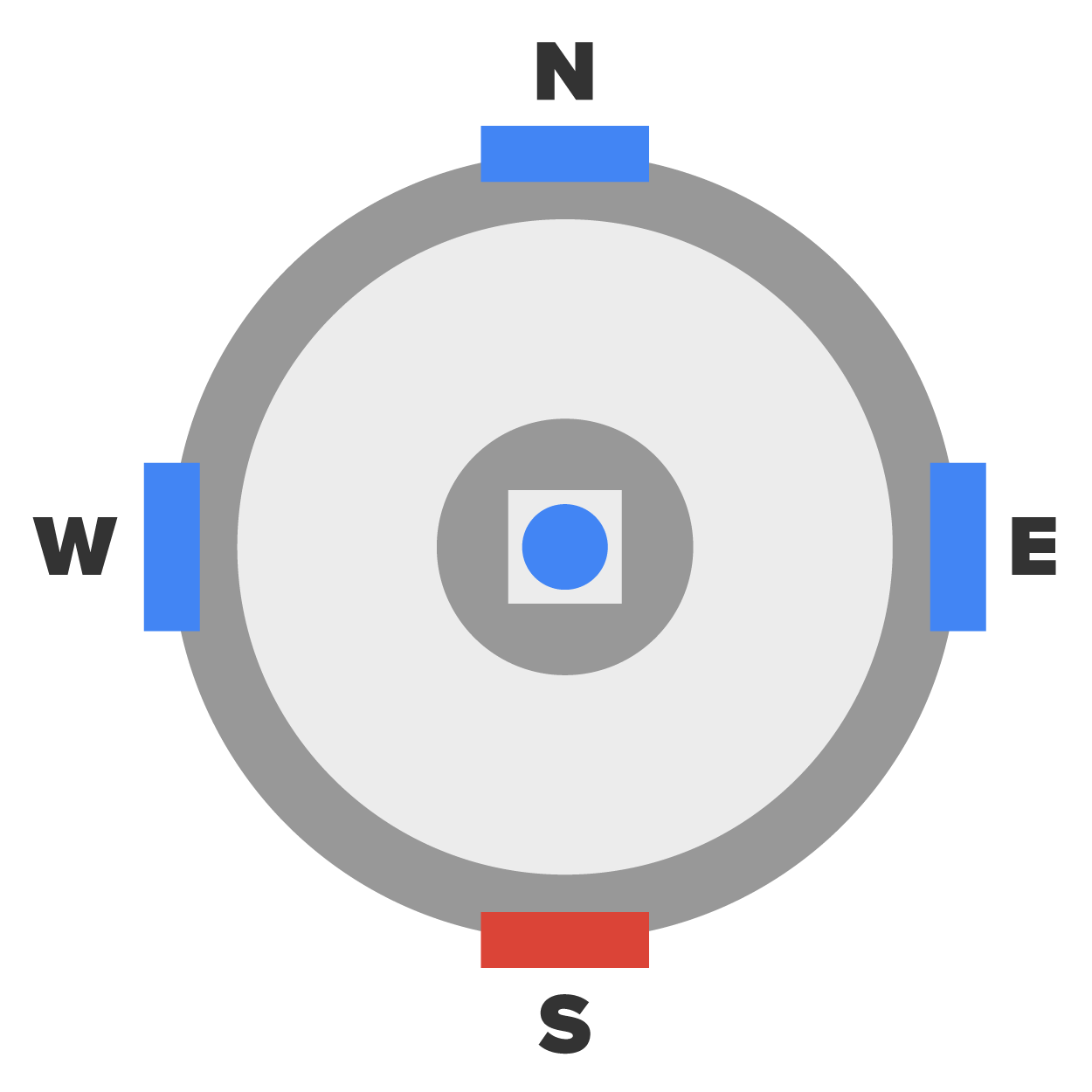
Meditators move in a clockwise direction, making two rotations around the stupa in what's referred to as circumambulation. The first turn would be in the innermost area, between the outer wall and the dome itself, in that light grey area. The second turn would be around the raised platform area attached to the dome itself.
Inside the harmika is a pole called a yasti, which symbolizes the universe and forms a connection between the earth and heaven, or an axis mundi. Some features of this structure include:
The next three images are of the north, east, and west toranas. Take notice of how each one is just slightly different from the others.
First, here is the north torana where you can see a close-up of the sculptural program depicting stories from the life of the Buddha.
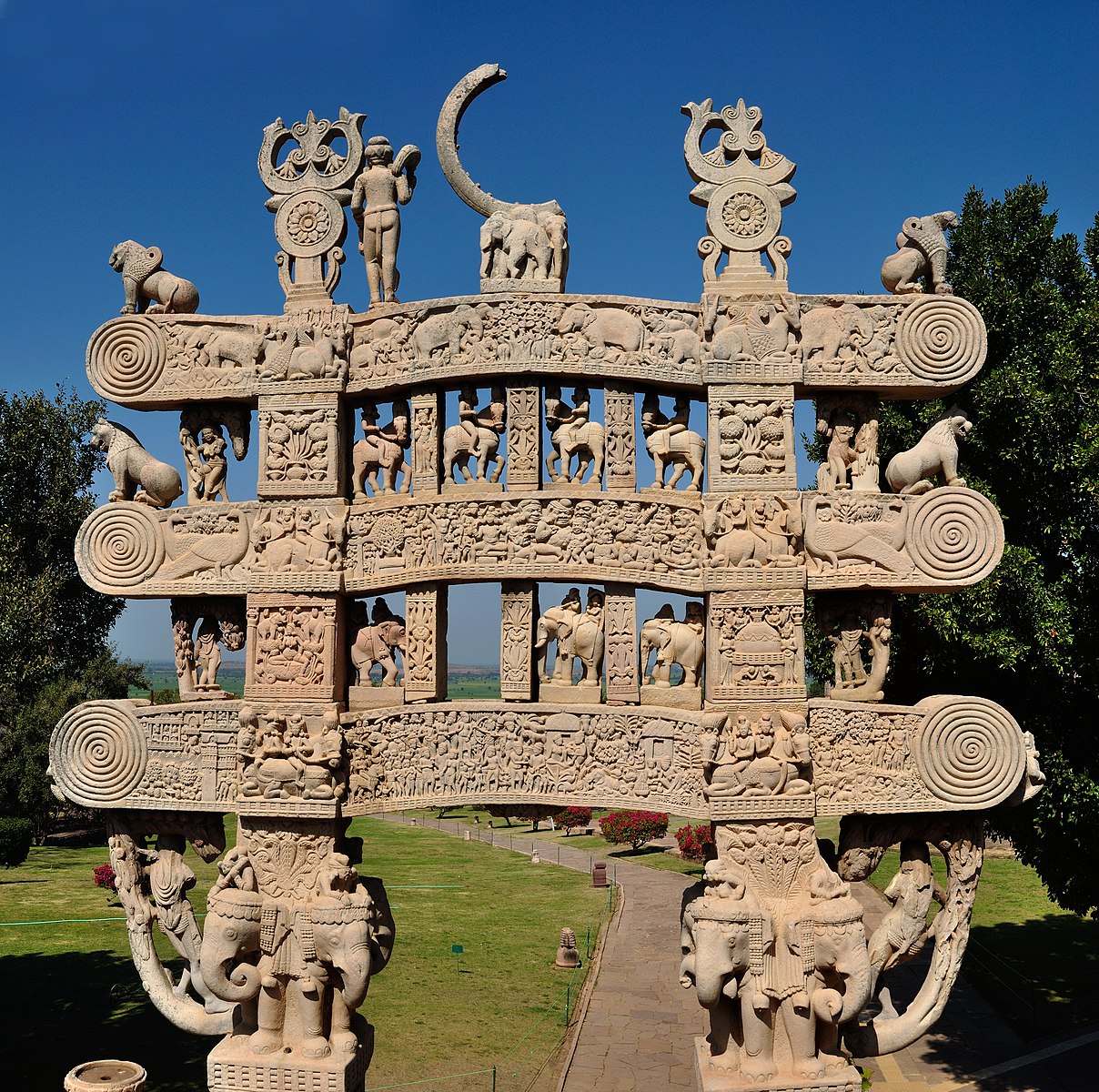
The Northern Torana of the Great Stupa
Sanchi, Madhya Pradesh, India
3rd century BCE
Stone
Here’s a closer image of the eastern torana:
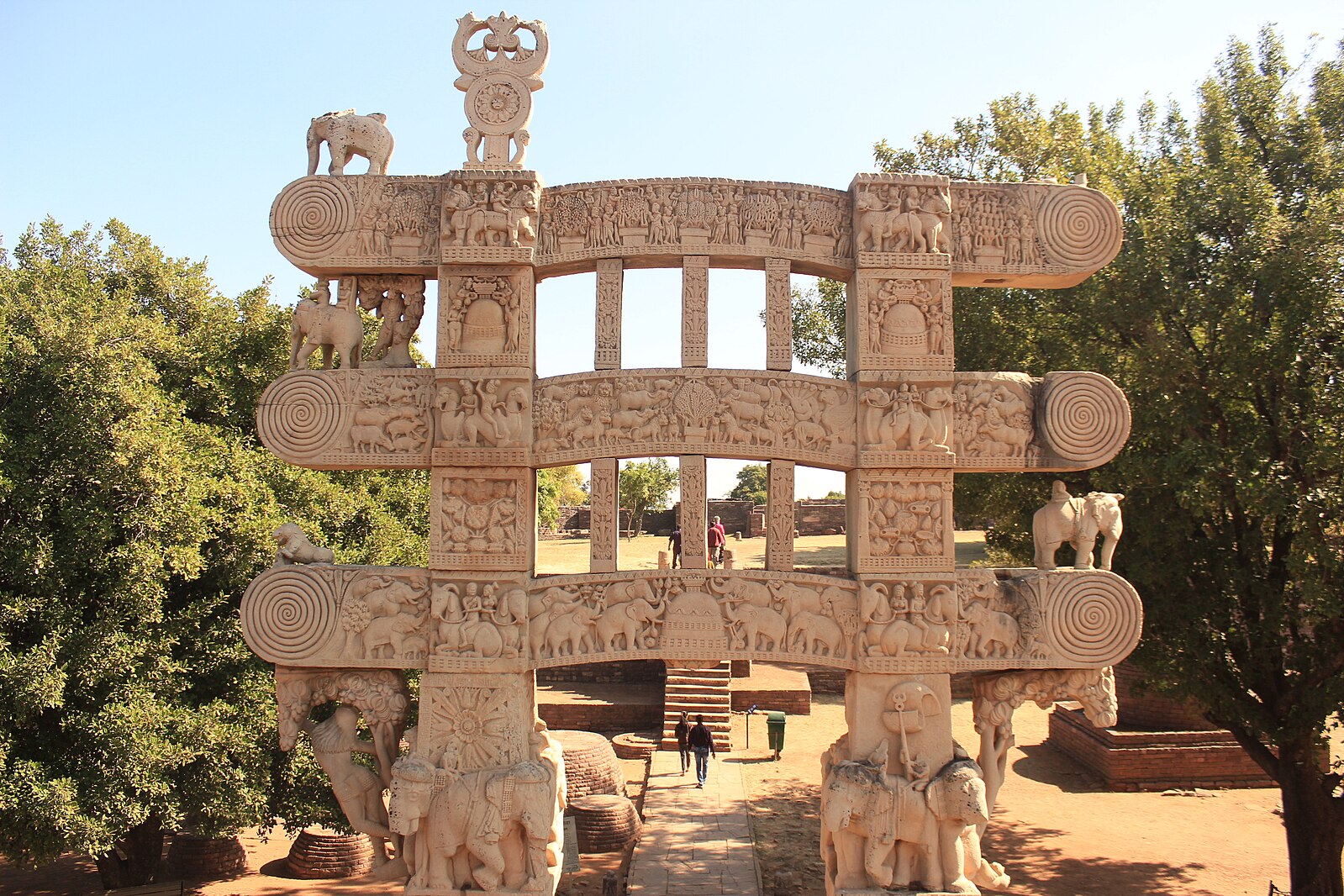
The Eastern Torana of the Great Stupa
Sanchi, Madhya Pradesh, India
3rd century BCE
Stone
Finally, a closeup of the western torana:

The Western Torana of the Great Stupa
Sanchi, Madhya Pradesh, India
3rd century BCE
Stone
Source: THIS TUTORIAL WAS AUTHORED BY SOPHIA LEARNING. PLEASE SEE OUR TERMS OF USE.