Table of Contents |
The prefix “micro-” means very small, so microbiology is most generally defined as the study of microscopic life (microorganisms). This encompasses a wide variety of organisms such as bacteria, algae, and microscopic animals such as rotifers. Additionally, several types of nonliving particles such as viruses (acellular agents that use host cells to reproduce themselves) are also considered microbes, and you will learn more about these in the lesson on acellular agents.
The term microbes is often used to describe microorganisms and acellular agents such as viruses. Microbes are small organisms of any taxonomic class (classification) that are often invisible without the use of a microscope (an instrument that magnifies specimens so that small structures can be studied).
Some larger organisms are included in the study of microbiology. For example, a group of multicellular worms called helminths includes some important human parasites. The eggs and larvae are microscopic, even though the adult worms range in size and are often visible without a microscope.
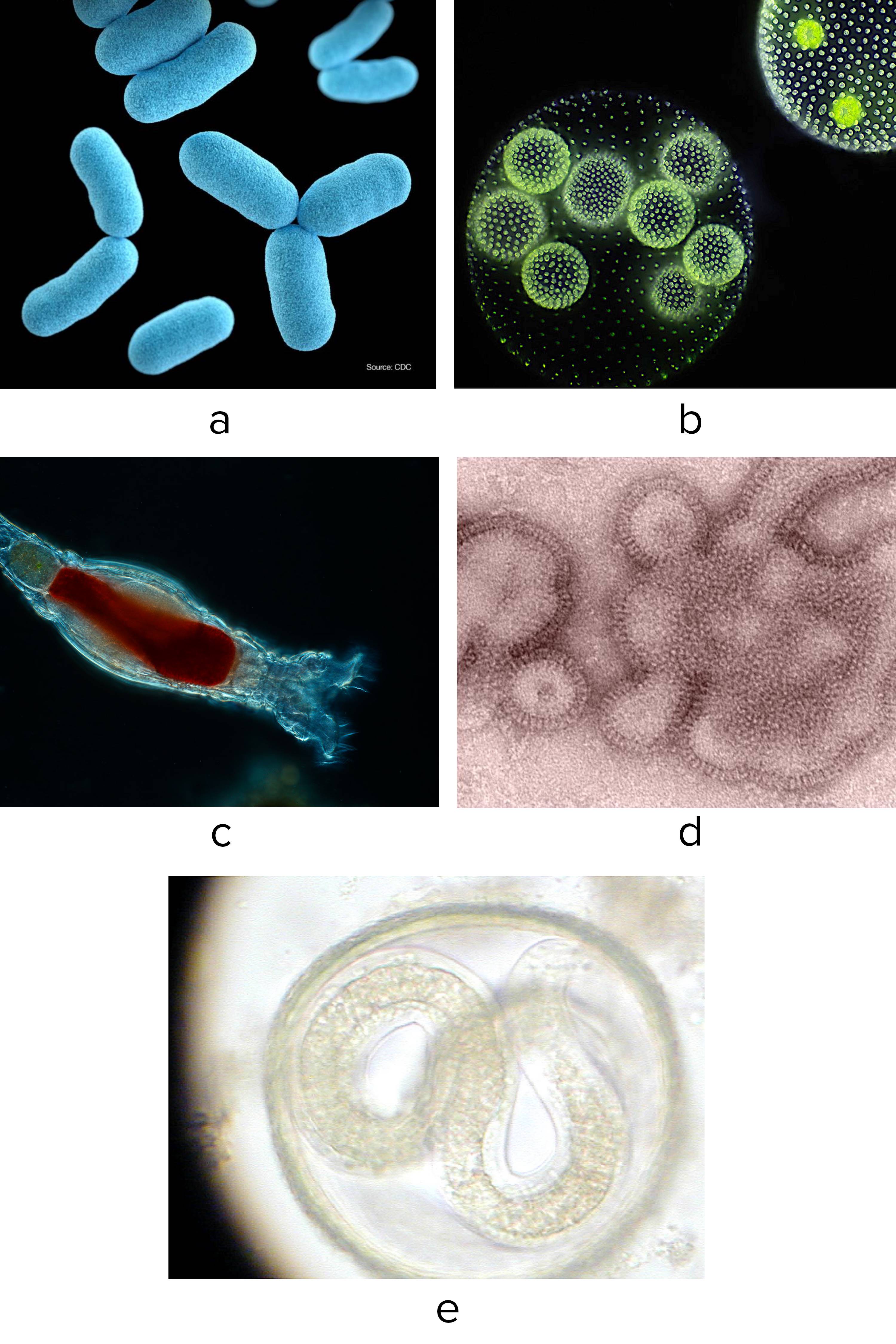
The image below illustrates the diversity of organisms studied in microbiology and also shows how different types of microscopy produce different types of images (micrographs). Micrograph (a) shows assorted blue rod-shaped bacteria. This species, called Corynebacterium diphtheriae, causes a disease called diphtheria. Micrograph (b) shows a colonial microbe called Volvox. Each spherical colony contains many green cells and several smaller spheres. Micrograph (c) shows a microscopic animal called a rotifer. The rotifer is translucent with tufts on one end and organs visible inside. Micrograph (d) shows the irregular, rounded shapes of influenza viruses. Micrograph (e) shows a pair of shiny, translucent worms on human tissue. These worms are called roundworms and do not have segmented bodies like common earthworms.
Microbiology can be divided into many nonexclusive subdisciplines in a variety of ways. Among other approaches, branches can be classified based on the types of organisms studied, the branches of biology involved, or the types of applications associated with them. Not only can a particular area potentially fall into more than one subdiscipline, it can also include the study of microbes even if it is not traditionally considered a branch of microbiology.
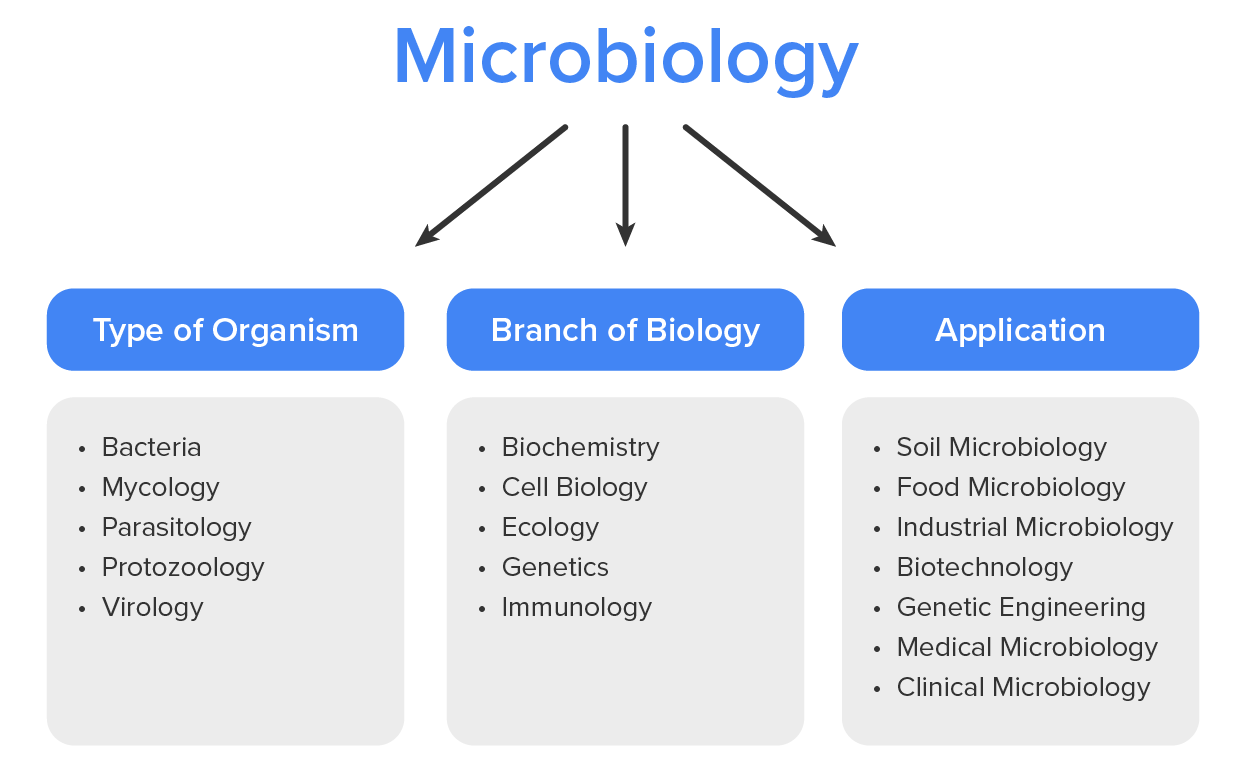
One way to subdivide microbiology is by the type of microbe studied. When this type of division is used, the name of the field includes the type of microbe followed by “ology”.
Because the branch names include terms used to describe microorganisms, it is important to know these terms to understand the branch names. Many single-celled organisms with nuclei are called protozoa (including many nonphotosynthetic protists and some photosynthetic protists capable of locomotion). Therefore, the study of these organisms is called protozoology. Parasites are organisms that live on or in a host and benefit while the host is harmed. The study of parasites is called parasitology. “Myco” means fungus (plural = fungi), so the study of fungi is called mycology. The table below summarizes the major branches of microbiology based on the type of organism studied. You will learn more about the types of organisms studied by microbiologists in the upcoming lesson on classification.
| Branches of Microbiology by Type of Organism Studied | |
|---|---|
| Type of Organism | Description |
| Bacteria | Study of bacteria |
| Mycology | Study of fungi (singular = fungus) |
| Parasitology | Study of parasites |
| Protozoology | Study of protozoa |
| Virology | Study of viruses |
The field of biology is broken into many subdivisions and sometimes microbiological studies are described using these terms. In some cases, the term “microbial” is added to indicate a focus on microbes.
Ecology is the study of interactions of organisms with each other and with their environment. When the focus is on microbes, the term microbial ecology may be used. This field includes studies of the role of microbes in biogeochemical cycles, which affect all life on Earth. Microbial ecology has many applications.
EXAMPLE
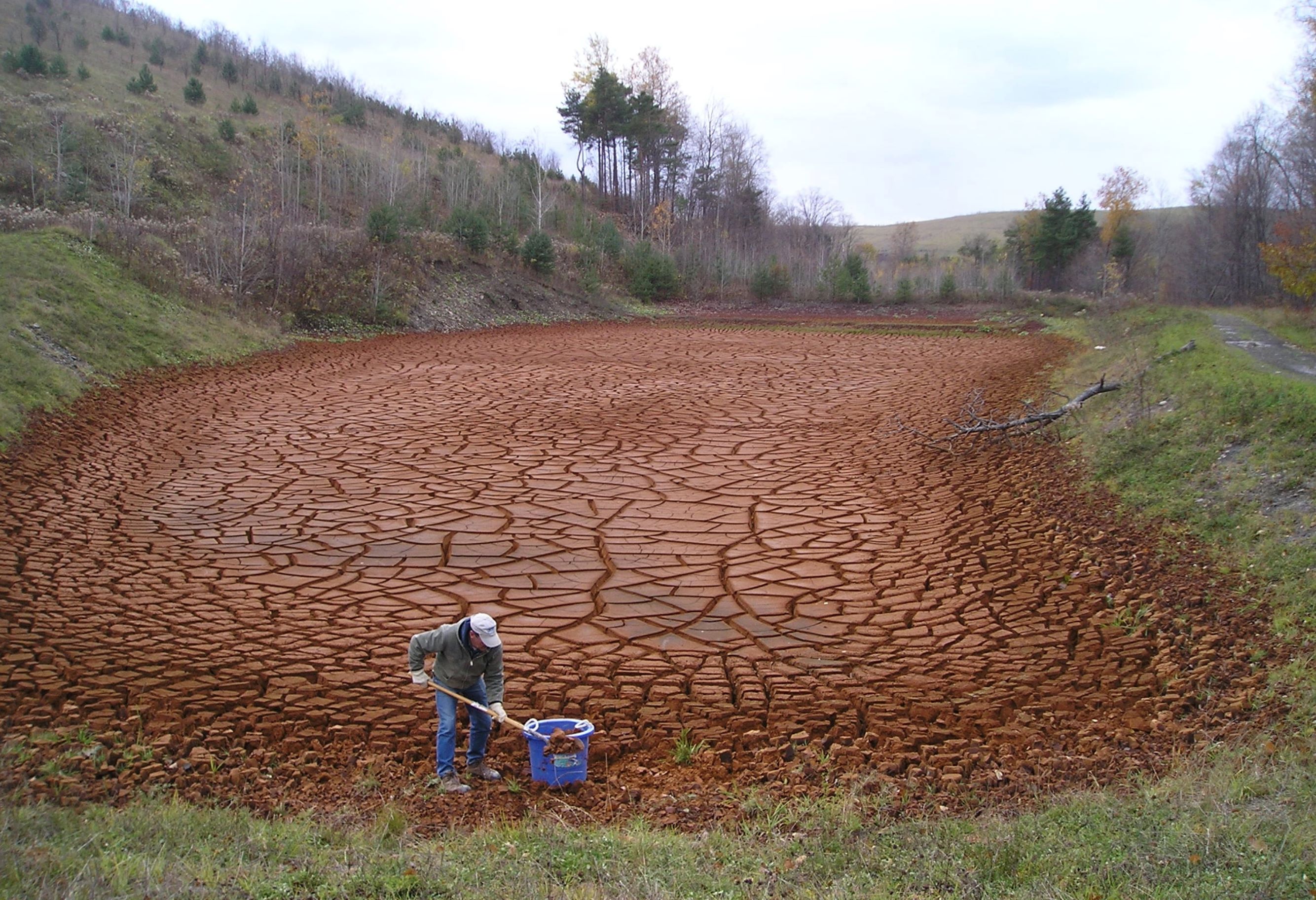
The study of microbial ecology helps people determine the best conditions to promote plant growth for agriculture. Research into the ecology of the human microbiome has revealed that it influences health in ways that were not known before. Microbes sometimes contribute to environmental problems (e.g., by worsening acidity in mine drainage), but they can also be valuable in solving problems such as for cleaning up oil spills.The photo below shows a person standing on broken soil representing drainage from a mine so that he can take samples to analyze. This drainage can be very acidic, but some microbes thrive in these conditions and contribute to the acidity. This has important environmental implications and therefore microbiologists study these areas. Research using these samples could fall under many different areas of microbiology including soil microbiology (based on application), microbial ecology (based on an area of biology), or a specific type of microbe being studied.
Another branch of biology is immunology, which is the study of the immune system. This relates to microbiology in two ways. Firstly, the immune system is a defense against microbes that cause disease. Secondly, normal microbes found on and in the human body help to protect people against infection by other microbes (they are part of the microbiome, which is the collection of microbes that reside on or within healthy human tissues).
EXAMPLE
There are many ways in which knowledge about immunology affects human life. Vaccinations are designed to trigger an immune response to help provide protection against infections. The immune system causes allergies and understanding how this occurs is helpful in developing treatments to control allergic reactions. Understanding immunology is also important to maximize the likelihood that organ transplants will be successful. You will learn more about immunology, vaccinations, and allergies in other lessons.The table below summarizes examples of microbiology by branch of biology with examples of the type of study that would be included within that branch. There are many other possibilities not listed.
| Branches of Microbiology by Branch of Biology | ||
|---|---|---|
| Branch of Biology | Description | Example |
| Biochemistry | Study of the chemistry of living organisms | A study of the chemical reactions used by a bacterium (singular = bacteria) to break down sugars |
| Cell biology | Study of the biology of cells | A study of the structures inside a particular type of cell |
| Ecology (microbial ecology) | Study of interactions of organisms with each other and with the environment | A study of the ways in which the types of microbes found in the human intestine are affected by diet |
| Genetics (microbial genetics) | Study of genetic material, ways in which genes are used to make products, and related topics | A study of how a species of bacterium evolves antibiotic resistance to survive when exposed to that antibiotic |
| Immunology | Study of the immune system | A study of how long an individual’s immune system recognizes a disease-causing microbe after the individual recovers from an infection caused by that microbe |
Some branches of microbiology are named after the ways in which they are used (applications). In contrast to basic microbiology, which focuses on general knowledge, these branches focus on solving problems.
These branches include several related to agriculture and food production. Among other benefits, soil microbiology is essential for agriculture because it examines ways to improve crop production and health. Food microbiology examines the microbial content of food and ways to prevent foodborne illnesses.
Industrial microbiology involves the production of products, some of which involve biotechnology (the science of using living systems for human benefit) and/or genetic engineering (in which genetic material of organisms is manipulated). Biotechnology can be used to make products such as medications. Human insulin was the first product made by a human gene inserted into a bacterial cell. This method is now used to produce life-saving insulin for people with type 1 diabetes. Previously, insulin had to be obtained from pigs. Additionally, many foods now contain genetically engineered ingredients.
EXAMPLE
Some plants such as soybeans have been genetically modified to survive treatment with chemicals to kill weeds. Other plants have been given a gene that causes them to make a toxin to reduce the effects of insects. Other foods have been made more nutritious or resistant to spoilage. You will learn more about genetic engineering in other lessons.Microbiological studies and techniques are important in medicine. Medical microbiology encompasses any study of microbiology related to medicine. Clinical microbiology is the study of interactions between humans and pathogens. Clinical microbiologists specialize in isolating and testing for the presence of microorganisms in laboratory samples. Most people have had many experiences with medical and/or clinical microbiology.
EXAMPLE
It is important to carefully choose antibiotics to effectively treat diseases so that while reducing the risk, microbes do not become resistant to antibiotics.Laboratory tests are used to detect genetic material or immune responses to infections.
EXAMPLE
You may have had COVID-19 testing that either detects a small amount of genetic material or detects if you have been exposed to COVID-19. While studying microbiology, it can be interesting to pay extra attention to these types of tests and treatments.Source: THIS TUTORIAL HAS BEEN ADAPTED FROM OPENSTAX “MICROBIOLOGY.” ACCESS FOR FREE AT openstax.org/details/books/microbiology. LICENSE: CC ATTRIBUTION 4.0 INTERNATIONAL.
REFERENCES
Cutchin, S.B. (2016). Cornyebacterium diptheriae ID# 22877 Details – Public Health Library (Phil). Centers for Disease Control and Prevention. Retrieved July 24, 2022, from phil.cdc.gov/Details.aspx?pid=22877
Fox, F. n.d. Retrieved July 24, 2022, from commons.wikimedia.org/w/index.php?curid=20240900, and commons.wikimedia.org/w/index.php?curid=20228899.
Micro. (n.d.). The Merrian-Webster.Com Dictionary. Retrieved July 24, 2022, from www.merriam-webster.com/dictionary/micro.
Microbiology Society. (2022). What is Microbiology? Retrieved July 24, 2022, from microbiologysociety.org/why-microbiology-matters/what-is-microbiology.html.
Shaw, M., & Jordan, D. (2011). ID# 13470 Details – Public Health Image Library (Phil). Centers for Disease Control and Prevention. Retrieved July 24, 2022, from phil.cdc.gov/Details.aspx?pid=13470.



