Table of Contents |
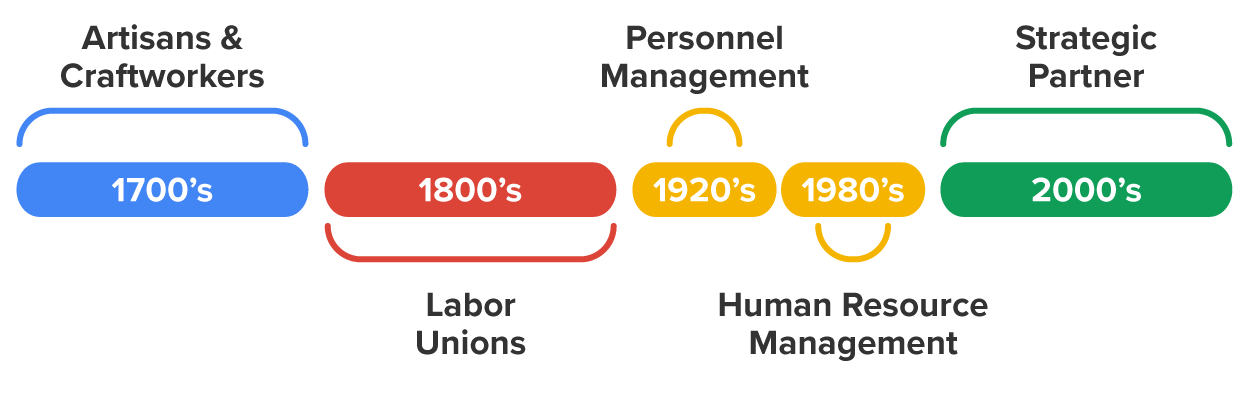
As we move into a new industrial age, businesses will need their HR departments to adapt and change to survive in this new environment. Before the 19th century, most work was done by skilled artisans and craftworkers. These workers usually owned their tools and sold their products directly in local markets. There weren’t formal employee-employer relationships or structured HR practices back then.
During the Industrial Revolution in the 19th century, factories and mass production changed how work was done. Factories needed more workers, which led to the need for better labor management. Labor unions also started during this time to fight for workers’ rights and collective bargaining.
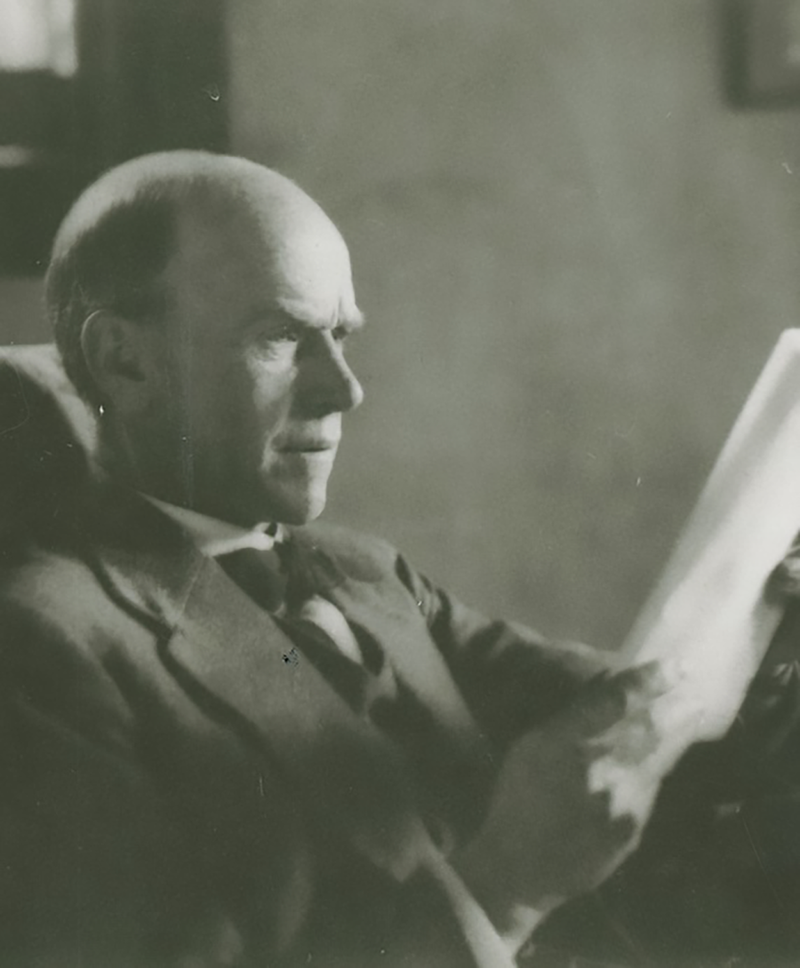
In the early 20th century, businesses started to see the need for specialized roles to handle employee-related tasks. Personnel managers took care of things like payroll, compliance, and keeping employee records. During this time, researchers like Elton Mayo showed how social factors affect productivity. Mayo’s Hawthorne Studies highlighted the importance of employee morale and motivation. Companies began to think more about employee well-being and satisfaction.
IN CONTEXT
The Hawthorne Studies, done at Western Electric’s Hawthorne Plant in the 1920s and 1930s, had a big impact on management theories. Researchers, including psychologist Elton Mayo, looked at how people behave at work. They found that changes in lighting seemed to affect productivity because the workers felt observed and cared for by the researchers, not the implemented lighting changes alone. These studies showed that social factors, such as feeling valued and being part of a group, had a significant impact on productivity. The Hawthorne Studies highlighted the importance of considering workers’ social and emotional needs in addition to their physical work environment.
The term ‘Human Resource Management’ became well-known in the 1980s when HR roles expanded beyond just administrative tasks to include strategic functions. Concepts like talent management, performance appraisal, and succession planning became essential. Companies started to see human capital (workers’ knowledge, skills, creativity) as a crucial asset, making strategic HRM the norm.
In the 21st century, HR has evolved into a strategic partner, crucial for implementing business strategies through effective management of human capital. This means going beyond traditional HR tasks, like payroll and compliance, and focusing on aligning HR strategies with the company’s long-term goals, significantly impacting overall business performance and success.
Over the past 15 to 20 years, the focus has been on integrating HR strategy into the overall business strategy. HR now considers the overall business strategy when prioritizing and allocating resources. HR has become a true partner to the business, with its credibility depending on its involvement in strategic management discussions.
In this new role of strategic partner, HR focuses on several key activities to support and drive business success.
HR must also look to the future to identify trends that could impact the organization. This involves staying informed about changes in technology, workforce demographics, and industry developments. By understanding these trends, HR can develop proactive plans to address potential challenges and opportunities.
EXAMPLE
This might include implementing new training programs to upskill employees, adjusting recruitment strategies to attract emerging talent, or creating flexible work policies to adapt to changing employee expectations.By anticipating future needs and preparing accordingly, HR ensures that the organization remains competitive and well-positioned for long-term success.
The following diagram depicts the evolution of human resource management from skilled workers to strategic partners:
IN CONTEXT
Case Study: Google and Project Oxygen
A real-world example of HR as a strategic partner is Google’s approach to talent management and company culture. Google’s HR, called People Operations, plays a key role in shaping the company’s strategies and keeping it a top innovator in the tech industry.
One important project led by Google’s HR was called ‘Project Oxygen’ (Garvin, 2013). This project aimed to find out what makes a manager effective at Google. Using data, they analyzed performance reviews, feedback surveys, and nominations for top-manager awards. They found eight key behaviors of successful managers, like being a good coach and empowering the team without micromanaging.
With this information, Google’s HR team redesigned their management training programs to focus on these behaviors. They also used these criteria in their hiring and evaluation processes for managers. This strategic move not only improved managerial effectiveness but also boosted employee engagement and productivity.
This example shows how HR can go beyond traditional roles and contribute strategically to a company’s success by using data to improve leadership and overall business performance.

Source: This Tutorial has been adapted from "Human Resources Management" by Lumen Learning. Access for free at https://courses.lumenlearning.com/wm-humanresourcesmgmt/. License: CC BY: Attribution.
REFERENCES
Garvin, David A. (2013, December). How Google Sold Its Engineers on Management. Harvard Business Review. hbr.org/2013/12/how-google-sold-its-engineers-on-management



