Table of Contents |
The cost of capital represents the cost a company incurs to fund its operations and investments. It reflects the return that investors expect for providing capital. Essentially, it serves as a benchmark for evaluating investment opportunities. If a project’s expected return exceeds the cost of capital, it may be considered a worthwhile investment, but if the return falls short, the project could decrease shareholder value. Understanding the cost of capital helps businesses make informed decisions about financing strategies, capital budgeting, and risk management.
There are different components to the cost of capital, primarily cost of equity and cost of debt. The cost of equity is the return required by shareholders, often estimated using models like the capital asset pricing model (CAPM), while the cost of debt is the effective interest rate a company pays on its borrowings, adjusted for tax benefits. When combined, these elements form the weighted average cost of capital (WACC), which reflects the overall cost of financing based on the proportion of debt and equity in a company’s capital structure. WACC is widely used in valuation, financial modeling, and strategic planning, making it a critical tool for both corporate managers and investors.
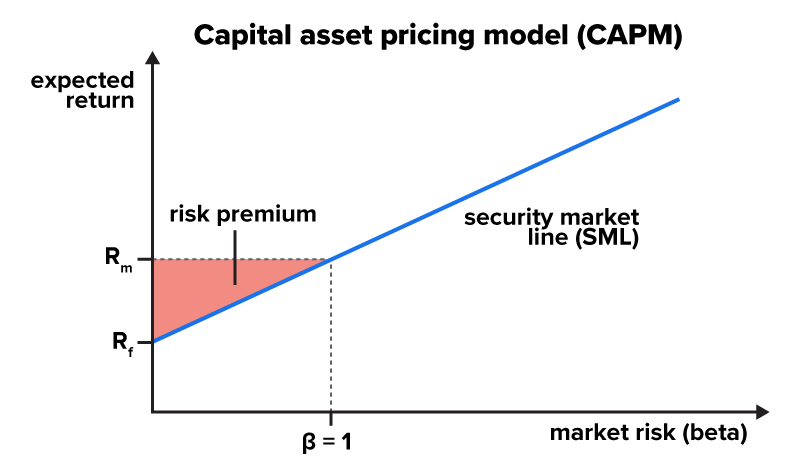
When defining the cost of capital, it is useful to frame it from either the borrower’s point of view (the organization) or the lender’s point of view (the investor).
The required return and the cost of capital are closely related financial concepts, but they serve different purposes and are viewed from different perspectives. The required return refers to the minimum rate of return an investor expects to earn from an investment, given its level of risk. It reflects the opportunity cost of investing capital in a particular asset instead of a risk-free or alternative investment.
On the other hand, the cost of capital is the rate a company must pay to raise funds (either through debt, equity, or both) to finance its operations and investments. It represents the company’s side of the same coin. It is what a company must offer to attract capital from investors.
While the required return is determined by the investor, the cost of capital is calculated by the firm and used as a benchmark to evaluate new projects. If a project’s expected return is greater than the cost of capital, it can add value to the firm. In essence, the required return is what investors demand, and the cost of capital is what companies must meet or exceed to justify investment.
| Required Return | Cost of Capital | |
|---|---|---|
| Definition | The minimum return an investor expects for taking on risk | The rate a company must pay to raise capital |
| Perspective | Investor’s viewpoint | Company’s viewpoint |
| Purpose | To evaluate whether an investment is worth the risk | To assess the viability of funding projects |
| Determined By | Market conditions and investor expectations | Market rates, company’s capital structure, and risk |
| Used In | Portfolio management, asset pricing | Capital budgeting, project evaluation |
| Includes | Risk-free rate + risk premium | Weighted average of cost of equity and cost of debt (WACC) |
| Benchmark For | Investment decision making | Project and investment evaluation |
Sometimes, there may be several investors, each with varying required rates of return. This is where a business would apply the weighted average cost of capital (WACC). The WACC takes into account the required rates of returns from each type of investment (debt and equity) and measures risk and tax implications to reflect the overall cost of financing.
Financial policy is the set of guidelines and strategic decisions that govern how a company manages its financial resources. This includes decisions about:
The relationship between financial policy and the cost of capital is interconnected, as the strategic decisions a company makes regarding its financial structure directly influence the rate it must pay to access capital. The decisions made about financial policy affect the company’s risk profile, which impacts investor expectations and the cost of both equity and debt.
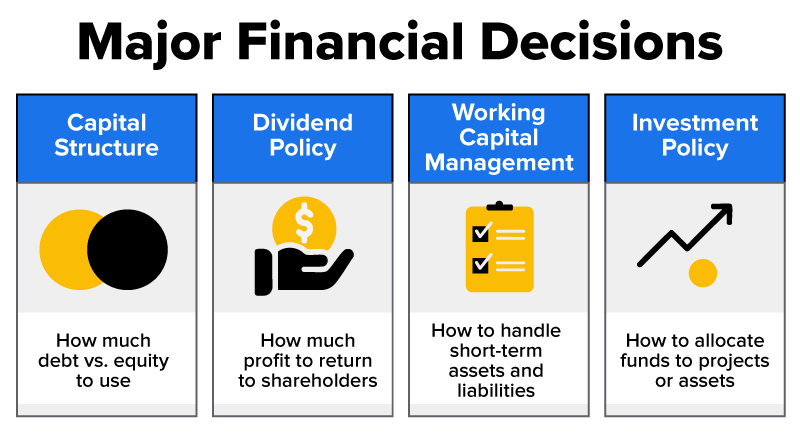
Financial policy can also be used as a tool to optimize the cost of capital. By carefully balancing debt and equity, a company can achieve a lower weighted average cost of capital (WACC), which enhances its valuation and competitiveness. A stable dividend policy and prudent debt management can signal financial health to investors, reducing perceived risk and lowering required returns. On the other hand, erratic or overly aggressive financial policies may increase uncertainty, driving up the cost of capital and limiting access to funding. In this way, financial policy not only reflects a company’s strategic priorities but also shapes its financial flexibility and long-term value creation.
IN CONTEXT
Netflix has long pursued an aggressive growth strategy, heavily investing in original content and global expansion. To fund this, the company relied extensively on debt financing, issuing billions in bonds over the years. While debt is generally cheaper than equity due to tax-deductible interest payments, Netflix’s high leverage increased its financial risk, which in turn raised its cost of equity. Investors demanded higher returns to compensate for the added risk. Despite this, Netflix maintained a strong credit rating by demonstrating consistent subscriber growth and revenue performance, which helped keep its overall cost of capital manageable.
Source: THIS TUTORIAL HAS BEEN ADAPTED FROM "BOUNDLESS FINANCE" PROVIDED BY LUMEN LEARNING BOUNDLESS COURSES. ACCESS FOR FREE AT LUMEN LEARNING BOUNDLESS COURSES. LICENSED UNDER CREATIVE COMMONS ATTRIBUTION-SHAREALIKE 4.0 INTERNATIONAL.



