Table of Contents |
This lesson covers the years from around 4500 BCE to around 2000 BCE. Sumer was a civilization that developed within Mesopotamia and consisted of a number of city-states that established themselves over time.
The map below shows Mesopotamia and the surrounding geography. Notice Mesopotamia’s location relative to the Tigris and Euphrates Rivers and the city-states indicated with black dots.
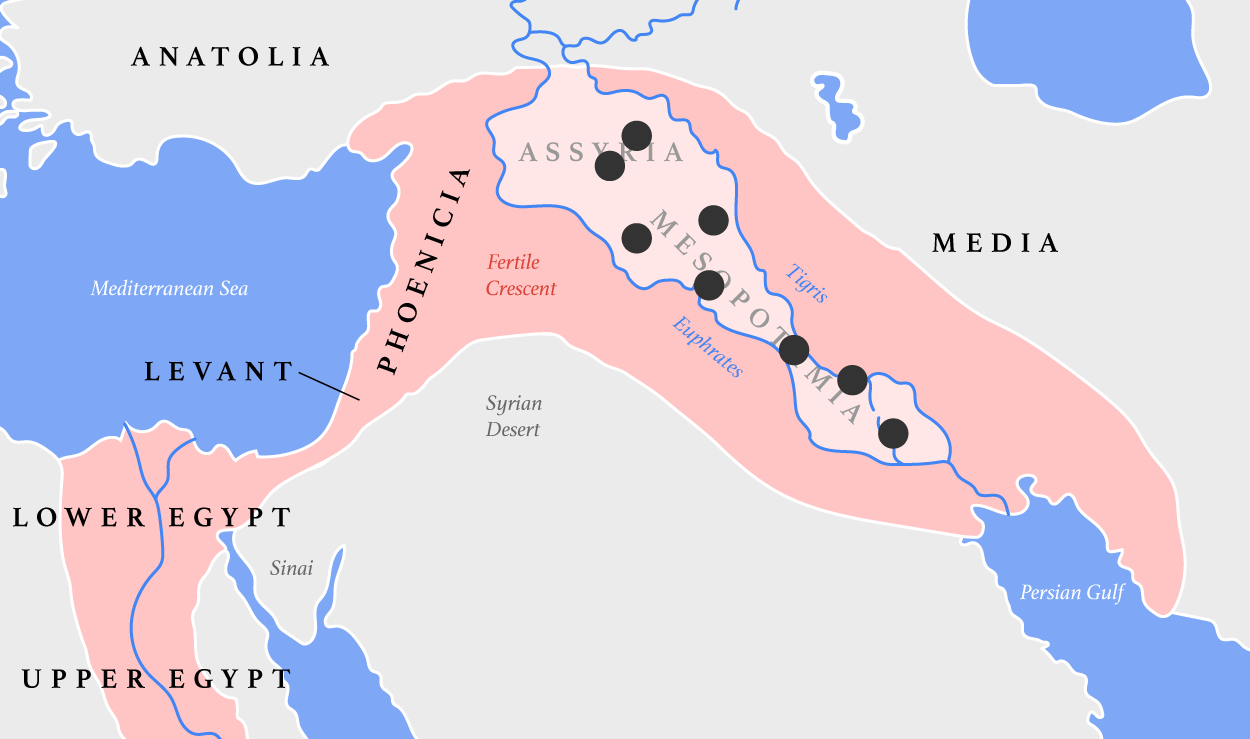
Sumer was the first major civilization that we know of to develop in Mesopotamia. People came to form city-states, which functioned more or less independently of one another, at least with respect to the local government. The religion of Sumer was of particular historical importance because of the influence it had on the Sumerian people and the role it played in their daily lives.
In terms of stratification, the priestly class of individuals, who were the religious leaders and differentiated from the secular rulers of a particular city-state, were at the top. They controlled the religious functions of the community and had a monopoly on the available face time with the deities. Ceremonies and rights were likely carried out in the shrines atop ziggurats, which were large religious temples that had an important place within the layout of each city-state.
The concept of a city-state is important to understand as you explore this time period. A city-state is completely independent of any outside government. In other words, it’s an autonomous state that consists of the city and perhaps some surrounding territory. Early civilizations often began as city-states.
EXAMPLE
Athens and Sparta in Greece are city-states that might be familiar to you.The city-state of Ur is particularly important in this lesson. Ur is located in the southern part of Mesopotamia and indicated by the black dot on the map below.
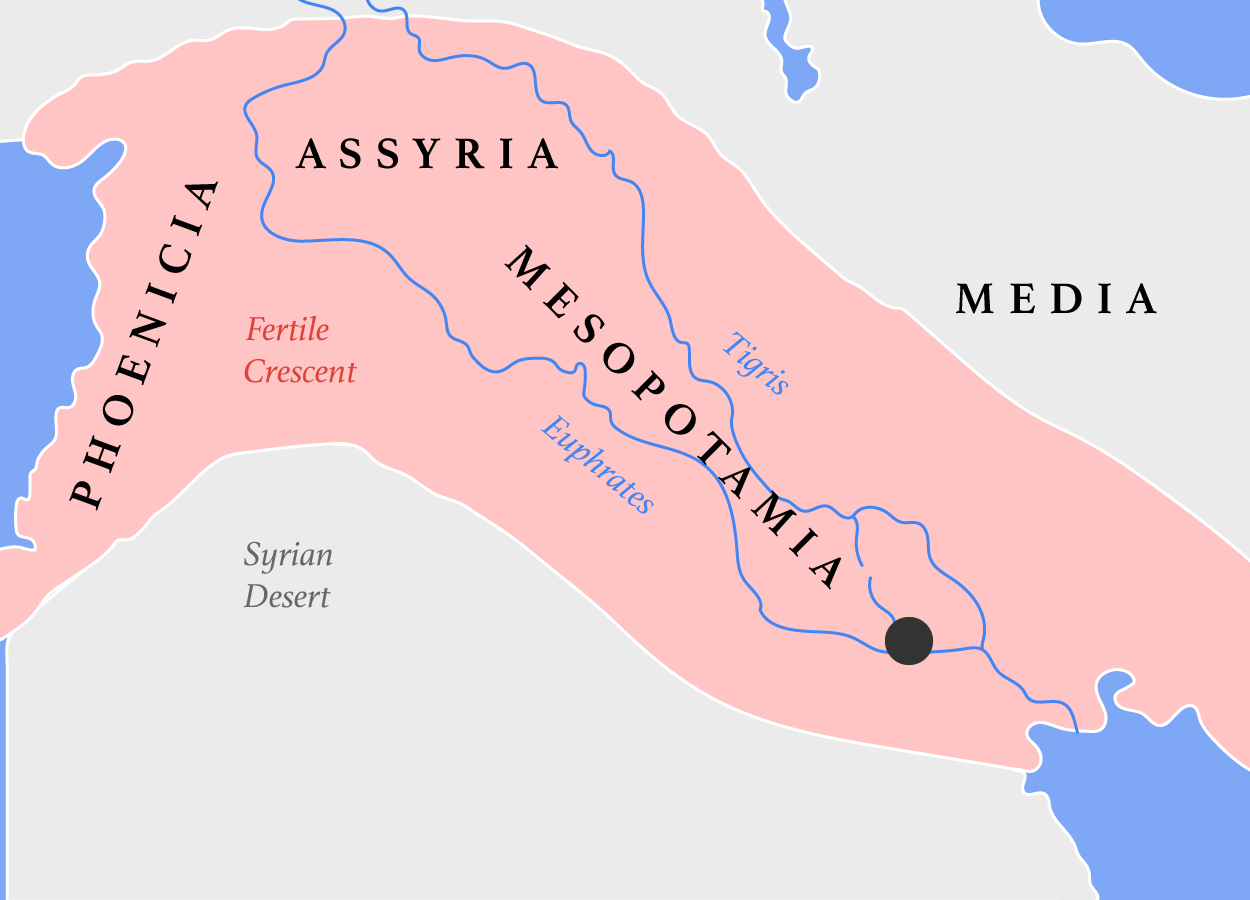
Much like the use of patron saints in older cities throughout Europe, each city-state in Mesopotamia had a patron deity who protected the city. Religious emphasis was on honoring the city’s patron deity. In Ur, Nanna, the moon goddess in the Sumerian religion, was the patron deity of Ur.
Take a look at this image below of a work of art called The Standard of Ur. As the name implies, it is widely believed to have served as a standard, something that’s carried around for display. But its true use is still a mystery. It’s a six-sided mosaic that dates from between 2600 and 2400 BCE.
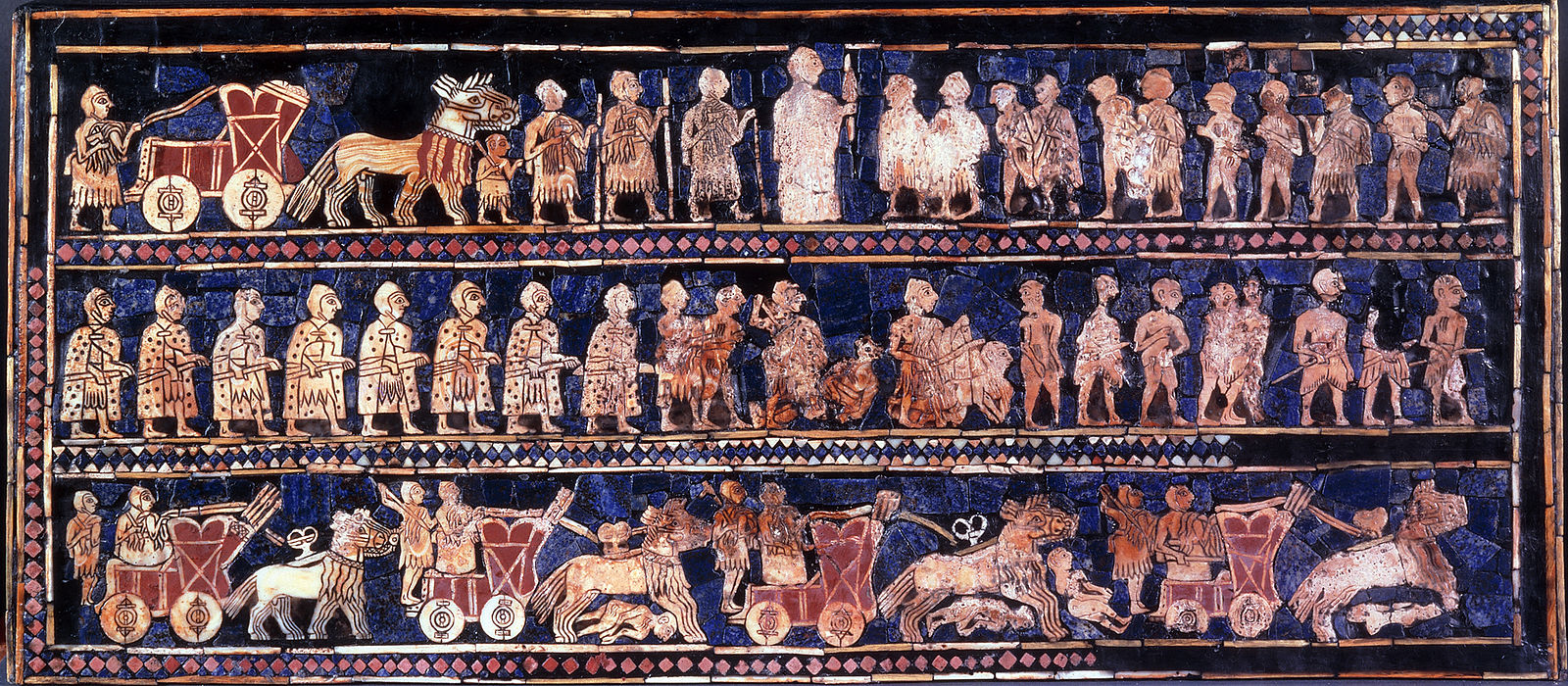
Standard of Ur
British Museum, London, England
2600 BC
Shell, limestone, lapis lazuli, bitumen
This piece has two main panels. One of these is of war, and it depicts a Sumerian army conquering its enemies and presenting the captured and naked foes before their leader. The other panel, not shown, depicts peace through what is thought to be a typical Sumerian banquet scene.
A ziggurat is a symbolic and religious structure, much like a temple. It was looked at as a holy mountain, reinforcing the idea that the gods dwelt above humans. The public were not allowed to gather here; rather, it was limited to only a privileged few, the priestly class, who conducted their business within the shrine at the top. The Nanna ziggurat (or The Great Ziggurat of Ur) was the major religious structure within the city of Ur.
Below is a reconstruction of the original Nanna ziggurat. The original remains are actually slightly visible by the people at the top.
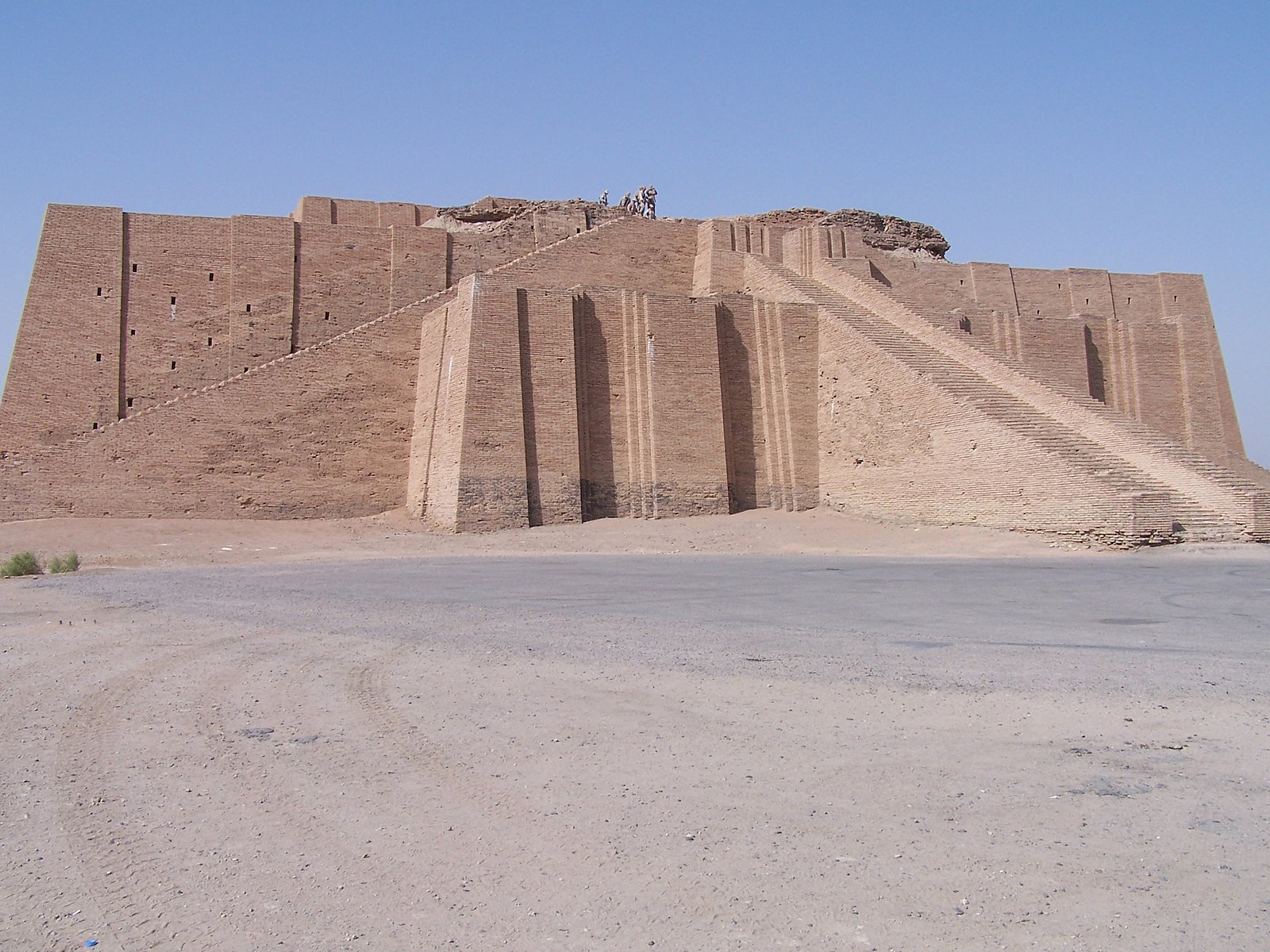
The Great Ziggurat of Ur
Ur (present day, Dhi Qar Province, Iraq)
21st century BCE, Early Bronze Age
Mud brick, bitumen
Here is a more detailed CAD rendering of what the ziggurat may have looked like in its day. Notice in the image below that the stepped or tiered structure has long access ramps. These are common ziggurat design elements.
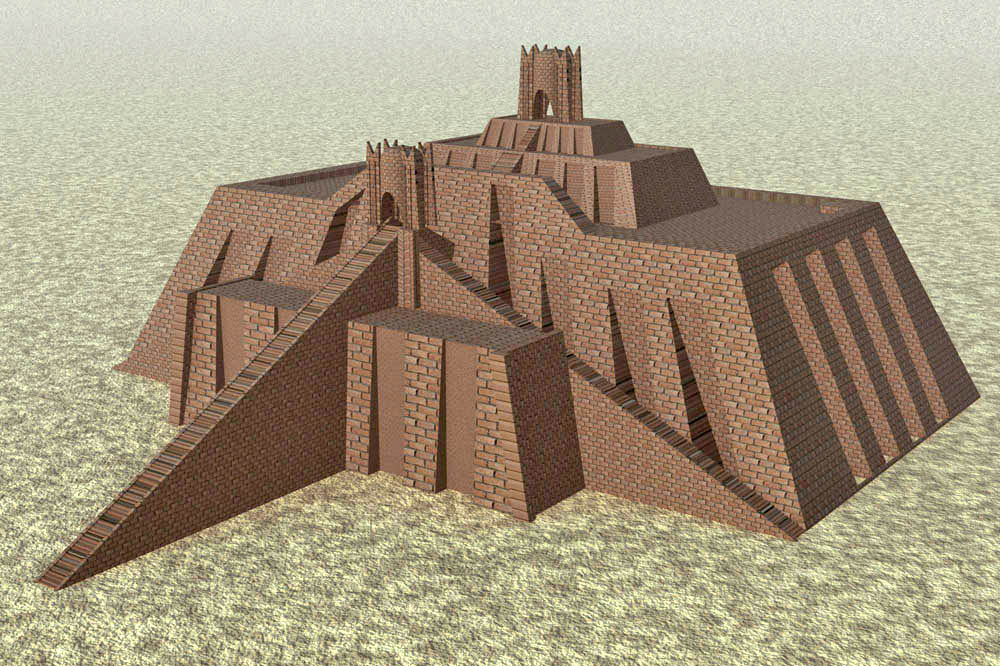
At the top of the ziggurat shrine is a small opening for access. Religious function would have been performed inside the temple, which would also serve to house votive sculptures.
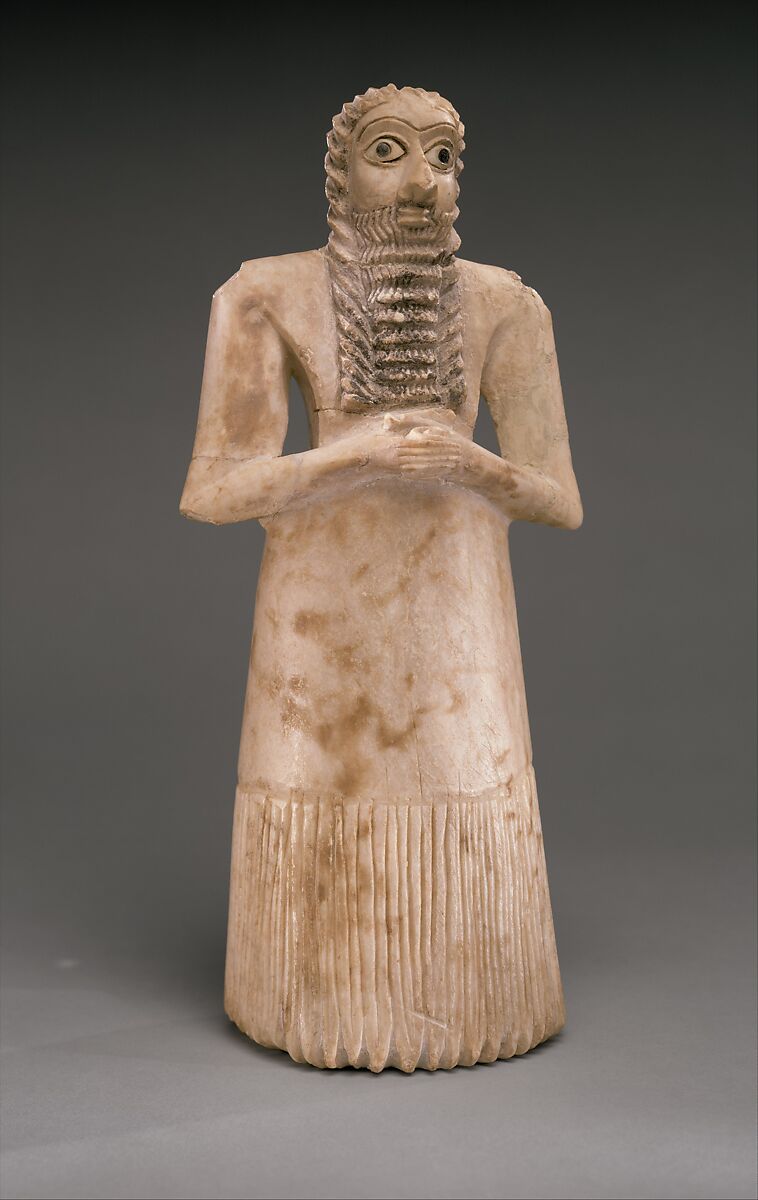
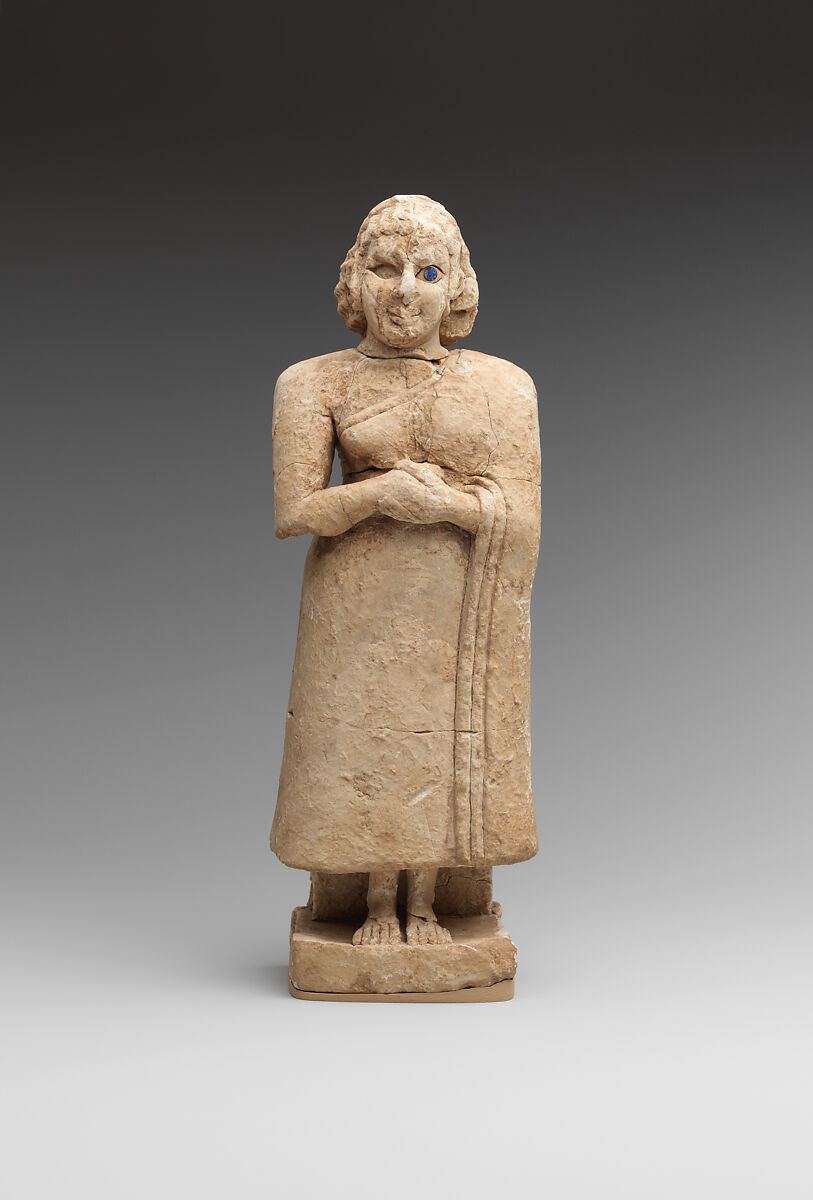
These votive figures played an important role for the elite class in Sumer, serving as representations of people, devout worshipers who were not priests and therefore could not ascend all the way to the top of the ziggurat. Their purpose was to continue the act of prayer in the absence of the people who offered them. We know that these are votive figures because many of them have inscriptions on them that say that they were offered in prayer. In addition, they appear somewhat subservient to modern viewers, with their enormous eyes and clasped hands. Happy gods meant a safe and prosperous city, so these sculptures were of utmost importance to national security.
Although Sumerian civilization occupied the land between two rivers, the climate was harsh and the location offered little in terms of natural resources. For this reason, the Sumerian world view appears to have been that their gods were distant and demanding, as expressed in their art and architecture.
The eye is an important symbol in Middle Eastern cultures. In Mesopotamian art, it meant to approach a deity with an attentive and respectful gaze. In certain parts of Mesopotamia, objects have been found that appear to be votive figures that consist of nothing but an enormous pair of eyes attached to a body. Some people refer to them as eye idols. We do not know what the function of these objects may have been, beyond those of more conventional votive sculptures. They might be related to "evil eye" jewelry that is common in the present.
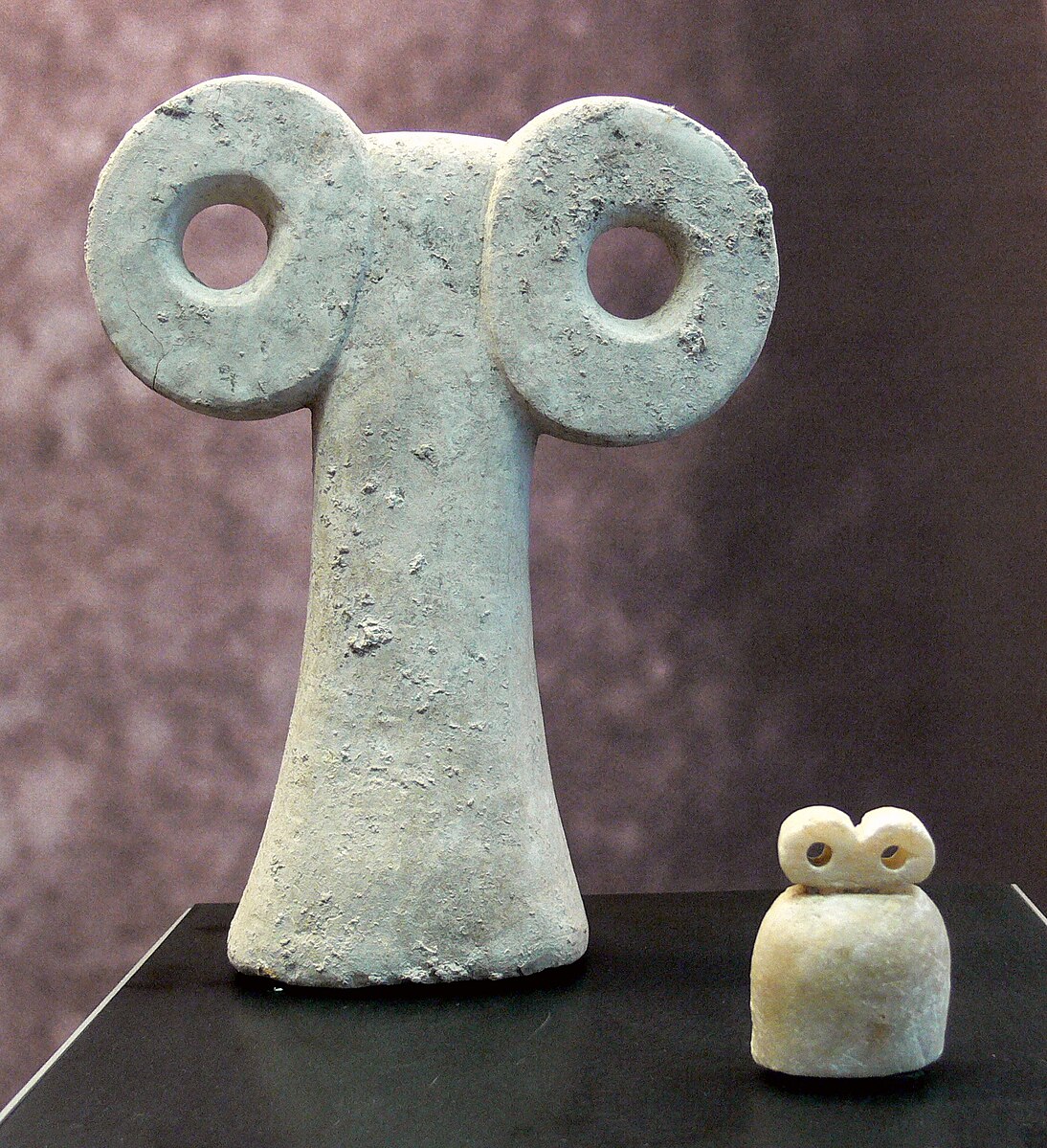
Eye idol
Syria, Tell Brak
ca. 3700–3500 BCE, Middle Uruk
Gypsum alabaster
This is a mask from Warka, sometimes referred to as the Mona Lisa of Mesopotamia or the Lady of Uruk. This is a very important artistic relic. It was likely a representation of the goddess Inanna, another important Sumerian deity and the goddess of love, fertility, and war. This is also one of the earliest representations of a human face. The eyes may have been inlaid with shell and lapis lazuli, and other stones may have been used to create the eyebrows. The curved lines around the forehead likely indicate where other materials might have been used for hair. This head may have been attached to a body made of wood or another substance.
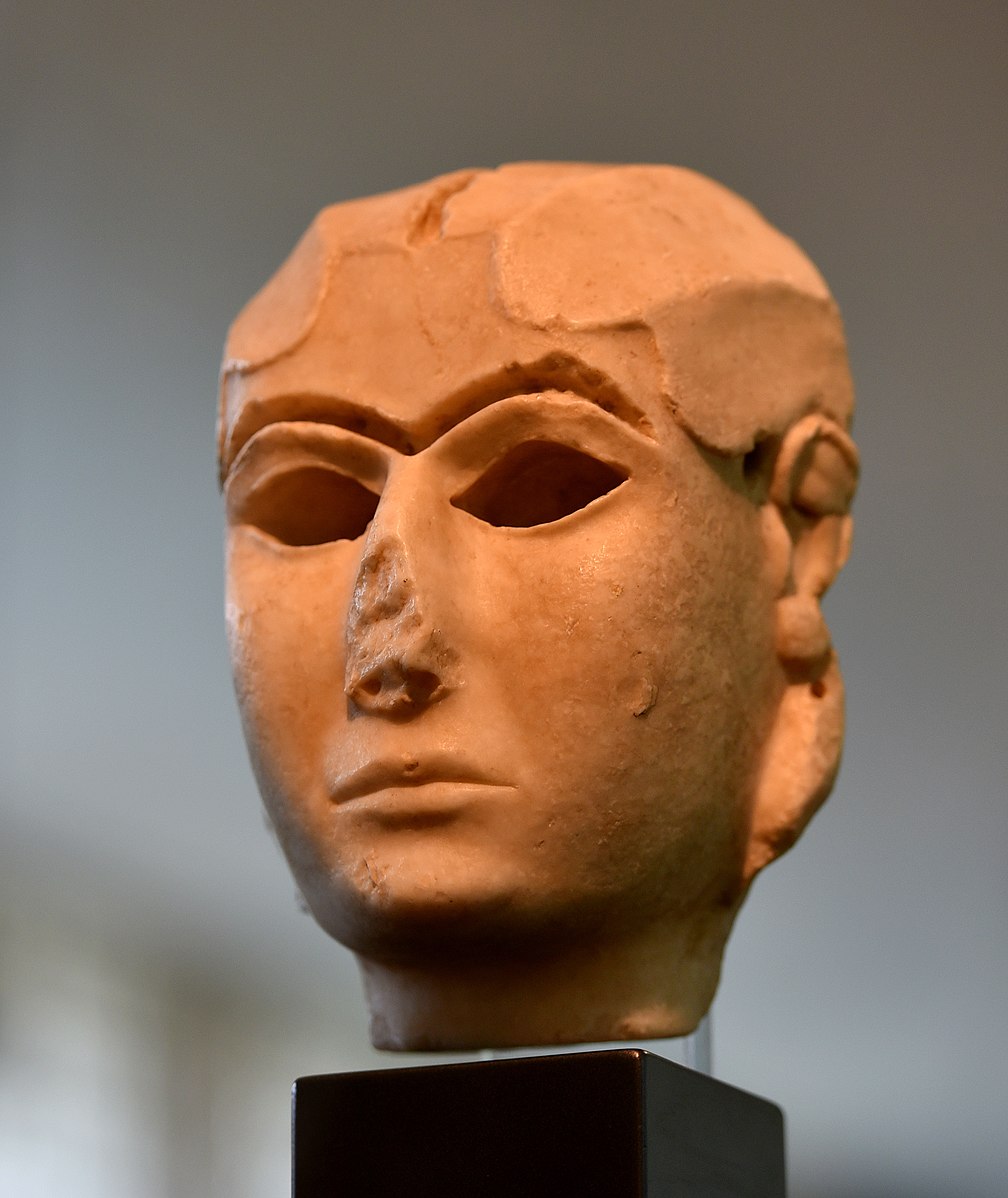
Mask of Warka (Lady of Uruk)
National Museum of Iraq, Iraq
3200–3000 BC
White marble
Source: THIS TUTORIAL WAS AUTHORED BY SOPHIA LEARNING. PLEASE SEE OUR TERMS OF USE.