Table of Contents |
Imagine seeing the dashboard in an airplane. There are gauges and measures of speed, attitude (a flight term referring to the angle of the plane), altitude (how high the plane is), and so forth. For a pilot, these are all critical to flying and landing safely. But even when the plane is on the ground, this control panel has useful information for a person who's never been in the cockpit before: It tells them what factors matter most to someone flying the plane.
Despite its name, the strategic architecture for a business is more like a dashboard than a blueprint of a building. It is a way to calibrate the current progress of the business and shows both the overall progress toward goals and also what factors matter most to that success.
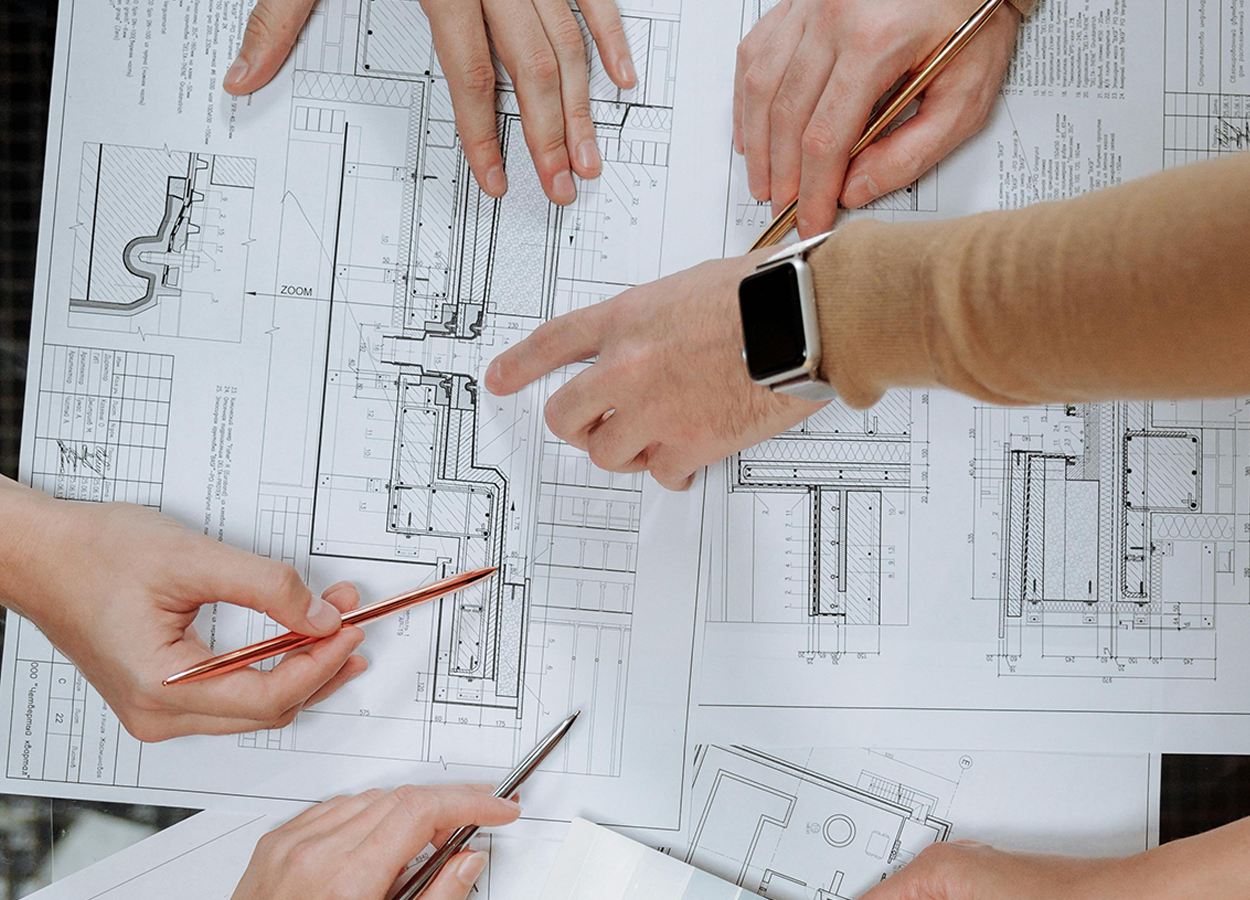
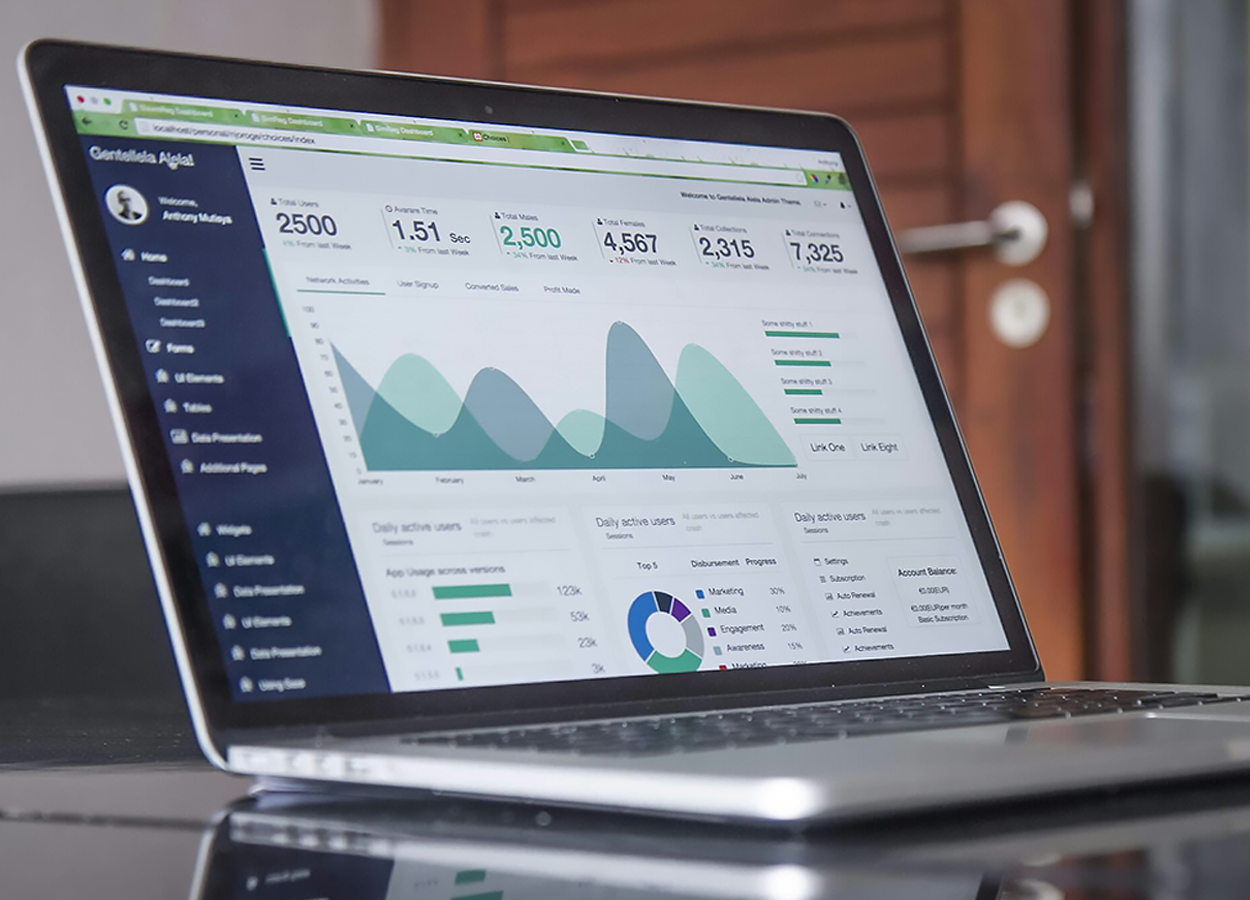
Any blueprint creates a path to completing something. Business architecture, however, isn’t a fixed plan so much as a diagram of the critical performance indicators that indicate progress toward goals.
While a traditional business strategy might resemble a building blueprint, outlining a fixed structure, a strategic architecture functions more like a dynamic dashboard. This real-time view prioritizes continuous calibration over a static plan. It assesses current progress towards established goals, highlighting the key performance indicators (KPIs) that most significantly influence success. By providing a holistic view with readily accessible data, the strategic architecture empowers proactive adjustments and fosters a data-driven approach to achieving business objectives.
Putting the architecture together is an important task; it requires determining which factors to measure and which data will give managers the best information for making critical decisions. Because even a small business can have more data than can be measured or delivered, it is important to be planful about what to measure and what to report. Among these factors are likely to be:
To illustrate these stages, let's consider a restaurant. What measures would a restaurant use to measure performance? Keep in mind that to be useful, any measures identified must be easy to measure and keep up to date.
| Description | Example |
|---|---|
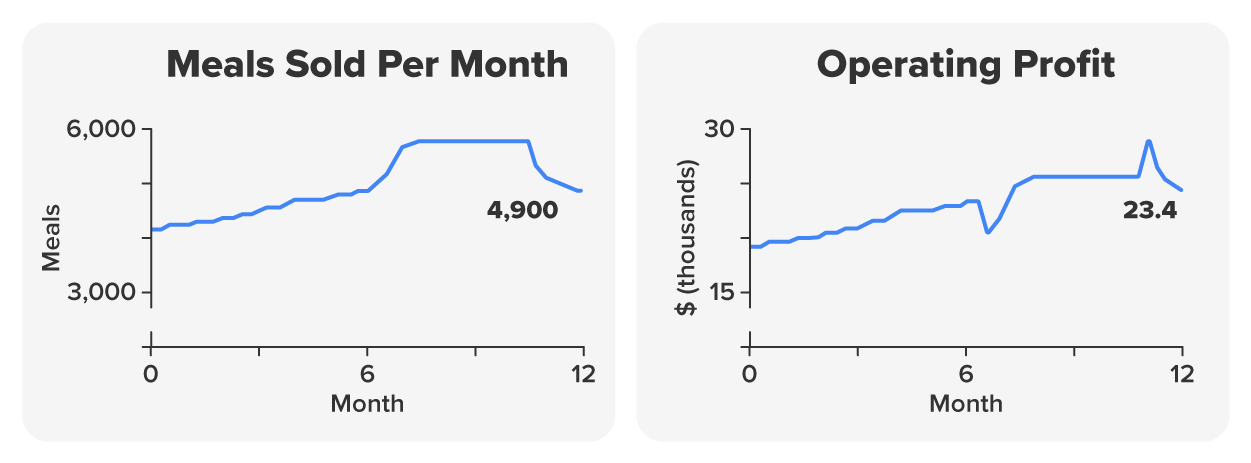
| Key measures to the success of the restaurant might be meals sold and the profits made in a month. |
|
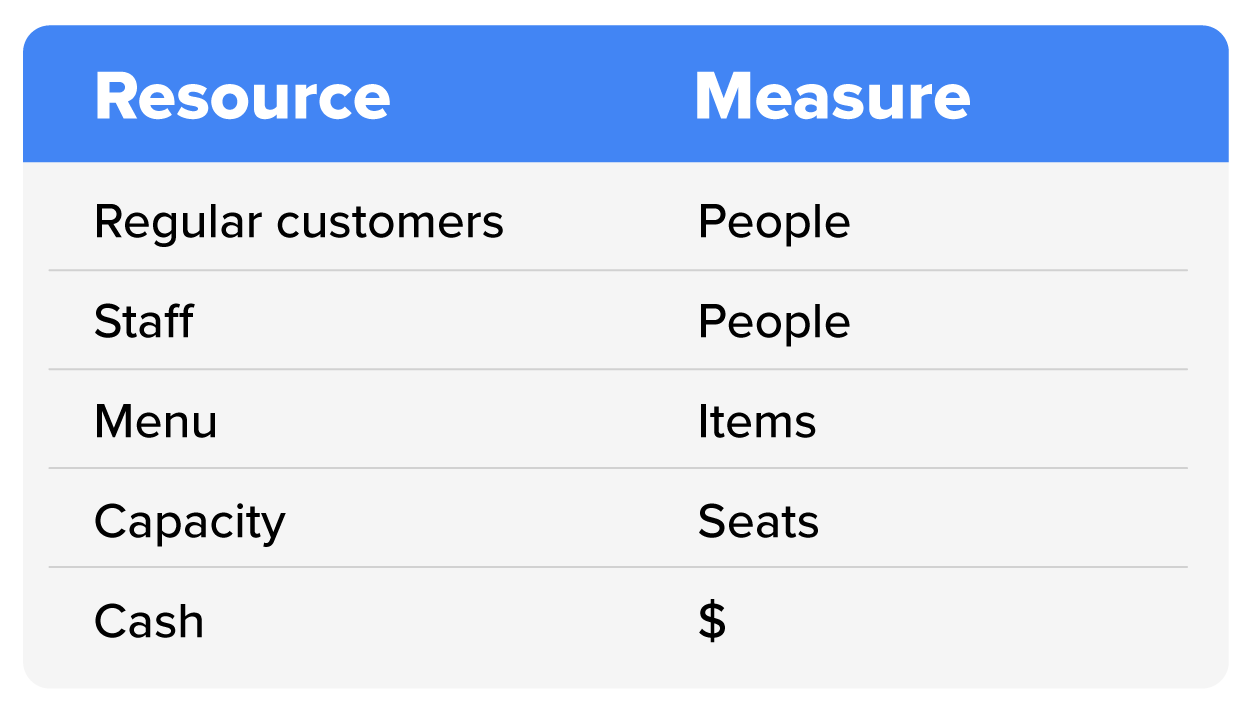
| Resources required include things like amount of people in the restaurant, how much they order, and how much capacity the restaurant has (that is, people they can serve at one time). |
|
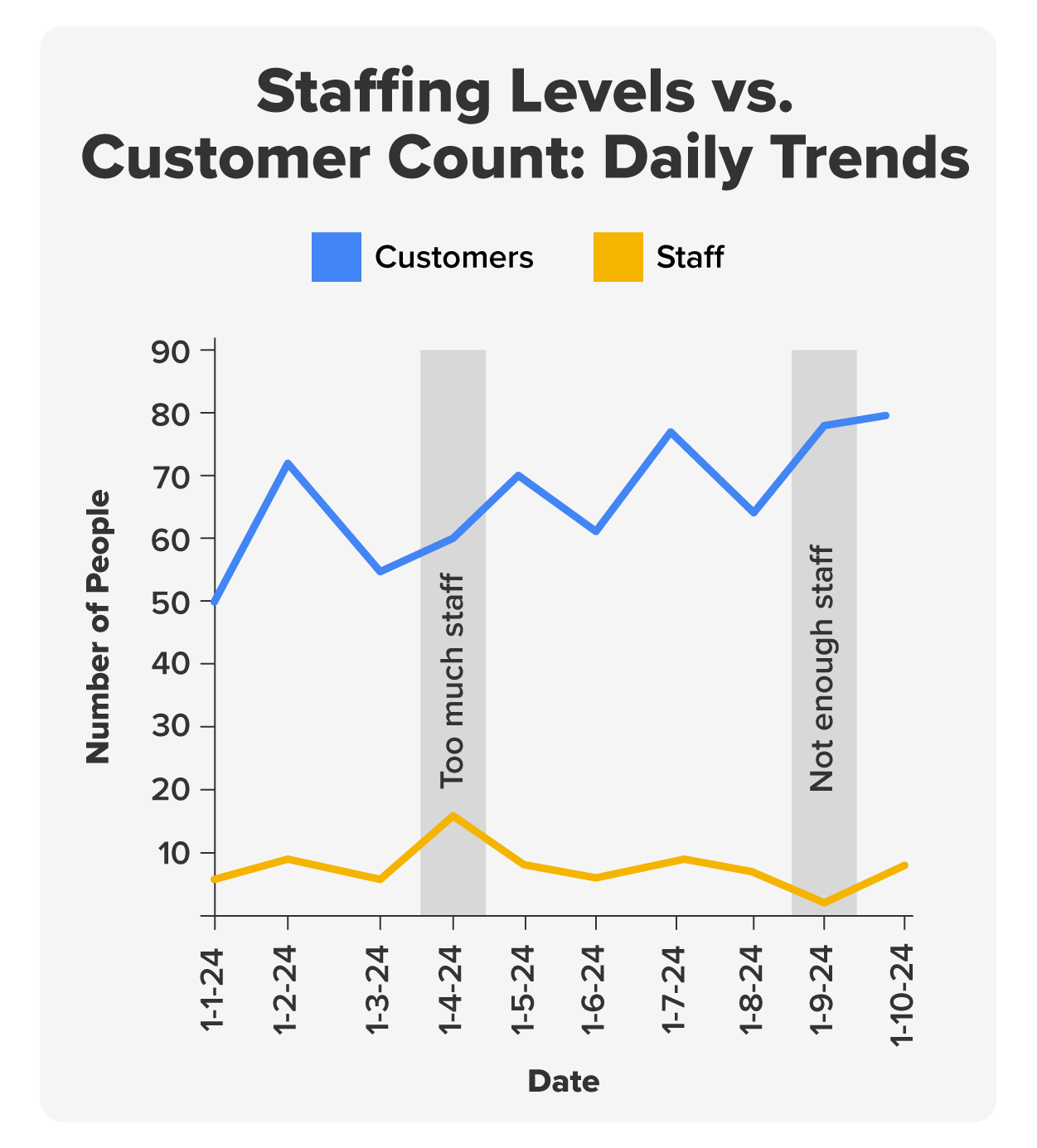
| The resources driving demand, supply, and performance include variables like how many customers are in the restaurant at any time and how many staff are available to serve them. The restaurant might be especially interested in how those two correlate, since higher demand translates to longer wait times and less satisfied customers. They can use these measures to find an optimal number of customers that maximizes profits while not lowering the overall customer experience. |
|
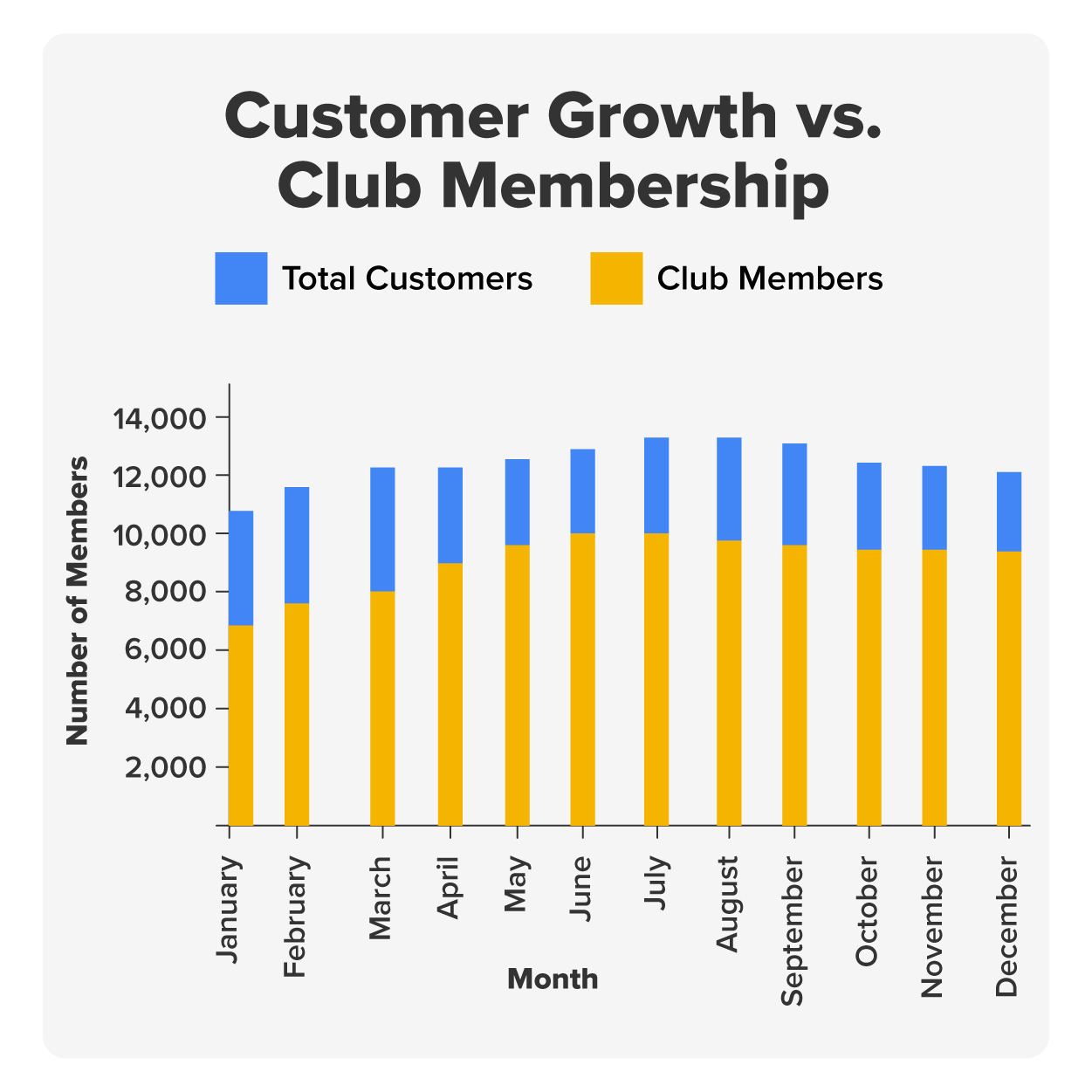
| The flows of resources into, through, and out of the organization’s system include customers, staff, the ingredients that make up meals, etc. In this scenario, the restaurant determines that customers are the most important variable to measure. The restaurant is also highly interested in the success of a dining club they’ve introduced with discounts for members. |
|
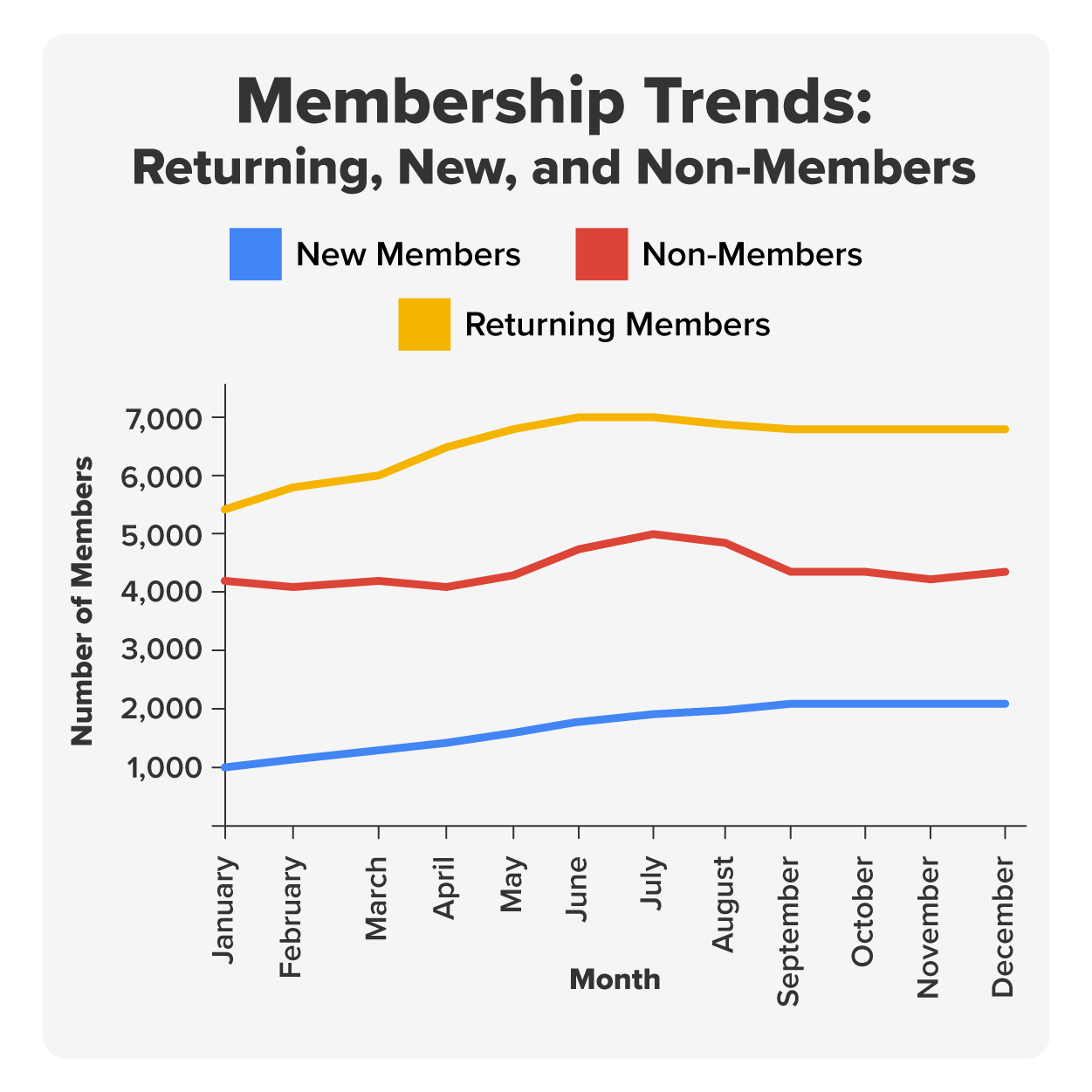
| The immediate causes for these flows to be running at the rate they are, such as new club members following a major marketing investment. |
|
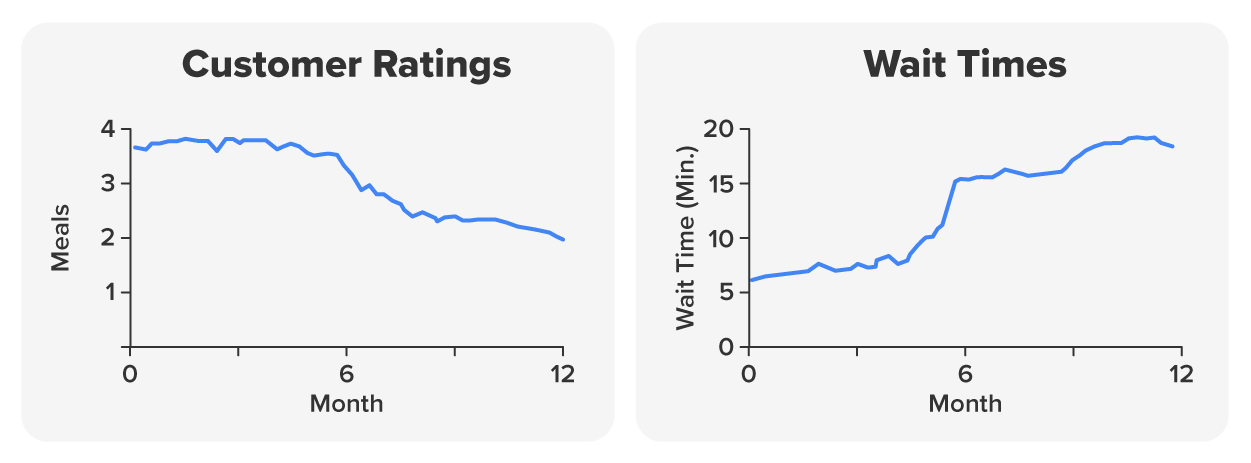
| If successful, the restaurant may be watching indicators that it has unwanted effects, such as longer wait times or lower customer evaluations. |
|
The above example is not complete. It does not, for example, include all resources, such as the menu or the seating capacity. Nor does it include potentially important factors that could drive changes in performance, such as competition or the general economic health of the community.
The best approach is to include as much of the architecture as is necessary to create a plausible explanation of performance over time. However, you also want to focus on the most important data and minimize unimportant data. It takes time and experience to determine the best factors to measure a particular business. These elements connect to provide a complete explanation of recent performance and future challenges.
You may be wondering where the restaurant gets the data needed to input into such a system. Restaurants often use a point-of-sale (POS) system which can track the number of sales in a given time period, the average dollar amount of a sale, number of customers or tables, what was ordered or purchased, and so on. Many of these systems can extract important information from the data, such as sales comparisons and trends. Likewise, most other businesses use these types of systems (POS and/or data analytics systems) to help analyze information to build an architecture, which ultimately makes for better business decisions. Later in this unit, we will look at methods of measuring and tracking inventory and customers—and consider the ethical limits of doing so.
To make best use of a strategic architecture, a business needs to have it available and accessible to the whole team—for the restaurant described above, perhaps on a large wallboard in the break room. In office environments, it is common in the high-tech era to have integrated data systems like Salesforce that can give real-time data to managers through a dashboard on their computer; the dashboard can be customized for each manager and their role. An HR head would see data like current new staff and departures and salary ranges; a sales executive would see overall performance and individual performance of sales staff, etc.
The architecture itself may change over time as managers realize that data is inaccurate, or that better measures can be used to gauge their progress toward goals. For example, if the restaurant above relies entirely on number of customers to measure success, they may hurry customers along to free up tables, where a restaurant that values customer evaluations will let diners enjoy meals at their leisure. What they measure and how they use those measurements to make decisions will align with their overall strategy. A high-end (Midas) restaurant will decide that customer experience is most important, where a fast-food (Hermes) restaurant depends on high volume.
A well-developed strategic architecture is a powerful tool, both to resolve specific issues and to guide the performance of the entire enterprise strategy. This takes some care in identifying the best indicators of performance and filtering out details that aren’t necessary and obscure the big picture.
Planning the architecture itself can lead to valuable insights, as it will typically prompt substantial debate and analysis. Two elements will ensure that insights are accurate and address the correct issues:
Source: This tutorial has been adapted from Saylor Academy and NSCC “Operations Management”. Access for free at https://pressbooks.nscc.ca/operationsmanagement2/. License: Creative Commons Attribution 4.0 International.



