Table of Contents |
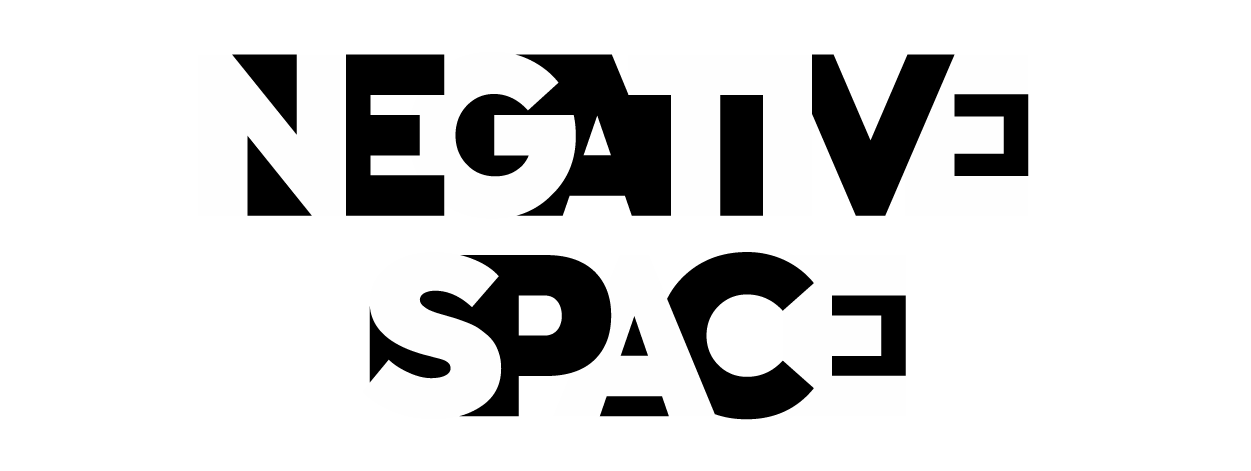
Space surrounds form and any other positive elements. Therefore, space is typically understood by negative spaces.

In the above graphic, negative space is used to define the letterforms P and C, and cut angles into the white areas to create the rest of the word, while simultaneously framing the letters.
Black and white denote the negative space and positive space. All the black surrounding the white is negative space, while the white is the positive element or form.
Space isn't necessarily an empty or secondary area; it's the background and can be considered a format by which we frame a design.
In the graphic below, we can see an inverse of this effect, where white space forms the negative area, or background, and the black space, the positive area. We can deduce that the white space is negative because it is the background element.
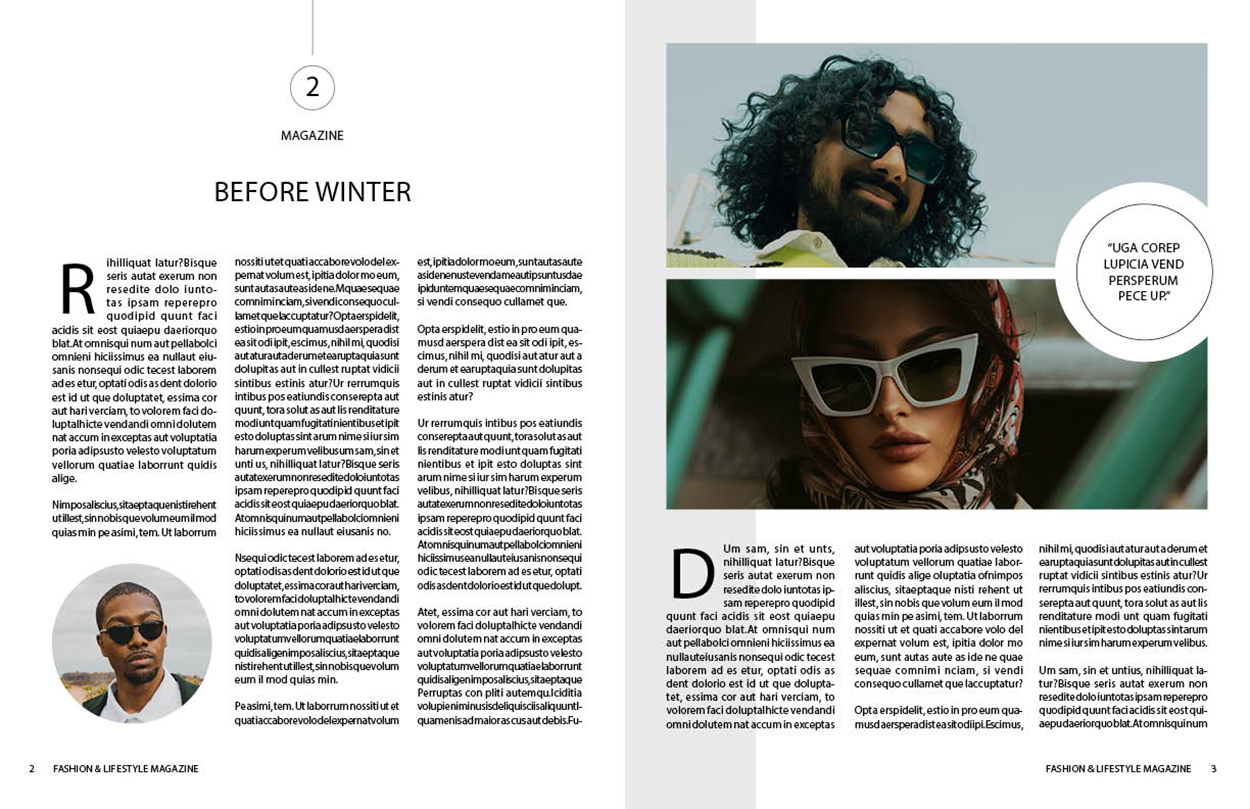
The terms white space and negative space are often interchangeable. When negative space is used correctly, it creates emphasis on the positive elements. White space is often used for alignment and forms paths for the viewer’s eyes to follow through the design. In the image below, white space establishes the width and structure of the text columns, promotes emphasis on both the headline and the circular photograph in the lower right-hand corner, and even forms a graphic element on the facing page.
Space can be used in framing, which refers to the edges of a visual design work. This variable lays the foundation of the designer's composition.
Framing changes the space, which directly affects the design as a whole, sometimes quite drastically. Thus, space and spatial relationships are very important in design.
Source: THIS TUTORIAL WAS AUTHORED BY MARIO E. HERNANDEZ FOR SOPHIA LEARNING. PLEASE SEE OUR TERMS OF USE.



