In this lesson, you’ll explore essential financial tools and services that can simplify money management. You’ll learn about the importance of balancing your account, online banking basics, and using debit and credit cards. Specifically, this lesson covers the following:
1. Balancing Your Account
Let’s be honest—no one likes the surprise of an overdraft fee or realizing they’ve spent more than they thought! Balancing your account is a simple way to stay on top of your money and avoid those unexpected moments. By regularly checking your bank balance and keeping track of where your money goes, you can feel more in control and confident with your spending. In this lesson, we’ll go over why balancing your account matters and how to make it part of your routine to keep your finances on track.
You can easily balance your bank account using online banking (more on that soon) or by looking at e-statements (digital versions of your bank statements you receive via email) or paper statements (mailed to you). We’ll discuss each of these later in the lesson.
-
EXAMPLE
Think of your bank account as your wallet. You wouldn’t spend money without knowing how much you have in your wallet, right? Balancing your bank account helps you avoid overspending and those dreaded overdraft fees. If you accidentally spend more than you have in your account, the bank might cover the extra amount—but they’ll usually charge an overdraft fee, which is often around $30–$35 per transaction. On top of that, banks may charge other fees, like monthly maintenance fees, ATM fees for using out-of-network machines, or even fees for paper statements. These costs can add up fast, so keeping track of your balance and understanding these fees helps you avoid paying extra.
-
- Online Banking
- A service that lets you manage your bank accounts and perform transactions, like checking balances, transferring money, paying bills, and more, through a secure website or mobile app rather than visiting a physical bank branch.
- E-Statements
- A digital version of your monthly bank statement sent to you via email.
- Paper Statements
- A physical paper copy of your monthly bank statement sent to you through regular mail to your home location.
1a. Overdraft Protection
Balancing your account is a great way to stay on top of your spending, but sometimes mistakes happen, and that’s where overdraft protection can come in handy.
Overdraft protection is like a financial safety net for your account. If you accidentally spend more money than you have in your checking account, overdraft protection steps in to cover the difference so your payment doesn’t get declined. But be careful because banks often charge a fee for this service, and it usually is something you have to ask for in advance.
-
EXAMPLE
Let’s say you’re at the grocery store, and without realizing it, you don’t have enough in your checking account to cover the total. Instead of the cashier telling you your card was declined, overdraft protection covers the difference, allowing the transaction to go through. It can be a real lifesaver in a pinch.
But there’s a catch—banks usually charge a fee every time this happens, often around $30–$35 per transaction. So, if you make several small purchases without realizing your account is low, those fees can stack up quickly. Plus, overdraft protection isn’t automatically applied; you need to opt in or request it ahead of time. And while it’s helpful for emergencies, it’s a costly habit if used frequently. The best way to avoid those fees is to keep an eye on your balance so you know what’s in your account before you spend.
-
- Overdraft Protection
- A bank service that covers purchases if you spend more than what’s in your account, preventing declined transactions or overdraft fees.
2. Online Banking
After exploring how compound interest can grow your savings, let’s look at a convenient way to manage that growth: online banking. Many online banks offer competitive interest rates, making them a great choice for maximizing your money’s potential while providing easy access from anywhere.
Online banking is the form of banking you most likely use every day on your mobile device. With just a few taps on your phone or computer, you can do almost everything: check your account balance, transfer money, pay bills, and even deposit checks without going to the bank. Online banking is like having 24/7 access to your bank without ever needing to leave your house.
2a. Online Bill Pay
Online bill pay is a lifesaver when it comes to managing monthly expenses. Instead of writing checks or remembering to pay your bills on time, you can set up automatic payments from your checking or savings account. Almost every monthly bill you have can be paid through online bill pay.
Here are some of the features of online bill pay that help you manage your finances:
- Automatic payments: Many online bill pay services let you set up automatic payments, so you don’t have to remember each bill’s due date. Once set up, payments are made on time each month, which helps you avoid late fees and can improve your credit score over time.
- Flexibility and control: You can choose to pay bills manually or schedule payments in advance, giving you flexibility based on your budget and cash flow. If a bill amount changes, like a utility bill, you can adjust the payment or set it to match the bill amount each month.
- Payment tracking: Most online bill pay platforms keep a history of your payments, so it’s easy to track what’s been paid and when. This can be helpful for budgeting or referencing past payments.
- Reminders and alerts: Some banks allow you to set reminders or alerts for upcoming payments. This way, if you prefer not to use autopay, you can still get a nudge when a due date is near.
- Security: Online bill pay is generally safe and secure, as banks use encryption to protect your information. Paying bills online also reduces the risk of checks being lost or stolen in the mail.
- One central location: Instead of logging in to multiple websites to pay different bills, online bill pay consolidates everything in one place. This makes managing your finances easier and more organized.
One of the most important factors of your credit score, which accounts for 35% of your score, is paying your bills on time. We will talk about this more in an upcoming lesson, but it’s critical to understand the importance of using online bill pay to make sure your bills are paid on time. You’ll never worry about late fees because your bills will be paid on time every month. It’s like setting your financial life on autopilot—without all the stress.
2b. Paper Versus E-Statements
Most banks give you a choice between paper statements (mailed to your house) or e-statements (digital statements you access online). Both serve the same purpose, but e-statements are great if you prefer keeping things digital, while paper statements might work better if you like having hard copies. It really comes down to your preference of how you like to review your bank inflows and outflows every month.
Some people still love opening a physical letter, but if you prefer everything on your phone or computer, e-statements are for you.
Let’s look deeper at some of the pros and cons of each.
Physical Bank Statements
- Pros:
- They provide a physical record you can keep on file for easy reference, which can be useful for taxes or tracking long-term spending.
- If you’re concerned about online security, physical statements eliminate the need to access sensitive information digitally.
- They are good for those who may not be comfortable using online banking.
- Cons:
- Paper statements can pile up and require storage space, making organization challenging.
- Physical statements arrive by mail, which may delay your ability to check your balance or recent transactions.
- Physical statements use paper, which can add up and have an environmental impact.
E-Statements
- Pros:
- You can view e-statements as soon as they’re issued, often giving you faster access to your financial information.
- There is no need for physical storage, as everything is stored digitally.
- E-statements save paper and reduce waste, making them an eco-friendlier choice.
- Most banks use secure online portals, and e-statements can be protected by passwords. Plus, no physical documents can be lost or stolen from the mail.
- Cons:
- They require internet access and comfort with online banking. Those without regular access to a computer or smartphone may find it inconvenient.
- E-statements might get lost in your email or overlooked if you don’t regularly check your online banking portal.
- While generally safe, digital records are still vulnerable to hacking or phishing scams if not properly secured.
In summary, if you prefer a physical record and don’t mind some extra paperwork, physical statements might be best. But if you’re comfortable with digital access and want convenience and eco-friendliness, e-statements are likely the better choice.
3. Cards
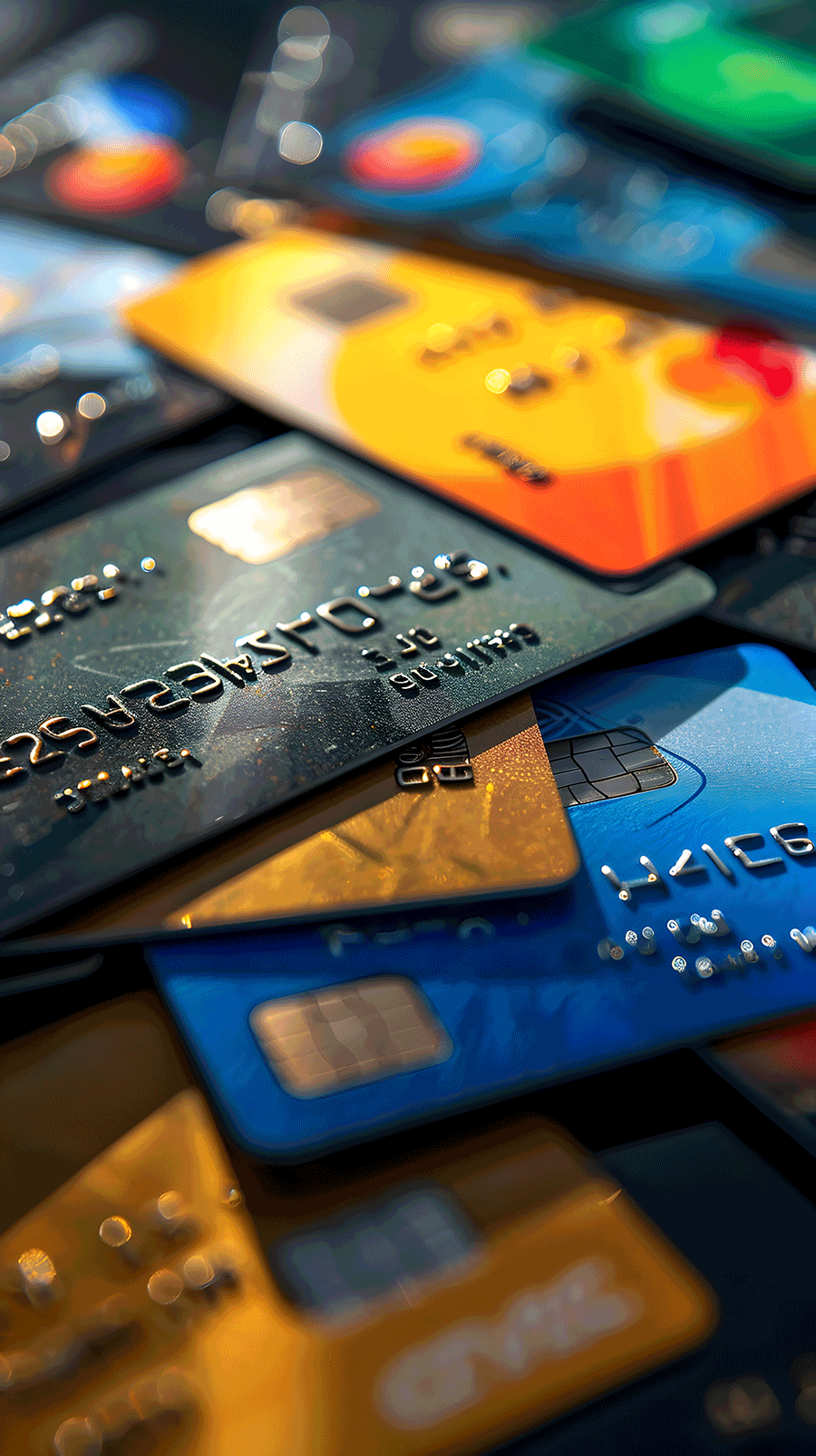
Debit cards, credit cards, and ATM cards are essential tools for managing and accessing your money, each with unique features and benefits. You probably use these cards daily, but let’s break down how they’re different:
- An ATM card lets you take money out of an ATM, or automatic teller machine, but it doesn’t work for making purchases.
- A debit card is tied directly to your checking account. When you use it, the money comes out of your account right away. It’s like using cash but in card form.
- A credit card lets you borrow money from the credit card company to make purchases. You have to pay it back, and with interest if you don’t pay it off in full each month. Credit card spending requires good financial habits to make sure you don’t go into credit card debt.
Each type of card is linked to a specific account that determines how your money is accessed. Debit cards are connected directly to your checking account, allowing you to spend only the money you already have. Credit cards are tied to a line of credit, meaning you can borrow money up to a set limit and pay it back later. ATM cards are usually linked to your bank account and primarily allow you to withdraw cash or check balances at ATMs.
IN CONTEXT
Think of a debit card as paying with cash—it’s instant. A credit card, on the other hand, is like borrowing money that you have to pay back later. Just make sure you don’t spend more than you can pay off, or you’ll owe extra in interest. The interest can really add up as well.
Just a friendly reminder, credit card debt can get you in trouble fast because interest builds up quickly, making it easy to owe much more than you originally spent if you don’t pay off your balance each month. Make sure to only spend as much as you can pay off in a short period of time, ideally a few months.
-
EXAMPLE
Imagine you buy a $1,000 laptop using your credit card, which has an interest rate of 20% per year. If you only make the minimum payment each month (let’s say it’s $25), here’s how the interest can cause the balance to grow over time.
Month 1: You owe $1,000. You pay the minimum $25, so your balance is now $975. However, at the end of the month, the credit card company adds 20% annual interest. That’s 1.67% per month (20% divided by 12). So, they add $16.26 in interest, and your new balance is $991.26.
Month 2: You owe $991.26. You make another $25 payment, bringing your balance to $966.26. Interest is added again at 1.67% of $966.26, which is $16.14. Your new balance is now $982.40.
Month 3: After your $25 payment, your balance is $957.40. The interest is $15.99, so your new balance is $973.39.
As you can see, even though you’re making regular payments, the high interest rate means you’re barely making a dent in the total amount you owe because the interest keeps piling up. Over time, if you only pay the minimum, the amount you owe can grow significantly, making the purchase much more expensive in the long run.
-
- ATM Card
- A bank card that allows you to withdraw cash, check your balance, and perform other transactions at an ATM.
- Debit Card
- A bank card that lets you pay for things directly from your bank account. You can also use it to withdraw cash at ATMs.
- Credit Card
- A card that lets you borrow money up to a limit to make purchases or pay bills. You repay it later, usually with interest if not paid in full by the due date.
In this lesson, you learned about essential financial tools and services that help you manage your money. You explored the importance of balancing your account and how online banking, online bill pay, and paper and e-statement types can simplify managing your finances. Additionally, you discovered how different types of cards and overdraft protection work to help you stay in control of your money.



