Use Sophia to knock out your gen-ed requirements quickly and affordably. Learn more
×

Shape

Author: Sophia

what's covered
In this lesson, you will learn about the shape element and its use in the visual design process. Specifically, this lesson will cover:

Table of Contents

1. Defining Shape

A shape is a two-dimensional plane with a clear, identifiable boundary.
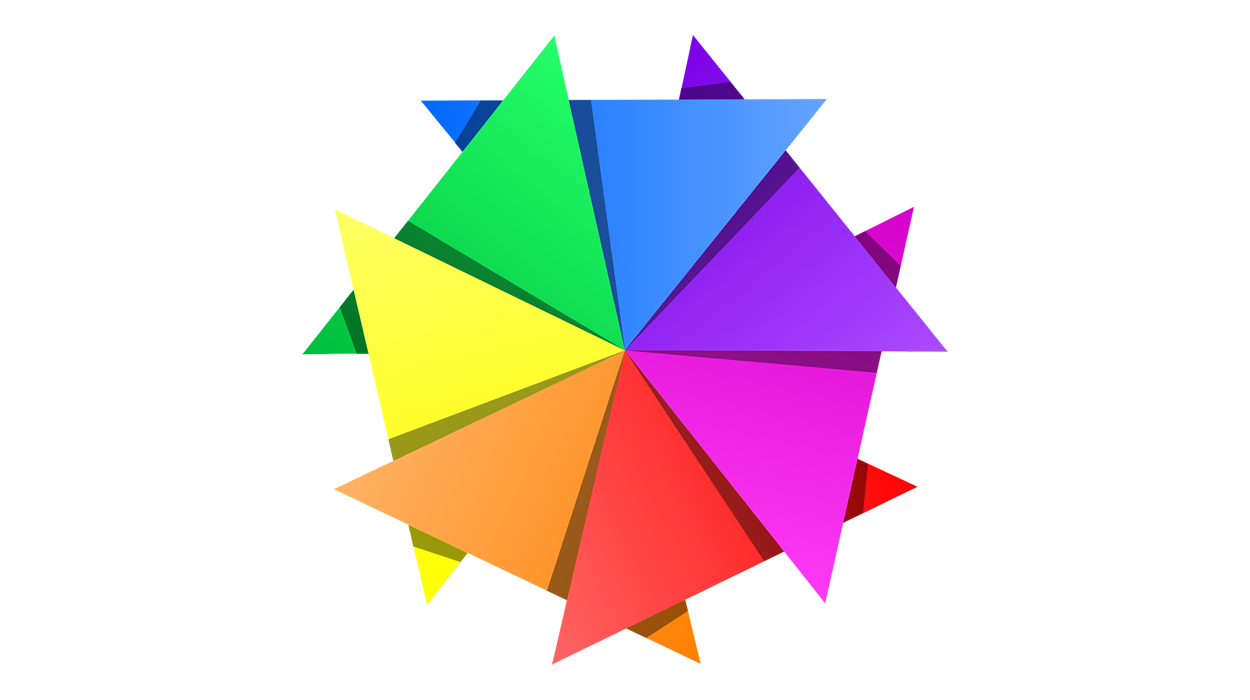
A plane is an area within a two-dimensional surface that extends to a specific direction or position. The plane is a particular kind of shape; it's the area between the two-dimensional surface. A plane can be parallel or skewed and recede into space.

Ceilings, walls, floors, and windows are all good examples of physical planes, as you can see in the image below.

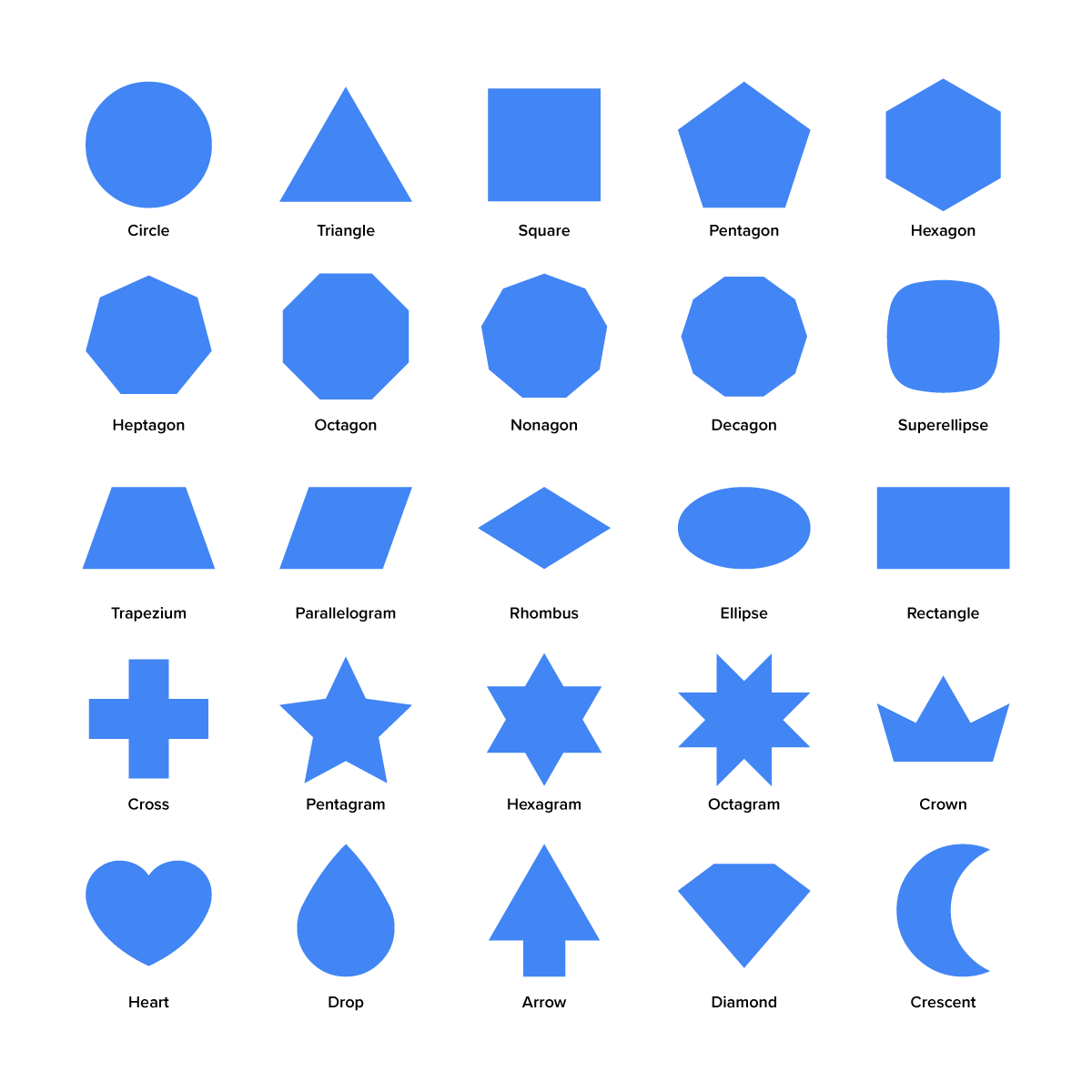
There are two categories of shapes: geometric and organic. Geometric shapes have uniform measurements and generally don’t appear in nature. Examples of geometric shapes include squares, rectangles, circles, and triangles. Although there are many different geometric shapes, they are rooted in three types: the rectangle, ellipse, and polygon. A rectangle is any four-sided shape, including squares. An ellipse is an oval shape, which includes circles. A polygon is any multisided shape with the exception of rectangles and squares. Triangles, stars, pentagons, hexagons, heptagons, and octagons are all examples of polygons.
Unlike geometric shapes, organic shapes do not have uniform measurements. Organic shapes are meant to replicate natural elements such as plants, trees, waves, sunbeams, and people.
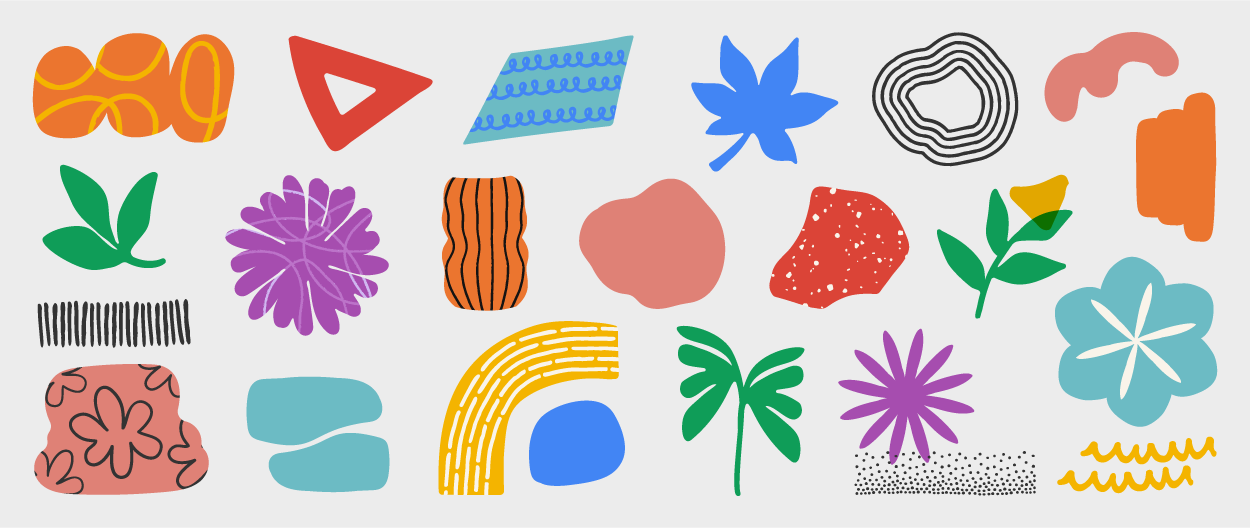
Although organic shapes often resemble natural elements, they can also be abstract in design.
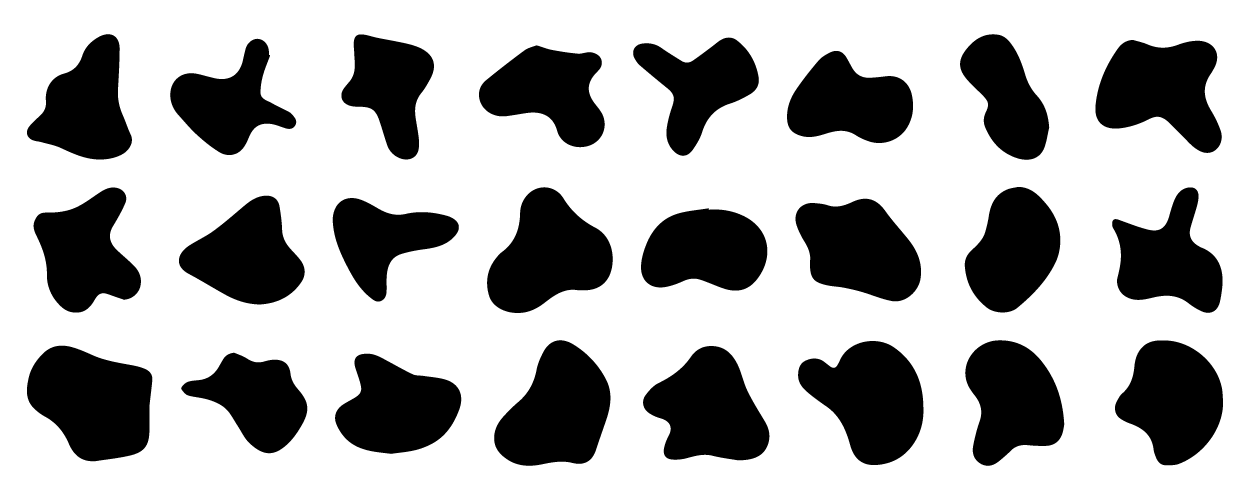
Blob shape collection. Vector illustration

terms to know
Shape
A two-dimensional plane with a clear, identifiable boundary.
Two-Dimensional
Having two coordinates: width and height.
Plane
An area within a two-dimensional surface that extends to a specific direction or position; a particular kind of shape.
Geometric Shape
A shape with uniform measurements that generally doesn’t appear in nature.
Rectangle
A shape with four sides.
Ellipse
An oval or circular shape.
Polygon
Any shape with multiple sides, including triangles.
Organic Shape
Shapes without uniform measurements, often used to replicate natural elements.


2. Shape Variant

Shape is a variant. The term shape variation relates to the diverse range of contours that can be implemented on the boundary of a shape, such as angular, curvy, and straight.
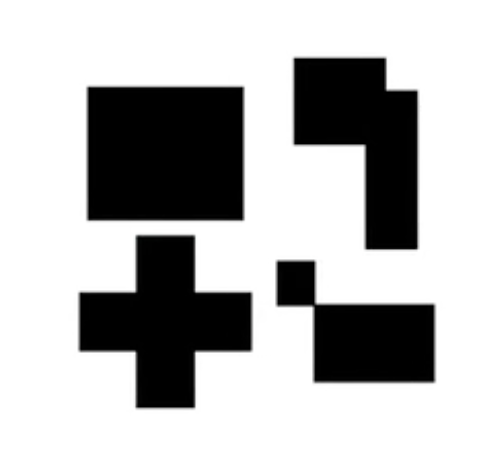
The shape above is a rectilinear shape. A rectilinear shape is a shape that is characterized by straight lines.
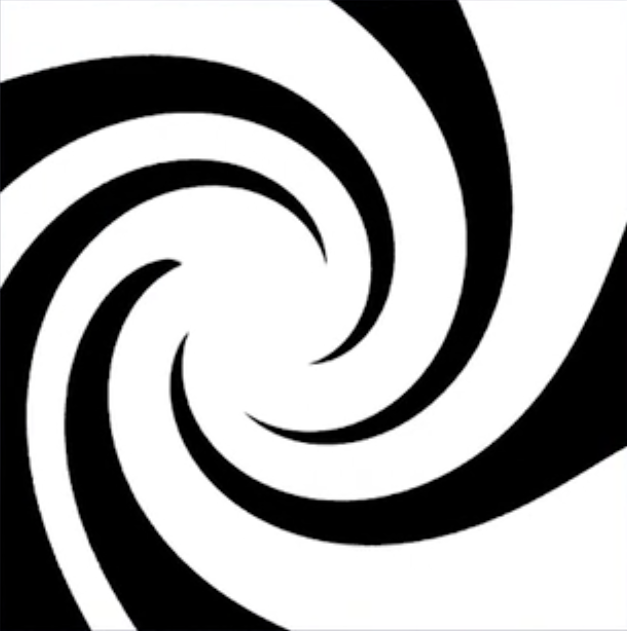
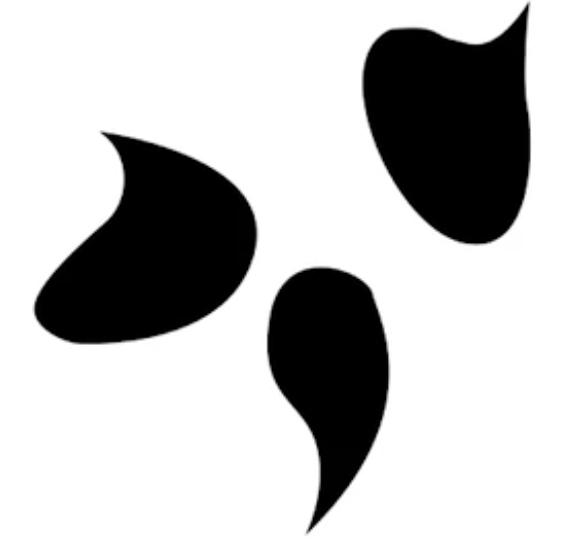
Curvilinear images like the ones above and below are characterized by curving lines delineating their boundaries.
watch

terms to know
Shape Variation
The diverse range of contours that can be implemented on the boundary of a shape, such as angles, curves, and straight edges.
Rectilinear
A shape that is characterized by straight lines.
Curvilinear
A shape that is characterized by curvy lines for boundaries.


3. Defining Form

Form is a three-dimensional object constructed by two or more shapes.

Look at the image below of a simple box.
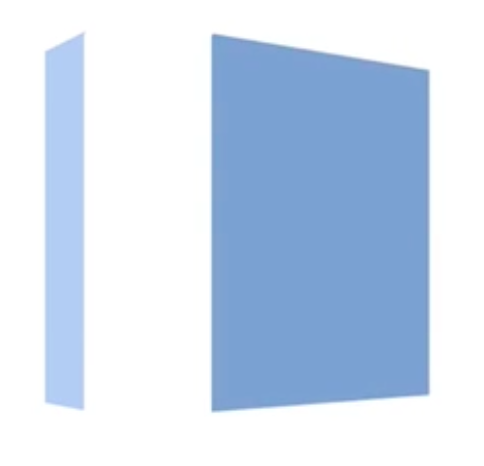
Depth—the third dimension that differentiates form from shape—can be achieved by combining the two rectangles.
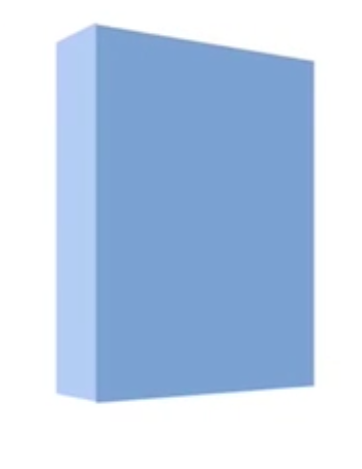
Combining three shapes together creates an even better sense of depth.
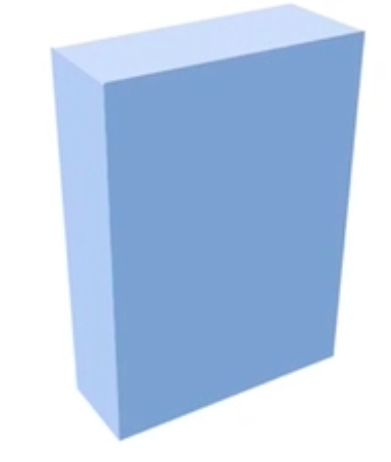
The form above is now three-dimensional, meaning that it has three planes representing width, height, and depth.

A three-dimensional form creates volume, which is the amount of three-dimensional space a form occupies. Increasing the size of the width, height, and depth expands the volume of the form.
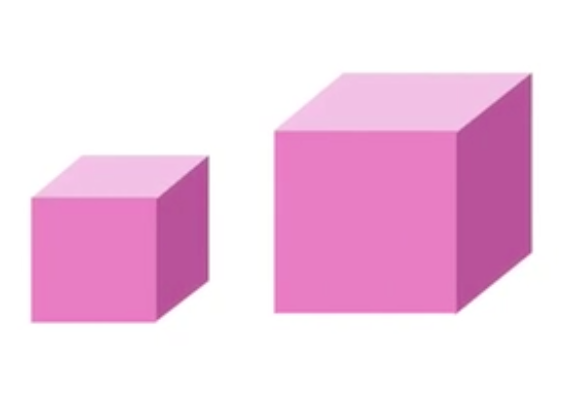
Compare the two boxes above; the box on the right has more volume than the smaller box on the left.

EXAMPLE

Imagine that you have two cups: a huge coffee mug and a tiny espresso cup. Clearly, one would hold more fluid than the other. By the coffee mug being larger, it has more width, height, and depth, so it occupies more volume than the espresso cup.

terms to know
Form
A three-dimensional object that can be constructed by two or more shapes.
Three-Dimensional
Having three coordinates: width, height, and depth.
Depth
The third dimension that differentiates form from shape.
Volume
The amount of three-dimensional space a form occupies.


4. Types of Form

When thinking about form, it's important to note that you can have different types: geometric form and organic form.

Much like shape, geometric from is defined by its allegiance to mathematical construction.
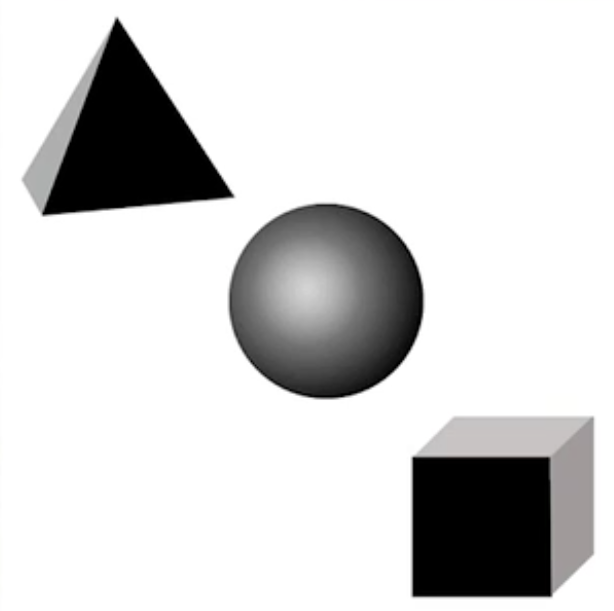
The basic shapes above (sphere, cube, and pyramid) are geometric forms. Typically, shapes with angular and hard edges are considered geometric.

EXAMPLE

You can see a lot of geometric forms in architecture, and everyday products like consumer electronics, and shipping containers.

Organic form is defined by its simulation of natural substance. Instead of the hard edges of geometric forms, organic forms have irregular, complex, curvy, and varied contours, much like you see in nature with hills and mountains or in the details of faces and hands.

watch

terms to know
Geometric Form
Form defined by its allegiance to mathematical construction.
Organic Form
Form defined by its simulation of natural substance.

summary
In this lesson, you learned about defining shape as a two-dimensional plane with a clear, identifiable boundary. You learned about geometric and organic shapes, and that geometric shapes are either rectangles, ellipses, or polygons. You also learned about shape variants, which are the diverse range of contours that can form the boundary of a shape, such as angular, curvy, and straight. Additionally, you learned to define form as a three-dimensional object. You also learned about the different types of form: geometric and organic. Geometric forms are defined by their mathematical construction of hard or angular edges, while organic forms simulate natural substances with varied contours.

Source: THIS TUTORIAL WAS AUTHORED BY MARIO E. HERNANDEZ FOR SOPHIA LEARNING. PLEASE SEE OUR TERMS OF USE.


Attributions
Terms to Know
Curvilinear

A shape that is characterized by curvy lines for boundaries.

Depth

The third dimension that differentiates form from shape.

Ellipse

An oval or circular shape.

Form

A three-dimensional object that can be constructed by two or more shapes.

Geometric Form

Form defined by its allegiance to mathematical construction.

Geometric Shape

A shape with uniform measurements that generally doesn’t appear in nature.

Organic Form

Form defined by its simulation of natural substance.

Organic Shape

Shapes without uniform measurements, often used to replicate natural elements.

Plane

An area within a two-dimensional surface that extends to a specific direction or position; a particular kind of shape.

Polygon

Any shape with multiple sides, including triangles.

Rectangle

A shape with four sides.

Rectilinear

A shape that is characterized by straight lines.

Shape

A two-dimensional plane with a clear, identifiable boundary.

Shape Variation

The diverse range of contours that can be implemented on the boundary of a shape, such as angles, curves, and straight edges.

Three-Dimensional

Having three coordinates: width, height, and depth.

Two-Dimensional

Having two coordinates: width and height.

Volume

The amount of three-dimensional space a form occupies.
