Table of Contents |
When you choose courses, you need to think about which courses you want to take and which courses you have to take. Typically, there are three types of courses you'll be considering: general education courses, courses required for your degree program, and elective courses.
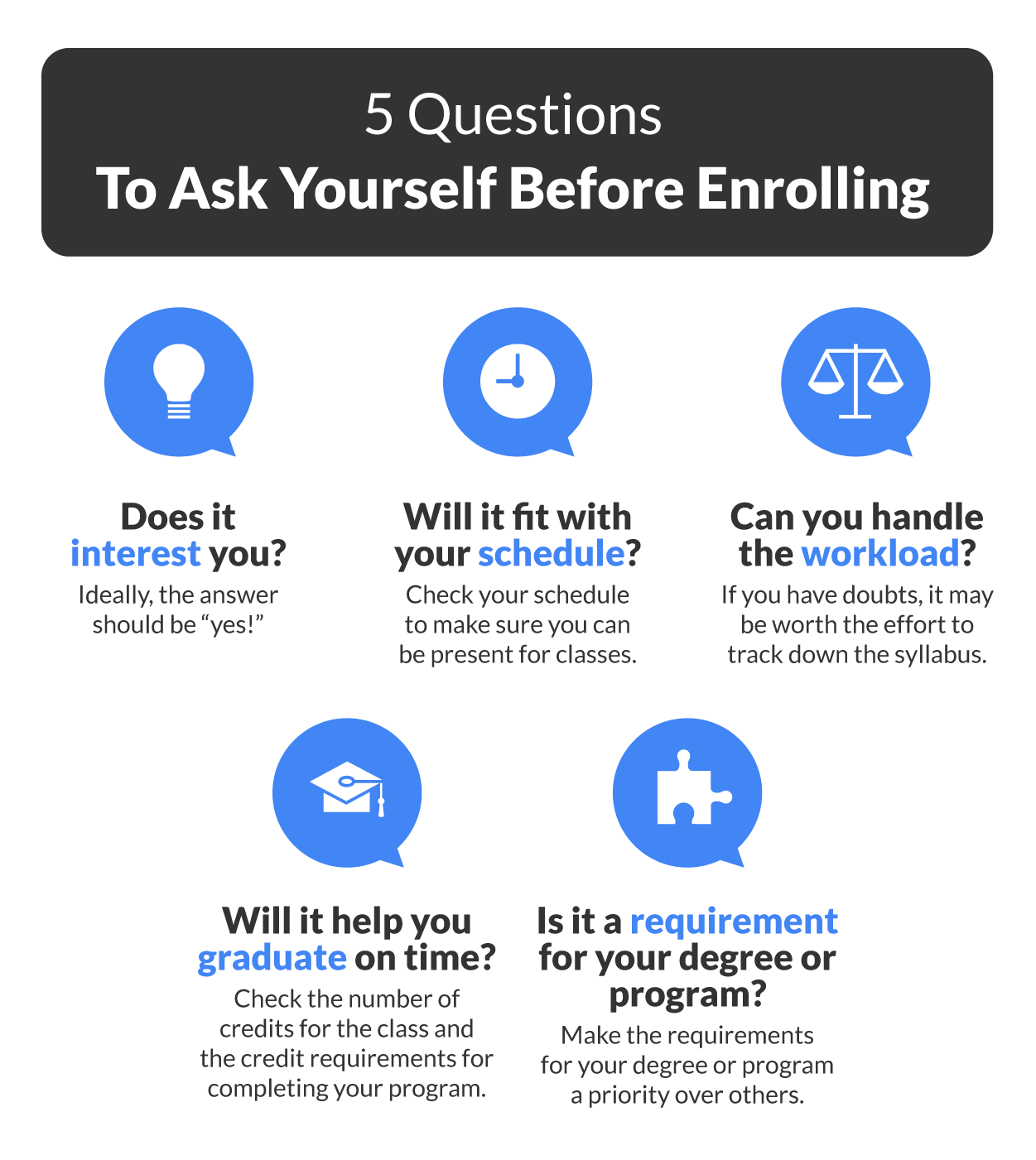
If the process of choosing the right courses and understanding the courses you need to take seems daunting or overwhelming, there is no reason to panic.
There are professionals whose job is to help you with these kinds of issues. They are typically called academic advisors, and their role at an institution of higher learning is to consult with students in order to help them develop short and long-term plans and goals.
An advisor will know about or be able to find out about different sets of requirements for the programs you are interested in and registration procedures. They may also have information and advice about particular courses or instructors, and they will have valuable experience working with students in your situation.
After you've read a course description and carefully considered factors like whether a course fits into your schedule or whether it will be useful in satisfying the requirements of your degree, there is even more you can do to learn about a course in order to help you make your decision.
You might see if you can find a syllabus online from when the course was offered in the past, so you can investigate the workload and the kind of work that is assigned in the course.
Another good idea is to find out as much as you can about the instructor since they will play a significant part in whether you have a positive experience with the course. The instructor might have a web page, either through their academic department or elsewhere, which includes vital personal and professional details about them. There are also internet sites where students anonymously review their instructors; though another student's experience won't necessarily match up with yours, these sites can be an interesting way to gauge popular opinion about an instructor.
IN CONTEXT
When selecting a course, it's important to consider not only the content and schedule but also the instructor. There are several factors that might influence your experience in a class, such as teaching style, class workload, and exam difficulty. While every student’s experience may differ, many students find it helpful to check online reviews of instructors to get a sense of what to expect.
There are several websites where students can anonymously review their professors, which can give you an idea of what other students think about a particular course or instructor. Keep in mind that reviews are highly subjective and may not fully align with your own learning preferences or experience. However, they can offer some insight into the instructor's teaching style, grading system, and overall approach to the course.
While these reviews can be a helpful tool, remember that one student's experience may differ from yours. The best way to assess a course and its instructor is to do your own research and consider speaking to students who have taken the course recently, if possible. Additionally, don't hesitate to reach out to the professor directly if you have any questions about the course content, structure, or expectations.
Source: THIS TUTORIAL WAS AUTHORED BY SOPHIA LEARNING. PLEASE SEE OUR TERMS OF USE.



