Table of Contents |
Scale is a design principle that refers to the size of an element.
This simple principle is important because it can drastically affect the perception of the design, photograph, or other visual work.
As human beings, we have learned to notice larger objects in our environment first. Part of this awareness is the fact that larger objects take up more space and are easier to see. Although there are exceptions to this, as in camouflaged objects or figures in dim light, we generally see big things first. On a deeper level, our brains are hardwired to identify and assess objects in our surroundings. Larger objects offer increased threats and opportunities. Early humans recognized that bigger predators equaled greater threats, large prey animals offered more food and resources, and larger fires kept more people warm. In essence, bigger is better, stronger, and commands more attention.
In the image below, a battleship and a small boat float side by side in a harbor. The viewer’s attention is drawn to the warship first because of its scale. If the small boat’s size were to be increased to a larger size than the military craft, the viewer’s attention would shift to the other boat. In this case, the battleship’s size implies power, especially when its scale stands in contrast with the small craft on the right.

Scale is an important technique for visual storytelling. In the case of the two ships in the harbor, the viewer immediately becomes aware of the imposing power and potential threat of the military vessel. The small boat appears vulnerable and weak in comparison. The competition between the scale of the two boats communicates with the viewer.
In the image below, a house is surrounded by oversized vegetation. The disparity in scale between the structure and the reeds first makes the viewer wonder whether the house is very small or if the vegetation is abnormally large. Smoke emanating from the house’s chimney provides a visual clue that someone is inhabiting the home. The storytelling component is embellished further by the red-leaved trees and the wagon wheel near the house. The trees and the wagon wheel match the scale of the house, deepening the mystery of what is really large or small in the design. This triggers curiosity in the viewer and enhances the experience of the design.

Scale goes hand in hand with proportion, which is the ratio of one size of an element to another.
Proportion is needed to help identify the scale of an element by allowing the viewer to compare multiple elements in a design. For instance, you could compare the size of a tree to the size of a car in order to establish how large one or the other is.
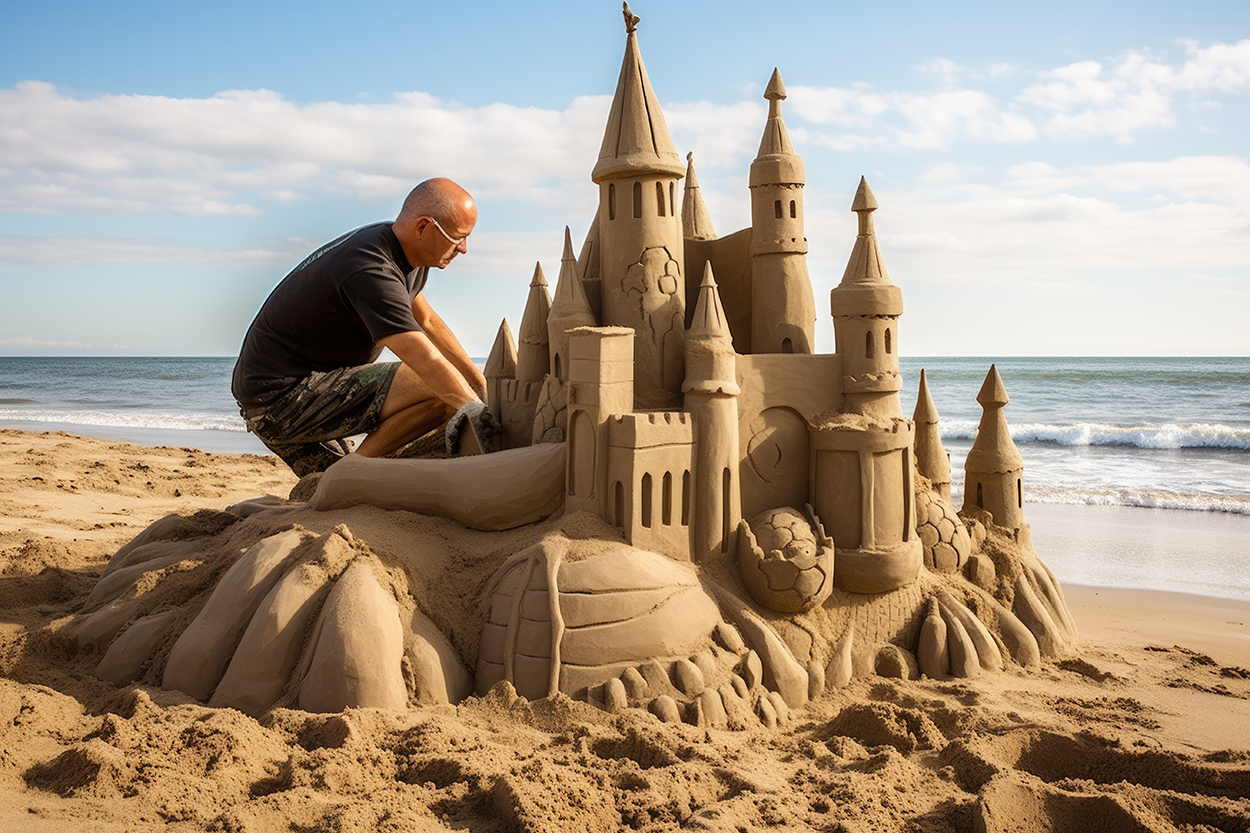
Look at the image of the man building the sandcastle. While we don’t know the man’s exact height, we do understand the average height of other human beings, and we use this to determine the scale of the sandcastle. If we removed the man from the image, there would be no visual reference, as the sand, waves, and clouds are not measurable to the casual viewer.
Part of our recognition of scale to identify proportion comes from learned experience.
Take a look at the example image below.
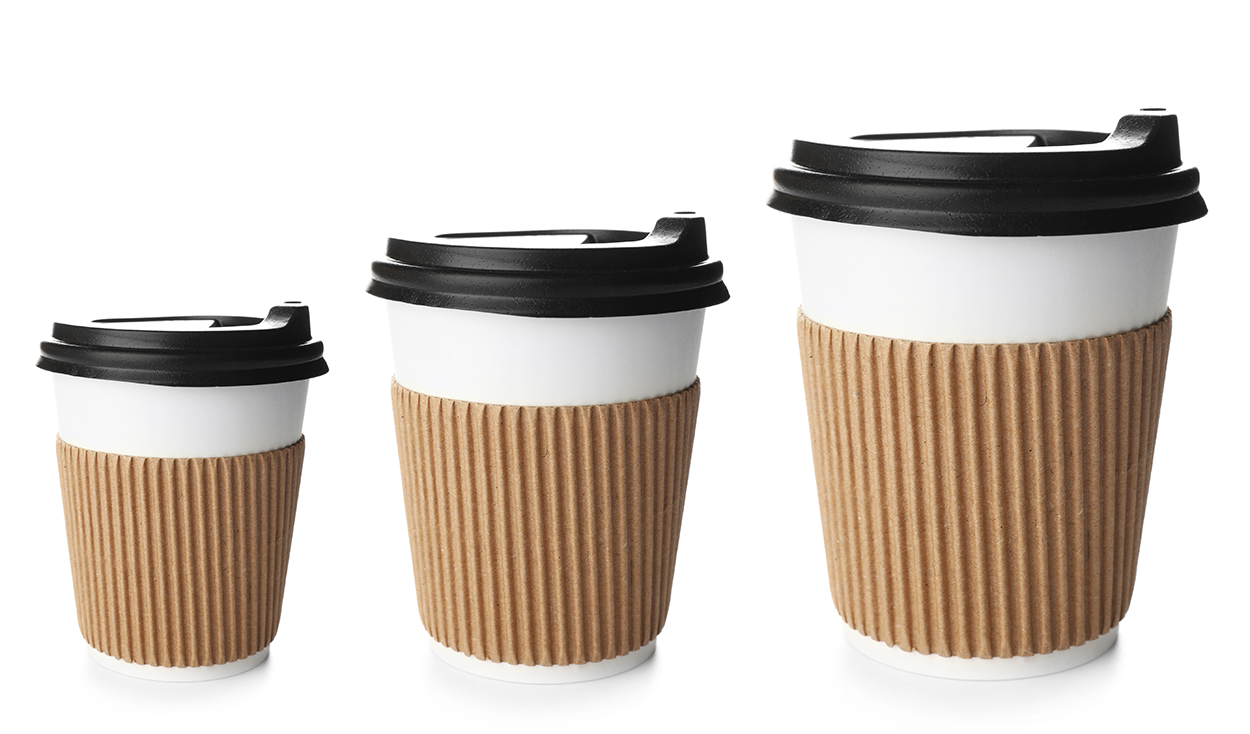
In this example, three coffee cups are lined up to show proportion. The viewer understands the proportions between small, medium, and large by the difference in scale. We can quickly identify and understand these proportions because we have all used Styrofoam cups and are familiar with their sizes and shapes.
Scale is also used to understand proportion in living creatures. In the image below, a young snail crawls behind an adult. We understand that the snail on the left is not fully mature because we determine the proportions of an adult snail by viewing the larger gastropod on the right.

Source: THIS TUTORIAL WAS AUTHORED BY MARIO E. HERNANDEZ FOR SOPHIA LEARNING. PLEASE SEE OUR TERMS OF USE.



