In this lesson, you will learn about the costs associated with college and some strategies to choose the right savings plan. Specifically, this lesson will cover the following:
1. Understanding the Costs Associated With College
-
For many families, figuring out how to pay for college is one of the biggest financial challenges they will ever face. The cost of higher education has risen significantly over the years, making some families feel like it is almost impossible to afford it without taking on massive amounts of debt. Tuition, housing, meals, books, and personal expenses all add up quickly, leaving many students and parents wondering how to cover the costs.
The good news is that with the right plan and strategies, saving for college is entirely possible. Just like saving for retirement, buying a home, or any other major life goal, paying for college becomes much more manageable when you break it down into smaller steps and start planning as early as possible. Even if you haven’t started yet, it’s never too late to put a plan in place.
No matter where you are in the process—whether you’re a parent starting early or a student looking for ways to fund your own education—this lesson will provide you with practical and actionable strategies to make college more affordable and reduce the reliance on student loans.
Before you start saving, it’s important to understand the full cost of college—not just tuition, but everything that comes along with it.
Here’s a breakdown of average annual tuition and fees (not including housing, food, or other expenses) in 2024. Keep in mind that these numbers change frequently and costs vary widely by school, state, and financial aid availability. Always check with individual colleges for the most up-to-date pricing.
- Public, in-state university: ~$11,000 per year
- Public, out-of-state university: ~$28,000 per year
- Private university: ~$40,000 or more per year
Multiply those numbers by 4 (or more) years, and you quickly realize how expensive a degree can be. However, these are just averages, and actual costs vary depending on factors like the specific school, scholarships, financial aid, and residency status.
Beyond tuition, students also need to budget for the following:
- Housing and meals: On-campus housing and meal plans can range from $10,000 to $15,000 per year. Living off campus might be cheaper or more expensive, depending on the location.
- Books and supplies: College textbooks can cost $1,200 to $1,500 per year—sometimes, even more for specialized courses.
- Transportation: If your child is attending college out of state, travel costs (flights, gas, and public transportation) can add up.
- Personal expenses: Laundry, phone bills, entertainment, and other day-to-day costs can add another $2,000 to $5,000 per year.
Total Estimated 4-Year Cost of College
|
Type of College
|
Tuition & Fees (4 Years)
|
Estimated Total Cost (Including Housing and Books)
|
|
Public, In-State
|
~$44,000
|
~$80,000–$100,000
|
|
Public, Out-of-State
|
~$112,000
|
~$150,000–$180,000
|
|
Private University
|
~$160,000+
|
~$200,000+
|
Note: These numbers are just estimates, and tuition rates increase nearly every year. Some schools might charge significantly more or less, and financial aid or scholarships can bring costs down.
-
EXAMPLE
Let’s say a student chooses an in-state public university where tuition and fees are $11,000 per year. If they live on campus, their total costs might look like this:
- Tuition and Fees: $11,000
- Room and Board: $12,000
- Books and Supplies: $1,500
- Personal Expenses: $2,500
- Transportation: $1,000
Total Cost Per Year: $28,000
Total Cost for 4 Years: $112,000
But What if You Haven’t Started Saving Yet?
- If your child is already in high school (or even college), you might feel like it’s too late to start saving. But here’s the reality: It’s never too late to make a financial plan. Even small savings can make a difference, and there are still plenty of ways to reduce college costs.
Consider these strategies:
- Start saving now, even if it’s a small amount. Putting aside $100 per month for 4 years will still add up to nearly $5,000, which could cover books, fees, or part of a semester’s tuition.
- Encourage your child to apply for scholarships. There are thousands of scholarships available for students of all backgrounds, talents, and interests.
- Explore community colleges and transfer programs. Many states have agreements where students can complete the first 2 years at a community college for a fraction of the cost before transferring to a university.
- Look into employer tuition assistance. Some companies offer tuition reimbursement for employees and their children.
- Make sure to apply for federal aid. Completing the Free Application for Federal Student Aid (FAFSA), which you’ve already learned about, can unlock grants, work-study opportunities, and low-interest student loans.
The cost of college can seem overwhelming, but with a solid plan, it’s possible to save and reduce expenses along the way. Whether your child is still in diapers or already filling out college applications, taking action today can help reduce financial stress in the future.
In the next section, we’ll dive into the best savings options, including 529 plans, Coverdell ESAs, and other strategies to make saving for college as easy and effective as possible.
-
- Scholarships
- Financial awards, which do not need to be repaid, that are given to students based on merit, need, or other criteria.
- Tuition Assistance
- Financial help provided by employers or organizations to cover part or all of an employee’s or student’s college tuition costs.
2. Choosing the Right Savings Plan
Now that we’ve covered the cost of college, let’s explore the best ways to save and invest for it. There are several savings options available, and the right choice for you depends on your goals, financial situation, and how much flexibility you need.
The most effective college savings plans are those that offer tax advantages, meaning that your money can grow faster because you’re not paying taxes on interest, dividends, or capital gains.
The four most common ways to save for college are as follows:
- 529 College Savings Plan: A tax-advantaged investment account designed specifically for education expenses
- Coverdell Education Savings Account: A flexible account that allows you to invest in a wide range of assets for education
- Roth IRA: A retirement savings account that can also be used for college expenses
- Regular Investment or Savings Accounts: A more flexible option with no restrictions on how the money is used, but without tax benefits
Let’s break each one down in more detail.
1. The 529 College Savings Plan: The Best Option for Most Families
A 529 plan is one of the most powerful ways to save for college. It’s a state-sponsored, tax-advantaged savings plan designed specifically for education expenses. While each state offers its own version of a 529 plan, you can typically enroll in any state’s plan—you don’t have to choose the state where you live.
Why a 529 Plan Is a Great Choice:
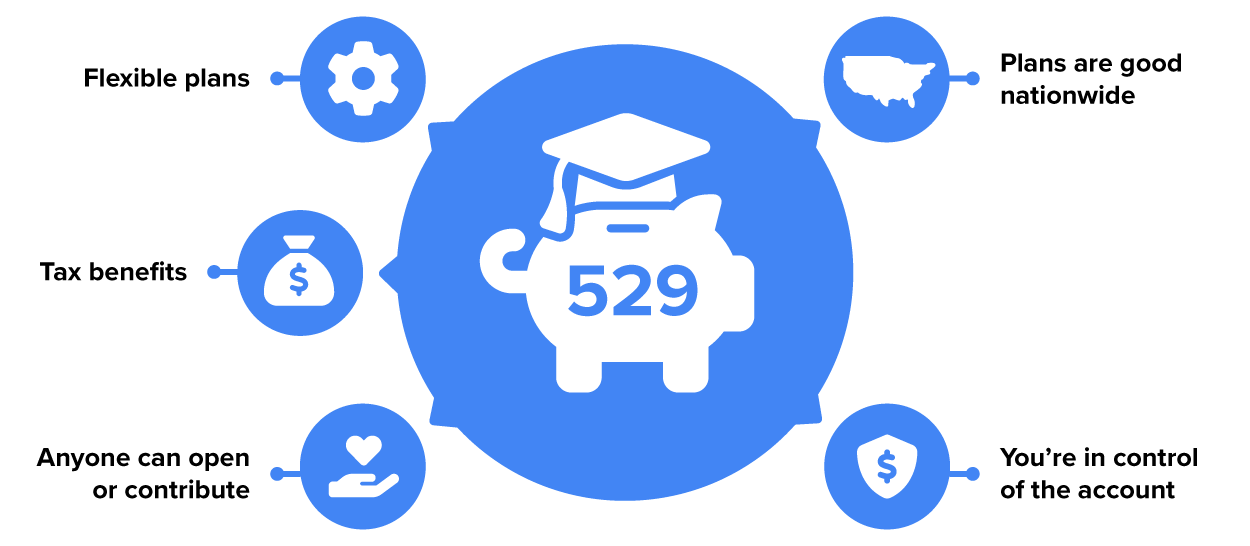
- Tax-Free Growth: Your contributions grow tax-free and withdrawals are also tax-free as long as they are used for qualified education expenses.
- High Contribution Limits: Unlike other accounts, a 529 plan allows you to contribute hundreds of thousands of dollars over time (exact limits vary by state, but some allow up to $500,000 or more per child).
- Flexibility: The funds can be used for tuition, room and board, books, and even some K-12 expenses or student loan repayments (up to $10,000).
- Not Just for Parents: Anyone can contribute, including grandparents, relatives, or even family friends.
-
EXAMPLE
Let’s say you contribute $250 per month to a 529 plan, starting when your child is born. Assuming a 7% annual return, here’s what your savings could look like:
- By age 10: ~$45,000
- By age 15: ~$76,000
- By age 18: ~$108,000
That’s a huge amount of money to help cover college expenses—without taking on debt!
One concern many parents have is what happens if their child decides not to attend college. Fortunately, 529 plans offer flexibility:
- Change the Beneficiary: You can transfer the funds to another family member (including siblings, parents, or even yourself).
- Hold the Funds for Later: The money doesn’t have to be used immediately and can stay in the account for future educational needs.
- Withdraw the Funds: If you withdraw the money for noneducational expenses, you’ll pay income tax plus a 10% penalty on the earnings (not the contributions).
-
Some states offer a tax deduction or credit if you contribute to their 529 plan. Even if your child attends college in another state, you may still get a tax break for contributing to your home state’s plan.
-
Each state offers its own 529 college savings plan, and while you can enroll in most state plans regardless of where you live, some states offer tax benefits to residents who use their home state’s plan.
Here are some ways to find out about your state’s 529 plan:
- Visit Your State’s 529 Website: Search for “(Your State) 529 Plan” to find official information about the available plans, tax benefits, and enrollment details.
- Check Savingforcollege.com: This website provides a comparison tool to review all 529 plans by state, including rankings, fees, and benefits.
- Ask Your Financial Advisor: A financial planner can help determine the best 529 plan for your needs, whether it’s in your state or another state with better options.
- Look for Tax Incentives: Some states offer tax deductions or credits for contributing to their 529 plan, making it financially beneficial to use your home state’s plan.
Researching your options ensures that you choose the best plan to maximize savings and tax advantages.

There are two main types of 529 plans, and understanding the difference can help you choose the right one for your needs.
- 529 College Savings Plan: This is the most common type of 529 plan. It works like an investment account where your money grows tax-free and you can use it for tuition, room and board, books, and other qualified education expenses. It can be used at almost any accredited college, university, or trade school in the United States as well as some international schools.
-
529 Prepaid Tuition Plan: This type of plan lets you lock in today’s tuition rates at participating public colleges and universities, helping protect against rising costs. However, it usually only covers tuition and fees (not housing or books) and is limited to certain schools.
-
For most families, a 529 college savings plan is the better option because it offers more flexibility and can be used at a wider range of schools. However, if you are certain your child will attend a specific in-state public university, a 529 prepaid tuition plan may help save on tuition costs.
2. Coverdell Education Savings Account (ESA): A Flexible Investment Option
A Coverdell education savings account (ESA) is another type of tax-advantaged ESA, but it has some differences compared to a 529 plan.
Key Benefits of a Coverdell ESA:
- Tax-Free Growth and Withdrawals: Just like a 529 plan, your money grows tax-free and can be withdrawn tax-free for qualified education expenses.
- More Investment Choices: Unlike 529 plans, which limit your investment options to state-selected funds, a Coverdell ESA allows you to invest in stocks, bonds, mutual funds, ETFs, and more—giving you full control over how your money grows.
- Can Be Used for K-12 Expenses: A Coverdell ESA allows funds to be used for private school tuition, tutoring, and other K-12 educational expenses, making it a great choice if you plan to pay for a private elementary or high school.
Limitations of a Coverdell ESA:
- Lower Contribution Limit: Unlike a 529 plan, you can only contribute $2,000 per year per child, which may not be enough to cover all future expenses. *Note that these numbers change over time, so it’s important to look up the most accurate numbers each year.
- Income Restrictions: If your income exceeds $110,000 (single) or $220,000 (married filing jointly), you cannot contribute to a Coverdell ESA. *Note that these numbers change over time, so it’s important to look up the most accurate numbers each year.
-
EXAMPLE
Let’s say you contribute the maximum amount ($2,000 per year), starting when your child is born. With an average return of 7%, here’s what your savings could look like:
While this is less than what you could accumulate with a 529 plan, a Coverdell ESA still provides a valuable way to save—especially if you want more investment control or plan to cover private school tuition.
3. Roth IRA: A Smart Backup Plan
Most people think of a Roth IRA as a retirement account, but it can also be used to pay for college expenses. While it doesn’t offer the same tax advantages as a 529 plan, it gives you flexibility if your child doesn’t end up needing the money for school.
How It Works:
- You contribute after-tax dollars, and your money grows tax-free.
- You can withdraw contributions at any time (without penalty).
- You can withdraw earnings without penalty for qualified education expenses, but you’ll owe income tax on the growth.
Pros of Using a Roth IRA for College:
- If your child doesn’t need the money for school, you can keep it for retirement.
- There are no restrictions on how you invest the money.
- Contributions can be withdrawn tax-free at any time.
Cons:
- Contribution limits are much lower than 529 plans ($7,000 per year, or $8,000 if you’re over the age of 50 in 2024). *Note that these numbers change over time, so it’s important to look up the most accurate numbers each year.
- If you withdraw your earnings before the age of 59.5, you’ll owe income tax on them (unless you use them for college).
-
EXAMPLE
Let’s say you contribute $6,000 per year for 10 years and your account grows to $90,000. If your child gets a full scholarship, you can keep the money for retirement—without any penalties.
4. Regular Investment or Savings Account: Maximum Flexibility
If you don’t want restrictions on how the money is used, you can save in a regular brokerage or savings account. While you won’t get tax benefits, you’ll have full control over the funds.
- Pros: There are no restrictions—can be used for anything.
- Cons: There are no tax benefits, and investment earnings may be taxed.
Which College Savings Plan Should You Choose?
|
Feature
|
529 Plan
|
Coverdell ESA
|
Roth IRA
|
Savings Account
|
|
Tax-Free Growth?
|
Yes
|
Yes
|
Yes
|
No
|
|
High Contribution Limits?
|
Yes
|
No ($2,000/year)
|
No ($7,000/year)
|
Yes
|
|
Flexible Investment Choices?
|
No
|
Yes
|
Yes
|
Yes
|
|
Can Be Used for K-12?
|
Yes (limited)
|
Yes
|
No
|
Yes
|
-
For most families, a 529 plan is the best choice, but a Coverdell ESA or Roth IRA can also be great options. The key is to start saving as early as possible!
-
- 529 Plan
- A tax-advantaged savings plan designed for education expenses, allowing money to grow tax-free if used for qualified costs like tuition, books, and room and board.
- 529 Prepaid Tuition Plan
- A plan that allows you to prepay tuition at current rates for participating public colleges and universities, helping to protect against rising tuition costs.
- Coverdell Education Savings Account (ESA)
- A tax-free savings account for education with more investment options than a 529 plan but a lower annual contribution limit and income restrictions.
2a. Create a Savings Strategy
Once you’ve chosen the right savings plan, the next step is figuring out how to consistently save money for college. The key to success is making saving a habit, even if you start with small amounts.
1. Start Early, but It’s Never Too Late
The earlier you start saving, the more time your money has to grow through compound interest. Even small contributions made early can lead to significant savings over time.
-
EXAMPLE
If you save $100 per month, starting when your child is born, and earn an average annual return of 7%:
- By age 10, the savings could grow to around $17,000
- By age 18, the savings could grow to around $38,000
If you start saving when your child is 10 years old, the total savings by age 18 would be around $15,000. While this is still helpful, the difference illustrates why starting early can make a big impact.
2. Automate Your Savings
One of the easiest ways to ensure consistent contributions is to set up automatic transfers to your college savings account. Most 529 plans, investment accounts, and savings accounts allow you to schedule monthly contributions.
-
Treat savings like a regular expense, similar to a bill, to stay on track. Even if money is tight, starting with small contributions and increasing them over time can help build momentum.
3. Get Family Involved
Grandparents, relatives, and family friends can contribute to college savings instead of giving toys or cash gifts. Many 529 plans allow third-party contributions, making it simple for loved ones to support your child’s education.
Saving for college can feel overwhelming, but with early planning, the right savings tools, and informed financial decisions, it is possible to build a solid financial foundation for education.
Higher education is a valuable investment, but it does not have to become a financial hardship. By taking action today, it is possible to reduce the future cost of college and ensure that it remains an affordable and worthwhile goal.
In this lesson, you discovered the costs associated with college and how to choose the right savings plan and savings strategy to make college affordable.



