Table of Contents |
Rhythm is a visual principle that emulates time by repeating elements sequentially in a design.
Rhythm is a powerful component in design because rhythm is sought out by human beings as a way to determine order and harmony. Rhythm is present in biology, natural elements, music, poetry, prose, and all forms of design from classical art to architecture. Our first experiences of life include syncing with the biological rhythms of our mother’s breath and heartbeat. Infants are calmed by their mothers rocking them to sleep and humming lullabies. We see repeating colors and patterns in wildflowers, forests, sunsets, and coral reefs. As we age, we listen to music and explore novels and poetry. Music is constructed on rhythm and beats and can’t be music without them. Writers ranging from William Shakespeare to T.S. Eliot established their verse using the iambic pentameter, a pattern of 10 syllables per line of verse used to create rhythm.
Below is an image of some very simple shapes in a pattern that creates rhythm.
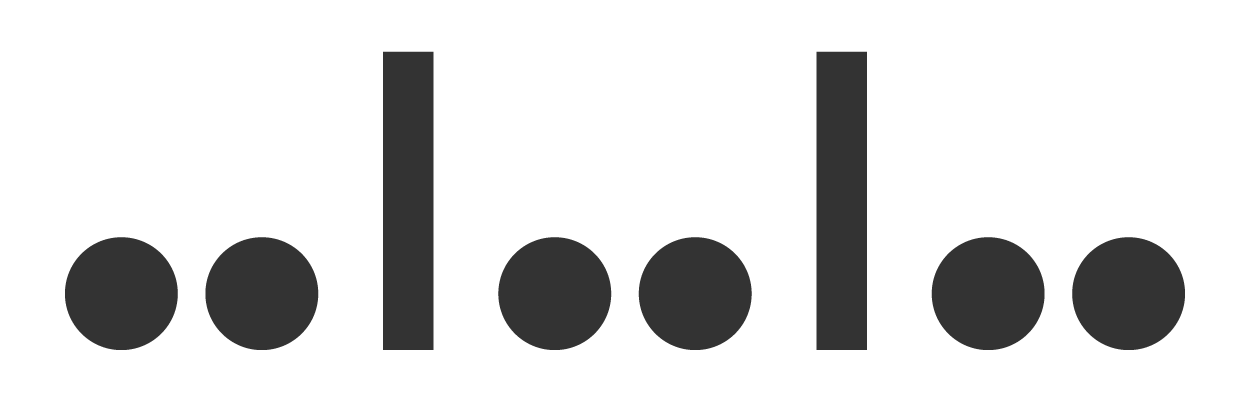
There is a repeating visual element that creates a regular beat, similar to the way rhythm works in music. If you attempt to read this image, you will translate it as dot, dot, line, dot, dot, line, dot, dot. The rhythm establishes a cadence, leaving the viewer to expect the next visual beat, which in this case would be another line following the last dot.
In visual communication, rhythm is created through the repetition of two or more elements, such as lines, shapes, colors, and textures.
Line, shape, color, and texture are four of the seven elements of design. Because these elements are ubiquitous in visual communication, they are often used to establish rhythm in art and design. Note that the repetition of any elements in sequential order creates rhythm. In some cases, this may include things like value and typography.
In the image below, rhythm is applied via the repetition of lines.

Three different line types repeat through the design, but they are so similar that the differences are subtle. Value is often used to enforce rhythm. Although none of the lines have the same color, they alternate from dark to light and light to dark.
Shapes are commonly used for defining visual rhythm. In the image below, circles, rectangles, triangles, and organic shapes are all used to build rhythm. Lines are also used in this example.
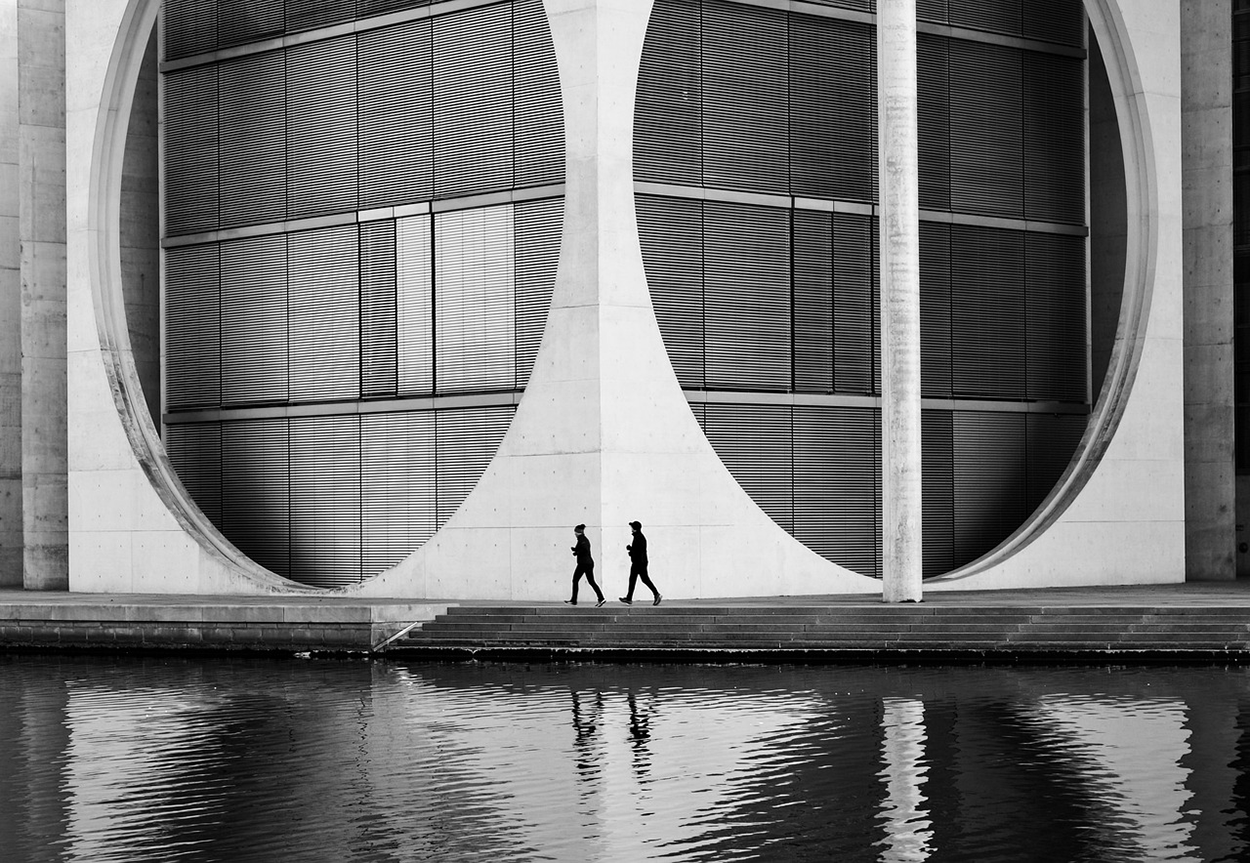
In the image below, line, shape, color, and texture are all combined to create a multilayered rhythm. Lines form the trunk and the branches of the tree. Notice the shapes, colors, and textures of the leaves.

The human brain seeks order in design. Whenever an image has multiple elements forming rhythm, the brain will first recognize all of the similar elements first and then work through the design to process other related forms, colors, textures, and patterns. Take a second look at the image of the tree above. What color did you concentrate on first? Perhaps you noticed the blue leaves? In microseconds, your eyes transmitted the image to your brain, which focused on the blue leaves, noticing one and then all of them in the design. Next, your brain moved on to a second color, like yellow, and then orange and red. Once your brain identified and processed the visual information, it sorted through the image and found relationships between lines, colors, textures, and shapes, determining that all of these things belonged together and seemed congruent due to sequential patterns of repetition.
Examples of rhythm using lines and shapes are displayed in architecture. In the image below, lines and triangles form the windows in a building’s ceiling.

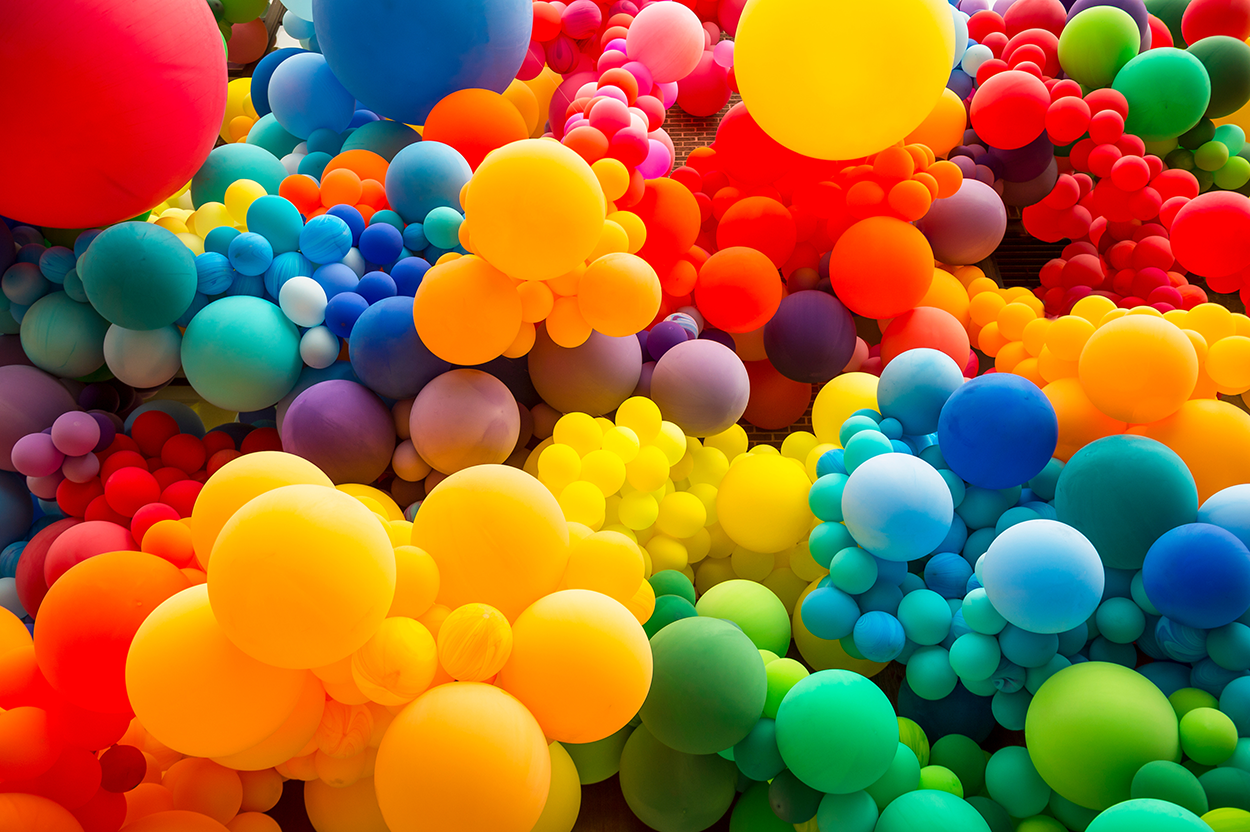
Notice how color and shape create rhythm in the image below. The repetitions of reds, blues, yellows, and greens combined with the shapes of the large and small balloons establish a sequential order.
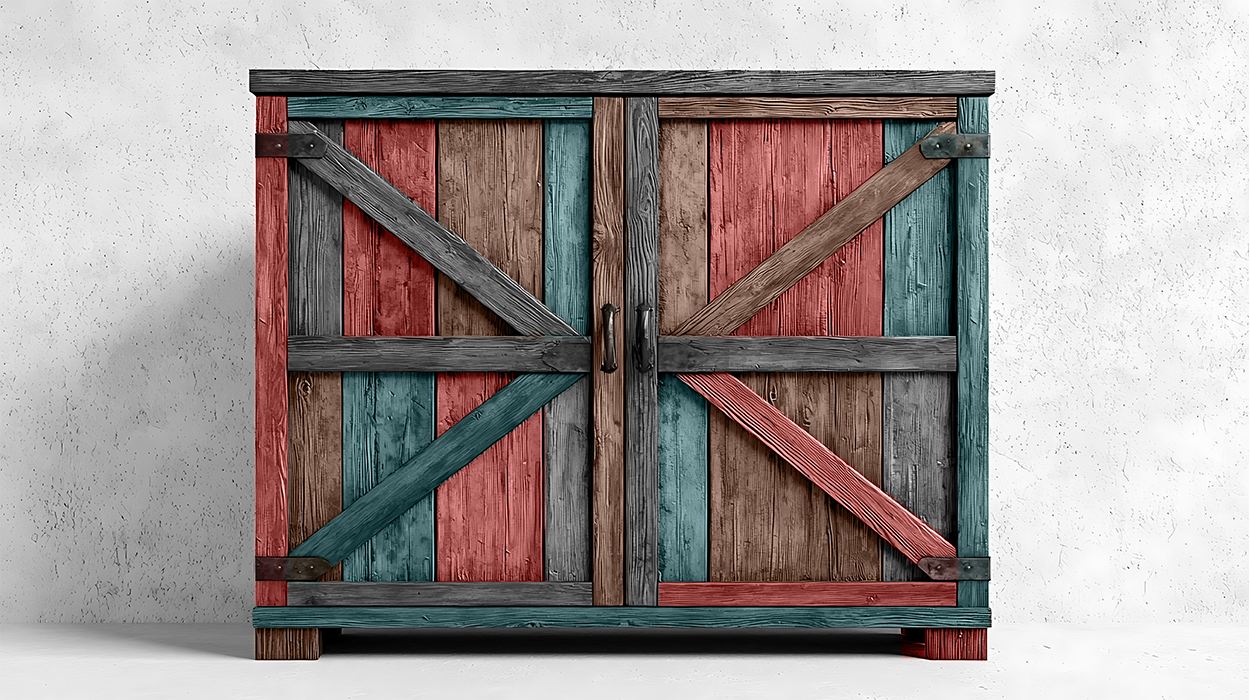
Look at the cabinet doors in the image below. See how colors, textures, and shapes all work together. The rhythm established by these elements tells the viewer that the elements belong together.
Source: THIS TUTORIAL WAS AUTHORED BY MARIO E. HERNANDEZ FOR SOPHIA LEARNING. PLEASE SEE OUR TERMS OF USE.



