Table of Contents |
A diet is anything that is consumed by a particular person or people on a regular basis. That means if someone routinely drinks coffee in the morning, that is part of their diet. If a person consistently eats a Big Mac from McDonald’s, that is part of their diet.
It is clear that food choices influence short-term and long-term health. That is why it is so important to make wise choices in what one eats on a regular basis. If a person chooses to have a diet high in calories without balancing energy use, that person can expect to put on unhealthy weight. A diet that is high in fiber, with the appropriate amount of calories and proper amounts of the macronutrients, will contribute to a healthy body.
Decisions about nutrition can be difficult. Knowing and using scientific research can lead to better health. Over time public health organizations have developed tools based on nutritional science to help people design healthy diets. These tools should be used as guidelines for each individual with the awareness that everyone is different and therefore has different needs. Everyone, regardless of age, size, shape, or physique, can benefit from learning and utilizing the following tools:
Acceptable Macronutrient Distribution Range (AMDR)
The AMDR describes the proportions of daily caloric intake that should be carbohydrates, lipids (fat), and proteins. Basically, the AMDR provides guidelines on how many macronutrient calories one should consume a day.
According to the AMDR, the range of caloric intake in a daily diet should be:
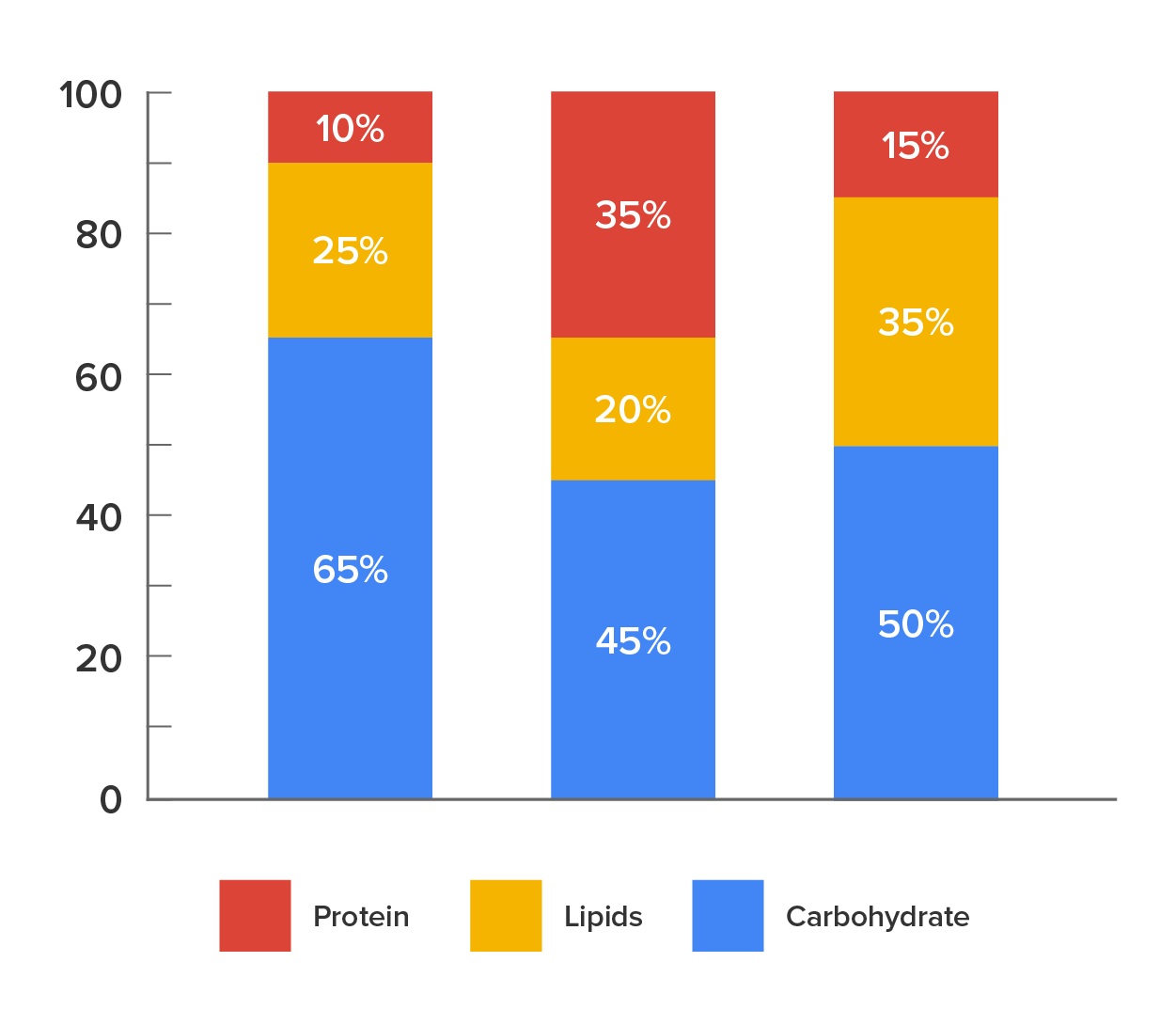
If you determine that you need 2,000 calories every day, you could use the AMDR percentages to calculate how many grams of carbohydrates, lipids, and protein you need every day.
To do this, we divide the number of calories by the number of calories per gram. For carbohydrates: 900 calories/4 calories per gram = 225 grams and 1,300 calories/4 calories per gram = 325 grams. Now you can plan your daily carbohydrate intake to be between 225-325 grams.
The Dietary Reference Intakes or DRIs are reference values of nutrient intake that help with nutrition planning and assessment of healthy individuals.
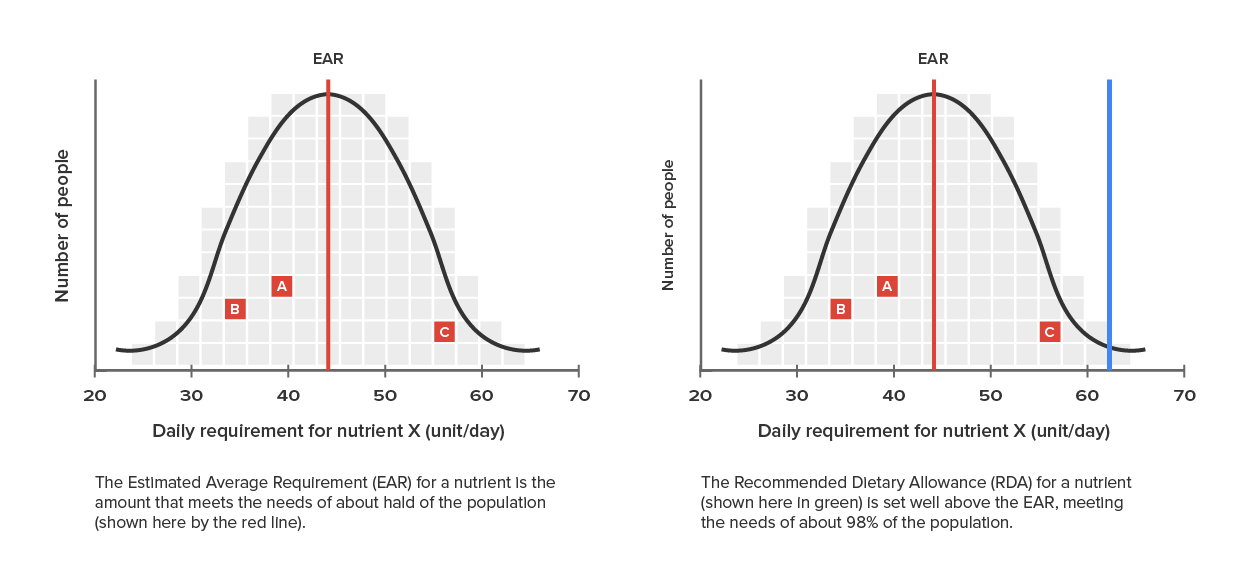
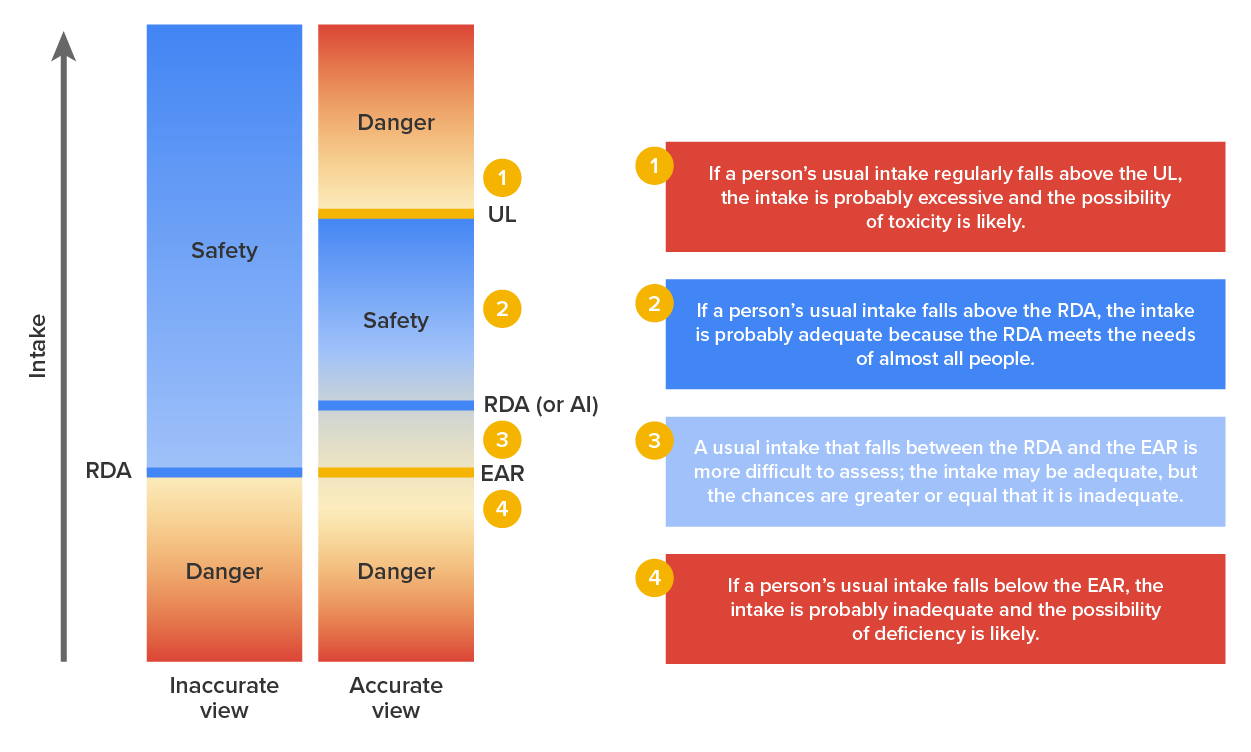
Familiarizing yourself with each of the food groups is the first step in diet planning. Individual requirements for nutrients vary considerably depending on factors such as age and gender. Other relevant factors are size, metabolic rate, and occupation. A farmer would have a different dietary need than someone in a sedentary occupation. The body also has stores of certain nutrients (fat-soluble vitamins, for example) so that variations in daily intake of such nutrients can be accommodated. Thus it could be misleading to recommend a particular daily intake level. The following will help you identify the difference between the RDA, EAR, UL, and AI.
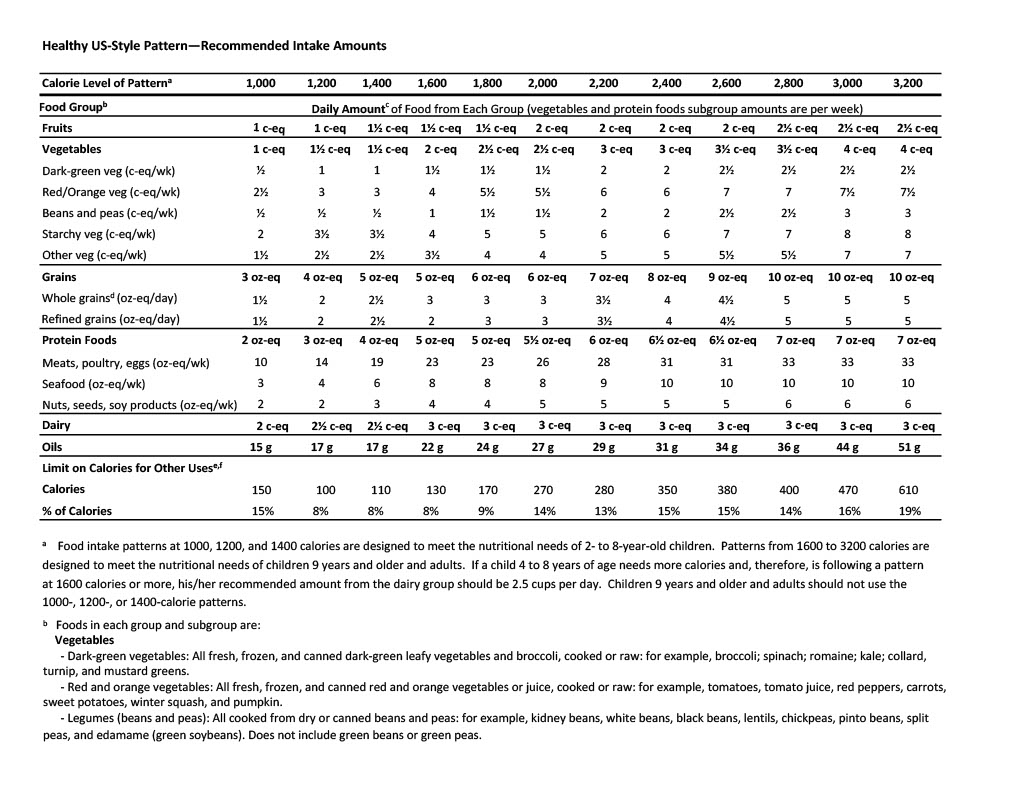
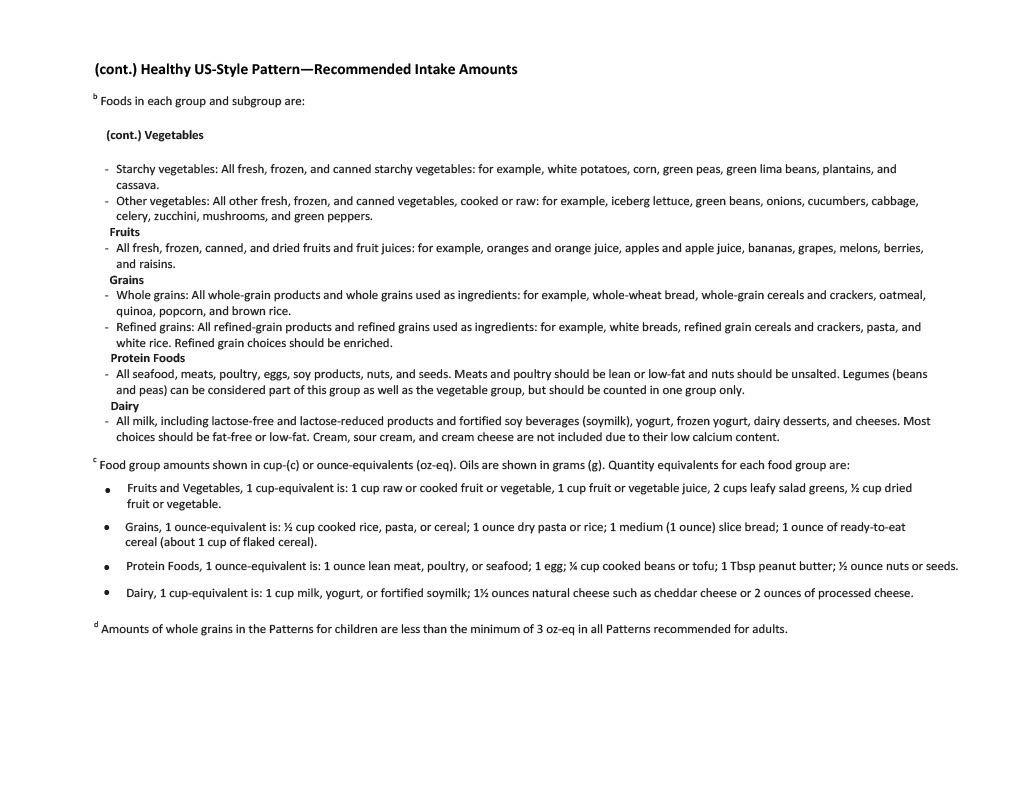
The diet plan you selected is just one of many possibilities. For example, if you selected a 2,000 calorie diet plan, then for breakfast, you would have ½ c of fruit, 1 oz of grains, and 1 c of dairy. What foods would you select to put on your grocery list? Maybe ½ cup of strawberries to go with a cup of cereal and 1 cup of low-fat milk?
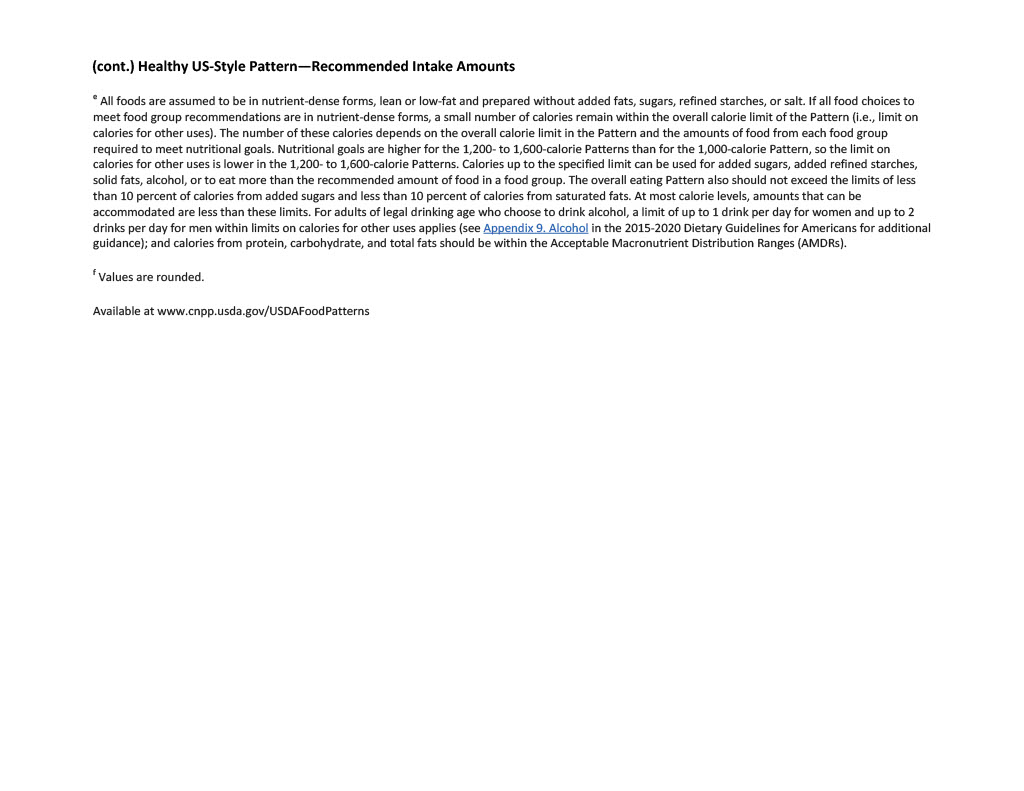
The Dietary Guidelines emphasize nutrient-dense foods. Nutrient-dense foods include whole grains, vegetables, lean meats, low-fat milk products, and fruits. There are thousands of foods available to us in each of these categories, how do you start planning? One place to start is by making your grocery list. By choosing nutrient-dense foods that have been minimally processed, you can make improvements. Minimally processed foods are those that are frozen, fresh, or even canned in their own syrup or without added salt or sugar. Consider corn as an example. You can buy fresh, frozen, or canned corn, corn chips, popcorn, and corn nuts. The first three options could be considered minimally processed since they retain much of their nutrient value and do not have added salt, sugar, or fat.
We will learn more about food groups and groupings in the next challenge.
Personalizing meal plans can be extremely beneficial psychologically as well as physically. Knowing that one is eating healthy reduces some of the subconscious doubts about doing what needs to be done to be well.
When considering dietary needs, various techniques have been established by health officials to assist people in choosing foods and food amounts wisely. Like we learned before, MyPlate is a graphic representation of what a healthy plate of food might look like. Other tools, such as meal planning guides have also been established.
Source: THIS TUTORIAL HAS BEEN ADAPTED FROM LUMEN LEARNING’S “NUTRITION FLEXBOOK”. ACCESS FOR FREE AT https://courses.lumenlearning.com/suny-nutrition/. LICENSE: creative commons attribution 4.0 international.
REFERENCES
USDA. (n.d.). Retrieved May 4, 2022, from www.usda.gov