In this lesson, you will learn about investing in real estate. Specifically, this lesson will cover the following:
1. Investing in Real Estate
-
If you’ve ever scrolled through social media and seen people talking about making millions from real estate, you might have thought, “That sounds great, but how do I even start?” Or maybe you’ve heard horror stories of people losing money on bad deals and thought, “Maybe this isn’t for me.”
The truth is that real estate can be a powerful way to build wealth, but it’s not a get-rich-quick scheme. Think of it like planting a tree—you buy a property (plant the seed), take care of it over time (manage tenants and pay the mortgage), and, eventually, it grows into a strong tree that provides fruit (profit and rental income).
This lesson will break down the different ways to invest in real estate, the risks and rewards, and how you can get started—even if you don’t have a ton of money to invest right now. Let’s dive in!
Real estate investing is one of the oldest and most reliable ways to build wealth. It involves buying property—such as homes, apartments, office spaces, or land—with the goal of making money. Some people invest in real estate to generate passive income, while others focus on selling properties for a profit.
There are three main ways to make money in real estate:
- Buying property to rent out: This is like running a small business. You purchase a property and rent it to tenants, who pay you monthly. If you choose the right property in a good location, the rent you collect can cover the mortgage, property taxes, and maintenance costs while still leaving you with extra income.
- Buying property and selling it later for a higher price: This is known as real estate appreciation. If you buy a property in an area that is growing, home values may increase over time. You can sell the property for more than you paid, making a profit.
- Investing in real estate investment trusts (REITs): Instead of buying physical property, you can invest in REITs, which are companies that own and manage income-generating real estate. REITs allow you to earn passive income through dividends and potential price appreciation without the hassle of property management.
Some investors combine both strategies. They buy rental properties, earn money from tenants, and later sell the properties once the value has significantly increased. Others flip houses—buying run-down properties at a lower price, fixing them up, and selling them quickly for a profit.

-
EXAMPLE
Let’s say Maria, a 28-year-old teacher, wants to start investing in real estate. She saves money for a few years and finally buys a small, two-bedroom house for $200,000 in a neighborhood where new businesses and restaurants are opening.
Instead of living in the house, she rents it out for $1,500 per month. Her mortgage payment, including taxes and insurance, is $1,100. That means she earns $400 in profit every month, or $4,800 per year.
Over the next 10 years, property values in the area increase, and her house is now worth $300,000. If she sells the house, she makes a $100,000 profit, plus all the rental income she earned along the way.
Now, let’s imagine Maria reinvests that money by buying another house or two, repeating the process. Over time, she builds a steady source of income, and by the time she is in her 40s, she owns multiple properties, generating thousands of dollars in passive income each month.
So, why do people invest in real estate? Good question. There are a few reasons why real estate investing has been so popular over the years:
- Property values usually increase over time: While there are occasional downturns, real estate tends to go up in value, especially in growing areas.
- Rental income provides a steady source of cash flow: Unlike stocks or crypto, which rely on market fluctuations, rental properties provide monthly income.
- Real estate is a physical asset: Unlike stocks or digital currencies that can disappear in a market crash, real estate is tangible and has intrinsic value.}}
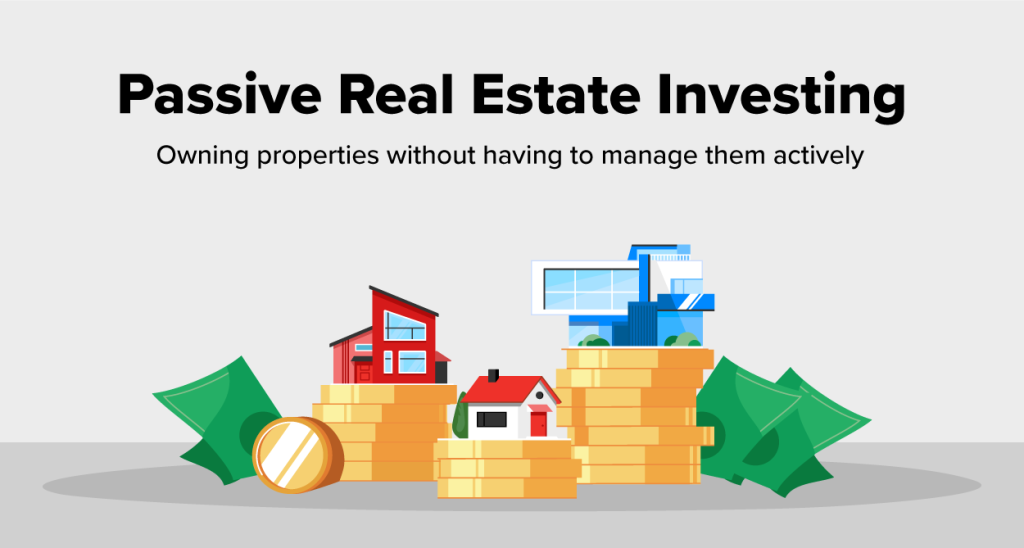
While those are some of the pros of investing in real estate, there are also a few cons that you need to consider:
- It requires a large up-front investment: Even with a mortgage, you typically need a down payment of at least 3%–20% of the home’s price.
- It is not a liquid investment: If you need cash fast, you cannot sell a house overnight like you can with stocks or crypto.
- Managing rental properties takes effort: Finding tenants, handling repairs, and dealing with potential issues can be time consuming. Some investors hire property managers, but this adds to the cost.
Investing in REITs
-
Real estate has long been one of the best ways to build wealth, but not everyone wants to deal with buying a house, managing tenants, or handling maintenance. That’s where
real estate investment trusts (REITs) come in. A REIT is like a real estate mutual fund—it’s a company that owns, operates, or finances properties that generate income, such as shopping centers, apartment buildings, office spaces, hospitals, and data centers. Instead of purchasing property yourself, you invest in a REIT, which manages the real estate while you collect dividends and potentially grow your investment over time.
One of the biggest benefits of REITs is how accessible they are. Unlike traditional real estate, where you need a large down payment, a mortgage, and time to manage a property, you can invest in REITs with a much smaller amount of money. They trade on stock exchanges like regular stocks, meaning you can buy and sell them easily without waiting months for a buyer as you would with physical property. Additionally, REITs are required to pay out at least 90% of their profits to investors in the form of dividends, making them an attractive option for anyone looking for passive income without the responsibilities of being a landlord.
There are several reasons investors choose REITs:
- Easy access to real estate without the need to buy and manage a property
- Passive income through regular dividend payments
- Diversification since real estate does not always move with the stock market
- Professional management, eliminating the need to deal with maintenance or tenants
- Liquidity, allowing investors to buy and sell shares quickly instead of dealing with the long process of selling a property
Not all REITs work the same way. The three main types are as follows:
-
Equity REITs, which own and manage properties like apartment buildings, hotels, and shopping centers, making money through rent payments from tenants
-
Mortgage REITs, which invest in mortgages and earn income from interest payments rather than rental income
-
Hybrid REITs, which combine elements of both equity and mortgage REITs, owning properties while also investing in real estate loans
For those looking to invest in real estate without the commitment of buying property, REITs provide a straightforward option. They offer passive income, diversification, and professional management, making them appealing to both beginners and experienced investors.
Real estate is great for people who want a long-term investment with a steady cash flow. If you are willing to save for a down payment and take the time to manage properties or hire someone to do it, real estate can be a solid way to build wealth.
-
- Real Estate Investing
- Buying property to earn rental income or profit from its value increasing over time.
- Liquid Investment
- An asset that can be quickly converted to cash without losing value, like stocks or savings accounts.
- Real Estate Investment Trust (REITs)
- Companies that own, operate, or finance income-generating real estate, allowing investors to earn passive income without owning property.
- Equity REITs
- REITs that own and rent out properties like apartments, malls, and office buildings, making money through tenant payments.
- Mortgage REITs
- REITs that invest in real estate loans and mortgages, earning income from interest rather than rent.
- Hybrid REITs
- A combination of equity and mortgage REITs, owning properties while also investing in real estate debt.
In this lesson, you got an understanding of how to invest in real estate and the pros and cons associated with it.



