Table of Contents |
As mentioned earlier in this course, there are different types of data sources. You learned about primary data sources, which involve collecting new data to answer specific questions through interviews and surveys, and secondary sources of data, which are available to the public and are a great way to begin exploring health topics. This lesson will focus on a few of the most used public health secondary health data sources, including datasets developed by the Agency for Healthcare Research and Quality (AHRQ), the National Health and Nutrition Examination Survey (NHANES), and the U.S. Census Bureau.
AHRQ is the lead federal agency with a mission of improving the quality and safety of health care for all Americans. AHRQ develops tools and data needed to improve the health care system and help consumers, health care professionals, and policymakers make informed decisions (AHRQ, 2022). This agency acts as a “science partner” with private and public organizations in their efforts to improve the quality, effectiveness, and appropriateness of health care. AHRQ synthesizes evidence, translates it into evidence-based findings, and disseminates evidence and tools into practice for implementation. It provides valuable data tools that allow exploration of its data sources. These data sources include a set of surveys that address families and individuals, medical providers, and employers nationwide called the Medical Expenditure Panel Survey (MEPS; AHRQ, n.d.).
AHRQ’s data sources also include the following:
NHANES is a critical data source in public health. Run by the Centers for Disease Control and Prevention (CDC) in the United States, NHANES collects comprehensive information about the health and lifestyle of both children and adults. NHANES is unique because it provides objectively measured health data. The health data are derived from interviews, standardized physical examinations, and laboratory testing to produce data on a wide array of measures (CDC, 2009). NHANES goes beyond self-reported information and includes direct measurements of various health parameters. The survey also covers demographics and health conditions. It helps researchers and policymakers understand health trends, risk factors, and health disparities across different population groups. The sample size is very large with approximately 5,000 participants enrolled each year, making NHANES a robust and nationally representative dataset.
Public health officials, legislators, doctors, and researchers rely on NHANES data to develop health policies and programs, create evidence-based health services, monitor nutrition and environmental factors, produce prevalence estimates, and support public health recommendations and guidelines (CDC, 2024).
The U.S. Census Bureau’s mission is to serve as the nation’s leading provider of quality data about its people and economy. It is the federal government’s largest statistical agency dedicated to providing facts and figures about America’s people, places, and economy. Federal law protects all the information collected by the bureau (U.S. Census Bureau, 2017). Public health outcomes are shaped by the data captured by the U.S. Census.
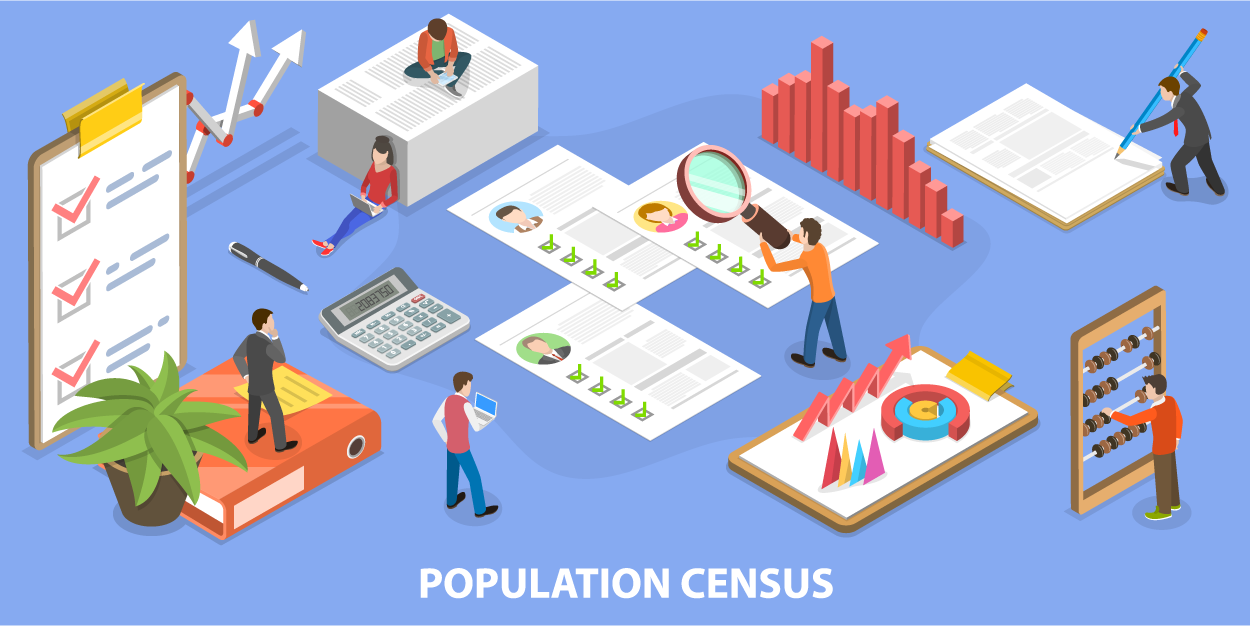
Every 10 years (decennial), a census is the only attempt to count and collect information about everyone in the country. The census provides an accurate picture of who lives in the United States. The data are used for various purposes like dividing seats in the U.S. House of Representatives among states. The data are also used to allocate federal funding of an estimated $1.5 trillion. This funding supports health-related programs like the Children’s Health Insurance Program (CHIP), Medicaid, Medicare, the Supplemental Nutrition Assistance Program (SNAP), the Supplemental Nutrition Program for Women, Infants, and Children (WIC), and community health centers funded through the Health Resources and Services Administration (HRSA; Reichel, 2019).
Political shifts can result from census data that can influence health policy decisions. Decennial data are also combined with other measures like poverty level to guide federal funding distribution and eligibility for programs. Many national health surveys rely on data collected through the decennial census. It truly affects everything related to public and community health. A fair and accurate census is essential for equitable funding distribution, political representation, and informed decision-making in public health.
The U.S. Census Bureau is also committed to ensuring that the data are used to promote health equity. The demographic data collected provide valuable information about race, ethnicity, sex, disability, income, and veteran status to help measure equity. Geographic information (like zip codes) helps to identify underserved communities, including rural areas.
Census Bureau data are valuable assets that can be used by policymakers, public and community health professionals, and the public to advance health equity.
Source: THIS TUTORIAL WAS AUTHORED BY SOPHIA LEARNING. PLEASE SEE OUR TERMS OF USE.
Disclaimer: The use of any CDC and United States government materials, including any links to the materials on the CDC or government websites, does not imply endorsement by the CDC or the United States government of us, our company, product, facility, service, or enterprise.
REFERENCES
Agency for Healthcare Research and Quality. (n.d.). Medical Expenditure Panel Survey. U.S. Department of Health and Human Services. meps.ahrq.gov/mepsweb/
Agency for Healthcare Research and Quality. (2022, July). Agency for Healthcare Research and Quality: A profile. U.S. Department of Health and Human Services. www.ahrq.gov/cpi/about/profile/index.html
Centers for Disease Control and Prevention. (2009, April 1). Report of the NHANES Review Panel to the NCHS Board of Scientific Counselors: Executive summary. U.S. Department of Health and Human Services. www.cdc.gov/nchs/data/bsc/nhanesreviewpanelreportrapril09.pdf
Centers for Disease Control and Prevention. (2024, May 13). National Health and Nutrition Examination Survey. U.S. Department of Health and Human Services. www.cdc.gov/nchs/nhanes/index.htm
Reichel, C. (2019, November 18). Why the 2020 census matters for public health: An explainer. The Journalist’s Resource. journalistsresource.org/economics/census-2020-public-health-care-explainer/
U.S. Census Bureau. (2017, October 24). U.S. Census Bureau at a glance. www.census.gov/about/what/census-at-a-glance.html



