Table of Contents |
As you have learned, the development of the reproductive system begins soon after fertilization of the egg, with primordial gonads beginning to develop approximately one month after conception. Reproductive development continues in utero, but there is little change in the reproductive system between infancy and puberty.
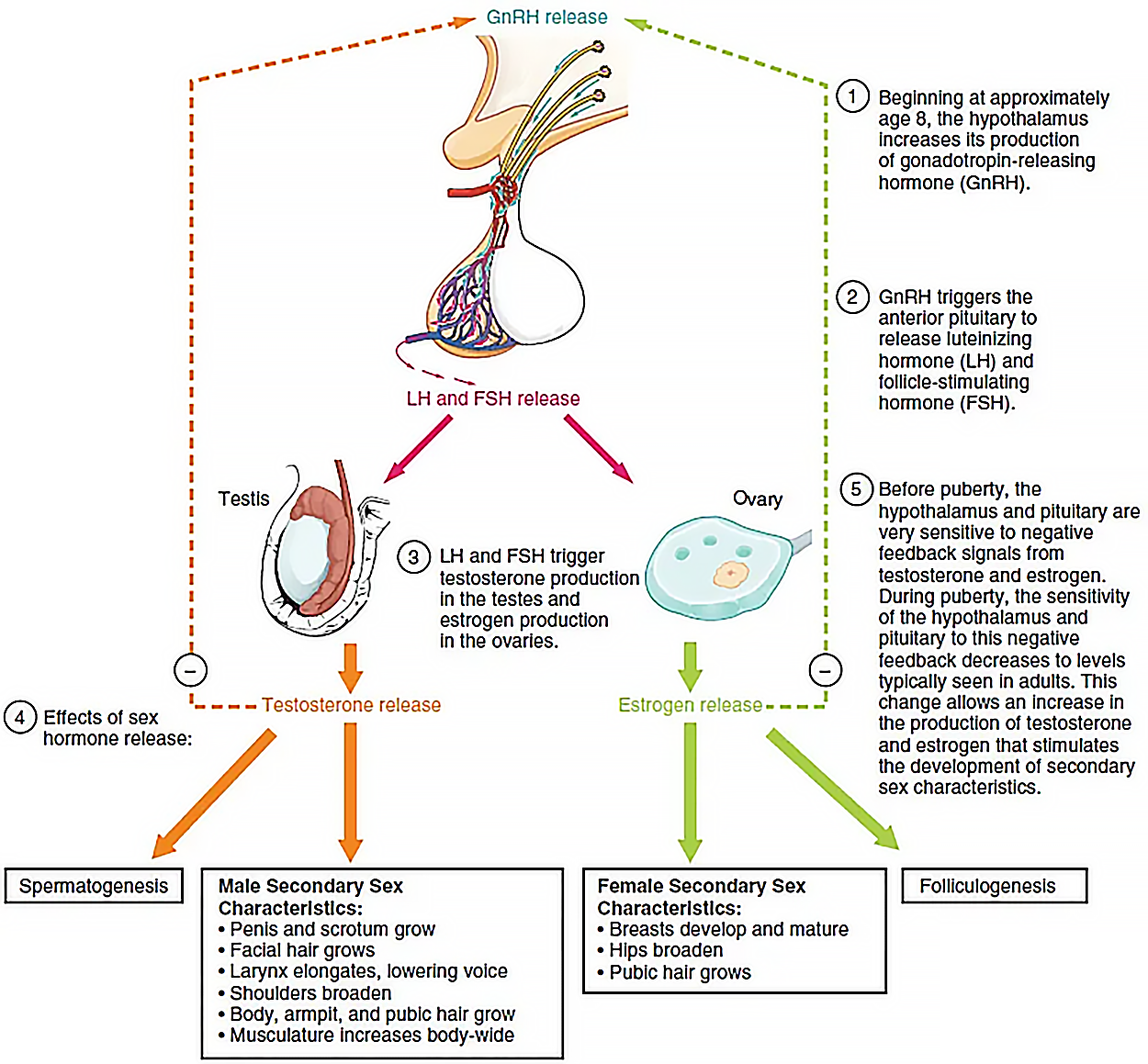
As shown in the image below, a concerted release of hormones from the hypothalamus (gonadotropin-releasing hormone, GnRH), the anterior pituitary (luteinizing hormone, LH, and follicle-stimulating hormone, FSH), and the gonads (either testosterone or estrogen) is responsible for the maturation of the reproductive systems and the development of secondary sex characteristics, which are physical changes that serve additional roles in reproduction. Note that the body must reach puberty in order for the adrenal glands to release the hormones that must be present for GnRH to be produced.
The first changes begin around the age of eight or nine when the production of LH becomes detectable. The release of LH occurs primarily at night during sleep and precedes the physical changes of puberty by several years. In pre-pubertal children, the sensitivity of the negative feedback system in the hypothalamus and pituitary is very high. This means that very low concentrations of androgens or estrogens will negatively feedback onto the hypothalamus and pituitary, keeping the production of GnRH, LH, and FSH low.
As an individual approaches puberty, two changes in sensitivity occur. The first is a decrease of sensitivity in the hypothalamus and pituitary to negative feedback, meaning that it takes increasingly larger concentrations of sex steroid hormones to stop the production of LH and FSH. The second change in sensitivity is an increase in sensitivity of the gonads to the FSH and LH signals, meaning the gonads of adults are more responsive to gonadotropins than the gonads of children. As a result of these two changes, the levels of LH and FSH slowly increase and lead to the enlargement and maturation of the gonads, which in turn leads to secretion of higher levels of sex hormones (testosterone in the testes and estrogen in the ovaries) and the initiation of spermatogenesis and folliculogenesis, which you learned about in previous lessons.
IN CONTEXT
In addition to age, multiple other factors can affect the age at which an individual experiences the onset of puberty, including genetics, environment, and psychological stress. One of the more important influences may be nutrition; historical data demonstrate the effect of better and more consistent nutrition on the age of menarche in the United States, which decreased from an average age of approximately 17 years of age in 1860 to the current age of approximately 12.75 years in 1960, as it remains today. Some studies indicate a link between puberty onset and the amount of stored fat in an individual. This effect is more pronounced in females but has been documented in both sexes. Body fat, corresponding with the secretion of the hormone leptin by adipose cells, appears to have a strong role in determining menarche. This may reflect to some extent the high metabolic costs of gestation and lactation. In females who are extremely lean and highly active, such as gymnasts, there is often a delay in the onset of puberty.
Different sex steroid hormone concentrations between the sexes also contribute to the development and function of secondary sexual characteristics, to which you were previously introduced. Examples of secondary sexual characteristics in humans are listed in the table below.
| Male | Female |
|---|---|
| Increased larynx size and deepening of the voice | Deposition of fat, predominantly in breasts and hips |
| Increased muscular development | Breast development |
| Growth of facial, axillary, and pubic hair, and increased growth of body hair | Broadening of the pelvis and growth of axillary and pubic hair |
As a female reaches puberty, typically the first visible change is the development of the breast tissue. This is followed by the growth of axillary (armpit) and pubic hair.
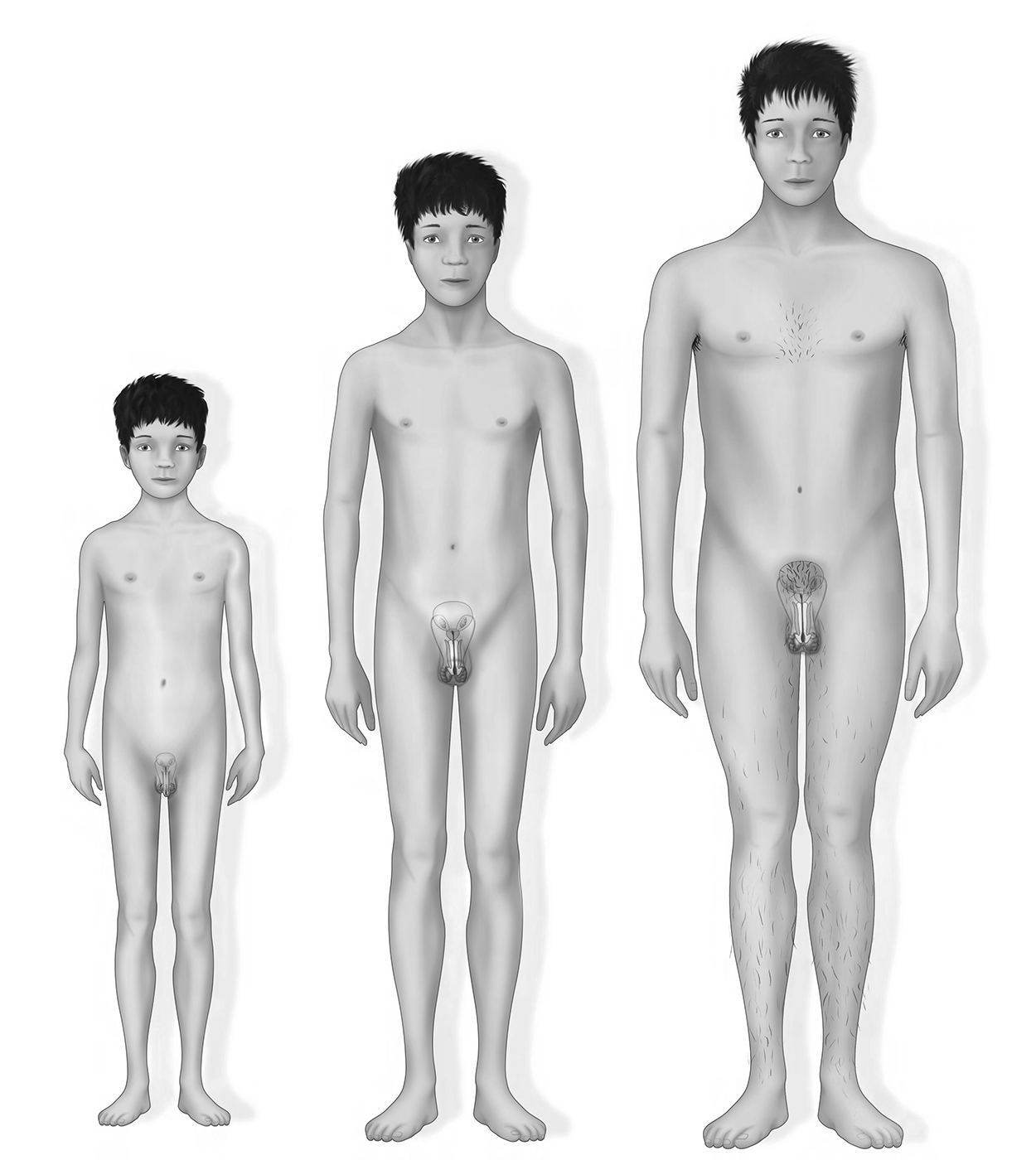
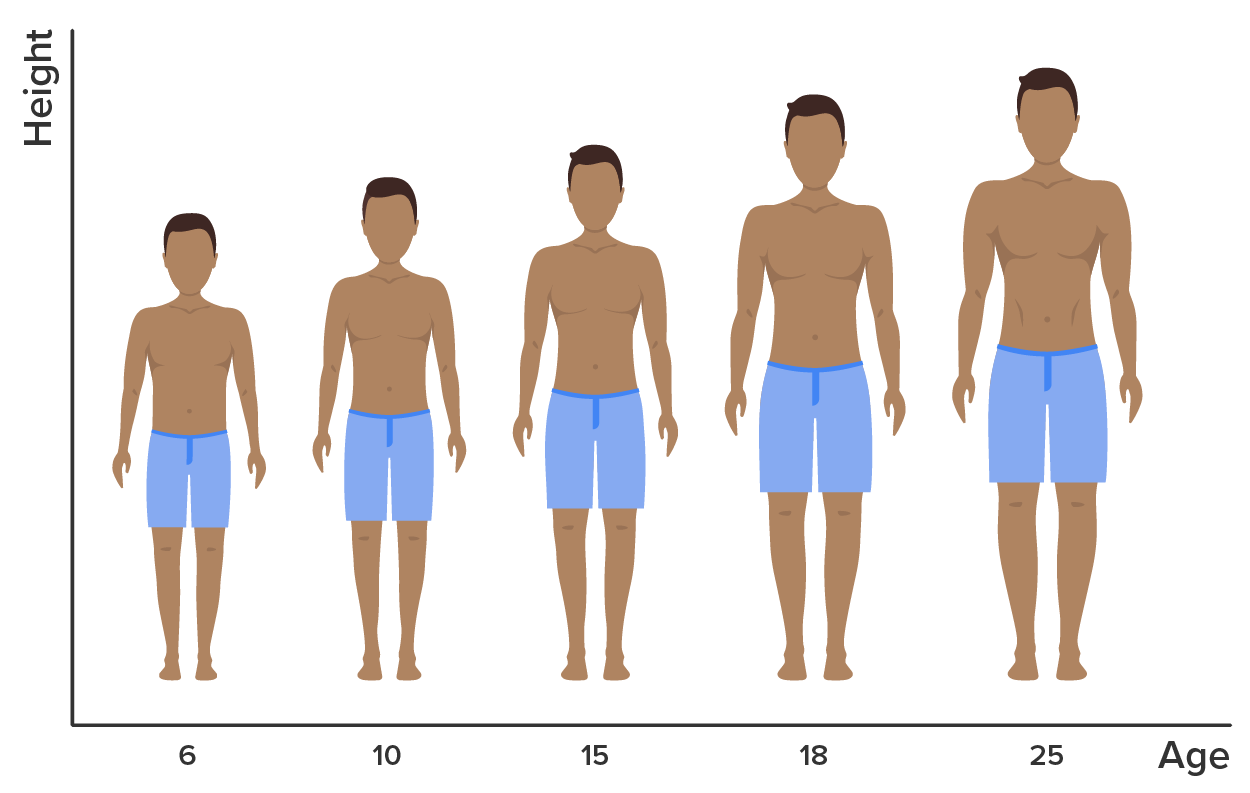
In males, the growth of the testes is typically the first physical sign of the beginning of puberty, which is followed by growth and pigmentation of the scrotum and growth of the penis. The next step is the growth of hair, including armpit, pubic, chest, and facial hair. Testosterone stimulates the growth of the larynx and the thickening and lengthening of the vocal folds, which causes the voice to drop in pitch. The first fertile ejaculations typically appear at approximately 15 years of age, but this age can vary widely across individuals.
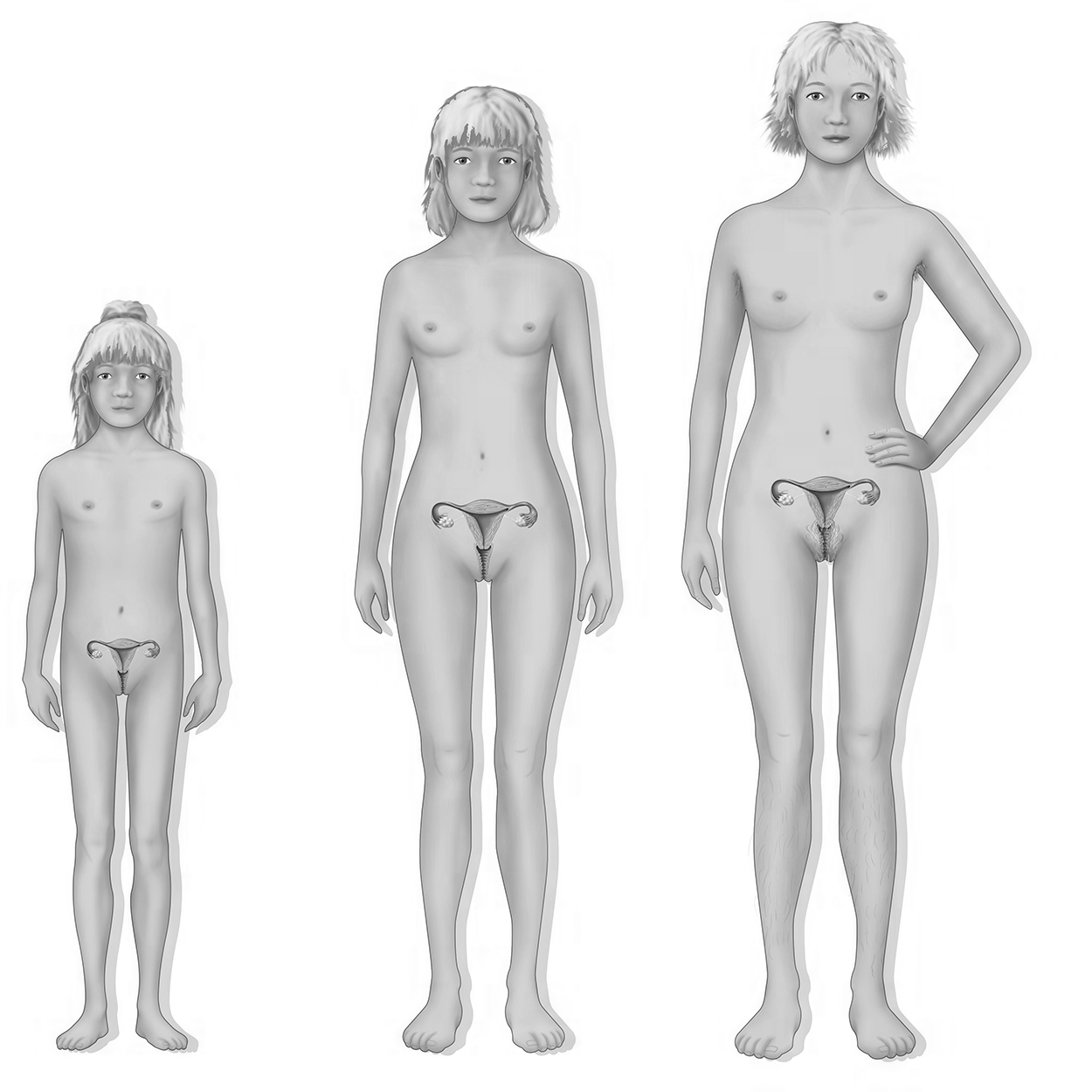
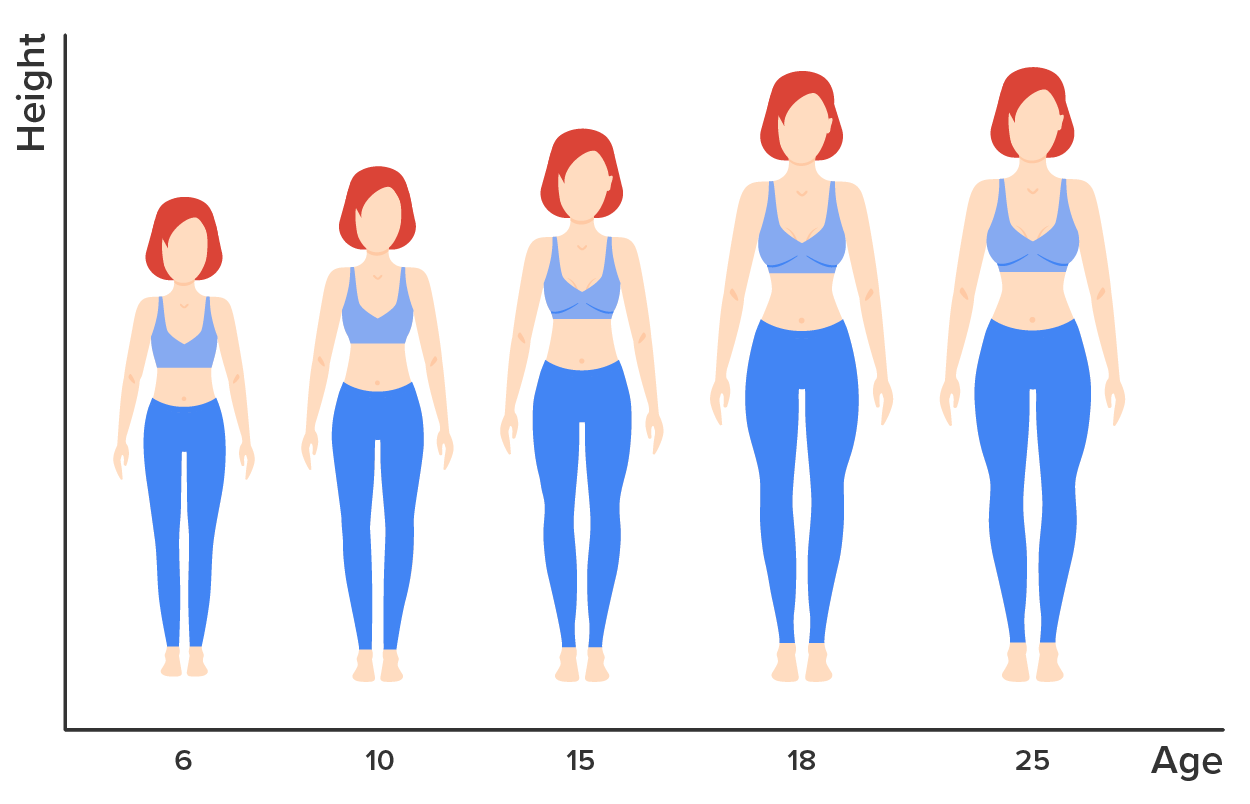
In females, a growth spurt normally starts at approximately age 9 to 11 and may last two years or more. During this time, height can increase by 3 inches per year. The next step in puberty is menarche, which you have learned is the start of menstruation.
However, unlike the early growth spurt observed in females, the male growth spurt occurs toward the end of puberty, at approximately age 11 to 13, and height can increase as much as 4 inches a year. In some males, pubertal development can continue through the early 20s.
Source: THIS TUTORIAL HAS BEEN ADAPTED FROM OPENSTAX "ANATOMY AND PHYSIOLOGY 2E". ACCESS FOR FREE AT OPENSTAX.ORG/DETAILS/BOOKS/ANATOMY-AND-PHYSIOLOGY-2E. LICENSE: CREATIVE COMMONS ATTRIBUTION 4.0 INTERNATIONAL. Accessed by August 2023.



