In this lesson, you will learn about how the genetic code is used to produce specific proteins in the cell through protein synthesis. Specifically, this lesson will cover:
DNA is housed within and cannot leave the nucleus. However, protein synthesis takes place in the cytoplasm using ribosomes. Therefore, there must be an intermediate messenger that transports the DNA code to ribosomes. This intermediate messenger is messenger RNA (mRNA), a single-stranded nucleic acid that carries a copy of the genetic code for a single gene out of the nucleus and into the cytoplasm where it is used to produce proteins.
There are several different types of RNA, each having different functions in the cell. Recall that the structure of RNA is similar to DNA with a few small exceptions.
DNA is double-stranded, and most types of RNA are single-stranded with no complementary strand.
DNA is made using deoxyribose sugar, and RNA is made using ribose sugar.
DNA contains the nucleotide base thymine, which pairs with adenine. RNA is made using the nucleotide base uracil instead of thymine that pairs with adenine.
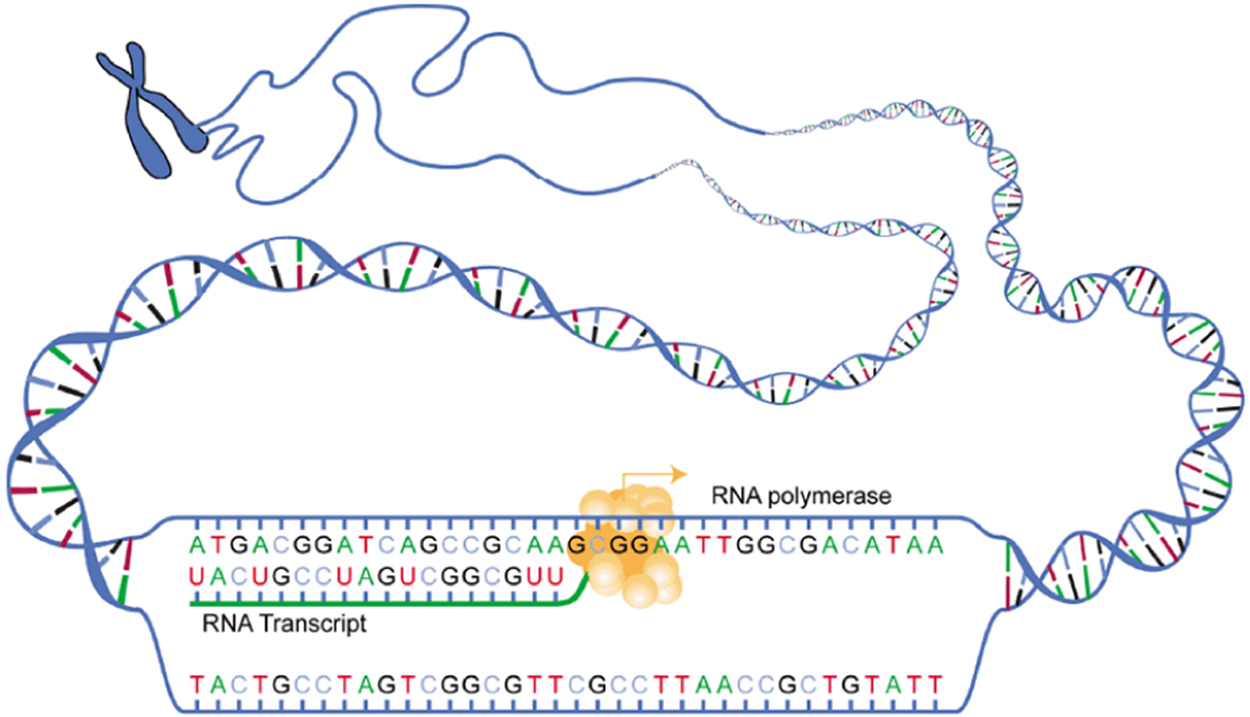
Gene expression begins with the process called transcription, which is the synthesis of a strand of mRNA that is complementary to the gene of interest. This process is called transcription because the mRNA is like a transcript, or copy, of the gene’s DNA code.
Transcription begins in a fashion somewhat like DNA replication, in that a region of DNA unwinds, and the two strands separate; however, only that small portion of the DNA will be split apart. The nucleotides within the gene on this section of the DNA molecule are used as the template to transcribe the complementary strand of RNA. For every cytosine in the DNA strand, a guanine is added to the RNA strand and vice versa. For every thymine in the DNA strand, an adenine is added to the RNA strand. For every adenine in the DNA strand, a uracil is added to the RNA strand. The production of the mRNA transcript is done by an enzyme called RNA polymerase as opposed to the DNA polymerase that produced the DNA during DNA replication.
Transcription: From DNA to mRNA—In the first of the two stages of making protein from DNA, a gene on the DNA molecule is transcribed into a complementary mRNA molecule.
Stage 1: Initiation. A region at the beginning of the gene called a promoter—a particular sequence of nucleotides—triggers the start of transcription.
Stage 2: Elongation. Transcription starts when RNA polymerase unwinds the DNA segment. One DNA strand, referred to as the coding strand, becomes the template with the genes to be coded. The RNA polymerase then aligns the correct nucleic acid (A, C, G, or U) with its complementary base on the coding strand of DNA. This process builds a strand of mRNA.
Stage 3: Termination. At the end of the gene, a sequence of nucleotides called the terminator sequence causes the new RNA to fold up on itself. This fold causes the RNA to separate from the gene and from RNA polymerase, ending transcription.
try it
Directions: Below is a series of potential DNA nucleotide codes. Use your understanding of transcription to determine what the complementary mRNA strand would be.
Before the mRNA molecule leaves the nucleus, it can be modified in a number of ways. One way an mRNA is modified is by removing specific sections of code through a process called RNA splicing. This process allows for the production of multiple possible versions of every mRNA from a single gene, meaning that every gene has the ability to produce a range of unique final products. When the mRNA transcript is ready, it travels out of the nucleus and into the cytoplasm.
Before the mRNA leaves with the message, it has to be cleaned up so ribosomes can understand it. The mRNA removes any non-coding units called introns and seals the coding sequences called exons back together (you will learn more about introns and exons soon). This process is called splicing. Then, to keep enzymes in the cytoplasm from breaking it apart, the message is protected by a GTP cap being put on the 5′ end and a poly A tail being put on the 3′ end. The GTP cap is composed of multiple phosphates tied to a guanine base. The poly A tail is made of several adenine bases strung together.
Once the message is packaged, the mRNA leaves the nucleus through the nuclear pores into the cytoplasm where the ribosomes (rRNA) are waiting for the message. The ribosomes in the cytoplasm are composed of a large subunit and a small subunit. The mRNA message will come in between the two subunits of the ribosome to be translated.
terms to know
Messenger RNA (mRNA)
A single-stranded nucleic acid that carries a copy of the genetic code for a single gene out of the nucleus and into the cytoplasm, where it is used to produce proteins.
Transcription
The synthesis of a strand of mRNA that is complementary to the gene of interest.
RNA Polymerase
An enzyme that adds new nucleotides to a growing strand of RNA.
2. From RNA to Protein: Translation
Once an mRNA is present in the cytoplasm, translation can begin. Translation is the process of synthesizing a chain of amino acids called a polypeptide. Translating the mRNA language into the protein language utilizes two different alphabets. Recall that the RNA code is made from four nucleotide bases and the protein code is made from 20 amino acids. A sophisticated method is required to accurately translate mRNA into protein.
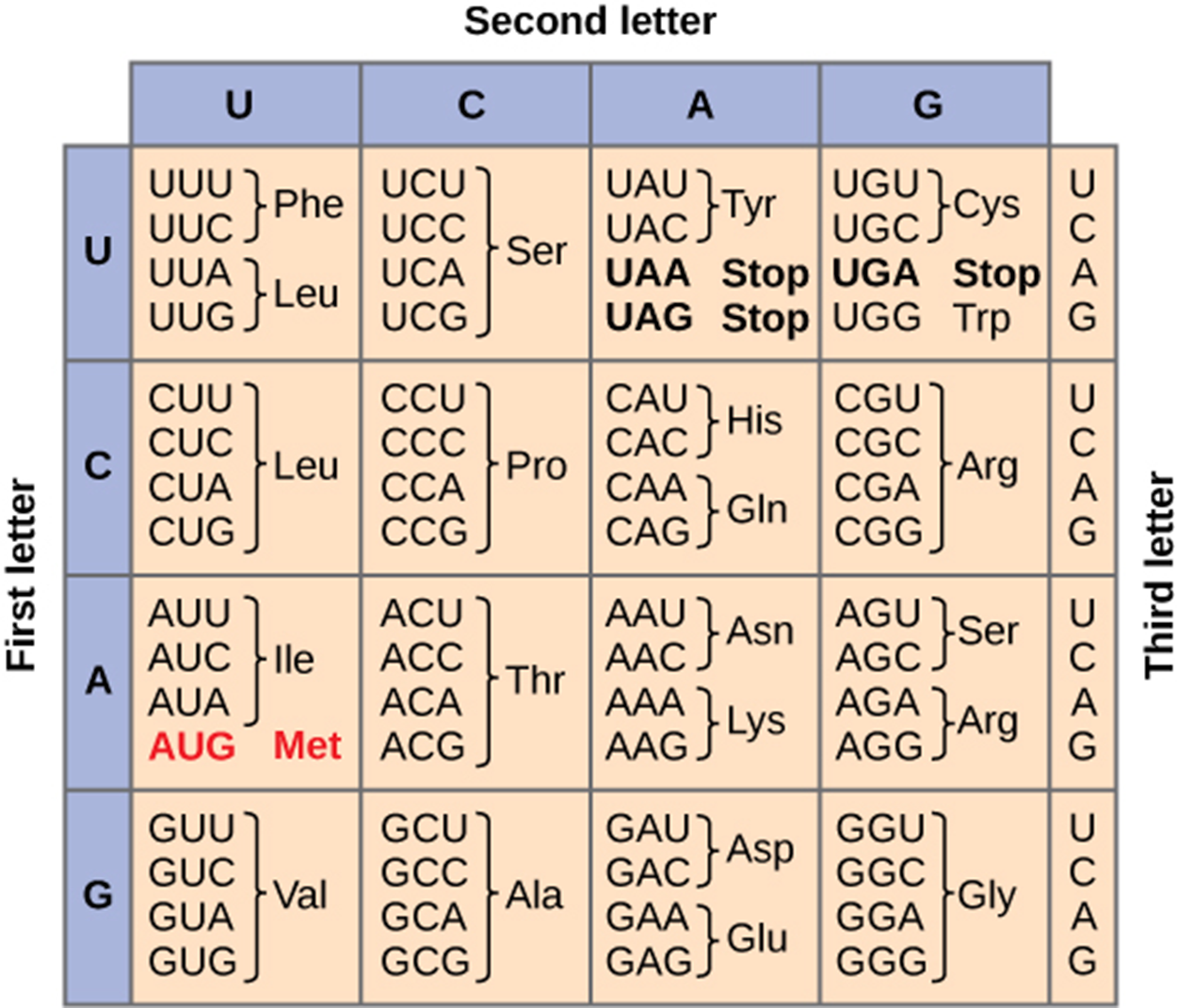
A one-to-one model does not work for translating RNA to protein because it only allows for four unique codes based on the four nucleotide bases (A, U, C, and G). Therefore, groups of codes must be used to code for specific amino acids. A two-to-one model also does not work because it only allows for 16 unique codes (AA, AU, AC, AG, UU, UA, UC, UG, etc.), which is four short of the number of available amino acids. A three-to-one model does work because it allows for 64 unique codes (AAA, AAU, AAC, AAG, etc.). These three-base sequences in the mRNA transcript are called codons. Codons indicate where protein synthesis starts, stops, and/or a specific amino acid. Due to the number of codons, many amino acids are encoded by multiple codons.
Translation Code—This table shows all 64 mRNA codons and the amino acids or stop signals they encode. Note that AUG, which encodes Met (methionine), is the start codon, labeled in red, while UAA, UAG, and UGA are stop codons, labeled in bold. Otherwise, all amino acids are encoded by two to four codons.
Translation requires two major aids: first, a “translator,” the molecule that will conduct the translation, and second, a substrate on which the mRNA strand is translated into a new protein, like the translator’s “desk.” Both of these requirements are fulfilled by other types of RNA. The substrate on which translation takes place is the ribosome.
Remember that many of a cell’s ribosomes are found associated with the rough ER and carry out the synthesis of proteins destined for the Golgi apparatus. Ribosomal RNA (rRNA) is a type of RNA that, together with proteins, composes the structure of the ribosome. Ribosomes exist in the cytoplasm as two distinct components, a small and a large subunit. When an mRNA molecule is ready to be translated, the two subunits come together and attach to the mRNA. The ribosome provides a substrate for translation, bringing together and aligning the mRNA molecule with the molecular “translators” that must decipher its code.
The other major requirement for protein synthesis is the translator molecules that physically “read” the mRNA code. Transfer RNA (tRNA) is a type of RNA that ferries the appropriate corresponding amino acids to the ribosome and attaches each new amino acid to the last, building the polypeptide chain one by one. Thus, tRNA transfers specific amino acids from the cytoplasm to a growing polypeptide. The tRNA molecules must be able to recognize the codons on mRNA and match them with the correct amino acid. The structure of tRNAs allows for this function. On one end of its structure is a binding site for a specific amino acid. On the other end of the tRNA is an RNA base sequence that is complementary to the mRNA codon for that amino acid. This sequence of three bases on the tRNA molecule is called an anticodon.
EXAMPLE
The amino acid methionine (Met) is encoded in mRNA by the codon AUG. The tRNA that binds to and transports methionine in the cytoplasm has an anticodon of UAC. When the mRNA codon is aligned within the ribosome, the tRNA’s anticodon can read and bind to it. This codon, AUG, is also known as the start codon, indicating where protein synthesis begins within an mRNA transcript. Every protein begins with the amino acid methionine.
Much like the processes of DNA replication and transcription, translation consists of three main stages: initiation, elongation, and termination.
Initiation takes place with the binding of a ribosome to an mRNA transcript. When the translation complex is formed, the tRNA binding region of the ribosome consists of three compartments. The A (aminoacyl) site binds incoming charged aminoacyl tRNAs. The P (peptidyl) site binds charged tRNAs carrying amino acids that have formed peptide bonds with the growing polypeptide chain but have not yet dissociated from their corresponding tRNA. The E (exit) site releases dissociated tRNAs so that they can be recharged with free amino acids. The initiating methionyl-tRNA, however, occupies the P site at the beginning of the elongation phase of translation in both prokaryotes and eukaryotes.
During translation elongation, the mRNA template provides tRNA binding specificity. As the ribosome moves along the mRNA, each mRNA codon comes into register, and specific binding with the corresponding charged tRNA anticodon is ensured. If mRNA were not present in the elongation complex, the ribosome would bind tRNAs nonspecifically and randomly.
Elongation proceeds with charged tRNAs sequentially entering and leaving the ribosome as each new amino acid is added to the polypeptide chain. Movement of a tRNA from A to P to E site is induced by conformational changes that advance the ribosome by three bases in the 3' direction. The energy for each step along the ribosome is donated by elongation factors that hydrolyze GTP. GTP energy is required both for the binding of a new aminoacyl-tRNA to the A site and for its translocation to the P site after formation of the peptide bond. Peptide bonds form between the amino group of the amino acid attached to the A-site tRNA and the carboxyl group of the amino acid attached to the P-site tRNA. The formation of each peptide bond is catalyzed by peptidyl transferase, an RNA-based enzyme that is integrated into the 50S ribosomal subunit. The energy for each peptide bond formation is derived from the high-energy bond linking each amino acid to its tRNA. After peptide bond formation, the A-site tRNA that now holds the growing peptide chain moves to the P site, and the P-site tRNA that is now empty moves to the E site and is expelled from the ribosome.
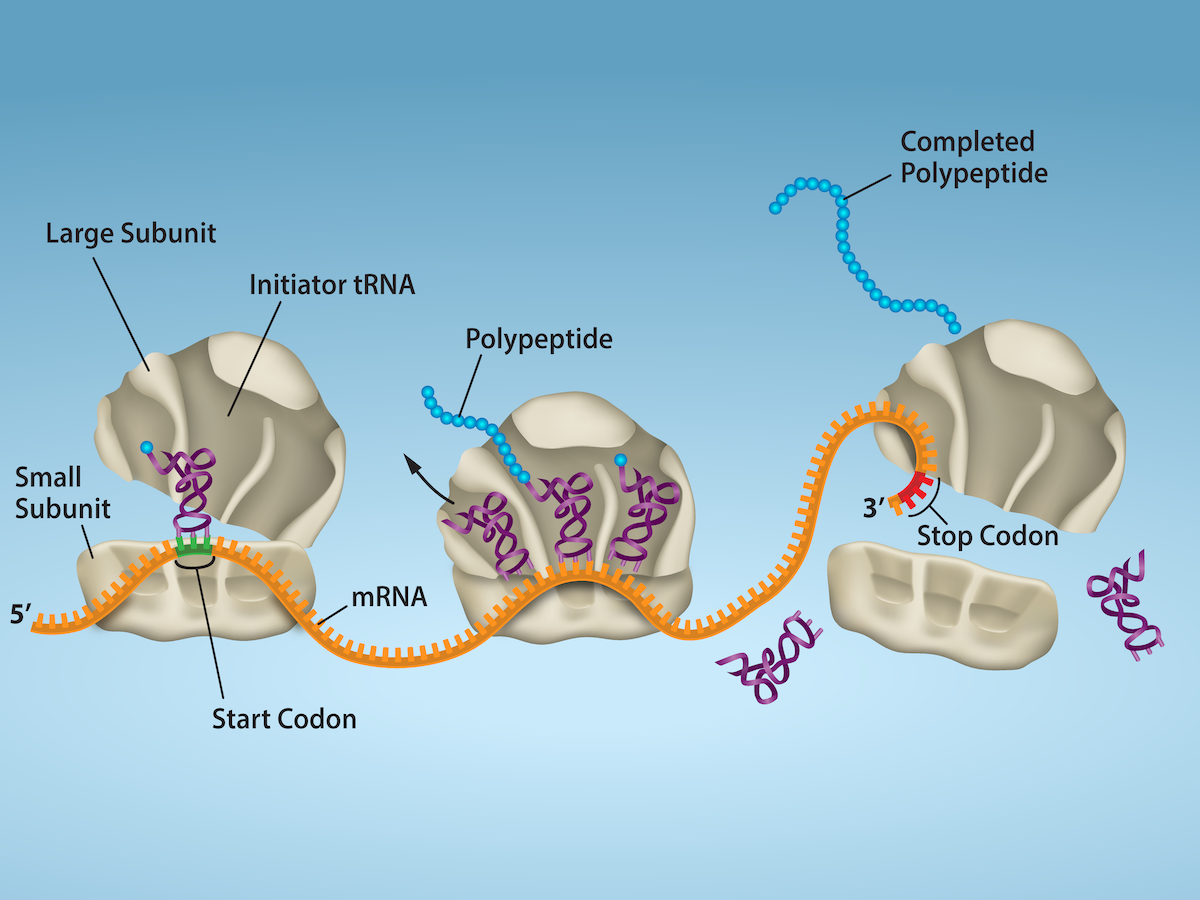
Translation begins when an initiator tRNA anticodon recognizes a start codon on mRNA bound to a small ribosomal subunit. The large ribosomal subunit joins the small subunit, and a second tRNA is recruited. As the mRNA moves relative to the ribosome, successive tRNAs move through the ribosome, and the polypeptide chain is formed. Entry of a release factor into the A site terminates translation, and the components dissociate.
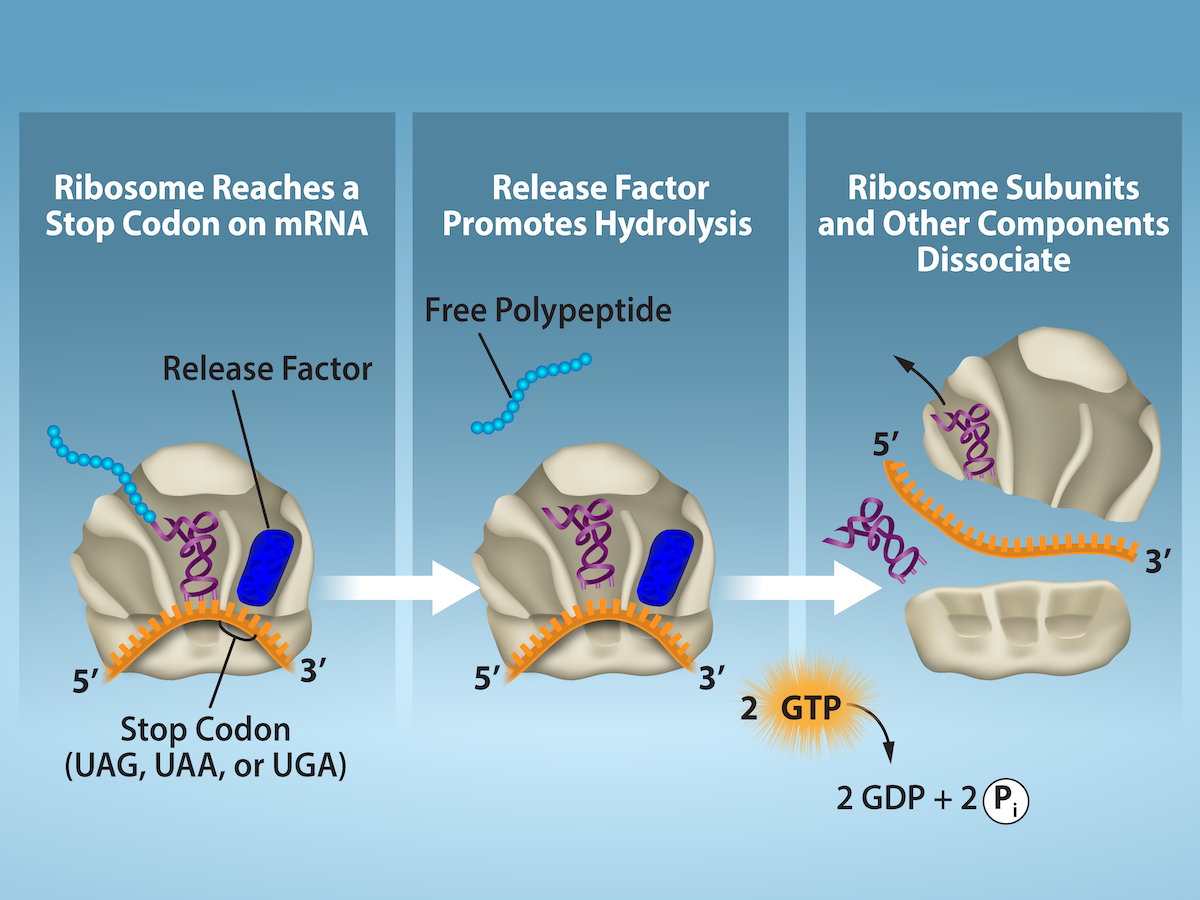
Translation is terminated when a STOP codon is in the A site of the ribosome. Since there are no tRNAs corresponding to the STOP codons, the release factor protein enters and catalyzes the hydrolysis between the last amino acid and its tRNA. This hydrolysis releases the free carboxyl terminus (C-term) of the protein, releasing the complete, newly synthesized protein. Thus, a gene within the DNA molecule is transcribed into mRNA, which is then translated into a protein product.
Translation Termination Is Active—Translation is terminated when a STOP codon is in the A site of the ribosome. Since there are no tRNAs corresponding to the STOP codons, the release factor protein enters and catalyzes the hydrolysis between the last amino acid and its tRNA. This hydrolysis releases the free carboxyl terminus (C-term) of the protein. Additional factors use the energy in GTP hydrolysis to disassemble the large and small ribosomal subunits and mRNA. Credit: Rao, A. and Ryan, K. Department of Biology, Texas A&M University.
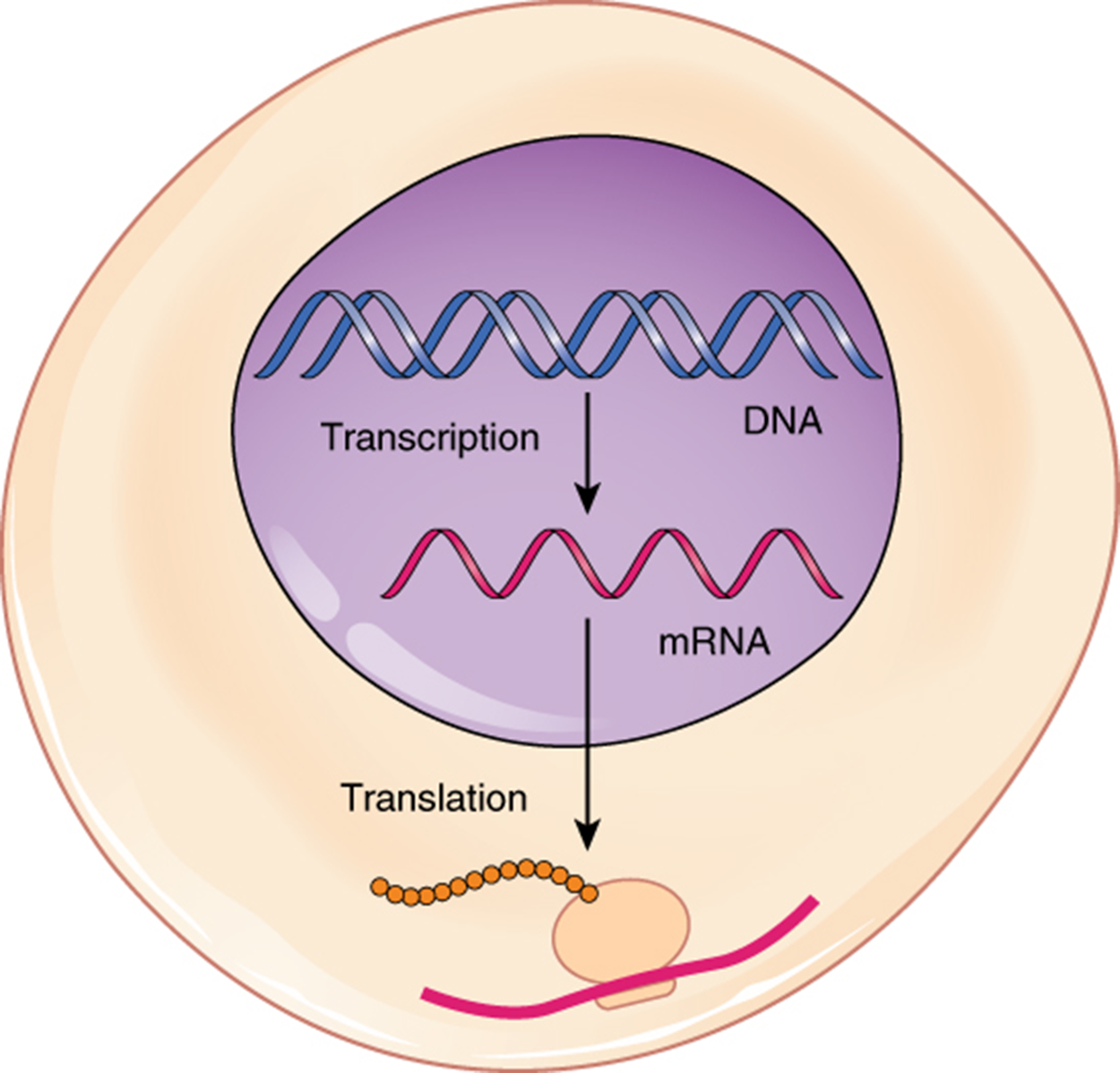
From DNA to Protein: Transcription Through Translation—Transcription within the cell nucleus produces an mRNA molecule, which is modified and then sent into the cytoplasm for translation. The transcript is decoded into a protein with the help of a ribosome and tRNA molecules.
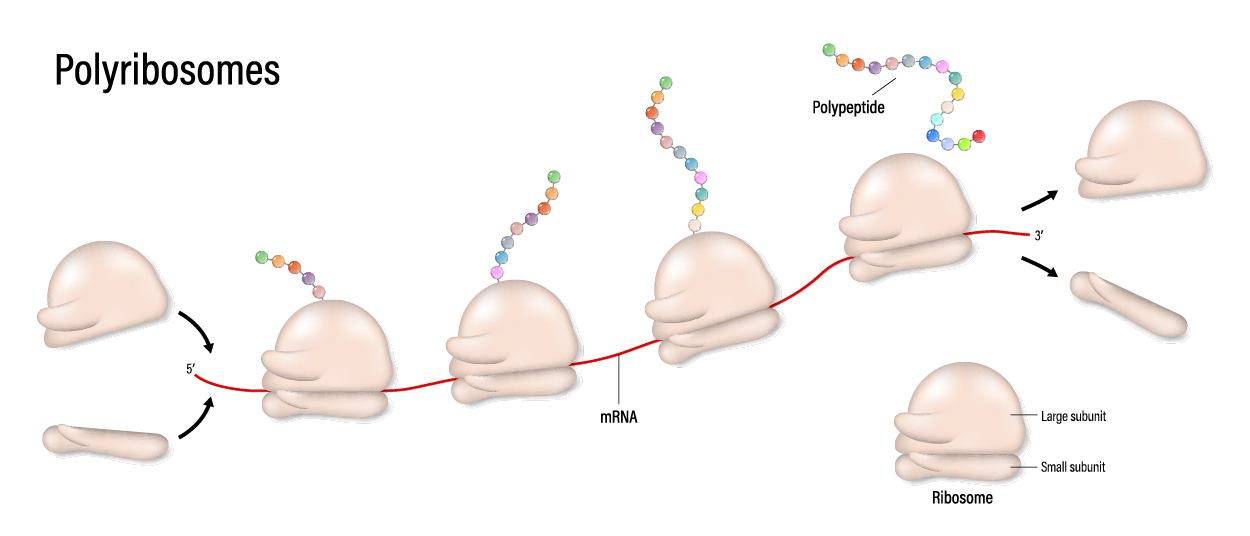
Commonly, an mRNA transcription will be simultaneously translated by several adjacent ribosomes. This increases the efficiency of protein synthesis. A single ribosome might translate an mRNA molecule in approximately one minute; so, multiple ribosomes aboard a single transcript could produce multiple times the number of the same protein in the same minute. A polyribosome is a string of ribosomes translating a single mRNA strand.
Polyribosome—An mRNA molecule is generally translated simultaneously by several ribosomes.
terms to know
Translation
The process of synthesizing a polypeptide from an mRNA transcript.
Codon
A three-base sequence in the mRNA transcript that encodes the start or stop of protein synthesis and/or a specific amino acid.
Ribosomal RNA (rRNA)
A type of RNA that, together with proteins, composes the structure of the ribosome.
Transfer (tRNA)
A type of RNA that ferries specific amino acids from the cytoplasm to the ribosome, adding to a growing polypeptide.
Anticodon
The sequence of three bases on the tRNA molecule that is complementary to the mRNA codon.
Polyribosome
A string of ribosomes translating a single mRNA strand.
3. Mutations
Mutations, variations in the nucleotide sequence of a genome, can occur because of errors during DNA replication or as a result of damage to DNA, and they may or may not affect the proteins that are produced during protein synthesis. Although many mutations are considered negative mutations because they have harmful effects (such as in an essential protein that loses its function), some mutations are neutral (or silent) with no effect, and others can even have beneficial effects.
EXAMPLE
Most humans have three types of cones on their retina that allow them to see color. Those that have fewer than three are considered color blind. However, in approximately 12% of women, there is a mutation that causes a fourth cone to develop. This fourth cone allows these women to see over 100 million different shades of color compared with women who lack the mutation. Mutations such as tetrachromacy are considered beneficial mutations.
Mutations may be induced or spontaneous. Induced mutations are those that result from exposure to chemicals, UV rays, X-rays, or some other environmental agent. For example, Charlotte Auerbach and J.M Robson discovered the mutation-inducing effects of mustard gas, which was used during combat in World War I and World War II. Spontaneous mutations occur without any exposure to any environmental agent; they are a result of natural reactions taking place within the body.
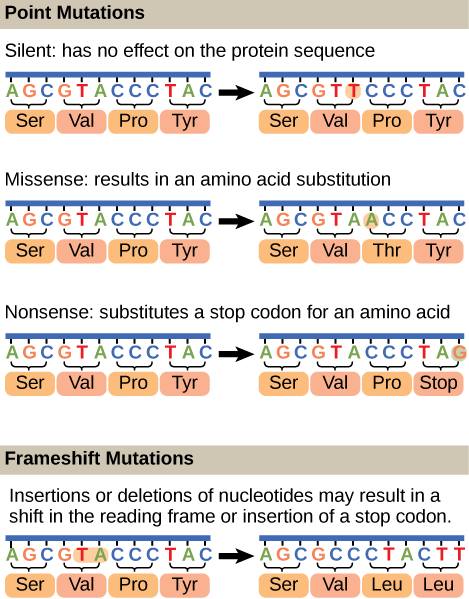
Mutations may have a wide range of effects. Point mutations are those mutations that affect a single base pair. The most common nucleotide mutations are substitutions, in which one base is replaced by another. These substitutions can be of two types, either transitions or transversions. Transition substitution refers to a purine or pyrimidine being replaced by a base of the same kind; for example, a purine such as adenine may be replaced by the purine guanine. Transversion substitution refers to a purine being replaced by a pyrimidine, or vice versa; for example, cytosine, a pyrimidine, is replaced by adenine, a purine.
EXAMPLE
The BRAF gene produces a protein called RAF that helps regulate functions such as cell division and differentiation. If a point mutation changes the codon GAG (glutamic acid) to GUG (valine) by changing the purine adenine to the pyrimidine uracil, the new RAF protein will cause signaling that results in uncontrollable division of cells, leading to cancer. The changing of A to U is a change from a purine to a pyrimidine.
Some point mutations are not detectable in the final protein product; these are known as silent mutations. Silent mutations are usually due to a substitution in the third base of a codon, which often represents the same amino acid as the original codon. Other point mutations can result in the replacement of one amino acid by another, which may alter the function of the protein. Point mutations that generate a stop codon can terminate a protein early.
Some mutations can result in an increased number of copies of the same codon. These are called trinucleotide repeat expansions and result in repeated regions of the same amino acid. Mutations can also be the result of the addition of a base, known as an insertion, or the removal of a base, also known as deletion. If an insertion or deletion results in the alteration of the translational reading frame (a frameshift mutation), the resultant protein is usually nonfunctional. Sometimes a piece of DNA from one chromosome may get translocated to another chromosome or to another region of the same chromosome; this is also known as translocation.
EXAMPLE
Cystic fibrosis is an inherited disorder in which a faulty gene causes the body to produce thick, sticky mucus that blocks airways, damages organs, and traps germs. This disorder is caused by two frameshift mutations in a gene: a two-nucleotide insertion and a one-nucleotide deletion. Consequently, the reading frame of the protein is shifted to introduce an early termination codon, rendering the protein nonfunctional.
Mutations can lead to changes in the protein sequence encoded by the DNA.
Mutations in DNA repair genes have been known to cause cancer. Many mutated repair genes have been implicated in certain forms of pancreatic cancer, colon cancer, and colorectal cancer. Mutations can affect either somatic cells or germ cells. If many mutations accumulate in a somatic cell, they may lead to problems such as the uncontrolled cell division observed in cancer. If a mutation takes place in germ cells, the mutation will be passed on to the next generation, as in the case of hemophilia and xeroderma pigmentosa.
IN CONTEXT
A Beneficial Mutation
Since the first case of infection with human immunodeficiency virus (HIV) was reported in 1981, nearly 40 million people have died from HIV infection, the virus that causes acquired immune deficiency syndrome (AIDS). The virus targets helper T cells that play a key role in bridging the innate and adaptive immune response, infecting and killing cells normally involved in the body’s response to infection. There is no cure for HIV infection, but many drugs have been developed to slow or block the progression of the virus. Although individuals around the world may be infected, the highest prevalence among people 15–49 years old is in sub-Saharan Africa, where nearly one person in 20 is infected, accounting for greater than 70% of the infections worldwide. Unfortunately, this is also a part of the world where prevention strategies and drugs to treat the infection are the most lacking.
In recent years, scientific interest has been piqued by the discovery of a few individuals from northern Europe who are resistant to HIV infection. In 1998, American geneticist Stephen J. O’Brien at the National Institutes of Health (NIH) and colleagues published the results of their genetic analysis of more than 4,000 individuals. These indicated that many individuals of Eurasian descent (up to 14% in some ethnic groups) have a deletion mutation, called CCR5-delta 32, in the gene encoding CCR5. CCR5 is a co-receptor found on the surface of T cells that is necessary for many strains of the virus to enter the host cell. The mutation leads to the production of a receptor to which HIV cannot effectively bind and thus blocks viral entry. People homozygous for this mutation have greatly reduced susceptibility to HIV infection, and those who are heterozygous have some protection from infection as well.
It is not clear why people of northern European descent, specifically, carry this mutation, but its prevalence seems to be highest in northern Europe and steadily decreases in populations as one moves south. Research indicates that the mutation has been present since before HIV appeared and may have been selected for in European populations as a result of exposure to the plague or smallpox. This mutation may protect individuals from the plague (caused by the bacterium Yersinia pestis) and smallpox (caused by the variola virus) because this receptor may also be involved in these diseases. The age of this mutation is a matter of debate, but estimates suggest it appeared between 1,875 years to 225 years ago and may have been spread from Northern Europe through Viking invasions.
This exciting finding has led to new avenues in HIV research, including looking for drugs to block CCR5 binding to HIV in individuals who lack the mutation. Although DNA testing to determine which individuals carry the CCR5-delta 32 mutation is possible, there are documented cases of individuals homozygous for the mutation contracting HIV. For this reason, DNA testing for the mutation is not widely recommended by public health officials so as not to encourage risky behavior in those who carry the mutation. Nevertheless, inhibiting the binding of HIV to CCR5 continues to be a valid strategy for the development of drug therapies for those infected with HIV.
HIV is highly prevalent in sub-Saharan Africa, but its prevalence is quite low in some other parts of the world.
terms to know
Mutation
A variation in the nucleotide sequence of a genome.
Induced Mutation
A mutation that results from exposure to chemicals or environmental agents.
Spontaneous Mutation
A mutation that takes place in the cells as a result of chemical reactions taking place naturally without exposure to any external agent.
Transition Substitution
When a purine is replaced with a purine or a pyrimidine is replaced with another pyrimidine.
Transversion Substitution
When a purine is replaced by a pyrimidine or a pyrimidine is replaced by a purine.
summary
In this lesson, you learned about how proteins are produced from the genetic code. You first learned about how genetic material goes from DNA to RNA through the process known as transcription. Then, you learned about how products are produced from RNA to protein through the process known as translation. Finally, you explored how mutations may or may not affect the proteins synthesized based on the codons that are affected.
The sequence of three bases on the tRNA molecule that is complementary to the mRNA codon.
Codon
A three-base sequence in the mRNA transcript that encodes the start or stop of protein synthesis and/or a specific amino acid.
Induced Mutation
A mutation that results from exposure to chemicals or environmental agents.
Messenger RNA (mRNA)
A single-stranded nucleic acid that carries a copy of the genetic code for a single gene out of the nucleus and into the cytoplasm, where it is used to produce proteins.
Mutation
A variation in the nucleotide sequence of a genome.
Polyribosome
A string of ribosomes translating a single mRNA strand.
RNA Polymerase
An enzyme that adds new nucleotides to a growing strand of RNA.
Ribosomal RNA (rRNA)
A type of RNA that, together with proteins, composes the structure of the ribosome.
Spontaneous Mutation
A mutation that takes place in the cells as a result of chemical reactions taking place naturally without exposure to any external agent.
Transcription
The synthesis of a strand of mRNA that is complementary to the gene of interest.
Transfer (tRNA)
A type of RNA that ferries specific amino acids from the cytoplasm to the ribosome, adding to a growing polypeptide.
Transition Substitution
When a purine is replaced with a purine or a pyrimidine is replaced with another pyrimidine.
Translation
The process of synthesizing a polypeptide from an mRNA transcript.
Transversion Substitution
When a purine is replaced by a pyrimidine or a pyrimidine is replaced by a purine.