Table of Contents |
Promotion is the attempt by marketers to inform, persuade, or remind consumers and B2B users to influence their opinion or elicit a response. Most firms use some form of promotion. Because company goals vary widely, so do promotional strategies. The goal is to stimulate action from the people or organizations of a target market. In a profit-oriented firm, the desired action is for the consumer to buy the promoted item.
Promotional goals include:
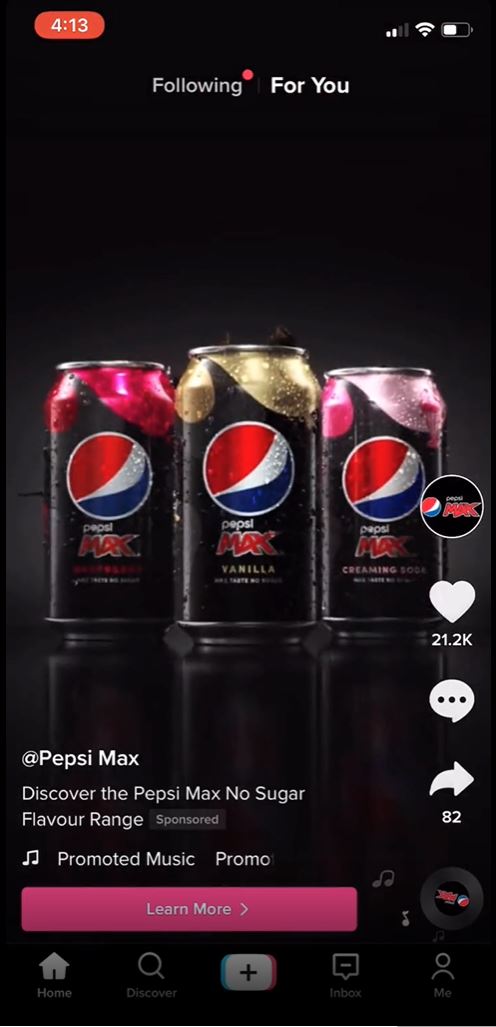 Promotion through ads on social media platforms and local radio or television, coupons in local papers, flyers, and so forth can create awareness of a new business or product.
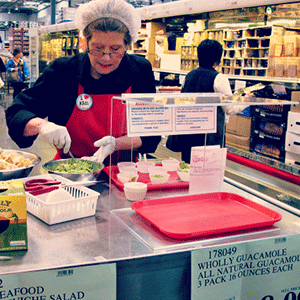 Have you ever been to Costco on a Saturday, where there are numerous samples? This is the brand’s attempt at getting people to try a product, and of course, hopefully buy it.
 For years, Pepsi has claimed it has the taste that consumers prefer. Southwest Airlines brags that customers’ bags fly free.
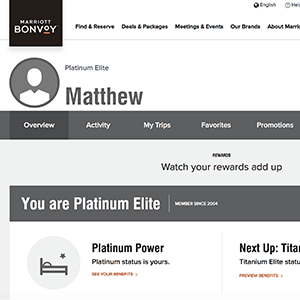 The Marriott Rewards program awards points for each dollar spent at a Marriott property. At the Platinum level, members receive a guaranteed room, an upgrade to the property’s finest available accommodations, access to the concierge lounge, a free breakfast, free local phone calls, and a variety of other benefits.
To meet the goals we just addressed, companies use something called the promotional mix. The promotional mix is the combination of traditional advertising, personal selling, sales promotion, public relations, social media, and e-commerce. Each firm creates a unique promotional mix for each product. But the goal is always to deliver the firm’s message efficiently and effectively to the target audience.
These are the elements of the promotional mix:
| Promotion Type | Definition |
|---|---|
| Traditional advertising | Any paid form of nonpersonal promotion by an identified sponsor that is delivered through traditional media channels. |
| Personal selling | Face-to-face presentation to a prospective buyer. |
| Sales promotion | Marketing activities (other than personal selling, traditional advertising, public relations, social media, and e-commerce) that stimulate consumer buying, including coupons and samples, displays, shows and exhibitions, demonstrations, and other types of selling efforts. |
| Public relations | The linking of organizational goals with key aspects of the public interest and the development of programs designed to earn public understanding and acceptance. Public relations can include lobbying, publicity, special events, internal publications, and media such as a company’s internal television channel. |
| Social media | The use of social media platforms such as Facebook, Twitter, Pinterest, Instagram, and various blogs to generate “buzz” about a product or company. The skills and knowledge needed to generate information as well as to defend the company against problems (such as incriminating videos “going viral”) are separate skills from those related to traditional advertising. Even promotional strategies such as paying celebrities to wear a specific line of clothing and posting these images on X (formerly Twitter) or Instagram (a form of advertising) require different types of planning and expertise than traditional advertising. |
| E-commerce | The use of a company’s website to generate sales through online ordering, information, interactive components such as games, and other elements of the website. Website development is mandatory in today’s business world. Understanding how to develop and utilize a website to generate sales is imperative for any marketer. |
Select the plus signs to see some examples of each promotion type:
 Any paid form of nonpersonal promotion by an identified sponsor delivered through traditional media channels
  A face-to-face presentation to a prospective buyer
 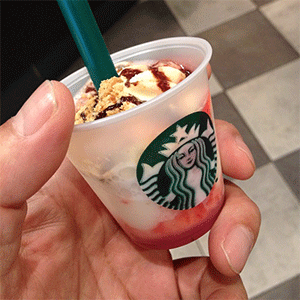 Marketing activities (other than personal selling, traditional advertising, public relations, social media, and e-commerce) that stimulate consumer buying, such as coupons, samples, displays, or demonstrations
 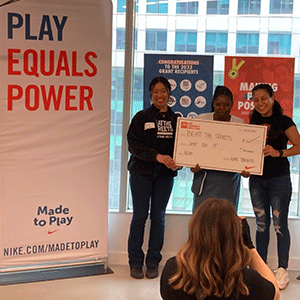 The linking of organizational goals with key aspects of public interest and the development of programs, such as publicity, lobbying, special events, or internal publications, to earn public understanding and acceptance
 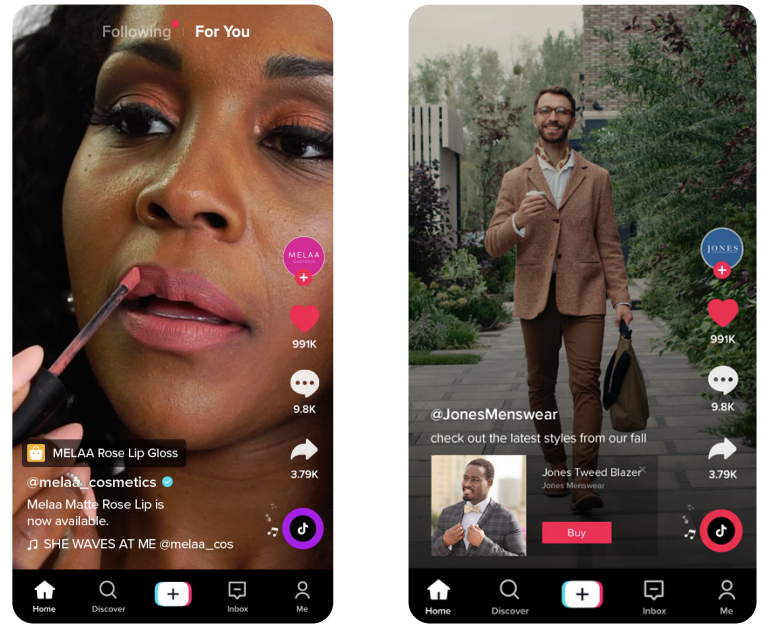 The use of platforms like Facebook, TikTok, Instagram, Pinterest, and blogs to generate buzz or engagement about a product or company
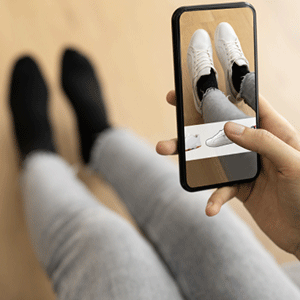 The use of a company’s website to generate sales through online ordering, interactive content, and other website elements
 Ideally, marketing communications from each promotional mix element (personal selling, traditional advertising, sales promotion, public relations, social media, and e-commerce) should give the same message to the consumer. We will address that in our next tutorial.
Source: THIS CONTENT HAS BEEN ADAPTED FROM RICE UNIVERSITY’S “PRINCIPLES OF MARKETING”. ACCESS FOR FREE AT OpenStax. LICENSE: CREATIVE COMMONS ATTRIBUTION 4.0 INTERNATIONAL.



