Table of Contents |
When the word "project scope" is mentioned, it includes two things. One is the physical document that defines a project; describes the outcomes; and identifies who has oversight in the project, otherwise known as the project scope document. The second focuses on the goals and results of the project.
Once a project manager is assigned to a project, the first step they should take is to create a project scope document. Then, the details of the project scope can be communicated to project members and stakeholders.
But what goes into a project scope document? Typically, this document answers the following questions: who, what, when, why, and how.
WHO
IN CONTEXT
An organization launches a project to create event planning software. You are the project manager and must create a project scope document. A few specific questions that may be asked in order to help guide the document, may be:
If your stakeholders communicate clear requirements, you will likely choose a phase-based development process to ensure each stage is delivered on time.
- Who in the organization will determine the requirements?
- What is the deliverable? Software to manage events? Software to plan events? Both?
- When will employees be able to plan events using our new software?
- Why is the project being initiated? To increase event attendance in the organization because notifications are being sent too late?
- How will the project be managed? Phase-based or iterative development?
The individual pieces of a scope can be outlined in a flow diagram.
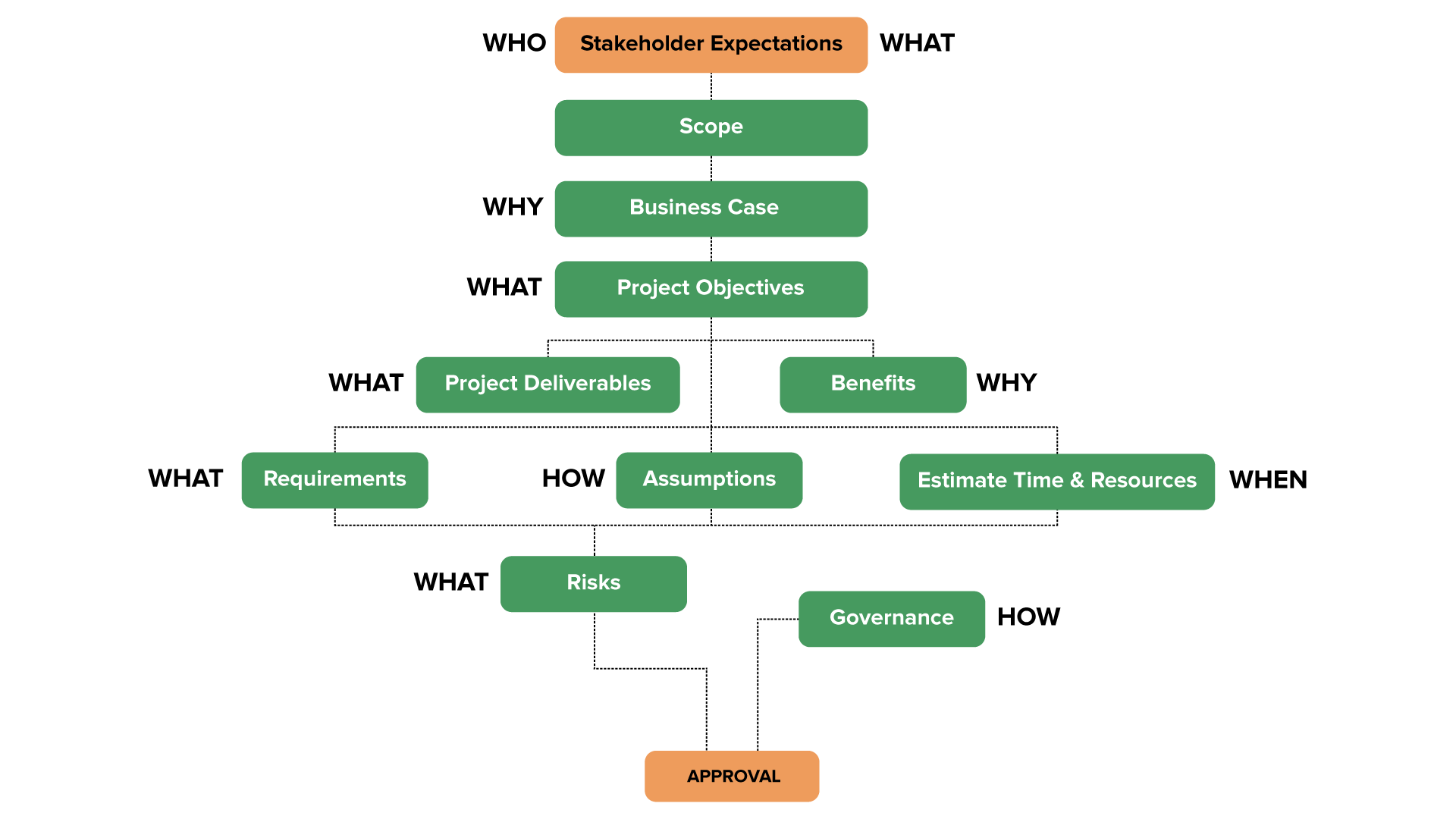
Note how the five scope questions are answered during the development of each element:
In some organizations, a project charter will also be created prior to the project scope.
While all projects should have a scope document, not all projects will have a charter. It's up to the organization whether a charter is necessary. If a project does have a charter and the scope document, the charter is always created first.
Without a charter though, there still needs to be a formal method to kick off the project and grant authority to the project manager. This could be a meeting between the key principles or even something as simple as a document or email informing the project manager that they can begin.
Source: This work is adapted from Sophia author Jeff Carroll.



