Table of Contents |
Organizations today operate in an environment of rapid change, global competition, and technological disruption. Delivering projects successfully is no longer optional—it is essential for survival and growth. Two critical pillars that support this success are governance and project management. Governance in project management refers to the framework of rules, processes, roles, and decision-making structures that ensure a project is managed effectively, ethically, and in alignment with organizational goals. Project management, on the other hand, focuses on planning, executing, and controlling projects to achieve defined objectives within time, cost, and quality constraints.
Governance frameworks are the specific systems used to manage governance in an organization. Governance frameworks are the set of rules and guidelines that help organize and control how things are done in a group or organization. It’s similar to a blueprint that shows how to manage and make decisions, ensuring that everything runs smoothly and according to plan.
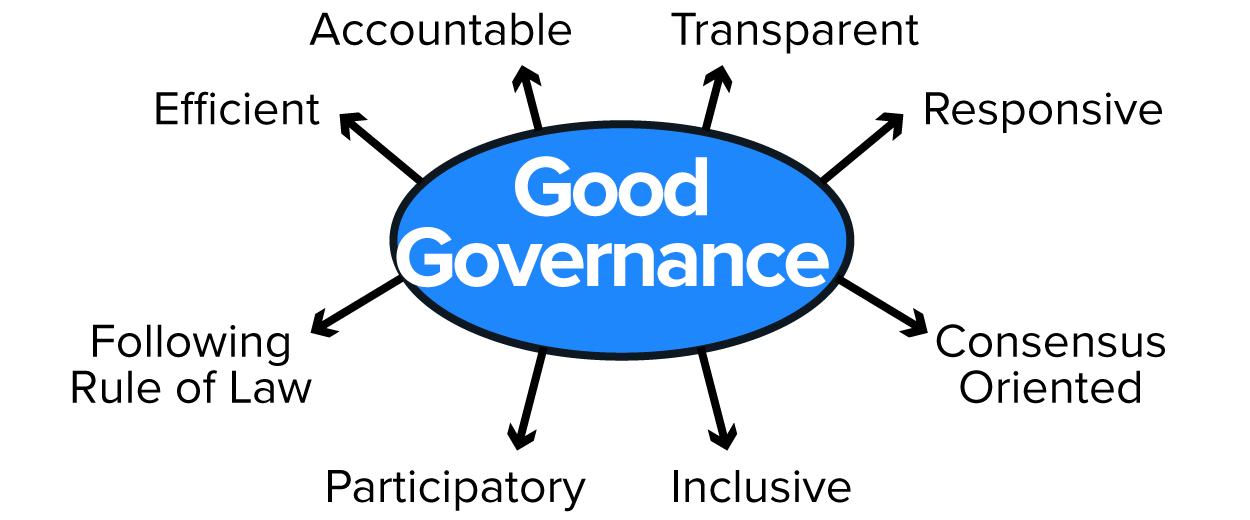
When project management and governance work together, organizations can align projects with strategic goals, manage risks effectively, and optimize resources. Without governance, projects risk becoming disconnected from organizational priorities, leading to wasted resources and missed opportunities. Without project management, even well-governed initiatives can fail because of poor execution. This lesson explores governance and project management in detail, their intersection, benefits, challenges, and best practices for integration.
Governance refers to the system of rules, practices, and processes by which an organization is directed and controlled. In projects, governance ensures alignment with organizational strategy, compliance with regulations, and delivery of expected benefits. It establishes accountability by defining roles and responsibilities, sets decision-making authority, and provides mechanisms for monitoring performance.
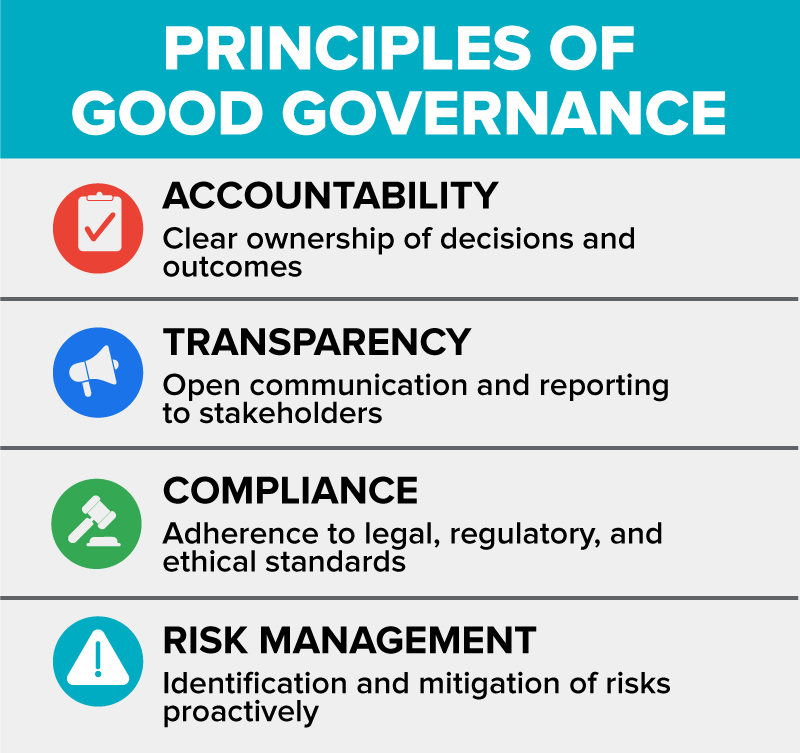
Project governance often includes structures such as steering committees, project boards, and project management offices (PMOs, which, if you recall, you learned about in the previous lesson). These bodies oversee project progress, approve major decisions, and ensure resources are allocated effectively. Governance also defines escalation paths for issues, ensuring timely resolution.
Let’s take a look at the differences and similarities between the three.
| Group | Definition | Main Focus | Typical Members | Decision-Making Role | Involvement Level |
|---|---|---|---|---|---|
| Steering Committee | A group of senior stakeholders that provides strategic direction for projects or programs and ensures alignment with organizational goals | Strategy and business alignment | Executives, VPs, senior leaders, and major sponsors | Approves major decisions affecting scope, funding, and priorities | Meets periodically; high-level involvement only |
| Project Board | A governing body responsible for overseeing and authorizing a specific project, ensuring it stays viable and delivers its intended benefits | Governance and successful delivery of the project | Executive sponsor, senior user, and senior supplier | Authorizes start, stage boundaries, and major changes; resolves escalated issues | Involved at key milestones or when issues arise |
| Project Management Office (PMO) | A centralized team or department that establishes project management standards, supports PMs, and may oversee or manage projects across the organization | Organization-wide project support, methodology, and performance | PM specialists, analysts, resource managers, and portfolio managers | May advise, monitor, or enforce depending on the PMO type (supportive/controlling/directive) | Continuous involvement throughout the year |
Without governance, projects can face challenges such as budget overruns and misalignment with organizational priorities.
EXAMPLE
A project may deliver a technically sound product that fails to meet business needs because strategic alignment was never verified.Governance acts as a safeguard, ensuring projects contribute to long-term organizational success.
Governance Structures Supporting Projects:
The best approach is a hybrid model—strong governance for strategic alignment and risk management, combined with flexible project management practices for adaptability. This balance ensures accountability without stifling creativity.
Strong governance provides a solid foundation for project success by ensuring clarity, accountability, and alignment with organizational objectives. It establishes clear roles and responsibilities, reducing confusion and fostering ownership among team members. Through structured oversight and transparent reporting, governance builds stakeholder confidence and trust. Additionally, it enables proactive risk management, helping identify and mitigate potential issues before they escalate. By aligning projects with strategic goals and optimizing resource allocation, strong governance ensures that time, money, and talent are used effectively, ultimately driving better outcomes and long-term value for the organization.
Some of the benefits of strong governance include the following:
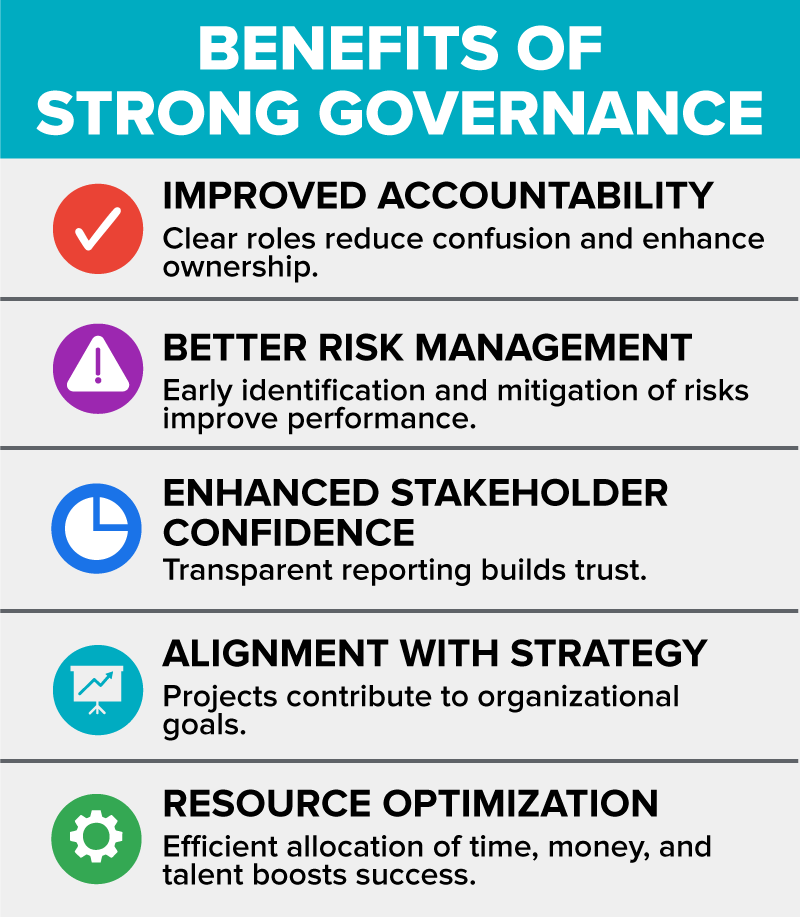
Organizations with strong governance frameworks consistently outperform those without.
EXAMPLE
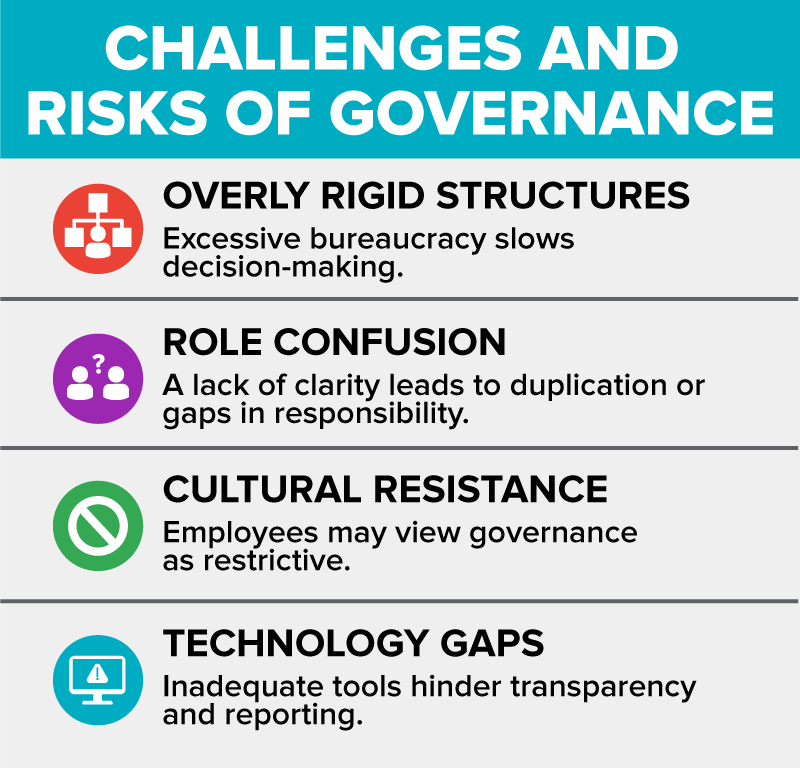
Companies with PMOs and project boards report higher project success rates because they can adapt to change while maintaining control.Governance in projects faces numerous challenges and risks that can impact success. Complex stakeholder interests, unclear roles, and inadequate decision-making structures often lead to delays and misalignment with organizational objectives. Additionally, insufficient transparency and accountability can create trust issues, while failure to comply with regulatory and ethical standards exposes projects to legal and reputational risks. Poor risk management and ineffective communication further amplify uncertainties, making robust governance frameworks essential to ensure control, clarity, and confidence throughout the project life cycle.
Some of the challenges and risks include the following:
EXAMPLE
A global organization implementing governance may face resistance from teams accustomed to autonomy. Similarly, without proper tools, governance processes can become manual and time-consuming, reducing efficiency.To overcome these challenges, organizations must strike a balance between control and agility. Governance should be seen as an enabler, not a barrier. Training, communication, and technology adoption are key to making governance effective and accepted.
Integrating governance with project management is essential for achieving strategic alignment and delivering successful outcomes. However, this integration requires a structured approach that balances control with flexibility. Best practices focus on establishing clear roles and responsibilities, embedding governance processes into project workflows, and ensuring transparency through consistent reporting. Leveraging technology for real-time oversight, fostering stakeholder engagement, and aligning governance standards with organizational objectives are also critical. When implemented effectively, these practices create a framework that enhances accountability, mitigates risks, and drives project success without stifling innovation.
To maximize effectiveness, organizations should adopt these best practices:
Organizations should also adopt risk-based governance, focusing oversight on high-risk projects while allowing more flexibility for low-risk initiatives. Risk-based governance is an approach to organizational or project governance that prioritizes decision-making and resource allocation based on the identification, assessment, and management of risks.
This approach prevents governance from becoming a bottleneck while maintaining control where it matters most.
By embracing best practices and leveraging technology, businesses can create a governance framework that empowers project teams rather than constrains them. This balance ensures sustainable success, allowing organizations to innovate while maintaining accountability. In the future, as projects become more complex and global, the integration of governance and project management will remain a critical factor in achieving strategic objectives.
Source: THIS CONTENT HAS BEEN ADAPTED FROM PRESSBOOKS "NSCC PROJECT MANAGEMENT” BY ADRIENNE WATT. ACCESS FOR FREE AT https://pressbooks.atlanticoer-relatlantique.ca/projectmanagement/ LICENSE: CREATIVE COMMONS ATTRIBUTION 4.0 INTERNATIONAL



