Table of Contents |
Conflict is a natural part of human interactions, whether in personal relationships, the workplace, or other social environments. The way we approach conflict plays a significant role in determining the outcome. A problem-solving attitude is essential for effective conflict resolution because it emphasizes collaboration, understanding, and a focus on solutions rather than blame. In this lesson, we will explore the importance of adopting a problem-solving mindset, how to separate people from problems, and practical strategies for fostering productive conversations in conflict situations.
A problem-solving attitude in conflict resolution involves focusing on identifying the root cause of a disagreement rather than attributing blame. This approach encourages parties to work collaboratively toward a mutually beneficial solution rather than escalating the conflict through personal attacks or defensive reactions. A problem-solving attitude is rooted in empathy, open-mindedness, and the willingness to explore alternative perspectives.
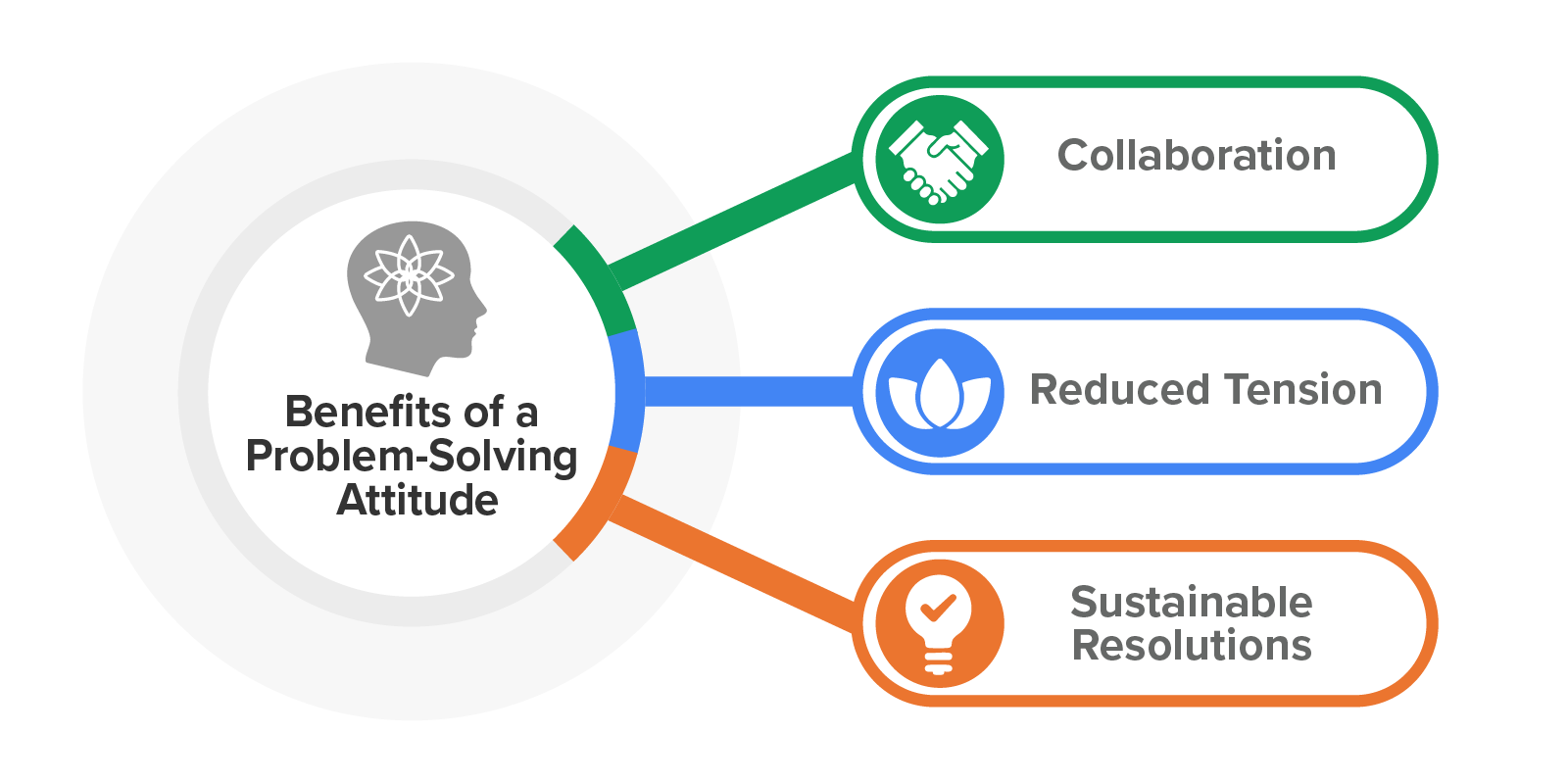
Benefits of a problem-solving attitude can include:
EXAMPLE
Consider a workplace scenario where two colleagues, Anna and Ben, argue over a project deadline. Anna believes Ben is not pulling his weight, while Ben feels overwhelmed with tasks. Instead of blaming Ben for being lazy, Anna adopts a problem-solving attitude and says, “I understand you have a lot on your plate. How can we work together to meet the deadline?” By focusing on the problem—meeting the deadline—rather than Ben’s behavior, Anna encourages Ben to collaborate on finding a solution.In conflict resolution, separating people from problems means focusing on the issue rather than attributing it to personal flaws. When people conflate the person with the problem, it leads to blame, defensiveness, and escalation. Emotions can run high, but the goal is to address the behaviors causing the conflict, not the individual’s character.
Blaming escalates the conflict by shifting the focus away from the problem. Instead, use I-statements to express concerns and reduce defensiveness.
EXAMPLE
Saying, “When the report was late, I felt stressed because I needed it to finish my work,” focuses on the issue and allows for resolution.Interest-based negotiation encourages creative solutions by exploring alternative ways to meet needs while keeping the focus on the problem. Once the issue is separated from the person, reframing the conflict is key. Reframing shifts the focus from personal disagreements to a shared challenge both parties can solve together.
EXAMPLE
If two coworkers are arguing over who is responsible for a missed deadline, the mediator could reframe the conflict by saying, “It seems like both of you are concerned about meeting deadlines moving forward. How can we ensure that future projects are completed on time?”Reframing helps depersonalize the conflict and allows both parties to focus on a solution.
Another useful technique in conflict resolution is the use of clarifying questions. Asking open-ended questions helps ensure both parties fully understand each other’s perspectives, which is essential for finding common ground.
EXAMPLE
A manager might ask, “Can you tell me more about what happened that led to the missed deadline?” or “What needs to happen for you to feel comfortable moving forward?” These questions invite the parties to share their side of the story without assigning blame.Clarifying questions help build rapport, demonstrate empathy, and ensure that each party’s interests are understood.
Active listening, which you may remember from an earlier lesson, also plays a significant role in fostering a problem-solving attitude. When parties feel heard and understood, they are more likely to engage in the conflict resolution process and collaborate on solutions. Active listening involves giving full attention to the speaker, acknowledging their perspective, and providing feedback to ensure understanding.
EXAMPLE
If a team member is frustrated with a lack of communication from their supervisor, active listening might involve the supervisor repeating what they heard: “So, you’re saying that you feel left out of the decision-making process because I haven’t been keeping you updated regularly. Is that correct?”This technique not only demonstrates that the listener is paying attention but also provides an opportunity to clarify any misunderstandings.
In conflict resolution, it’s important not only to adopt a problem-solving attitude yourself but also to encourage it in others. Here are some strategies to foster a collaborative problem-solving environment:
Creating an open and safe space for communication is key to fostering a problem-solving attitude. Encourage all parties to share their thoughts, feelings, and perspectives without fear of judgment. Open communication allows individuals to express their concerns and explore solutions collaboratively.

EXAMPLE
A team leader might say, “Let’s take turns sharing how we feel about this issue and what solutions we think could work. We want to make sure everyone has a voice in this discussion.”Finding common ground is essential in conflict resolution. By identifying shared goals or interests, parties can shift the focus from opposing positions to working together toward a mutually beneficial outcome. When people recognize that they have shared objectives, they are more likely to collaborate rather than compete.
EXAMPLE
In a dispute between two departments over resource allocation, a mediator might say, “It seems like both of you want what’s best for the company. How can we allocate these resources in a way that benefits both departments and contributes to the company’s overall success?”By focusing on common goals, parties can put aside their individual demands and work together to find a solution that benefits everyone.
Sometimes, parties become so entrenched in their positions that they lose sight of the consequences of not resolving the conflict. It’s important to remind individuals of the potential negative outcomes if the conflict is not addressed, such as strained relationships, decreased productivity, or missed opportunities.
EXAMPLE
A mediator could say, “If we don’t resolve this issue, it could affect the entire team’s ability to meet its goals. Let’s focus on finding a solution that works for everyone so that we can move forward.”By emphasizing the potential costs of ongoing conflict, parties may become more motivated to adopt a problem-solving attitude.
In some cases, individuals may resist adopting a problem-solving attitude because of deeply held beliefs, strong emotions, or past experiences. Here are some strategies for overcoming resistance and encouraging a shift toward collaboration:
Resistance often stems from unaddressed emotions, such as anger, frustration, or fear. It’s essential to acknowledge these emotions and create space for individuals to express them. Ignoring or dismissing emotions can exacerbate conflict, whereas validating feelings can help individuals move past their emotional reactions and focus on problem-solving.
EXAMPLE
A mediator might say, “I can see that you’re really frustrated with this situation, and that’s completely understandable. Let’s talk about what’s causing that frustration so we can find a way to address it.”By acknowledging emotions, the mediator helps defuse the tension and create an environment where problem-solving can occur.
People may resist problem-solving because they have negative assumptions about the other party’s motives or intentions. As discussed earlier, attribution bias can lead individuals to view others in a negative light, which hinders collaboration. Reframing these assumptions involves challenging negative beliefs and encouraging a more open-minded perspective.
EXAMPLE
In a conflict between two coworkers, a mediator might say, “It sounds like you believe that your colleague is intentionally making things difficult. However, it’s possible that there are other factors at play here. Let’s explore those together.”By reframing negative assumptions, the mediator encourages the parties to consider alternative explanations for the conflict and opens the door to collaborative problem-solving.
When individuals take steps toward a problem-solving attitude, it’s important to provide positive reinforcement. Acknowledge their efforts to collaborate and emphasize the benefits of finding solutions together.
EXAMPLE
A manager might say, “I really appreciate how both of you have been open to discussing solutions today. Your willingness to collaborate is going to help us find a resolution that works for everyone.”Positive reinforcement helps build momentum in the conflict resolution process and encourages parties to continue focusing on solutions rather than problems.
Adopting a problem-solving attitude in conflict resolution has significant long-term benefits, both for individuals and for the relationships involved. When individuals approach conflict with a focus on solutions rather than blame, they are more likely to build stronger, more collaborative relationships.

You recently learned about trust and rapport in conflict. A problem-solving attitude fosters trust and rapport between parties because it demonstrates a commitment to understanding each other’s needs and finding mutually beneficial solutions. Over time, this collaborative approach strengthens relationships and increases the likelihood of resolving future conflicts more effectively.
EXAMPLE
In a workplace setting, employees who consistently approach conflict with a problem-solving mindset are more likely to trust one another and work together harmoniously. This trust makes it easier to navigate challenges and prevents conflicts from escalating.When individuals adopt a problem-solving attitude, they are less likely to engage in destructive conflict behaviors, such as blaming, personal attacks, or defensiveness. This reduces the frequency and intensity of conflicts over time as parties learn to address issues calmly and collaboratively.
EXAMPLE
In a family, adopting a problem-solving approach to conflicts—such as disagreements over chores or responsibilities—can prevent small issues from escalating into larger disputes. Family members learn to communicate openly and find solutions that work for everyone, leading to a more peaceful household.A problem-solving attitude also promotes personal growth by encouraging individuals to develop key conflict resolution skills, such as active listening, empathy, and open-mindedness. These skills are not only valuable in conflict situations but also in everyday interactions and relationships.
EXAMPLE
An individual who learns to approach conflict with a problem-solving mindset may become more patient, empathetic, and skilled at handling difficult conversations. These qualities can enhance their personal and professional relationships and contribute to their overall emotional intelligence.Source: THIS TUTORIAL WAS AUTHORED BY MARLENE JOHNSON (2019) and STEPHANIE MENEFEE and TRACI CULL (2024). PLEASE SEE OUR TERMS OF USE.



