Use Sophia to knock out your gen-ed requirements quickly and affordably. Learn more
×

Probability of an Independent Event

Author: Sophia

what's covered
In this lesson, we will determine the mathematical probability of independent events. We will also dive into the connection between probability and problem solving. Specifically, this lesson covers:

Table of Contents

1. Determining Probability of Independent Events

So far, we have discussed simple probability. In other words, we conduct one trial with one outcome. However, what if you needed to know the probability of multiple events? For this lesson, we will focus on two events that have no effect or influence on the other event. For example, we could roll a die and flip a coin landing on heads. Rolling the die would not affect the outcome of flipping a coin. No matter what you roll on the die, the probability of flipping the coin remains the same, ½. Thus, rolling a die and flipping a coin are considered to be independent events because the first event does not affect the probability of the second event. Part of problem solving isn’t always about finding an answer, but understanding what you think might happen.

To determine the probability of two independent events, determine the probability of each and then multiply both of the probabilities together.

formula to know
Probability of Independent Events
fraction numerator Favorable space Outcomes over denominator Total space Number space of space Outcomes end fraction cross times fraction numerator Favorable space Outcomes over denominator Total space Number space of space Outcomes end fraction

EXAMPLE

What is the probability of rolling an even number on a die and then flipping a coin heads side up?
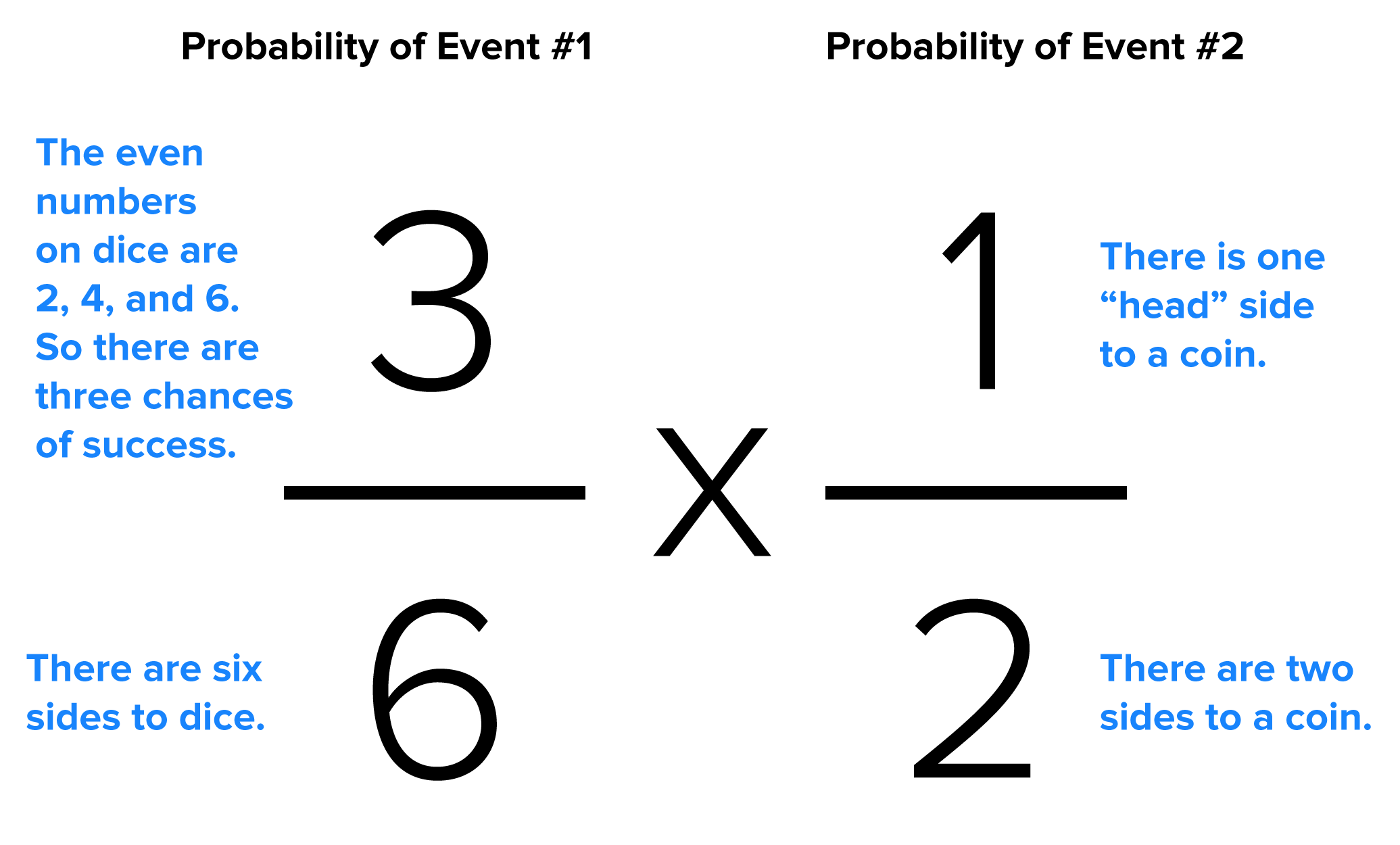
The probability of rolling an even number on a die is 3 out of 6 because there are three even numbers on a die (2, 4, and 6) with six sides to the die. The probability of flipping heads on a coin is 1 out of 2 since there is only one "head" side to a coin, and there are two total sides to a coin.

The probability of Event 1 (3/6) multiplied by the probability of Event 2 (1/2) gives the probability of independent events.

Multiply and simplify the two fractions:

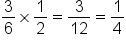
3 over 6 cross times 1 half equals 3 over 12 equals 1 fourth

The probability of rolling an even number on a die and flipping a coin heads up is 1 fourth.

EXAMPLE

In a classroom with 6 boys and 10 girls, as well as 3 turtles, 2 snails, and 5 fish, what is the probability of randomly choosing a girl and a fish?
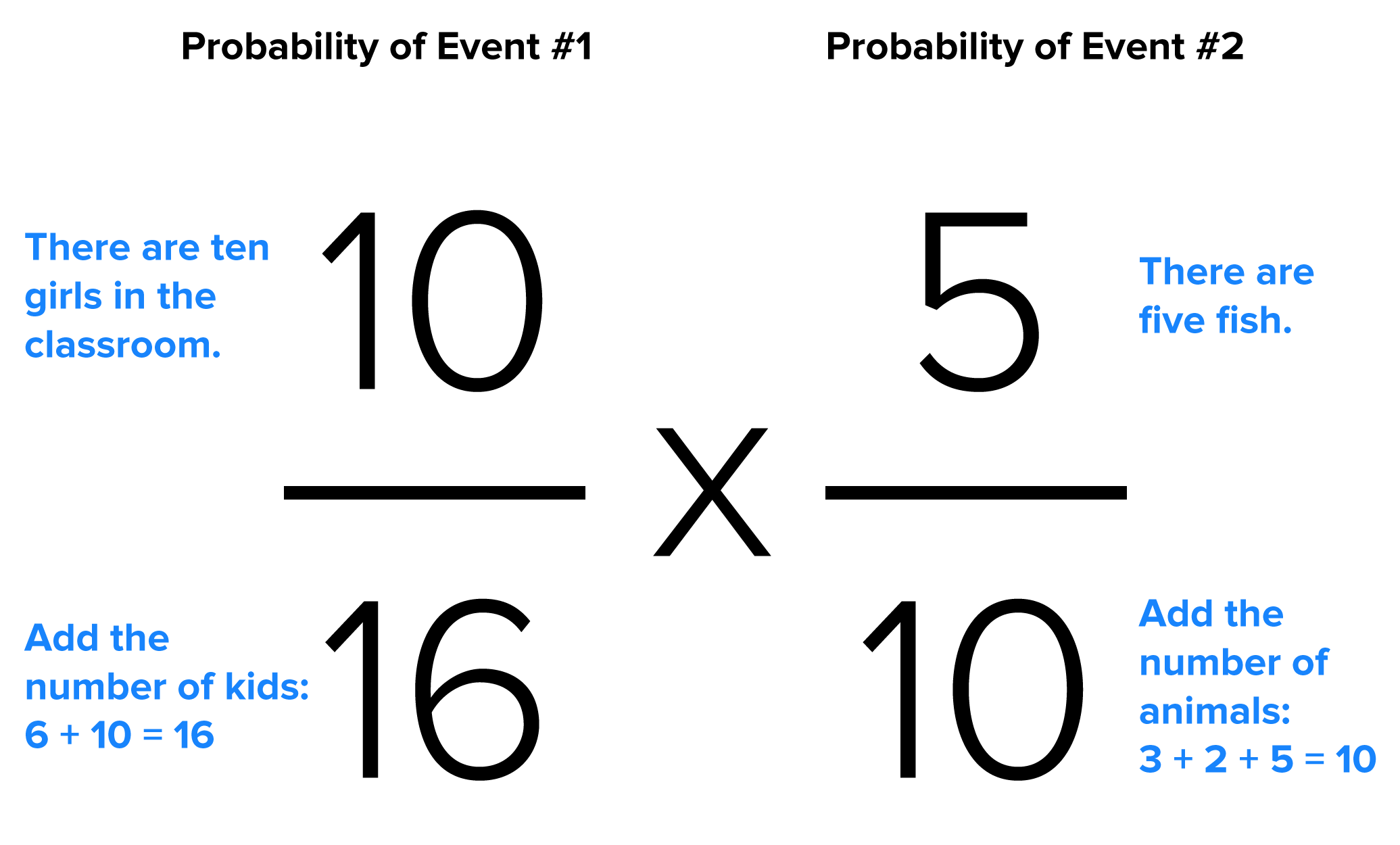
The probability of choosing a girl is 10 out of 16 because there are 10 girls and a total of 16 students. The probability of choosing a fish is 5 out of 10 because there are 5 fish and a total of 10 animals.

The probability of Event 1 (10/16) multiplied by the probability of Event 2 (5/10) gives the probability of both independent events occurring together.

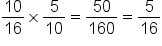
Multiply and simplify the two fractions. 10 over 16 cross times 5 over 10 equals 50 over 160 equals 5 over 16

The probability of choosing a girl and a fish is 5 over 16.

try it
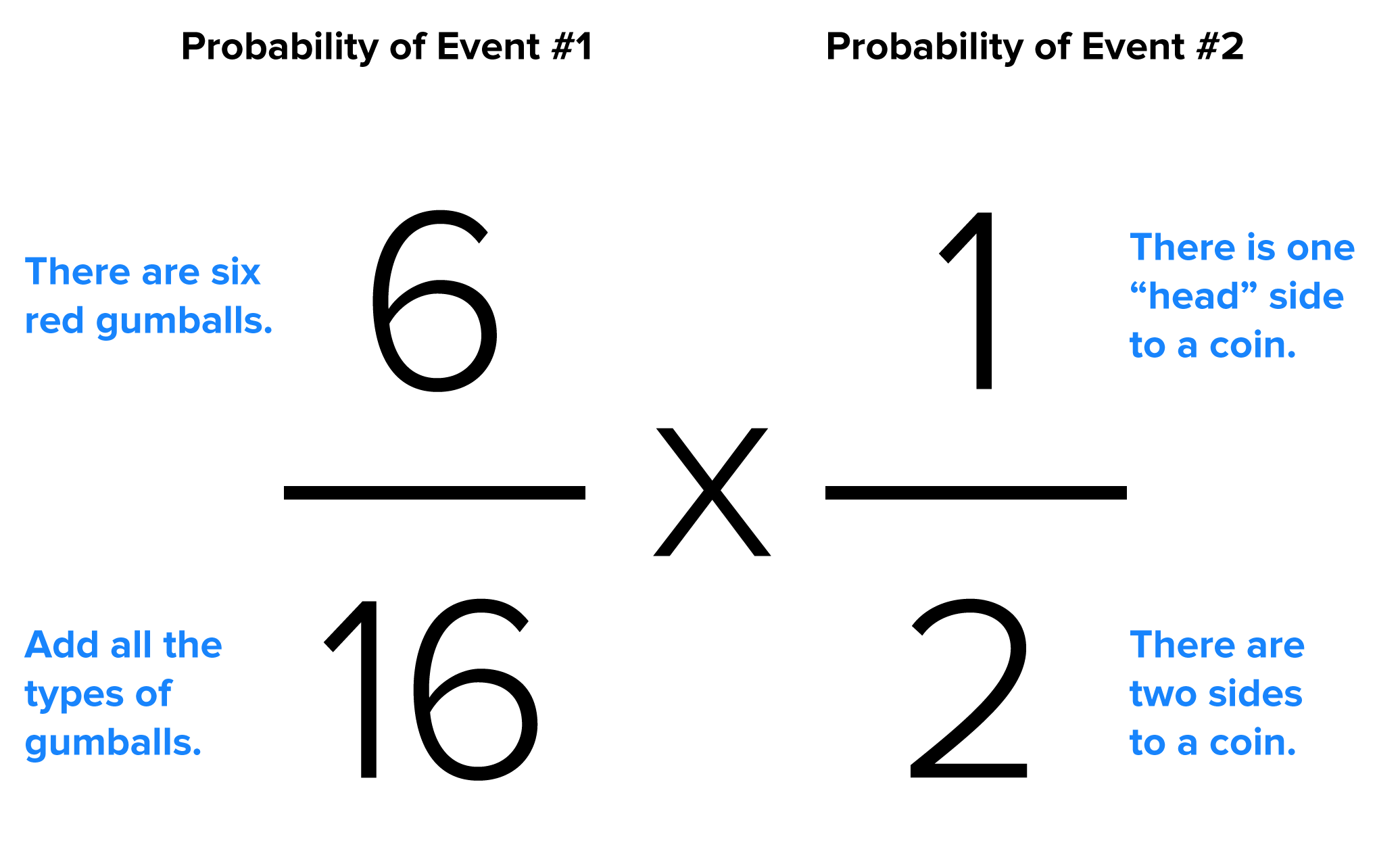
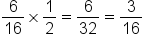
Suppose a gumball machine has 6 red, 3 green, 2 yellow, and 5 blue gumballs.

try it
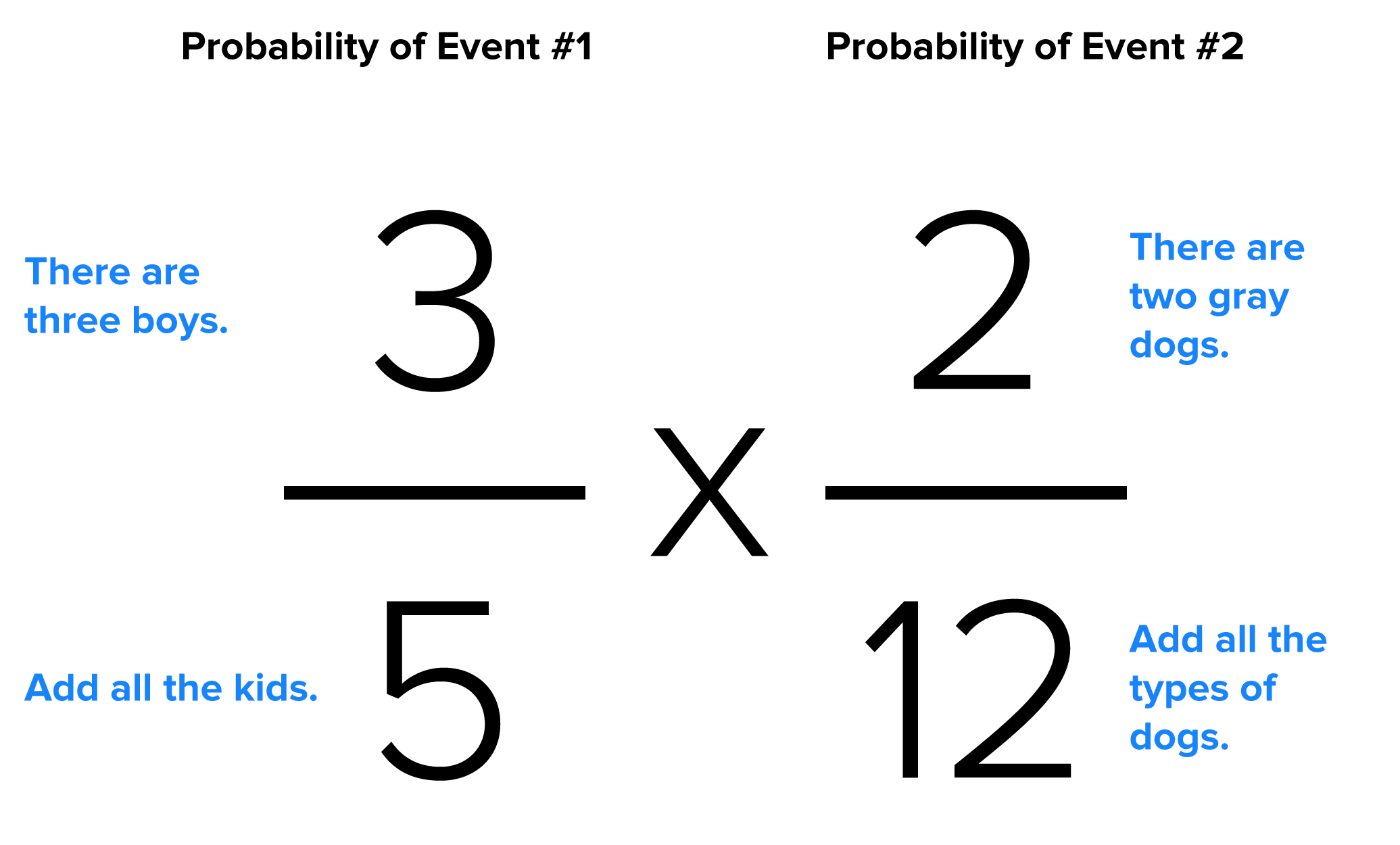
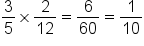
There are 2 girls and 3 boys at the dog pound to adopt a dog. There are 3 black dogs, 2 brown dogs, 5 spotted dogs, and 2 gray dogs.

Problem Solving: Skill Tip
There are several instances in your everyday life in which you’ll need to solve a problem that is based on chance. In many of these cases, there will be more than one event or outcome involved. By understanding what the most likely result of a situation is, you have the information needed to make informed decisions while solving problems.

summary
In this lesson, we explored determining the probability of two independent events occurring by multiplying the probability of each event together. An independent event is an event that has no effect on the outcome of the other event. We also examined the connection between probability and problem solving.

Best of luck in your learning!

Source: THIS TUTORIAL WAS AUTHORED BY SOPHIA LEARNING. PLEASE SEE OUR TERMS OF USE.

Formulas to Know
Probability of Independent Events

fraction numerator Favorable space Outcomes over denominator Total space Number space of space Outcomes end fraction cross times fraction numerator begin display style Favorable space Outcomes end style over denominator begin display style Total space Number space of space Outcomes end style end fraction