Use Sophia to knock out your gen-ed requirements quickly and affordably. Learn more
×

Prioritising and Planning

Author: Sophia
what's covered
This tutorial explains methods and strategies for time management, how to factor in your effectiveness at certain times of day, and the value of doing other things besides study. Here is a list of what’s covered:
  1. Prioritisation
    1. Prioritisation Matrix
    2. Creating a to-do list
  2. Your effectiveness and the time of day
  3. Making time for social connection and personal care


1. Prioritisation

At any time in your study journey, you will have many competing demands including regular weekly readings, preparation for assessment tasks, and reviewing your work. Of course, you will also have other priorities in terms of your family, work and social life that also need to be met.

By prioritising, you are deciding the tasks that must be completed most urgently, especially when you are busy. Prioritisation is a best practice to help you manage time because it enables you to create a plan for moving ahead with the things that matter most.

Prioritisation Matrix

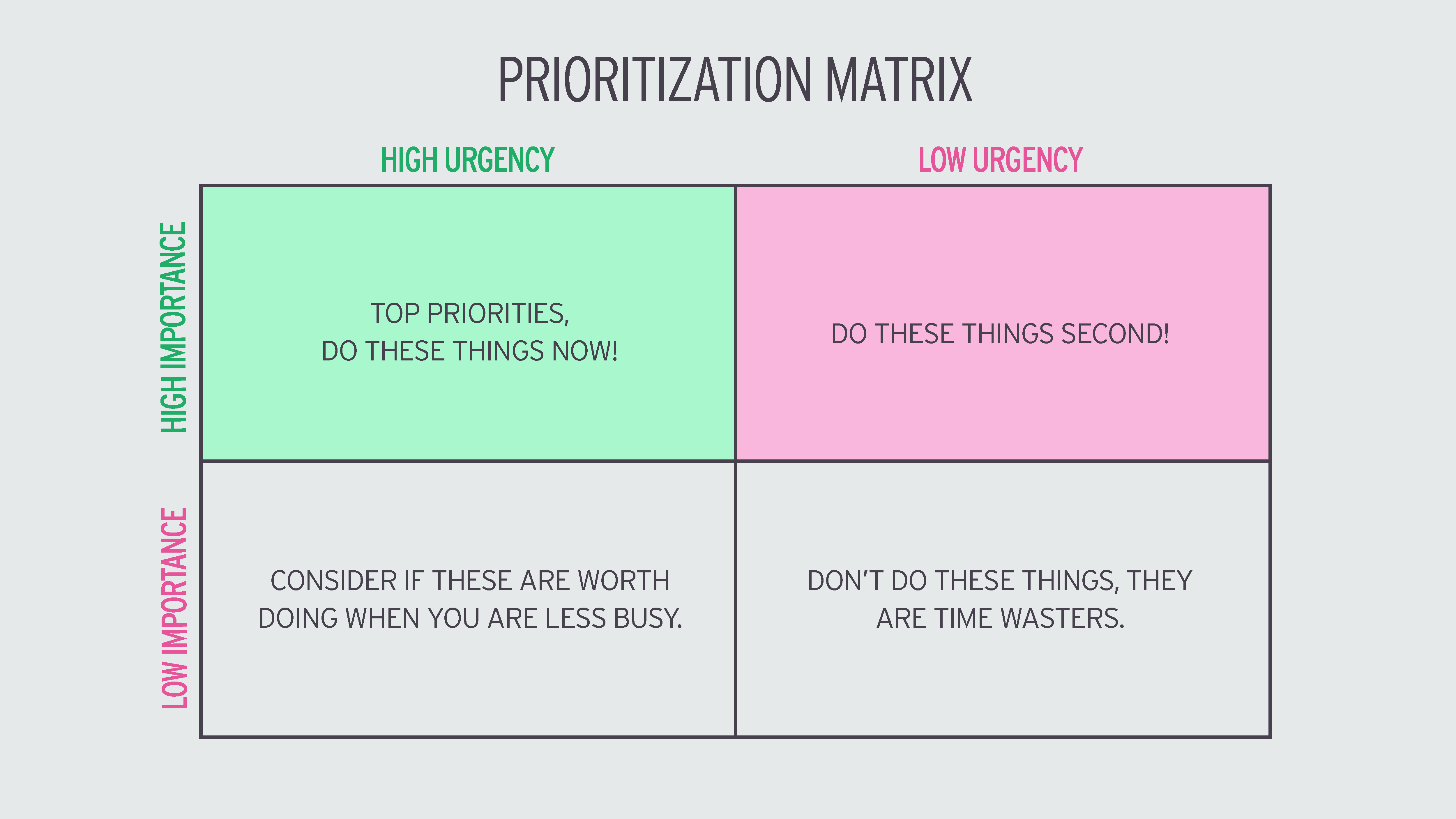
  • A helpful way to organize your work by priority is to use a prioritisation matrix. This is a chart that allows you to sort your tasks by their degree of urgency and importance.

EXAMPLE

Any work you have due in the next few days is urgent, but an assignment worth 25% of your grade is more important than an ungraded assignment. For this reason, you will want to give more time to the graded task.
try it
This is what a prioritisation matrix would look like
File:4308-prioritizationmatrix.png
Here are some sample tasks and activities:
  • Create final presentation (Due March 10; 15% of grade);
  • Go to the gym
  • Study for exam (April 25; 30% of grade);
  • Coordinate dinner plans with friends for tonight;
  • Read for tomorrow's workshop (Due March 9th; ungraded);
  • Check your notifications on social media;
  • Brainstorm a topic for an academic report (Due April 17; 20% of grade)
If you were filling in this matrix on March 3rd, where would you put each item?

Creating a To-Do List

  • Working towards deadlines for assessments can be very stressful, but one way you can minimise this stress is to note down what you need to do. Being organized and prepared for the road ahead will improve your mental health in the long term.
  • A helpful tip for writing a to-do list is to be specific. Break down an assignment into component parts that represent tasks you can complete in one or two short periods.

EXAMPLE

If your to-do list says “Write Essay,” this is not very instructive in terms of what specifically you need to do. Instead, perhaps the list says “Brainstorm Topics for Essay” and then “Outline Essay,” etc. This is a more effective way to organize and estimate your time.

2. Your effectiveness and the time of day

In addition to deciding what you’re going to accomplish on a given day, you need to decide when in the day you’re going to work.

It’s important to give some thought to whether you work best at a certain time or under certain conditions—some students may be more efficient in the morning and others in the afternoon or evening.

IN CONTEXT

File:13080-Time (2).jfif As a student, finding quality study time is important. By asking yourself some questions, you can find the best time and environment for you to study:
  • Do you think more clearly in the morning or evening?
  • Do you have family or work commitments that need your energy at different times of the day?
  • Can you study with things happening around you, or do you need calm and quiet?
  • What study tasks can you do even when you are not optimally energised?
  • What study tasks can you only do well when you are focused?


3. Making time for social connection and personal care

Taking care of the whole of your life by properly balancing your life at university with your life at work or at home is absolutely crucial to your success.

If you can manage your time efficiently, you can ensure you have enough time to give to each part of your life that matters. What’s more, leading a happy and healthy life outside of study is going to positively affect the energy level and mood with which you approach your study.


summary
During prioritisation, your highest priorities should be the ones that are most important and urgent. A prioritisation matrix can be helpful with this process. Creating a to-do list can help you break down tasks into smaller, more manageable chunks. You may be most effective at certain times of the day so it is important to understand when you are at your best. Make time in your priorities for taking care of yourself.

Terms to Know
Prioritising

Prioritising is the act of listing the tasks you must complete in order by their level of importance and urgency.
