Atoms, molecules, compounds, and macromolecules are combined to form the structure and function of the next level of organization—cells—and the first item that is required is a boundary. Where does the cell begin and end? Where is the space inside the cell and where is the space outside the cell? As the outer layer of your skin separates your body from its environment, the cell membrane (also known as the plasma membrane) separates the inner contents of a cell from its exterior environment. In this lesson, you’ll learn about what the cell membrane is made of and how it functions to provide the cell with protection and manage the entrance and exit of various materials.
1. Structure and Composition of the Cell Membrane
Despite differences in structure and function, all living cells in multicellular organisms have a surrounding structure called a cell membrane. The cell membrane, also called the plasma membrane, provides a protective barrier around the cell and regulates which materials can pass in or out.
The cell membrane is an extremely pliable structure. It is composed primarily of back-to-back phospholipids (a “bilayer”) but also contains cholesterol and proteins. Cholesterol contributes to regulating the fluidity of the membrane. Proteins embedded within the membrane help regulate transport across the membrane, cell-to-cell communication, and a variety of other functions.
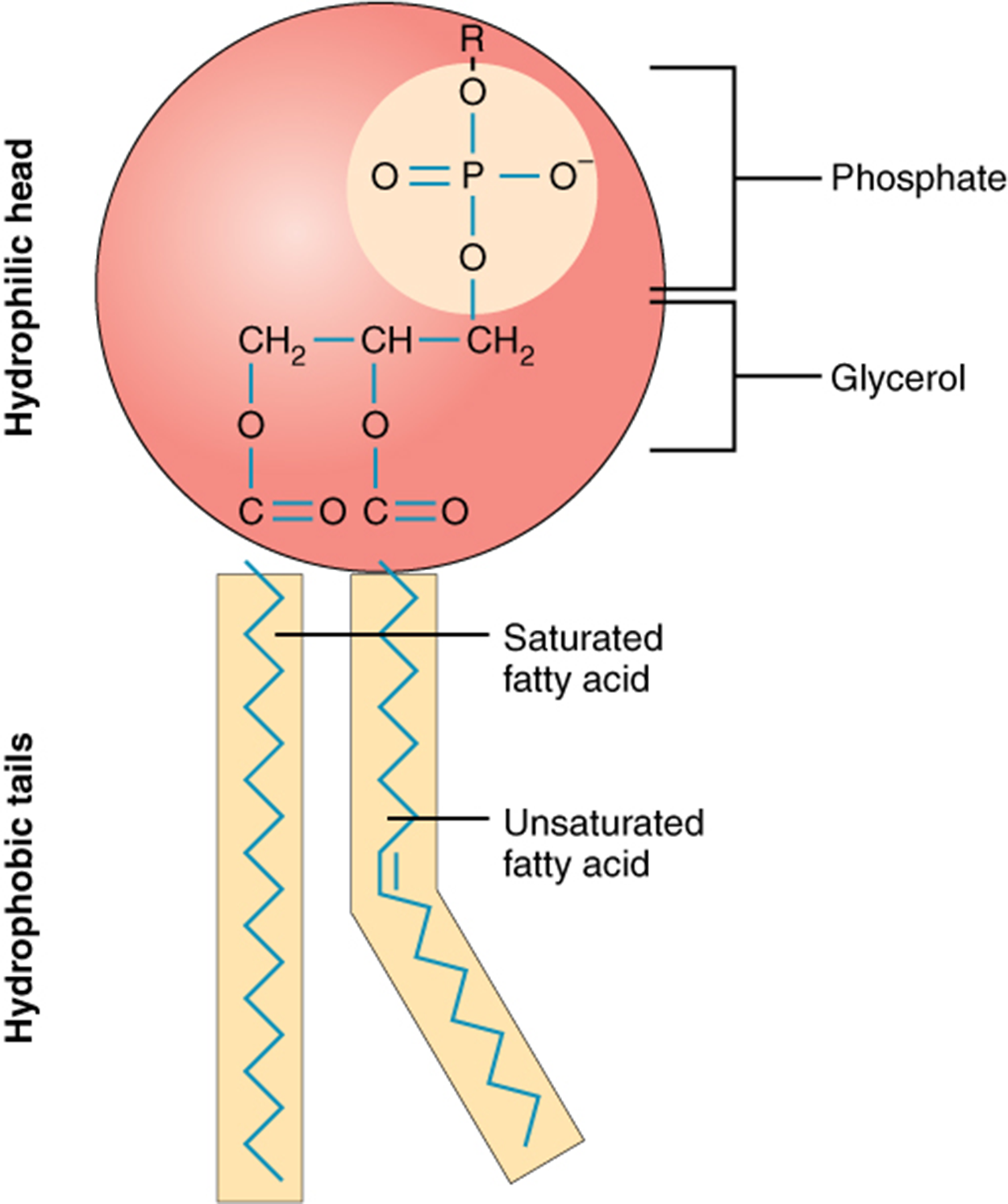
A phospholipid molecule has a hydrophilic phosphate group on one end, called the “head,” and two side-by-side hydrophobic fatty acid chains that make up the lipid tails. The phosphate heads are thus attracted to the water molecules of both the extracellular and intracellular environments, while the lipid tails will actively position themselves away from water.
Phospholipid Structure—A phospholipid molecule consists of a polar phosphate “head,” which is hydrophilic, and a nonpolar lipid “tail,” which is hydrophobic. Unsaturated fatty acids result in kinks in the hydrophobic tails.
did you know
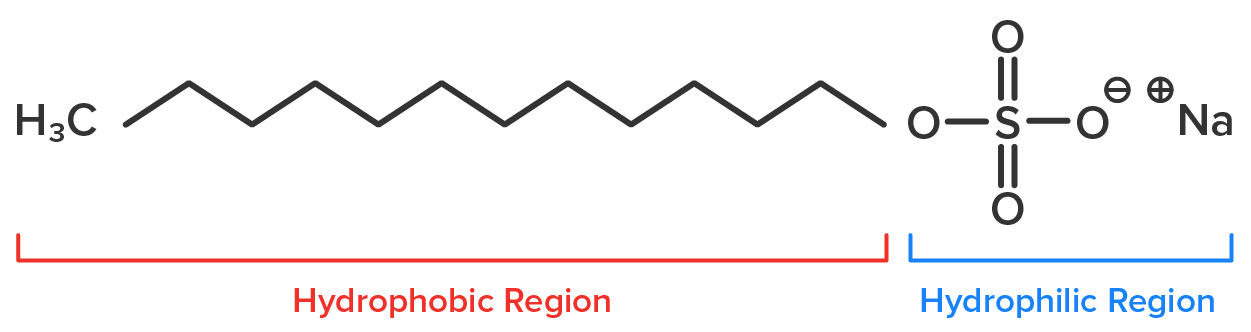
Most soaps (hand soap, dish soap, soap at the car wash, and others) contain a chemical that goes by two common names—sodium lauryl sulfate (SLS) or sodium dodecyl sulfate (SDS). This is the active ingredient that works to remove dirt, grease, or other materials from your skin, dishes, car, or any surface using the same basic properties of phospholipids. One end of the molecule is hydrophilic and dissolves easily in water while the other end is hydrophobic and is most stable away from water.
In sodium lauryl sulfate (SLS), the long chain hydrocarbon tail is hydrophobic (water-fearing) and inserts into hydrophobic materials such as grease to get away from water. The sulfate (SO₄²⁻) region is hydrophilic (water-loving) and is stable in interacting with water.
To better understand this, let’s look at what happens when you wash your hands. As you approach the sink, the hope is to remove materials from your hands. Some of those materials are hydrophilic, while others are hydrophobic. When you wash your hands, the hope is to remove them all.
You may start by rinsing and rubbing your hands together in water alone. This will dislodge any large items not stuck to your skin. It will also begin to dissolve any hydrophilic materials (e.g., sugar and water-based paint) that you have on your hand. What water doesn’t do is remove hydrophobic materials because they do not dissolve in water. Here is where soap comes into play.
When you lather your hands up with soap, the SLS/SDS molecules will work to satisfy both of their regions. The hydrophobic region, which is most stable away from water, will insert itself into the hydrophobic material on your hand that you’re trying to remove (e.g., oil and grease).
The hydrophilic region will remain sticking out into the surrounding water. This occurs a few hundred or thousand times (depending on how much oil you have on your hands), and eventually, like a pin cushion full of pins, it is completely surrounded.
At this point, the hydrophobic material you’re trying to wash off is completely surrounded by the hydrophilic portions of many SLS/SDS molecules. When this happens, the water that you rinse your hands with will wash that material away because, on the surface, it is hydrophilic.
Really stuck-on hydrophobic substances or large amounts may take multiple rounds of soap, lather, and rinse. However, in the end, the hydrophobic and hydrophilic properties of SLS/SDS in soap will be successful in cleaning your hands.
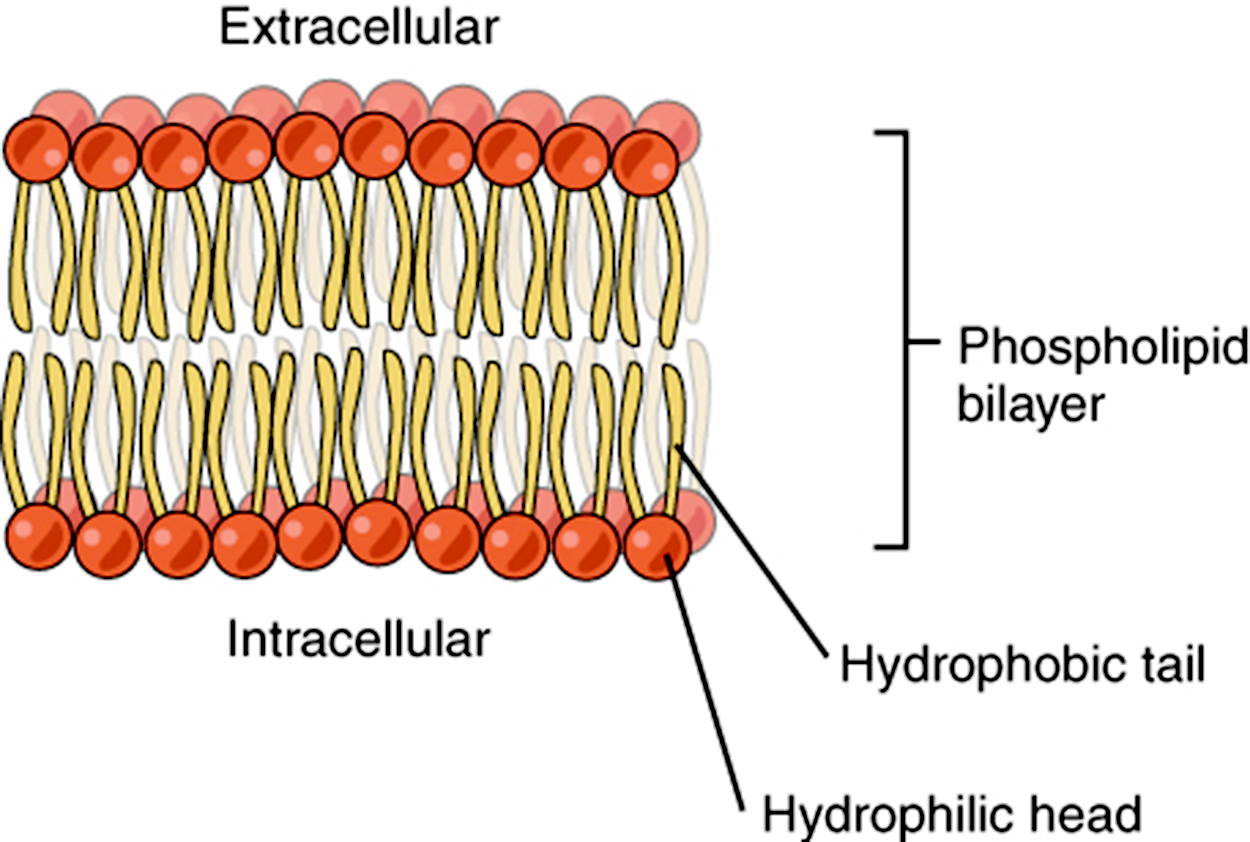
The cell membrane consists of two adjacent layers of phospholipids, called a phospholipid bilayer (bi, two). Much like the molecules of soap, the hydrophobic regions of the phospholipid will position themselves away from water and the hydrophilic regions toward water. To do this, the phospholipids form two lines back-to-back with the lipid tails facing inwards and the heads facing outwards. This positions the phosphate heads towards both the interior and exterior of the cell (where water is), excluding water from the inner hydrophobic region.
On both sides of the membrane are water-based solutions. The intracellular fluid (ICF) is the fluid in the interior of the cell. The extracellular fluid (ECF) is the fluid in the exterior of the cell. ECF in a fluid tissue, such as blood, is considered extracellular fluid. ECF in a non-fluid tissue (like muscle tissue and nervous tissue) is called interstitial fluid (IF). Because the lipid tails are hydrophobic, they meet in the inner region of the membrane, excluding watery intracellular and extracellular fluid from this space.
Phospholipid Bilayer—The phospholipid bilayer consists of two adjacent sheets of phospholipids, arranged tail to tail. The hydrophobic tails associate with one another, forming the interior of the membrane. The polar heads contact the fluid inside and outside of the cell.
big idea
An important feature of the membrane is that it remains fluid so all components can change position at any time. The phospholipids are not connected to one another by any chemical bond. In fact, they are only held in place by the stability of their hydrophobic and hydrophilic regions relative to water—moving out of their formation places a hydrophobic region in water that is unstable. This means that much like an individual within a crowd of people, any phospholipid can move left, right, forward, or back at any point, sliding within the membrane and continually changing the position of all membrane components.
Like an individual within a crowd of people, any phospholipid can shift at any point, sliding within the membrane and continually changing the position of all membrane components.
The fluidity of the membrane is primarily based on the fatty acid composition of the phospholipids. Some lipid tails contain saturated fatty acids, some contain unsaturated fatty acids, and some contain both. Recall that saturated fatty acid tails are straight and pack together tightly, while unsaturated fatty acids are kinked and do not pack together tightly. The tighter the fatty acids, and the phospholipids they are attached to, pack together, the harder it is for them to move around. This can severely limit the function of a cell’s membrane. On the opposite end, too much fluidity can also be detrimental.
reflect
Recall that saturated fatty acids are straight and can pack together tightly, while unsaturated fatty acids are bent and are unable to pack together tightly. Therefore, phospholipids with saturated fatty acids will pack together more tightly and restrict movement and membrane fluidity. Phospholipids with unsaturated fatty acids are more loosely packed together and therefore allow for more membrane fluidity.
terms to know
Phospholipid
A lipid made of a hydrophilic (water-attracting) head and a hydrophobic (water-repelling) tail which make up the plasma membrane.
Phospholipid Bilayer
A membrane created by two layers of phospholipids.
Intracellular Fluid
The fluid in the interior of the cell.
Extracellular Fluid
The fluid in the exterior of the cell.
Interstitial Fluid
Extracellular fluid not contained within blood vessels.
2. Functions of the Cell Membrane
Cells exclude some substances, take in others, and excrete still others, all in controlled quantities. Plasma membranes enclose the borders of cells, but rather than being a static bag, they are dynamic and constantly in flux. The plasma membrane must be sufficiently flexible to allow certain cells, such as red blood cells and white blood cells, to change shape as they pass through narrow capillaries. These are the more obvious functions of a plasma membrane. In addition, the surface of the plasma membrane carries markers that allow cells to recognize one another, which is vital as tissues and organs form during early development, and which later plays a role in the “self” versus “non-self” distinction of the immune response, by which the body can distinguish its own cells from those of pathogens.
The selective permeability of a plasma membrane allows some substances, such as oxygen, carbon dioxide, water, and very small nonpolar molecules, to cross through the plasma membrane on their own. However, some molecules that are larger or hydrophilic (water-attracting) are not able to cross through this membrane on their own.
The plasma membrane also carries receptors, which are attachment sites for specific substances that interact with the cell. Each receptor is structured to bind with a specific substance. For example, surface receptors of the membrane create changes in the interior, such as changes in enzymes of metabolic pathways. These metabolic pathways might be vital for providing the cell with energy, making specific substances for the cell, or breaking down cellular waste or toxins for disposal. Additionally, carbohydrates found on the exterior surface of cells are bound either to proteins (forming glycoproteins) or to lipids (forming glycolipids). Along with peripheral membrane proteins, which may serve as enzymes, structural attachments for the fibers of the cytoskeleton, or part of the cell’s recognition sites, carbohydrates can form specialized sites on the cell surface that allow cells to recognize each other.
Receptors on the plasma membrane’s exterior surface interact with hormones or neurotransmitters and allow their messages to be transmitted into the cell. Some recognition sites are used by viruses as attachment points. Although they are highly specific, pathogens like viruses may evolve to exploit receptors to gain entry to a cell by mimicking the specific substance that the receptor is meant to bind. This specificity helps to explain why human immunodeficiency virus (HIV) or any of the five types of hepatitis viruses invade only specific cells.
term to know
Selective Permeability
A feature of the plasma membrane that allows it to regulate what crosses through it.
summary
In this lesson, you learned that the plasma membrane is the outermost layer of a cell. You first examined the structure and composition of the cell membrane: It is composed of a phospholipid bilayer, which includes the hydrophilic heads facing toward the cytoplasm of the cell and hydrophobic tails facing inward towards each other. You then explored the functions of the cell membrane and learned that it creates a cell border, transports substances in and out of the cell, is selectively permeable to certain substances, and has proteins that facilitate transport of other materials across the membrane.