Use Sophia to knock out your gen-ed requirements quickly and affordably. Learn more
×

Physical Wellness

Author: Alison DeRudder

Edited by Torrens University Australia for applicability within Australian Higher Education and the use of Australian English.

what's covered
This tutorial highlights the relationship between physical health and optimal student performance and describes some best practices and resources that can help you to stay healthy. Here is a list of what’s covered:
  1. Caring for your Physical Well-Being
  2. Good Physical Health and Optimal Student Performance
  3. Wellness Services or Programs

1. Caring for Your Physical Well-Being

For a student in higher education, taking a proactive approach to caring for your physical well-being is essential. Once again, a key difference between high school and higher education in this regard is that at university you are more likely to be on your own when it comes to taking care of yourself.

There is no required gym class or regularly scheduled lunch period. Students no longer have parents to monitor their sleeping, eating, and exercise habits. Students who study online can do their university studies in a sedentary state, without ever having to leave their homes.

This means that it is up to you to reflect on and implement strategies for staying healthy into your daily routine. Good physical health is not just a universally positive goal; it’s also specifically crucial to achieving optimal student performance.


2. Good Physical Health and Optimal Student Performance

You might think that your physical health and your education are two separate spheres of your life. However, if you want to fully optimise your potential for success in higher education, it’s time to consider the relationship between your health and your education.

While it’s true that university is generally a place to exercise your mind and not your body, it’s also true that your mind works best when your body works best. Eating well, getting enough sleep, and exercising regularly will not only keep your body in good shape but will keep your energy level up when it’s time to study and maximise your ability to focus on your work.

Conversely, eating poorly or not at all and not getting enough sleep or exercise can really hinder your capacity to pay attention and think clearly. Optimisation means performing to the upper limits of your potential—and that entails working to rethink aspects of your lifestyle that might be slowing you down at school.

This does not mean you need to train like a world-class athlete in order to boost your grades. After all, that would leave you with little time to study. But little adjustments to your routine can make a big difference.

Some basic steps you can take toward a healthy lifestyle include:
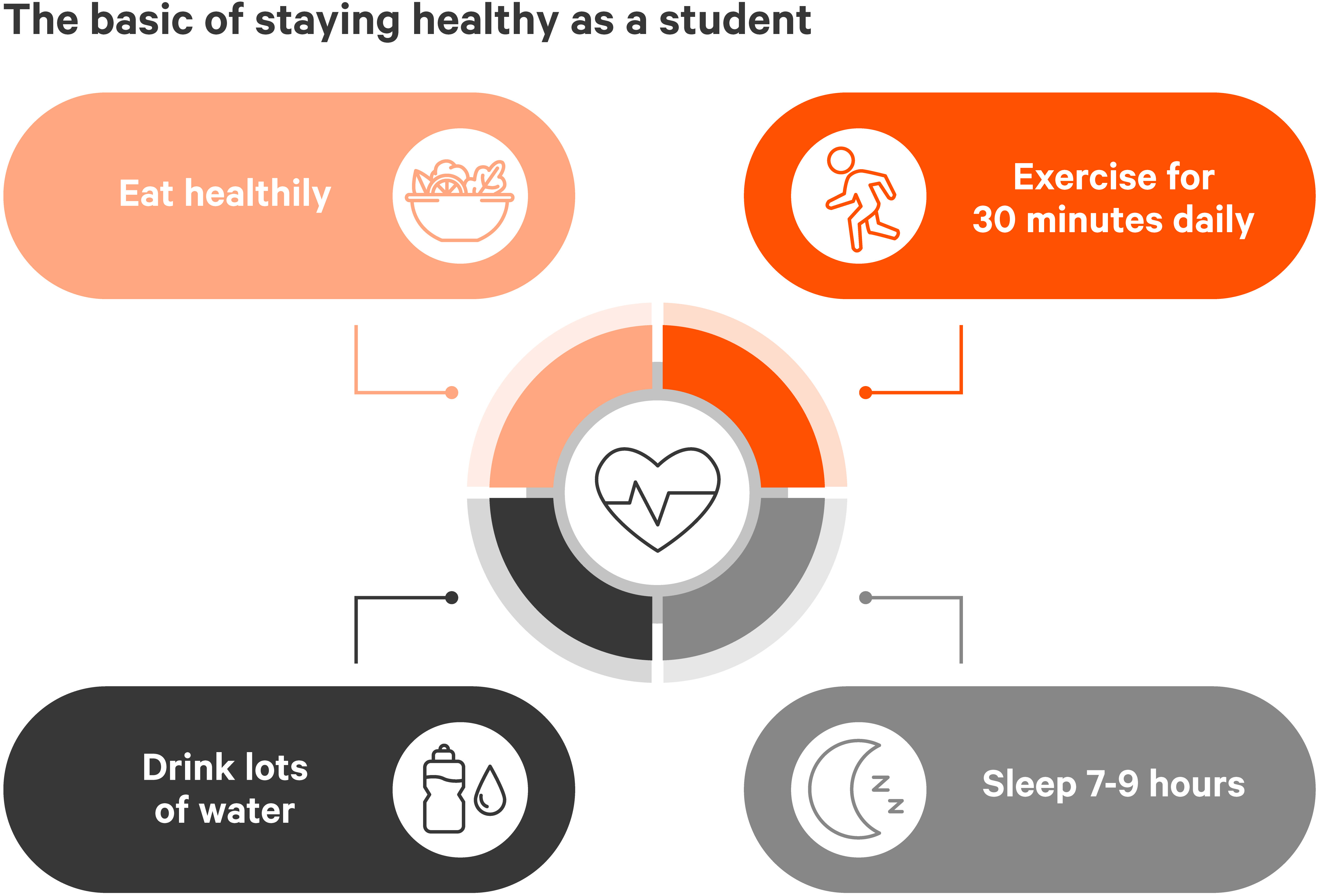
  • Exercise for 30 minutes daily: Committing at least 30 minutes a day—either all at once or in two or three short intervals—to some form of physical activity. This could mean going to the gym or simply taking a walk, as long as you’re able to set aside time to be active.
  • Eat healthily and drink appropriate amounts of water: In terms of your eating habits, it’s not necessary to go on a crash diet or fast—simply think about how healthier choices, moderation, and staying hydrated will keep you feeling better and more energetic.
  • Sleep 7-9 hours: What constitutes enough sleep? Different people need different amounts of sleep to function at a high level, but the generally recommended amount of sleep is 7-9 hours a night. Recall that studies have shown that “cramming” for exams at the expense of sleep has adverse results on student performance. You are not going to maximise absorption and retention of your subject materials if you are dozing off at your desk—in class or at home.
  • Seek medical attention if you become ill: It's important that you seek appropriate medical help when you aren’t feeling well. Neglecting to take care of ailments, big or small, is definitely going to be an obstacle to optimal performance at university.


File:18000-2201-Figure6.jpg

think about it

If you’re still skeptical about the relationship between physical health and student performance, here is an excerpt from the conclusions of a 2017 study conducted by Stanford University’s Center for Education Policy Analysis:

University students would not be very active if they did not engage in recreational physical activity as they spend most of their time sitting in lectures or studying. Even though evidence from neuroscience suggests positive short- and long-term effects of exercising on brain functioning, little is known about productivity enhancing effects of physical activity. This paper contributes to the literature by identifying the effects of physical activity on students’ educational performance... [The] results indicate that integrating studying and exercising during the day may enhance the productivity of study time and thus improve students’ performance…Our study suggests that physical activity is an under-explored factor in the human capital production function. In particular, on-campus exercise can contribute to the educational objectives of universities… While our results cannot speak to the benefits of extravagant facilities such as water parks or to the relative benefits compared to academic spending, they suggest that providing basic opportunities for students to exercise on campus contributes to the educational objectives of universities.

3. Wellness Services or Programs

A recent development is the wellness program—an on-campus facility or an occasional program aimed at a holistic approach to student health. This can include meditation or yoga classes, mental health counseling, education and treatment regarding drugs and alcohol or sexual health, immunisation and emergency medical treatment, cafés with healthy food, and more.

Basically, universities realise that a range of resources and services supporting student wellness enriches the higher learning experience.

Here at Torrens University, we prioritise the health and well-being of the university community, and you can find out more about available resources on the Student Services and Support page on the Student Hub.

In addition, Torrens University Australia has developed a wide range of resources aimed at the holistic approach to student health. These include physical health videos, exercise and mental health podcasts, mindfulness and yoga videos, mental health counseling, resources on nutrition to improve your health and wellbeing and more.

To access these resources, click on Counselling Resources on your Blackboard (Learning portal) homepage.
File:13081-wellbeing.png

IN CONTEXT

If you have a diagnosed disability, learning difficulties, an ongoing mental or physical health condition or are the primary carer for a person with disability, you can contact Disability Services to find out more about the support available for you during your studies at Torrens University.


summary
Caring for your physical wellbeing by keeping yourself in good physical health will help you optimise your student performance. Exercising regularly, eating healthily, drinking enough water, getting plenty of sleep, and taking care of yourself when you are ill are the basics you should practice, as well as researching any extra services provided on university campuses.

Attributions
