Table of Contents |
From the developmental perspective, middle adulthood (or midlife) refers to the period of the lifespan between young adulthood and old age. This period lasts from 20 to 40 years depending on how these stages, ages, and tasks are culturally defined. The most common definition by chronological age for middle adulthood is from 40 to 65, but there can be a range of up to 10 years (ages 30–75) on either side of these parameters.

Middle adulthood is a period of negotiation and renegotiation across the three main facets of human existence: physical, psychological, and social. Maintenance, protection, and promotion of physical health in middle adulthood is important, as our body may be the basis of our identity and how we see ourselves, and one of the sources of our sense of self and self-worth. The psychological aspect is also important, as an individual may resent, accept, or confront issues that arise at this time of life. Positive attitudes and mindfulness impact how change is perceived. Social engagement and social support are critically important at this stage of life. Social roles may feel limiting, but they can also motivate and energize, and provide healthy neurological aging. Our concept of self may not be fully ours to shape or control alone. How others see us, and their expectations of us, are age-sensitive as well.
IN CONTEXT
In the United States, the large baby boom cohort (those born between 1946 and 1964) now comprises midlife adults, which has led to increased interest in this developmental stage. The U.S. Census (2018) predicted that by 2030, when all boomers will be over 65, they will constitute 21% of the population, up from 15% today. Older adults (those over 65) will outnumber children (those under 18) for the first time in U.S. history by 2035. This will have profound social consequences. This demographic shift is already well advanced in European countries like Germany and Italy. How individuals prepare in middle adulthood for living longer and being part of an older community will assume even more critical importance. It may also present a formidable challenge in the areas of health and public policy as the relative numbers of those who are economically active, or economically inactive, shift.
Research on this period of life is relatively sparse, and many aspects of midlife are still relatively unexplored; in fact, it may be the least studied period of the lifespan. This is not as surprising as it might initially appear. One hundred years ago, life expectancy in the United States was about 47 years. According to the World Bank, in 2022, it stood at 73.2 years for males and 79.1 for females. There is variation between groups, and it is generally agreed that this is due to patterns of social and economic inequality which impact health outcomes across the board, not just longevity. There are also variations across cultures. Rates of so-called “lifestyle diseases” such as high blood pressure (hypertension), diabetes, substance abuse, and smoking are difficult to predict with exactness, as is the level of air pollution and other toxic environmental contaminants.
There are a few primary biological physical changes in midlife that include changes in vision, hearing, and weight. Physical changes related to sexual health and reproduction also occur in this phase of development and will be discussed in a later tutorial. Many of the changes that occur in midlife can be easily compensated for (by buying glasses, exercising, and watching what one eats, for example). Most midlife adults experience generally good health. However, the percentage of adults who have a disability increases through midlife; while 7% of people in their early 40s have a disability, the rate jumps to 30% by the early 60s.
Lifestyle has a strong impact on the health status of midlife adults. Smoking tobacco, drinking alcohol, poor diet, stress, physical inactivity, and chronic diseases such as diabetes or arthritis reduce overall health. It becomes important for midlife adults to take preventative measures to enhance physical well-being. Those midlife adults who have a strong sense of mastery and control over their lives, engage in challenging physical and mental activity, engage in weight-bearing exercise, monitor their nutrition, and make use of social resources are most likely to enjoy a plateau of good health through these years.
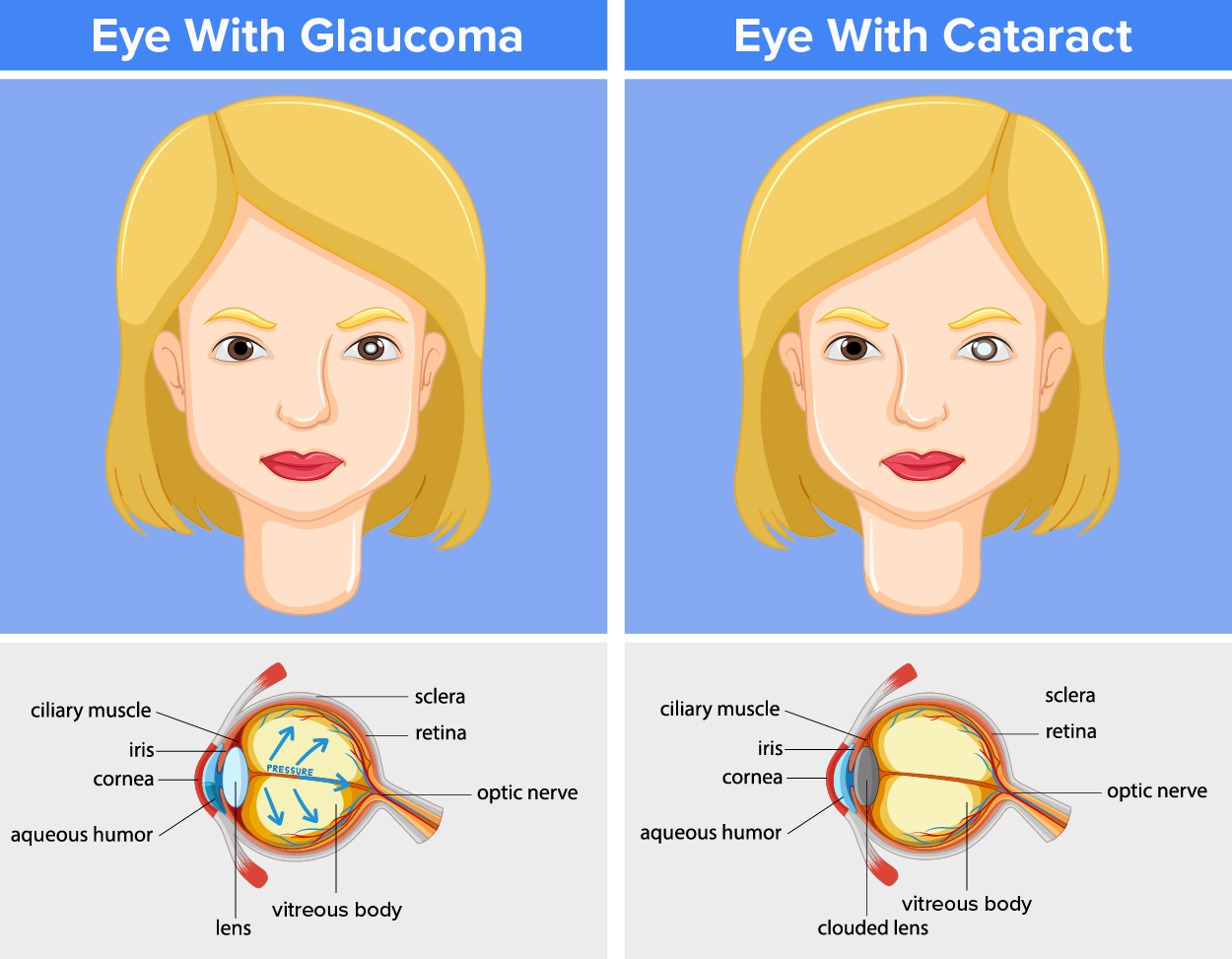
IN CONTEXT
Some other typical vision issues that arise along with aging include:
- Distant objects become less acute.
- Loss of peripheral vision (the size of the visual field decreases by approximately one to three degrees per decade of life).
- More light is needed to see, and it takes longer to adjust to a change from light to darkness and vice versa.
- Driving at night becomes more challenging.
- Reading becomes more of a strain, and eye strain occurs more easily.
Hearing loss is also common and affects one out of four persons between ages 65 and 74, and one out of two by age 75. Conductive hearing loss may occur because of age, genetic predisposition, or environmental effects, including persistent exposure to extreme noise over the course of our lifetime, certain illnesses, or damage due to toxins. Conductive hearing loss involves structural damage to the ear such as failure in the vibration of the eardrum and/or movement of the ossicles (the three bones in our middle ear). This loss accumulates after years of being exposed to intense noise levels and is generally due to the loss or damage of nerve hair cells inside the cochlea. It is more common in men, but men are also more likely to work in noisy occupations, which may explain their nearly doubled rates of hearing loss levels. Hearing loss is also exacerbated by cigarette smoking, high blood pressure, and stroke. High frequency sounds are the first affected by such hearing loss. There is new concern over hearing loss as early as childhood with the widespread use of headphones, as loud and/or prolonged listening can cause damage to the cilia, or the tiny sensory hairs, within the cochlea.
Being unable to hear causes people to withdraw from conversation and others to ignore them or shout. Unfortunately, shouting is usually high-pitched and can be harder to hear than lower tones. The speaker may also begin to use a patronizing form of “baby talk” known as elderspeak (See et al., 1999). This language reflects the stereotypes of older adults as being dependent, demented, and childlike.
Weight gain, sometimes referred to as the middle-aged spread, or the accumulation of fat in the abdomen, is one of the common health complaints of midlife adults. Men tend to gain fat on their upper abdomen and back, while women tend to gain more fat on their waist and upper arms. This can occur due to changes in hormone balances, activity level changes, dietary changes, or due to the natural slowing of the metabolism. Consequently, midlife adults have to increase their level of exercise, eat less, and watch their nutrition to maintain their weight.
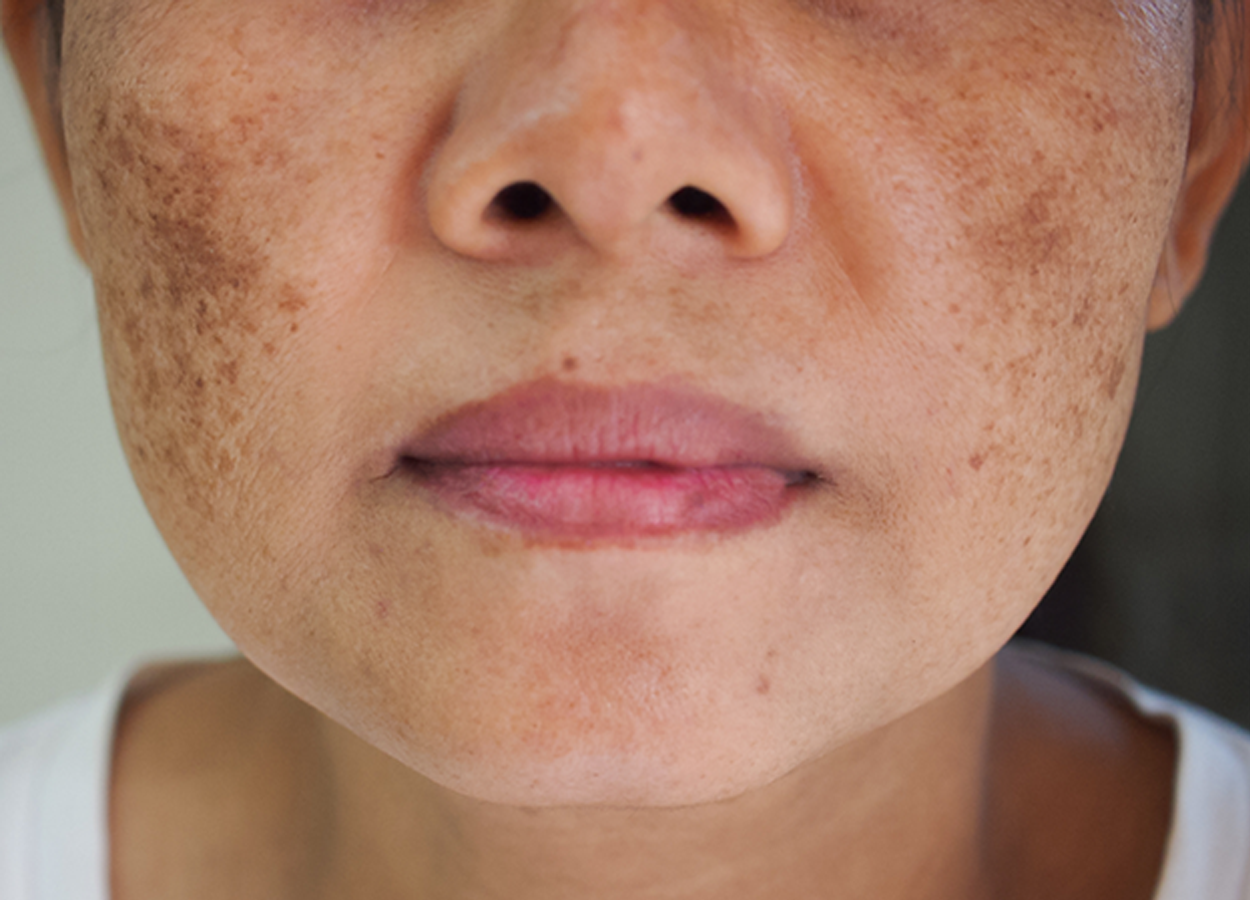
The most common typical change in middle adulthood is a change in appearance. Weight, as discussed above, can fluctuate during this phase of development, and typically, people see an increase in their weight or an increase in the distribution of their weight. Middle adults also tend to see a change in the appearance of their hair. Many adults have hair loss and hair that is gray or in the process of turning gray. For some adults, this is something they change by taking supplements for hair loss or coloring their gray hair. Middle adults also tend to show more wrinkles, age spots, and sun spots on their skin. This is common to occur on the face, but the skin on the rest of the body can also become looser and have changes in color.
Have you ever heard an older adult joke that they used to be taller or that they’re shrinking? Loss of height is common as we age, due to changes in our body’s fat deposits, muscle tone, and even the discs in our spines. Oftentimes, we see a change in height and where weight is distributed due to these changes. Muscle tone loss can be slowed with proper diet and exercise, specifically weight training activities and balancing protein intake. Wear and tear on joints as we age can also cause our physical appearance to change, but it can also cause joint pain when engaging in physical activity. Weight control and low-impact physical exercises, such as swimming and biking, can help manage joint pain.
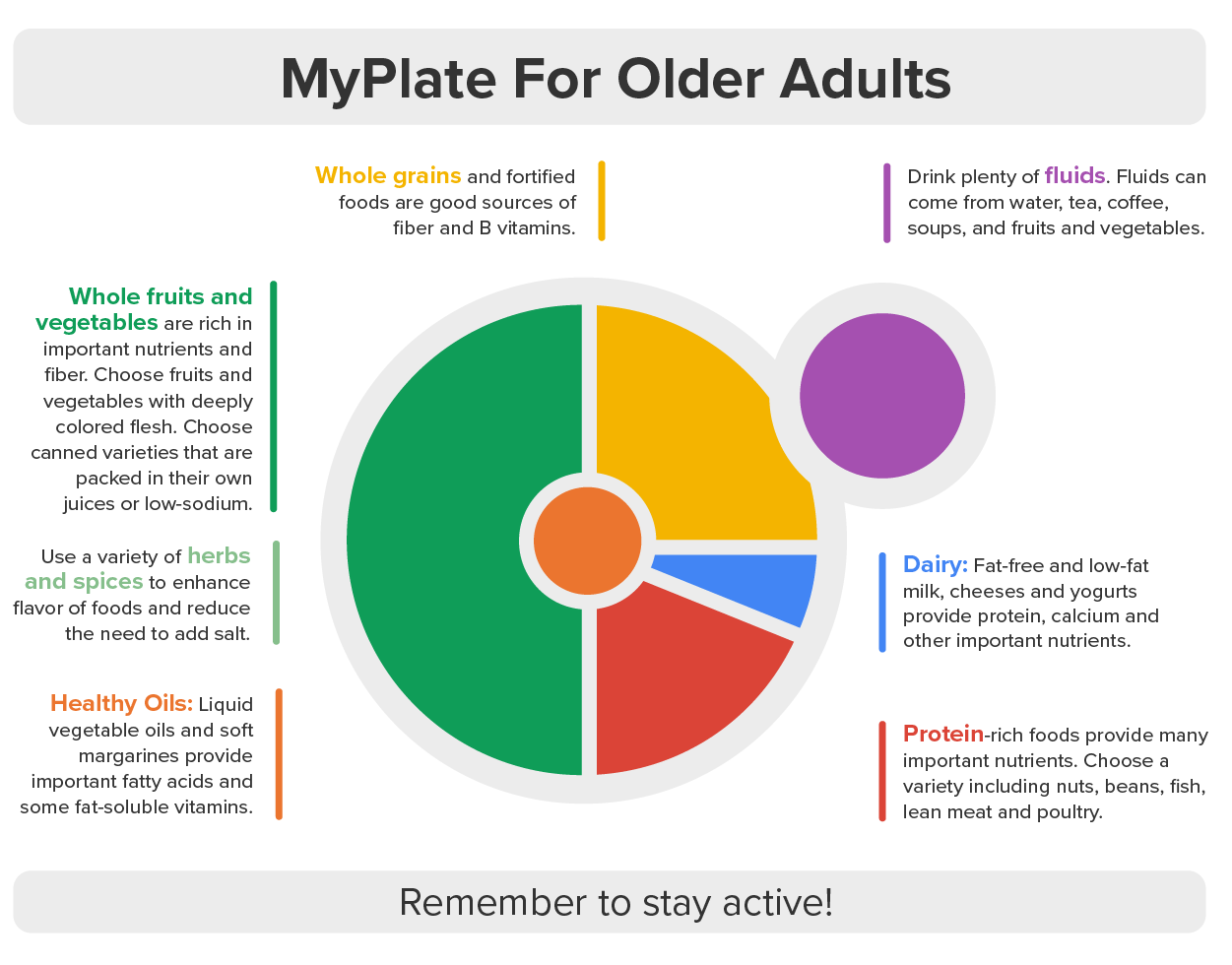
Setting dietary standards for adults is difficult because individual differences become more pronounced as people grow older. Energy needs decline an estimated 5% per decade. The basal metabolic rate declines 1 to 2% per decade in part because lean body mass and thyroid hormones diminish as we get older. The lower energy expenditure of older adults means that they need to eat less food to maintain their weight. For this reason, it is important that they select mostly nutrient-dense foods. MyPlate, based off of the USDA Food Patterns (Dietary Guidelines for Americans), offers dietary guidance for adults of all ages.
Physical activity is a powerful way to combat changes associated with aging. Exercise builds muscle, increases metabolism, helps control blood sugar, increases bone density, and relieves stress. Unfortunately, fewer than half of middle-aged adults exercise, and only about 20% exercise frequently and strenuously enough to achieve health benefits. Many stop exercising soon after they begin an exercise program—particularly those who are very overweight. The best exercise programs are those that are engaged in regularly, regardless of the activity, but a well-rounded program that is easy to follow includes walking and weight training.
Having a safe, enjoyable place to walk can make a difference in whether or not someone walks regularly. Weightlifting and stretching exercises at home can also be part of an effective program. Exercise is particularly helpful in reducing stress in midlife. Walking, jogging, cycling, or swimming can release the tension caused by stressors, and learning relaxation techniques can have healthful benefits. Adults who are active weigh less, have greater strength and flexibility, reduced inflammation, increased bone density, more endurance, better balance, and live longer. Regular physical activity is the most powerful predictor of a person’s mobility in later years. Mobility is closely associated with longevity. Physical activity also increases blood flow to the brain, thereby preserving mental ability, reducing depression, supporting independence, and improving quality of life.
The years between 30 and 60 can see the onset of rheumatoid arthritis (RA). This is the third most common form of arthritis, and its specific etiology is unknown at this time. RA occurs when antibodies attack normal synovial fluid in the joints, mistaking them for an alien threat. It affects women more than men by a factor of around 3 to 1. Peak onset for women is sometime in the early 40s. This has led to the conclusion that RA is caused by hormonal changes. Women who are pregnant and have RA often experience a temporary remission, again leading to the identification of hormonal changes in the body as the most likely culprit. Women also experience symptoms at an earlier age. This condition is often associated with people in their 60s, but only about a third first experience symptoms at this age, though they become more acute with the passage of time.
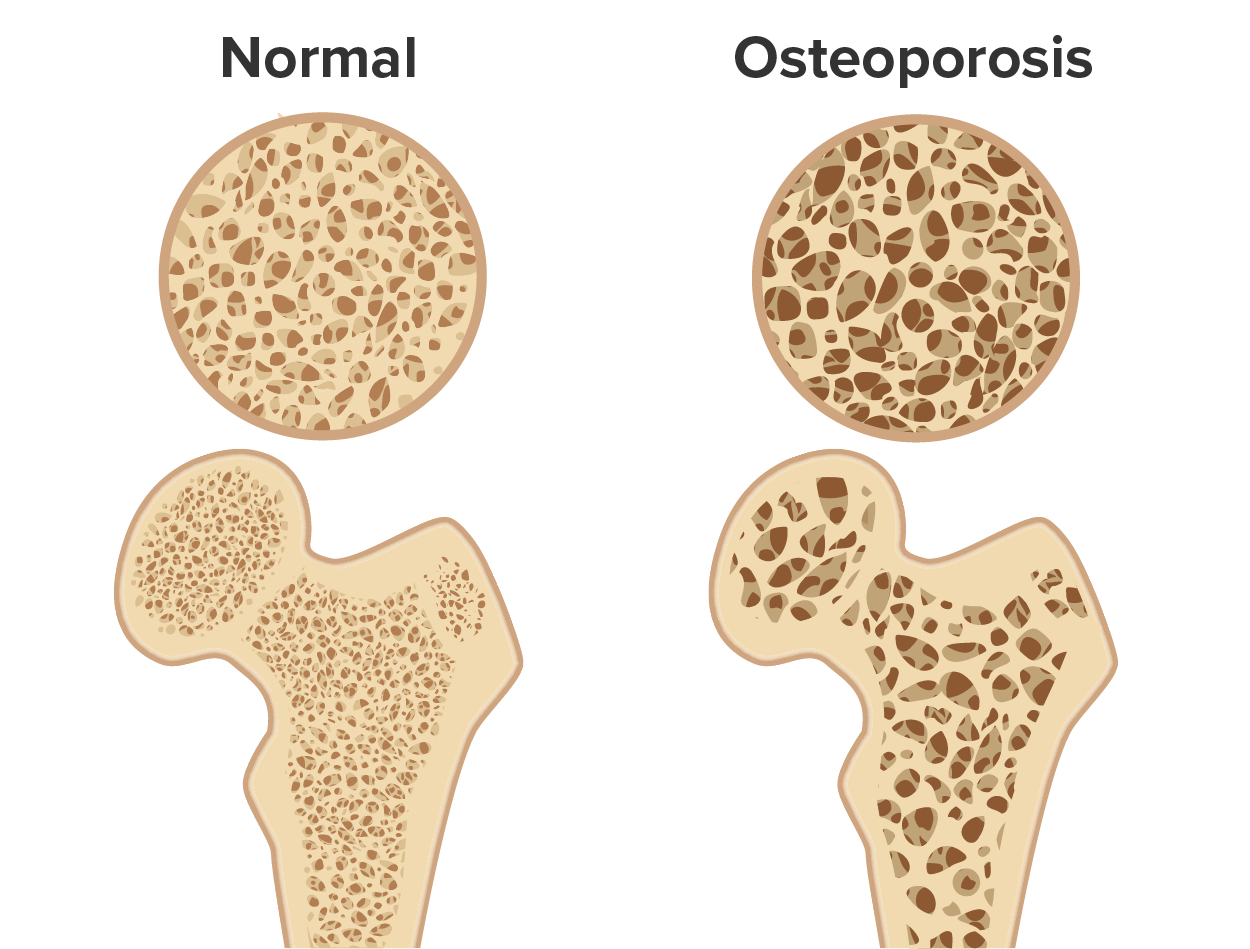
Human beings reach peak bone mass around 35–40. Osteoporosis is a “silent disease” which progresses until a fracture occurs. This bone disease develops over time and can lead to a decrease in bone strength. The sheer scale and cost of this illness is radically underestimated. It is often associated with women due to the fact that bone mass can deteriorate in women much more quickly in middle age due to menopause. After menopause, women can lose 5–10% of bone mass per year, rendering it advisable to monitor intakes of calcium and Vitamin D, and evaluate individual risk factors. Beginning in their 60s, though, men and women lose bone mass at roughly the same rate. The number of American men diagnosed with osteoporosis is currently around the 2 million mark, with a further 12 million at risk. Attention at this stage of life may bring pronounced health benefits now and later for both women and men.
Type 2 diabetes (T2D), formerly known as adult-onset diabetes, is a form of diabetes characterized by high blood sugar, insulin resistance, and a relative lack of insulin. Common symptoms include increased thirst, frequent urination, and unexplained weight loss. Symptoms may also include increased hunger, feeling tired, and sores that do not heal. Often symptoms come on slowly. Long-term complications from high blood sugar include heart disease, strokes, and diabetic retinopathy which can result in blindness, kidney failure, and poor blood flow in the limbs, which may lead to amputations.
Because of the aging population, health issues associated with autoimmune disease, chronic inflammation, and bone mass density will become central health and social policy concerns in the coming decades.
Source: THIS TUTORIAL HAS BEEN ADAPTED FROM LUMEN LEARNING'S LIFESPAN DEVELOPMENT. ACCESS FOR FREE AT https://courses.lumenlearning.com/wm-lifespandevelopment/. LICENSE: CREATIVE COMMONS ATTRIBUTION 4.0 INTERNATIONAL.
REFERENCES
United States of America. United States of America Health - Place Explorer - Data Commons. (n.d.). datacommons.org/place/country/USA?category=Health#Life-expectancy-(years)
USDA food patterns. Food and Nutrition Service U.S. Department of Agriculture. (n.d.). www.fns.usda.gov/usda-food-patterns
Dietary guidelines for Americans. (n.d.). health.gov/our-work/nutrition-physical-activity/dietary-guidelines



