Table of Contents |
Remember that ethics is the branch of philosophy that helps individuals and societies determine what is right and wrong. Philosophical approaches to ethics provide structured frameworks to evaluate moral dilemmas. Understanding these various approaches empowers you to engage in more informed and nuanced ethical decision making.
Philosophers have proposed different ways to assess what makes an action morally right or wrong. Some emphasize outcomes, others focus on duties or personal character, and still others stress relational contexts. This tutorial will help you compare these differing perspectives to sharpen your ethical judgment.
Consequentialism is the ethical theory that judges actions by their outcomes. The most well-known form is utilitarianism, which advocates for actions that maximize overall happiness or well-being.
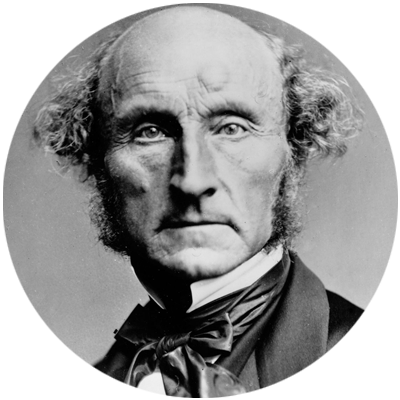
A central figure in this approach is philosopher John Stuart Mill, who refined utilitarian thought to emphasize qualitative differences in pleasures. In consequentialism, the ends justify the means. Actions are considered morally right if they lead to good consequences.
Consequentialism is often used in public policy, healthcare, and economic decisions, where weighing costs and benefits is essential. However, critics argue that this approach may justify morally questionable actions if they produce a desirable outcome.
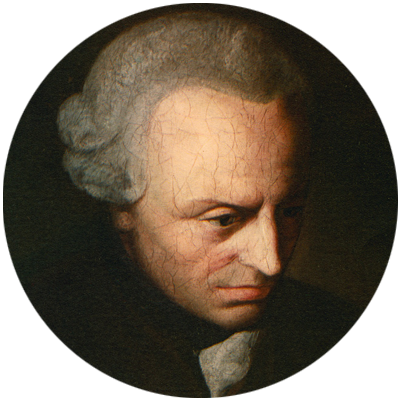 Deontology, rooted in the work of Immanuel Kant, evaluates morality based on duty and rules, regardless of consequences. According to Kantian ethics, some actions are morally obligatory or forbidden based on rational moral principles. Other actions are morally permissible. Still, a third of actions are “indifferent” to morality—or not considered in ethical reasoning.
The categorical imperative is Kant’s tool for determining moral duty. While there is only one categorical imperative, Kant describes how it works in multiple different ways (called formulations). Deontology emphasizes honesty, justice, and rights, even when they do not lead to the best outcomes. This theory is influential in law and human rights, but critics claim it can be overly rigid, failing to account for outcomes or context.
EXAMPLE
One formulation might ask whether one could rationally make an action a universal law. Another formulation might focus on whether one treats other individuals with respect or merely as a means to an end.Virtue ethics shifts the focus from rules or outcomes to the character of the moral agent. Rooted in the philosophy of Aristotle, this approach considers what kind of person one should be. Virtue ethics emphasizes moral virtues such as courage, temperance, and generosity, cultivated through habitual practice. Instead of asking, “What should I do?” it asks, “What would a virtuous person do?” While this approach is flexible and personal, critics argue it lacks clear guidance for specific moral dilemmas.
The ethics of care emphasizes the moral importance of relationships and the interdependence of people. Emerging from feminist philosophy, this approach challenges ethical theories that give priority to impartial rules or abstract calculations. Instead, care ethics highlights lived experience. It holds that moral reasoning often begins with attention to particular people and to the responsibilities that develop within ongoing relationships.
EXAMPLE
A caregiver may feel a moral obligation to prioritize a parent’s immediate needs over a general rule about fairness or equal treatment. This approach is closely associated with Carol Gilligan. Her work showed that moral perspectives grounded in care and responsibility had been overlooked in dominant ethical theories. Gilligan argued that influential psychological models of moral development, especially those shaped by Lawrence Kohlberg, treated abstract and impartial reasoning as the highest form of moral maturity. As a result, these models missed relational and contextual ways of understanding moral problems. Gilligan revealed that many people place greater moral weight on preserving relationships and responding to concrete needs than on applying detached principles.
Care ethics maintains that empathy and responsiveness are not merely emotional additions to moral thinking; they are central to ethical life. This framework has been especially influential in discussions of caregiving, education, and family relationships. Critics note, however, that care ethics offers less guidance when addressing large‑scale or impersonal moral dilemmas.
"The moral imperative that emerges repeatedly in women’s judgments is an injunction to care, a responsibility to discern and alleviate the ‘real and recognizable trouble’ of this world."
Each philosophical approach brings a unique lens to ethical decision making. Let’s analyze how they compare the following:
IN CONTEXT
Consider the following ethical scenario: A hospital has one dose of a life-saving medication and two patients in need. One is a young adult with a good prognosis; the other is an elderly patient with limited life expectancy.
Each lens offers a different solution, showing the strengths and blind spots of each framework.
- A consequentialist might prioritize saving the younger patient to maximize lifespan.
- A deontologist might argue that all lives are equal and choosing one over the other is morally wrong.
- A virtue ethicist might consider what a compassionate and wise physician would do.
- A care ethicist might take into account the relational context; perhaps the elderly patient has no family and is in emotional distress.
Source: This tutorial has been adapted from Philosophical Ethics. Access for free at https://gwmatthews.github.io/ethics/1-the-examined-life.html. License: Creative commons attribution 4.0 international



