Table of Contents |
Performance art draws from the influences of Dada performances, like the poetry readings at the Cabaret Voltaire in Zurich, Switzerland, the action painting of artists like Jackson Pollock, and the work of Yves Klein.
In this lesson, you’ll be looking at art from 1960 to 1980.
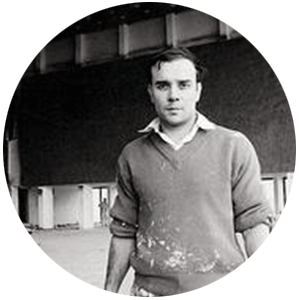
Despite his brief career and life, Yves Klein emerged as one of the most influential artists of the postwar era. He was remarkably ahead of his time, pioneering performance art while also pushing the boundaries of painting and photography. His innovative approach made him a significant precursor to both the Minimalist and Pop Art movements that followed.
Although Klein died young, his death was unrelated to his daring artistic endeavors. One of his most famous works, Leap Into the Void, is a striking photomontage in which he appears to be leaping fearlessly into empty space. The image is so convincing that the safety tarp he jumped onto has been seamlessly cropped out, leaving viewers to ponder the leap’s audacity and symbolism.
 View Leap Into the Void.
The association with dance or acting often overshadows other types of performance art. Performance art is defined as an artistic form in which there are elements of action, temporality, and use of the body. In the above example, you have all three. Klein was trying to evoke a sense of freedom and abandon in this work, albeit through a tightly controlled and rehearsed performance.
The concept of the viewer or audience as an active and integral part of a work of art is a distinctly modern, 20th-century innovation. Numerous artists embraced this notion of audience participation, pushing it into unique and often unconventional directions, redefining the relationship between art and its observers.
IN CONTEXT
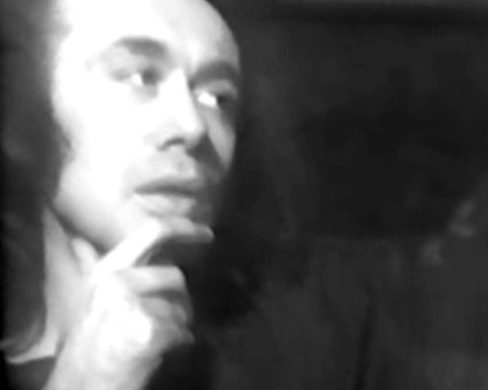
A notable example is Vito Acconci’s 1971 performance work, Seedbed. The installation featured a room with a wooden ramp running its length, beneath which Acconci concealed himself. Equipped with a microphone connected to an audio speaker, he could be heard but remained unseen by the audience. As visitors walked above him, Acconci listened to their movements and responded by vocalizing his fantasies, directly engaging with the presence of the audience in a provocative and intimate manner.
Seedbed radically redefined the traditional relationship between the artist and the audience. By placing himself in a hidden position beneath the ramp, Acconci created a situation where the audience was unaware of his precise actions, yet they were directly implicated in his performance. This inversion of roles blurred the lines between spectator and participant, forcing the audience to confront their own role in the work.
Allan Kaprow’s work is another prime example of performance art, particularly through his series of events known as Happenings. These Happenings were designed to foster organic audience participation, blending art with everyday life. A Happening typically involved a loosely scripted performance, allowing for improvisation and spontaneity, and could take place in any setting with anyone as a participant. For instance, one might involve 20 college students suddenly cramming into a Volkswagen Beetle. A modern parallel to this concept is the flash mob, where groups of people suddenly gather in a public space for a coordinated, spontaneous performance.
Kaprow’s installation artwork Yard is a collection of old rubber tires that the audience is encouraged to climb on and through and jump on:
In works like this, the temporal aspect of performance art becomes particularly evident. Each performance, even when scripted, is inherently unique and fleeting, capturing a moment in time that can never be exactly replicated. This emphasis on the ephemeral nature of the experience is a key element of performance art, highlighting its transient and dynamic qualities.
Performance pieces also seek to decommodify art—to strip away an economic role in the marketplace. Throughout the centuries, art has become another object to be bought, sold, and collected for its monetary value; however, performance art often aspires to remove any financial associations. Because performance works are temporary and experiential, artists disassociate them from previous physical and commercial art objects.
Body art is a form of art where the human body itself serves as both the medium and the focal point of the work. While it often intersects with performance art, it doesn’t necessarily have to. For instance, tattoos are a form of body art that doesn’t involve performance but still uses the body as a canvas for artistic expression. On the other hand, body-based performance art often leads to compelling and sometimes provocative displays, with artists literally using their own bodies in ways that may involve risk or discomfort to convey a message or explore a concept. Chris Burden was one such artist who pushed the envelope with personal safety. One of his most famous examples of body-based performance art is Shoot, in which his assistant literally shot him in the left arm from a distance of about 15 ft. Trans-Fixed, shown below, is another one of his most famous pieces in which he is crucified on the body of a Volkswagen Beetle. It supposedly was run during the performance, revving its engine for several minutes before shutting off. Chris Burden died in 2015, but he died from natural causes, not his performance art.
Hannah Wilke and Ana Mendieta are women artists known for their work in body-based performance art.
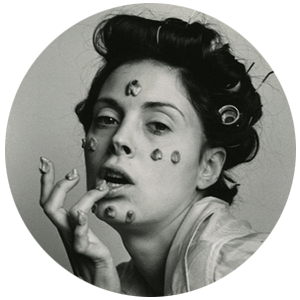 View S.O.S—Starification Object Series.
In this work of body art, Wilke addresses feminine identity, partially masked while posing in different stereotypical female roles, such as the housewife or the model. Audience members were given chewing gum, which was later collected and formed into tiny little vagina sculptures. These were attached to her body—a form of scarification and glamorizing that is simultaneously self-mutilating and a critique of the cultural and social pressures placed on women to conform to certain standards of beauty.
Ana Mendieta was known for her fiery personality and intense passion—qualities that deeply influenced her groundbreaking work in the art world. She was briefly married to the Minimalist artist Carl Andre, but their relationship ended tragically with her untimely and suspicious death in 1985 when she fell from her apartment window—a death that remains controversial to this day.
Mendieta is best known for her Silueta Series, a pioneering body of work that represents one of the earliest known integrations of emerging art forms such as land art and body art. She coined the term “earth-body art” to describe her unique approach, which combined the natural environment with her own physical presence.
In this series, Mendieta traveled from the United States to Mexico, where she created hauntingly beautiful works by imprinting or tracing the silhouette of her naked body onto the earth. She then photographed these silhouettes or impressions, often enhancing them with natural materials like flowers, leaves, and stones as well as more visceral elements like her own blood.
In her youth, Mendieta was separated from her wealthy, intellectual parents in Cuba to move to the United States as a refugee in an asylum program. Because of Mendieta’s complicated connection to her homeland, these works were deeply personal and symbolic, exploring the themes of identity, displacement, femininity, and the connection between the body and the earth.
Source: THIS TUTORIAL WAS AUTHORED BY IAN MCCONNELL AND TAMORA KOWALSKI FOR SOPHIA LEARNING. PLEASE SEE OUR TERMS OF USE.



 View
View  View
View  View
View 