Table of Contents |
A convergence of astonishing artistic talent, the spread of humanism, and economic prosperity marked a rebirth of classical values in both art and society known as the Renaissance. Because of the power of the Christian church during the Middle Ages, much of the influence of Greek and Roman civilizations was forgotten due to the pagan views of these ancient people. With the start of the Renaissance, a reawakening of Greco-Roman ideas and accomplishments began. This cultural flowering initially found its greatest center in 15th-century Florence, where the powerful Medici family played a pivotal role as influential art patrons and political leaders, nurturing and supporting a host of artists whose works would come to define the era.
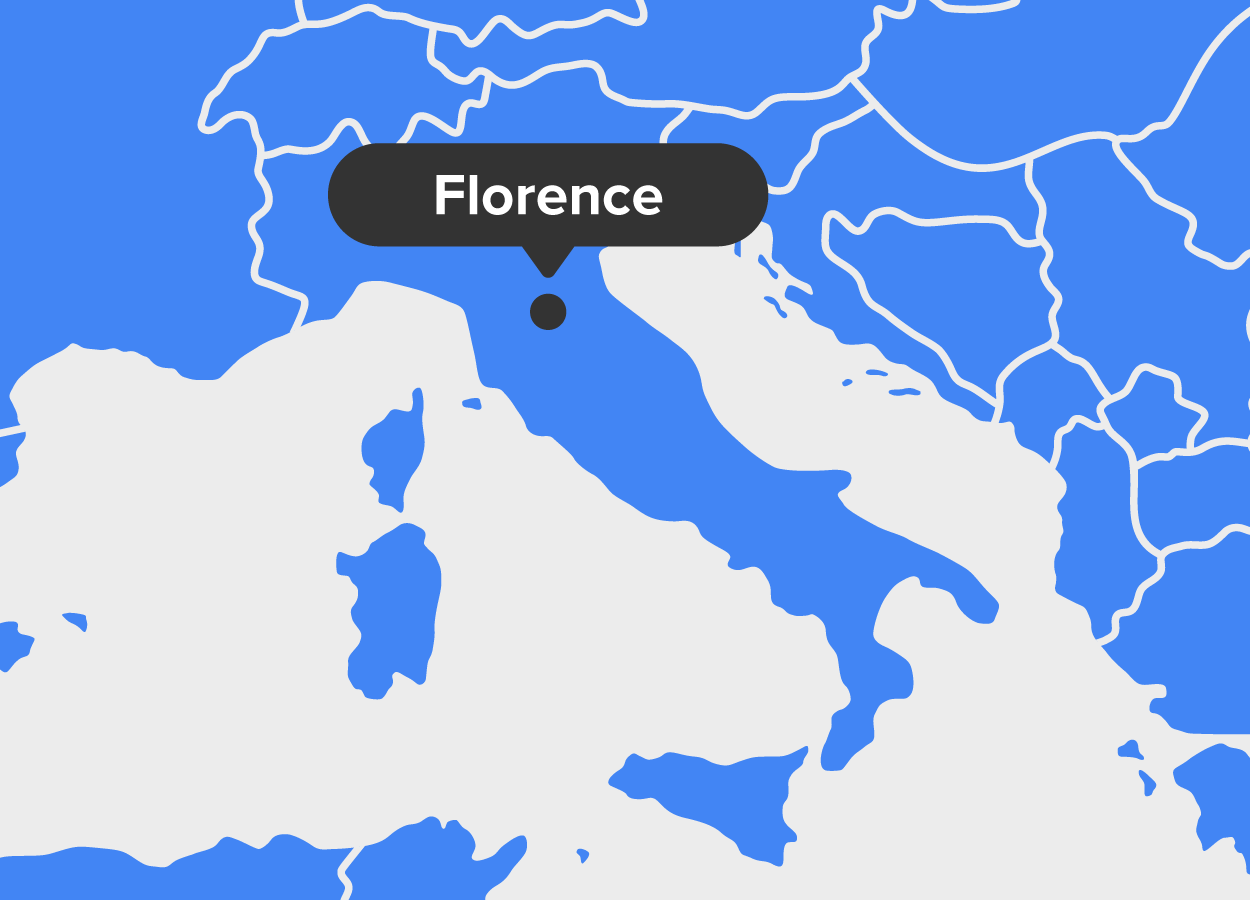
One of the hallmarks of the Renaissance was the groundbreaking approach to artistic representation, as you will see in the following examples of Renaissance art.
Early Renaissance artists sought to achieve greater physical credibility in their works. This was made possible by the new science of linear perspective, pioneered by Filippo Brunelleschi. Brunelleschi's development of linear perspective allowed artists like Paolo Uccello to create a sense of depth and space in their paintings, making their works appear more realistic.
The secular art side of Renaissance painting is found in historic subjects such as Paolo Uccello's Battle of San Romano, which depicts a conflict between Florence and Siena in 1432. Uccello's use of perspective and foreshortening exemplifies the era's advancements in artistic techniques, while the painting itself reflects the Renaissance interest in secular themes and the recording of historical events. Notice how the diagonal lines of the weapons, flags, soldiers’ bodies, and horses direct the viewer’s eyes to the center of the image, resulting in a livelier and more believable battle scene.
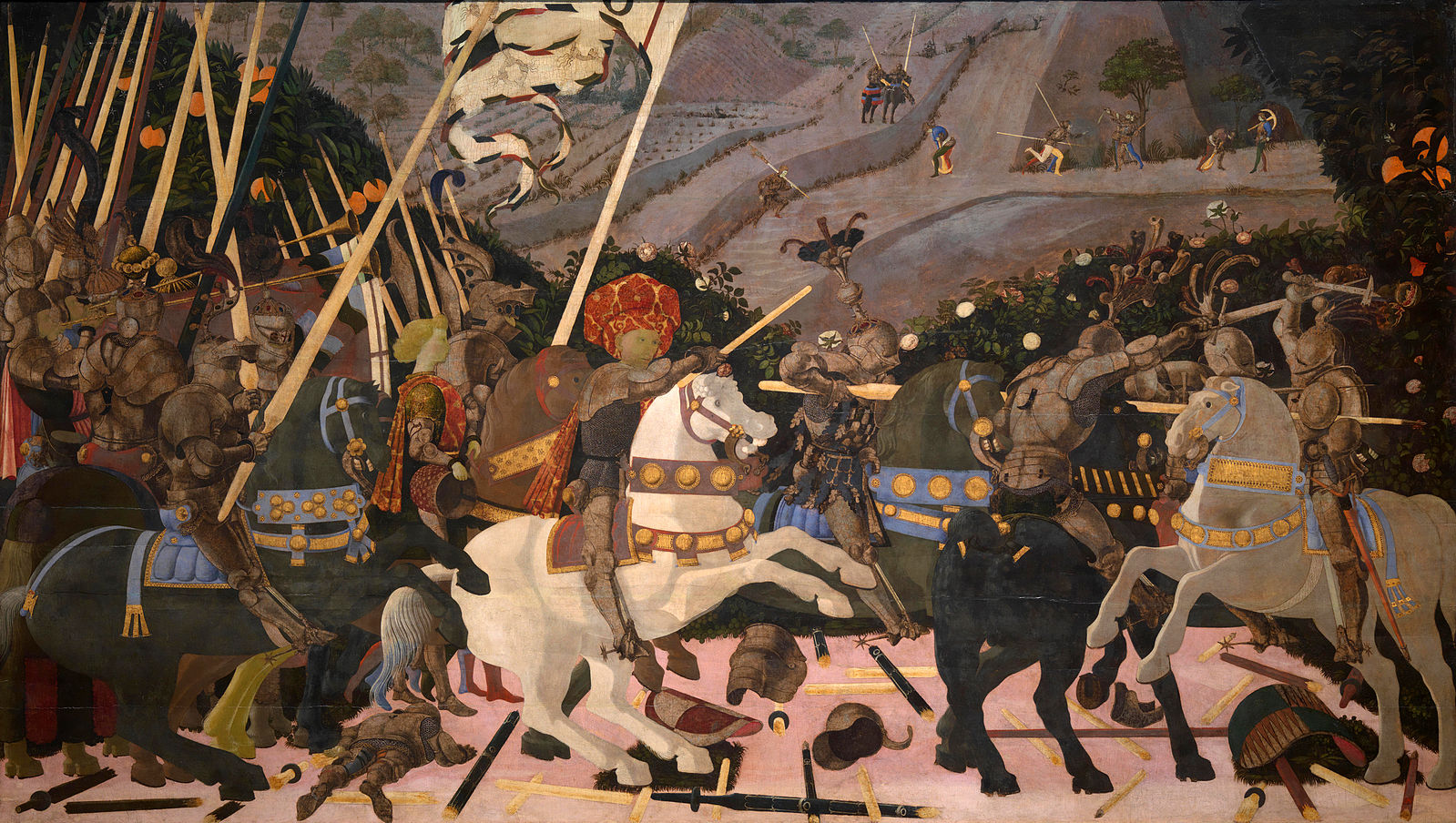
Battle of San Romano
National Gallery, London
c. 1438
Tempera on panel
The Renaissance interest in classical culture naturally also led to the revival of Greco-Roman mythological themes in art. For example, Antonio del Pollaiuolo's table-sized bronze sculpture of Hercules and Antaeus vividly illustrates this trend, depicting a dramatic moment from classical mythology with a renewed focus on anatomical precision and dynamic movement. This work exemplifies the period's fascination with ancient myths and its commitment to reviving and reinterpreting them through the lens of Renaissance artistry.
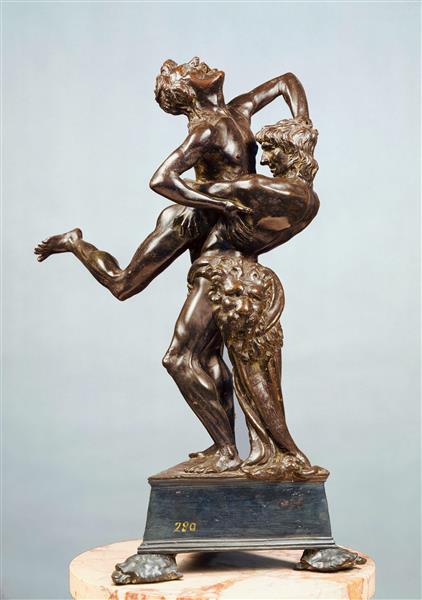
Hercules and Antaeus
Bargello, Florence
c. 1475
Bronze
In addition to advancements in painting, Renaissance architects looked to revive and reinterpret the classical style. They drew inspiration from the architecture of ancient Greece and Rome, emphasizing symmetry, proportion, and the use of classical orders. This revival of classical architecture can be seen in the works of architects such as Brunelleschi himself, whose design for the dome of Florence Cathedral and the Pazzi Chapel are masterpieces of engineering and a testament to the era's innovative spirit.
In the Pazzi Chapel, Brunelleschi focused on connecting the elements of the building in a proportional way to create visual relationships, as was the custom in the classical past. For example, in the chapel's interior, a cube-shaped ceiling with a dome is adjacent to two symmetrical wings. Both in the interior and exterior, architectural features like Corinthian columns, rounded arches and the central dome reflect the works of ancient Greece and Rome.
Somewhat hidden from the public eye, the Pazzi Chapel is tucked inside the main monastic cloister of the Basilica di Santa Croce in Florence, Italy. The chapel's design showcases the classical symmetry, proportion, and geometric harmony that are hallmarks of the Renaissance architectural style.
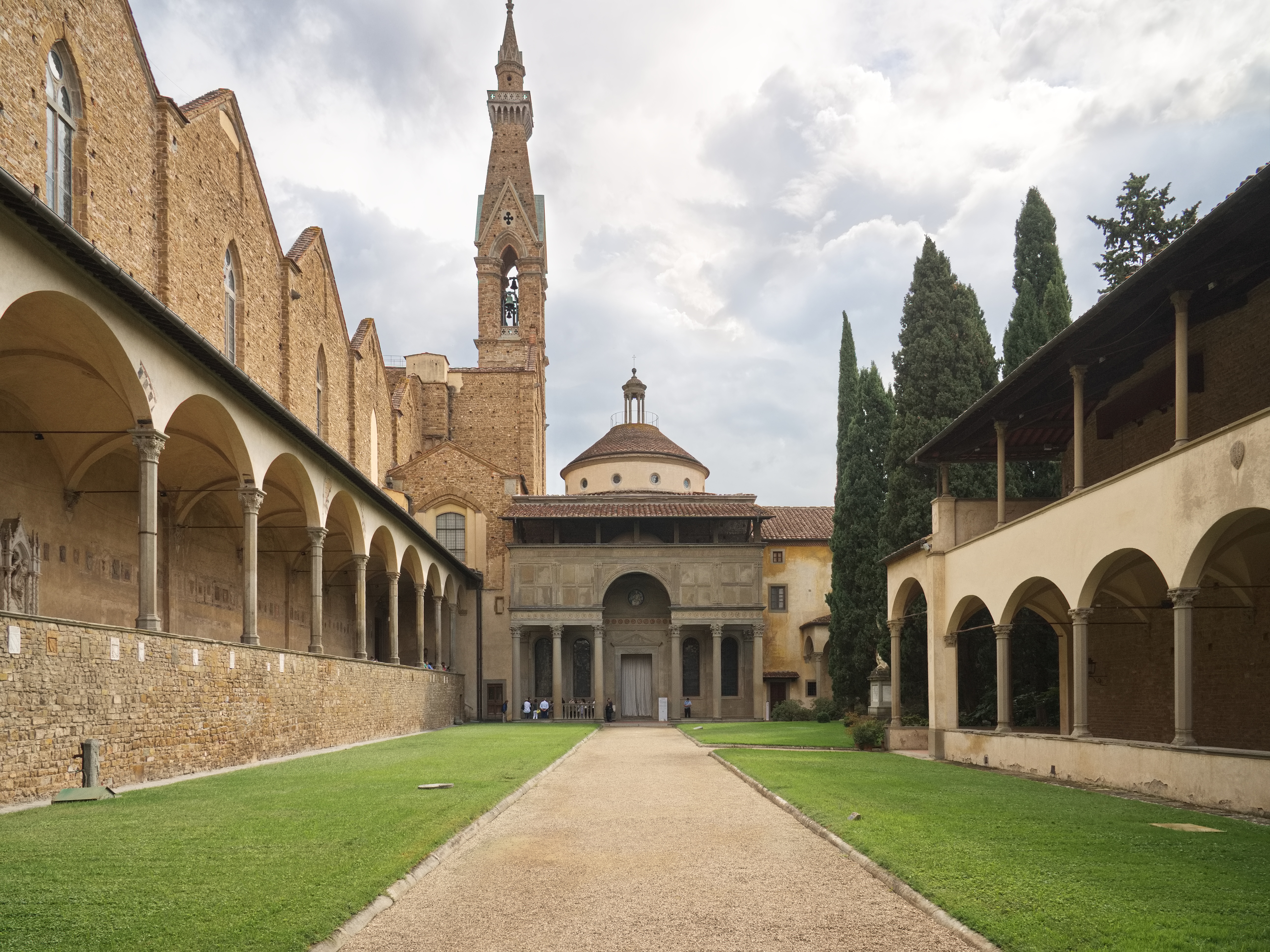
Pazzi Chapel
Santa Croce, Florence, Italy
1442–1443
Masonry and Pietra Serena
Attached to Santa Croce
Source: THIS TUTORIAL WAS AUTHORED BY SOPHIA LEARNING. PLEASE SEE OUR TERMS OF USE.



