Table of Contents |
Management is the process of coordinating, guiding, and overseeing the development, daily activities, maintenance, and allocation of capital (human, physical, and financial resources) to attain an organization’s goals efficiently and effectively. Simply put, management involves accomplishing tasks through people by utilizing available resources such as time, money, materials, and human effort.
Managers work at various levels (top, middle, and frontline) and in different areas (like HR, marketing, and operations), but they all use the same core management principles. These principles focus on efficiency and effectiveness to reach their goals.
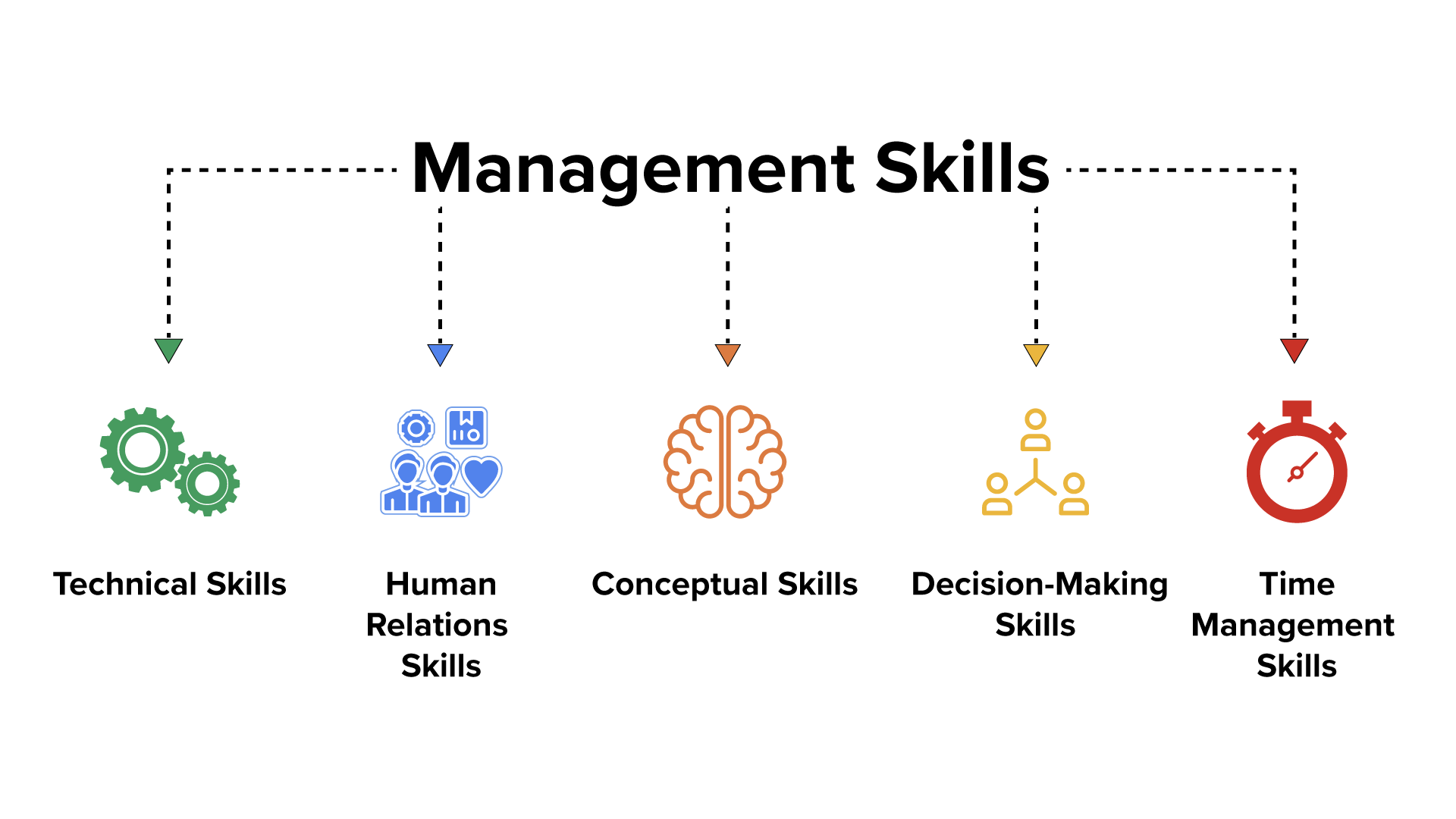
In addition to the POLC model, managers use a variety of skills, which include:
EXAMPLE
A manager in IT needs to understand software development, while a manufacturing manager must know the machinery and production processes.Mastery of technical skills allows managers to guide their teams effectively and troubleshoot issues, ensuring operational efficiency.
Human relations skills, also known as interpersonal skills, involve the ability to communicate, motivate, lead, and work well with others. These skills are essential for building strong relationships, managing conflicts, and fostering teamwork within an organization.
 A manager with strong human relations skills can inspire employees, encourage collaboration, and create a positive workplace culture, all of which contribute to higher morale and productivity.
Conceptual skills enable managers to understand complex situations and see the organization as a whole. These skills involve critical thinking, strategic planning, and the ability to anticipate future challenges or opportunities. Managers use conceptual skills to analyze data, interpret trends, and develop innovative solutions.
Decision-making skills are crucial for managers as they regularly face choices that affect their team and organization. Effective decision-making requires gathering relevant information, weighing alternatives, considering risks, and selecting the best course of action.
Time management skills help managers prioritize tasks, set goals, and allocate time efficiently to meet deadlines. These skills are vital in balancing multiple responsibilities, reducing stress, and increasing productivity.
EXAMPLE
 A manager who masters time management can organize their schedule to focus on high-impact activities, delegate when necessary, and ensure their team remains on track to accomplish both short-term tasks and long-term projects.
The POLC model is a way of viewing management and the types of activities managers are involved in. The POLC model —planning, organizing, leading, and controlling—is a foundational management framework and the focus of this Challenge; it outlines the key functions managers perform to ensure organizational success.
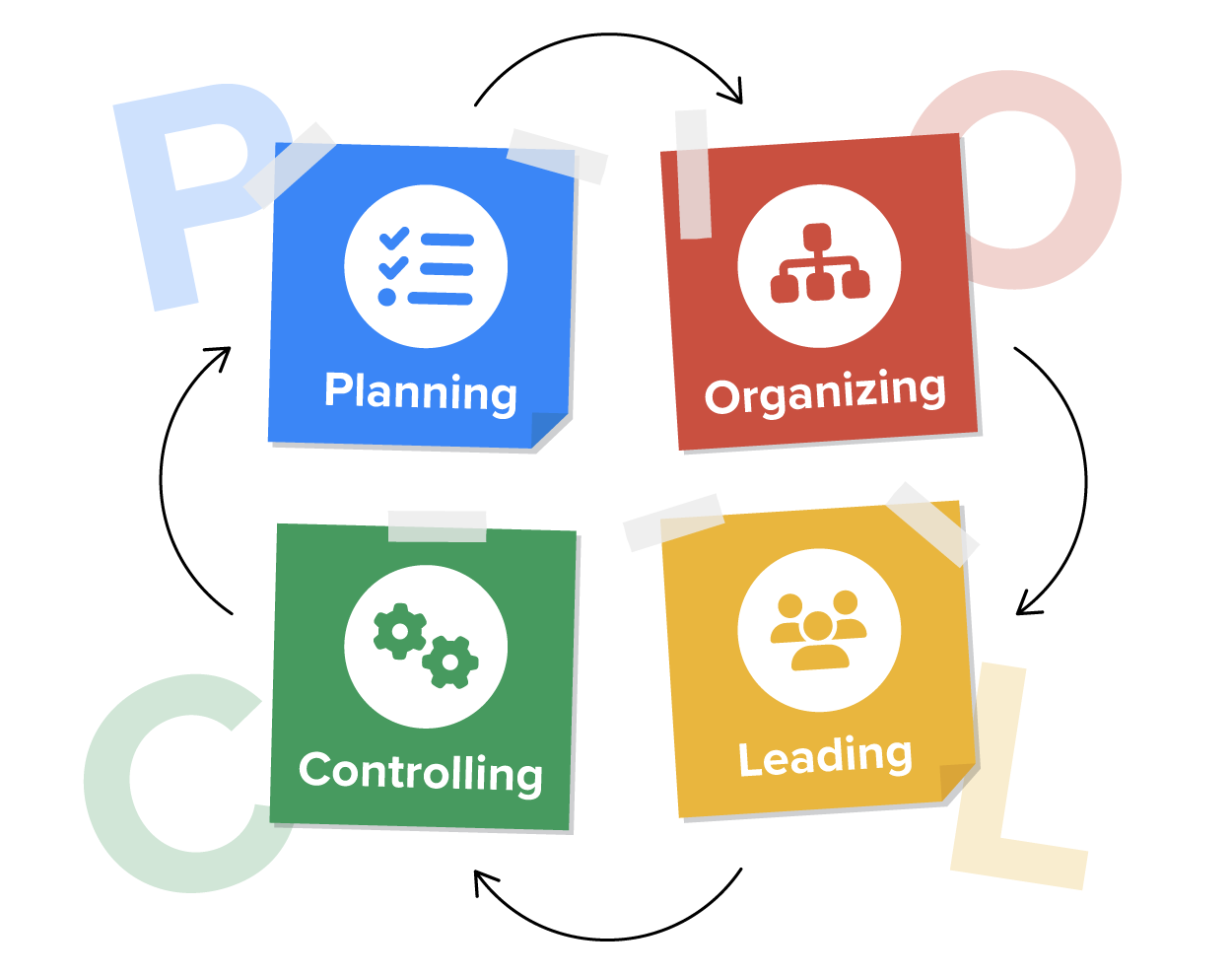
Planning is the first function and involves setting objectives and determining the best strategies to achieve them. It’s about looking ahead and preparing for the future.
EXAMPLE
A company might develop a 5-year strategic growth plan, create a budget for the upcoming fiscal year, or plan a new product launch timeline. Managers also set employee performance targets and outline crisis management plans to ensure preparedness for unexpected events.Organizing follows planning and focuses on arranging resources and structuring tasks to implement the plans effectively.
EXAMPLE
This could include assigning team roles for a marketing campaign or structuring departments within a newly formed business unit.Organizing also involves hiring new staff to meet growing production demands, setting up internal systems for project management, and creating workflows to streamline customer service processes.
Leading is the third function and centers around guiding, motivating, and communicating with team members to achieve organizational goals.
EXAMPLE
Managers might host regular team-building sessions to foster collaboration or provide individualized feedback and coaching during performance reviews.Leading also includes resolving interpersonal conflicts, recognizing employee achievements to boost morale, and clearly communicating the company’s vision to inspire commitment and focus.
Controlling is the final function and involves monitoring organizational performance, comparing it to established goals, and making the necessary adjustments.
EXAMPLE
Managers track key metrics such as weekly sales and adjust tactics when needed. They also conduct regular quality control inspections, use productivity software to monitor employee performance, and review financial statements to ensure budgets are aligned with spending. Additionally, performance appraisals are conducted to ensure individuals and teams are contributing effectively to the organization’s success.Let’s look at how AmmA might use the POLC model:

IN CONTEXT:
The AmmA POLC Model in Action
Planning:
Amira and Mariam identified a market gap—small California businesses lacked tools to analyze trends. Their goal: Build an affordable, intuitive dashboard with key features like visual reports and sales forecasting. They set milestones, including a prototype by Month 3 and beta by Month 6.
Organizing:
They divided roles—Amira led product development; Mariam handled marketing. They built a small team, set up cloud infrastructure, and partnered with local business groups.
Leading:
Amira led the dev team with regular check-ins and motivation. Mariam promoted the product through webinars and user training. Both encouraged adoption by sharing early success stories and staying open to feedback.
Controlling:
Post launch, they tracked KPIs like user activity and satisfaction. After noticing drop-offs, they added live support, tutorials, and monthly tips. Continuous updates based on feedback helped improve retention and growth.
Using each of these four management functions (the POLC model) can help managers increase organizational efficiency and effectiveness. Efficiency is using the least possible amount of resources to get work done, whereas effectiveness is the ability to produce a desired result. Managers need to be both efficient and effective in order to achieve organizational goals.
Let’s see how Delta Airlines exhibits both efficiency and effectiveness by applying the POLC model:
IN CONTEXT: Delta Airlines
In 2024, Delta, one of the most efficient network U.S. airlines, operated a total revenue per available seat mile (TRASM) of 21.60 cents, making it more efficient and effective than other airlines like Southwest and United Airlines. There are many ways that airlines can manage to produce higher revenue per seat-mile:While efficiency and effectiveness are sometimes lauded by investors, airlines also need to account for customer satisfaction, which can mean extra costs.
- Raise ticket prices
- Fill more of their seats
- Operate more efficient aircraft that utilize less fuel
- Negotiate favorable salaries with their employees
Delta Airlines exhibited both efficiency and effectiveness by applying the POLC model as a structured approach to management. They applied planning by setting clear goals, which allows them to see a clear path for achieving their goals. In terms of organizing, they ensured the right tools and people were in place and also streamlined operations to help them become efficient and effective. They applied leading by communicating a vision and attempting to reduce employee turnover and conflict, allowing them to be more effective. They applied controlling by reviewing performance and comparing the actual performance to company goals and made adjustments where needed.
Now that you’ve had an overview of the POLC model, in the forthcoming tutorials, you will look at individual elements in each area of the model.
Source: THIS CONTENT HAS BEEN ADAPTED FROM OPENSTAX "INTRODUCTION TO BUSINESS". ACCESS FOR FREE AT openstax.org/details/books/introduction-business. LICENSE: CREATIVE COMMONS ATTRIBUTION 4.0 INTERNATIONAL. Accessed by May 2025.
REFERENCES
Delta Air Lines. (2025, January 10). Delta Air Lines announces December quarter and full year 2024 financial results. Retrieved from ir.delta.com/news/news-details/2025/Delta-Air-Lines-Announces-December-Quarter-and-Full-Year-2024-Financial-Results/default.aspx