Table of Contents |
As we have learned, communication involves encoding, transmitting, and decoding messages. However, barriers to communication exist, known as filters. They can interfere with how messages are sent, received, and interpreted. They distort or block the transmission and understanding of a message, leading to misunderstandings, frustration, and conflict.
Understanding these filters is critical for improving communication, particularly in conflict resolution. Let’s explore some strategies for minimizing the impact of these filters and enhancing communication clarity.
There are two main types of these filters: external filters and internal filters.
External filters refer to outside forces that interfere with the communication process. These are typically environmental or situational factors that hinder the clear transmission of a message. Common external filters include background noise, distractions, interruptions, and technological issues.

For instance, imagine you’re trying to have an important conversation in a crowded and noisy restaurant. The loud background chatter makes it difficult for both parties to hear each other, distorting the message. This kind of external filter prevents the message from being received as intended.
EXAMPLE
Jack calls Tony to relay an important message, but Tony is sitting in a busy café where the noise of people talking, coffee machines grinding, and music playing makes it hard for him to hear Jack clearly. In this case, the noise in the café acts as an external filter that prevents Tony from fully understanding Jack’s message.EXAMPLE
Consider a videoconference where your internet connection keeps being cut, causing you to miss parts of the discussion. This external filter makes it difficult to follow the conversation. To resolve this, you might suggest switching to a phone call, where the connection is more stable, or rescheduling the meeting when both parties have better access to reliable internet.By addressing external filters, you ensure that communication is clear and effective.
External filters are easier to identify and control. By managing the physical environment—such as ensuring a quiet room for important discussions or improving technology for virtual meetings—you can significantly reduce the chances of miscommunication.
To manage external filters, you should create an environment conducive to clear communication. For instance, if you’re preparing for a sensitive discussion, find a quiet space where you won’t be interrupted or distracted. Similarly, if you’re using technology, make sure it’s reliable and functioning properly to avoid technical issues that might distort the message.
By taking proactive steps to eliminate external distractions, you allow the communication process to run more smoothly, reducing the chances of misunderstandings.
EXAMPLE
If you’re scheduled to have a difficult conversation with a team member, it’s important to choose a quiet, private space where you can both focus without distractions. If you were to have the same conversation in a noisy environment, the external filter of background noise might hinder effective communication, making it harder for both parties to fully understand each other.Internal filters are factors within the mind of the receiver that can distort the message. These filters are often rooted in emotions, biases, assumptions, or past experiences, and they influence how the receiver interprets the message. Unlike external filters, which are typically environmental, internal filters arise from the receiver’s psychological state. Internal filters require more self-awareness and emotional intelligence to manage them effectively.
For instance, if the receiver is feeling particularly emotional, stressed, or biased, they might misinterpret the sender’s message, even if the message itself is clear. This misinterpretation often occurs due to preconceived notions or emotional baggage that the receiver brings to the conversation.
EXAMPLE
 Consider Jack and Tony again. Jack tells Tony, “I need that report ASAP.” Tony, assuming that “ASAP” means “within the week,” decides he’ll submit the report in a few days. However, Jack actually meant “right now.” This misinterpretation is an example of an internal filter—Tony’s assumption about the meaning of “ASAP” distorted the intended urgency of Jack’s message. If Tony does not clarify the meaning of “ASAP,” this misunderstanding can escalate into a conflict.
To reduce the impact of internal filters, it’s crucial to develop self-awareness. This means recognizing your own emotional state, biases, and assumptions that may interfere with receiving a message accurately. Developing emotional intelligence allows you to set aside these internal filters, listen more objectively, and respond thoughtfully.
EXAMPLE
Imagine you’re having a conversation with a colleague with whom you frequently disagree. Based on past experiences, your internal filter might cause you to expect conflict, leading you to interpret their neutral statements as confrontational. By recognizing this bias and adjusting your mindset, you can focus more on their actual words, leading to a more constructive dialogue.Additionally, clarifying ambiguous statements and asking follow-up questions can help reduce misinterpretations caused by internal filters. When you’re unsure of someone’s message, instead of assuming its meaning, you can ask for clarification, which prevents unnecessary conflict.
In conflict resolution, both internal and external filters can exacerbate misunderstandings and escalate tensions. When people misinterpret each other’s words due to environmental distractions or emotional biases, conflicts can grow rather than be resolved. Recognizing the presence of these filters and addressing them are essential for preventing communication breakdowns during conflict resolution.
Next time you encounter a similar situation, consider how you can minimize both internal and external filters to improve the clarity of communication and reduce the likelihood of misunderstandings.
By being mindful of both types of filters and actively working to manage them, you can enhance your communication skills and become more effective in conflict resolution.
Effective communication helps prevent misunderstandings, especially in situations where clarity is needed. One key strategy for ensuring clarity in communication is using confirmation messages, which help both the sender and receiver stay on the same page. When clarity is missing, miscommunication can easily occur, leading to unnecessary conflicts. By incorporating confirmation messages and maintaining clear, simple language, we can avoid confusion and ensure stronger, more effective communication.
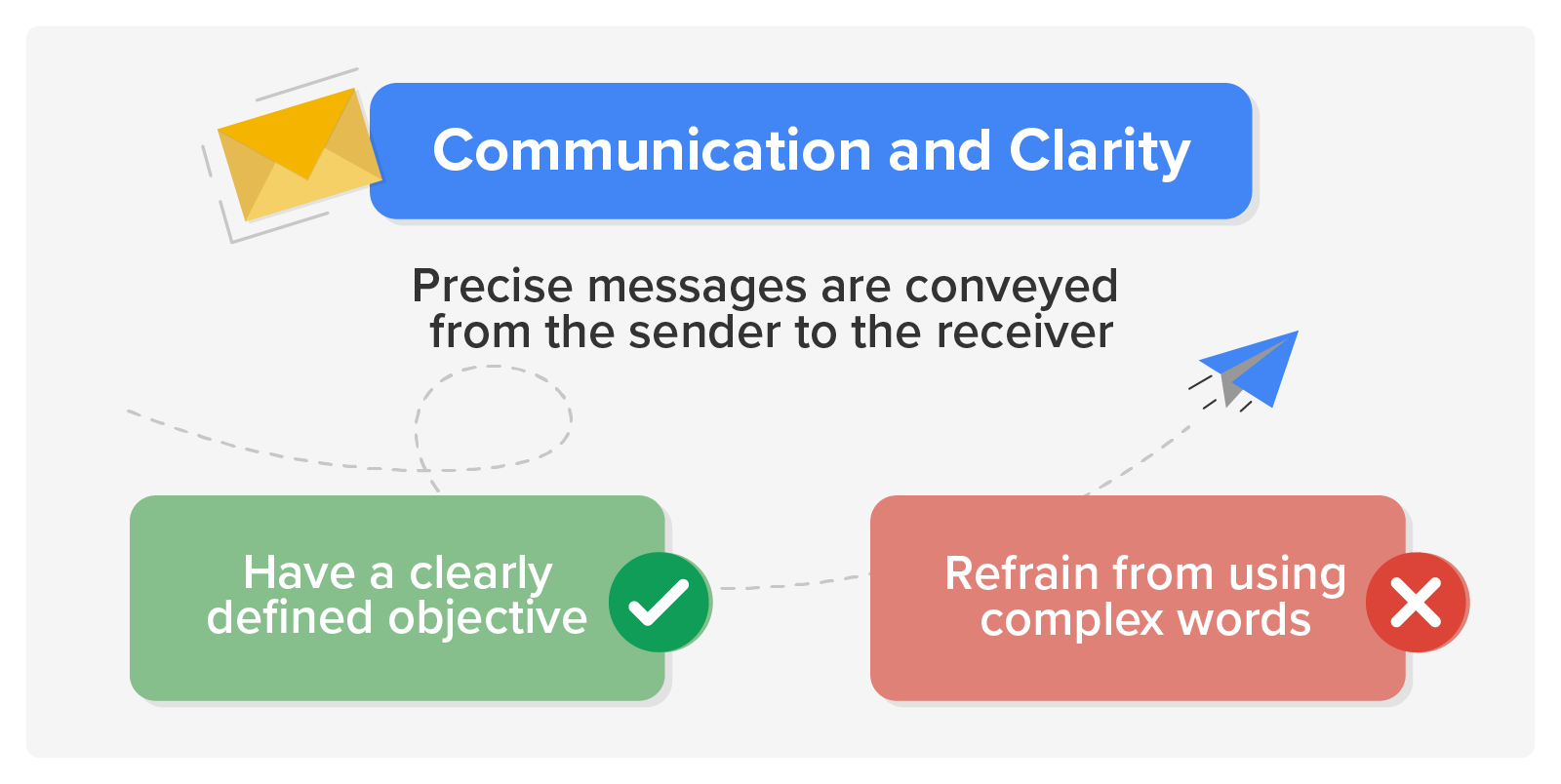
One way to reduce the risk of miscommunication is to use confirmation messages. A confirmation message is a response from the receiver to the sender indicating that the message has been received and clarifying how the message has been interpreted. This feedback loop helps ensure that both parties are on the same page.
EXAMPLE
Let’s return to Jack and Tony. Jack tells Tony, “I need that report ASAP.” Tony, unsure of what Jack means, sends a confirmation message: “Just to clarify, do you mean by the end of today, or would next week be acceptable?” This gives Jack the opportunity to specify his intent, thus avoiding any potential misunderstanding.Confirmation messages are especially important in high-stakes or complex situations where miscommunication could lead to significant problems. By using this technique, you can prevent misunderstandings and the conflicts that often arise from them.
Clarity is essential in communication, particularly when trying to resolve conflicts. When we are unclear, we leave room for misunderstandings, which can quickly escalate tensions. To communicate clearly, it’s important to use language that the other person can easily understand. This includes avoiding jargon, idiomatic expressions, or overly technical terms that the other person might not be familiar with.
EXAMPLE
If you tell a coworker, “We need to think outside the box,” but they have never heard this expression before, they may be confused about what you are asking. Instead, you could clarify by saying, “We need to come up with creative, innovative solutions.”Similarly, if you’re communicating with someone who is not fluent in your language, it’s important to be mindful of potential language barriers. In such situations, it may be helpful to use simple language and ask for confirmation to ensure that your message is understood.
External filters, as mentioned earlier, are environmental factors that interfere with the communication process. To overcome these barriers, it’s important to be mindful of your surroundings and the method of communication you’re using.
EXAMPLE
Suppose you’re having an important conversation with a colleague in a noisy coffee shop. The loud environment makes it difficult for both parties to hear each other, and you may miss important details. In this situation, a better solution might be to move to a quieter location or suggest continuing the conversation via email or in a meeting room.In professional environments, external filters like interruptions and multitasking can also affect communication. For instance, if a coworker is checking their email while you’re speaking to them, they may miss parts of your message. In this case, it’s important to make sure you have their full attention before continuing the conversation. If the topic is important, you might say, “Can we set aside a few minutes to discuss this when you’re free so we can focus fully?”
Internal filters, which are based on a receiver’s emotions, biases, or misunderstandings, are often more difficult to manage. One of the most effective strategies for dealing with internal filters is to ask clarifying questions or use confirmation messages. This allows the sender to ensure that their message is being received as intended, and it also gives the receiver an opportunity to address any misunderstandings.
EXAMPLE
Imagine you’re working on a project with a team, and your manager sends an email with feedback. You interpret the tone of the feedback as harsh, making you feel frustrated and defensive. Before responding emotionally, you could ask for clarification: “Could you clarify what you meant by this feedback? I want to make sure I understand your concerns correctly.” This type of message opens the door for better communication and reduces the likelihood of conflict.It’s also important to recognize your own internal filters. For instance, if you’re feeling particularly stressed or overwhelmed, you may misinterpret even neutral messages as negative or critical. In these cases, it’s helpful to take a moment to reflect before responding, ensuring that your emotional state is not coloring your interpretation of the message.
Source: THIS TUTORIAL WAS AUTHORED BY MARLENE JOHNSON (2019) and STEPHANIE MENEFEE and TRACI CULL (2024). PLEASE SEE OUR TERMS OF USE.



