Table of Contents |
Once you have a working thesis and have done enough research to begin supporting your thesis, you’re ready to take the next step, writing an outline.
You may have taken a writing class in the past that required an outline, and you may have learned a format that looks like this:
I. Introduction
II. First main point or subclaim in your argument
A. EvidenceIII. Second main point or subclaim in your argument
B. Explanation
A. EvidenceIV. Third main point or subclaim in your argument
B. Explanation
A. EvidenceV. Conclusion
B. Explanation
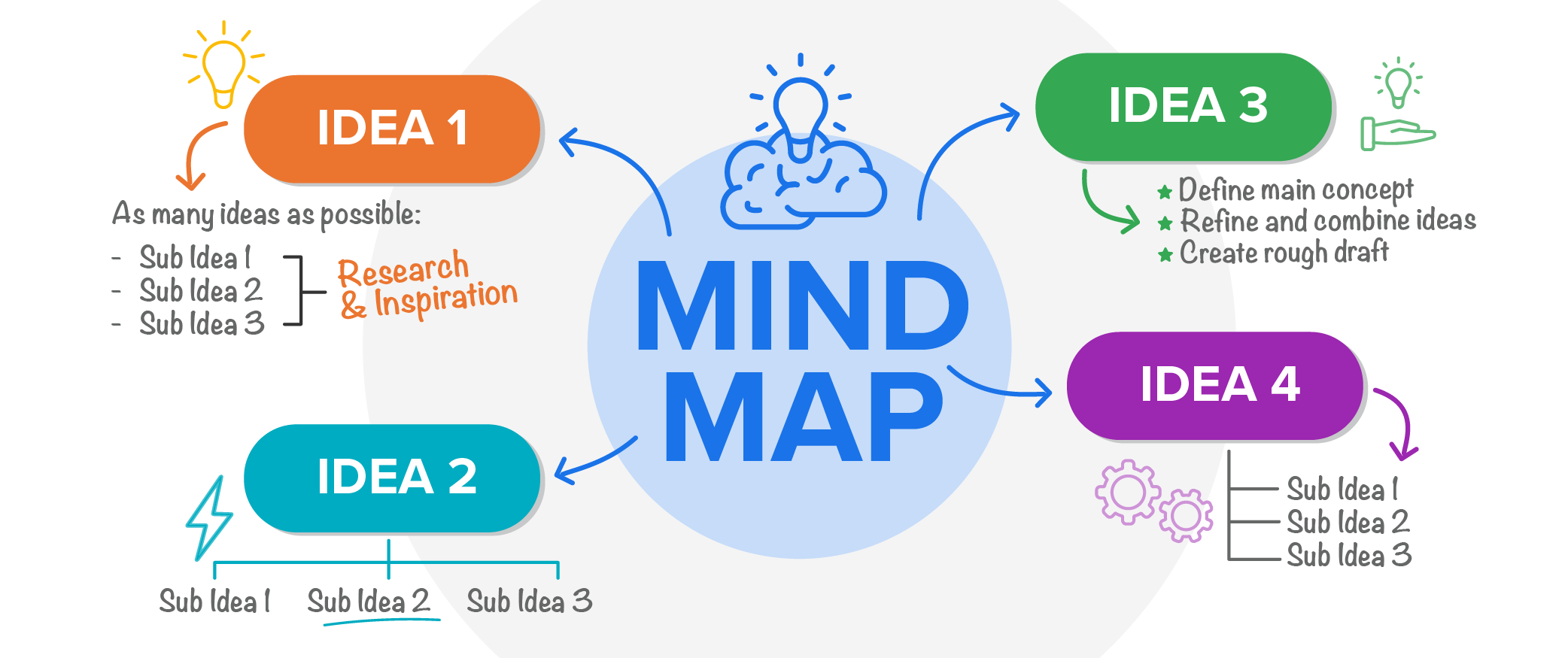
Your outline shouldn't just show the content of your essay; it should show the structure. You will want to indicate when you think you will need new paragraphs. This might be a guess for now, but guessing helps.
While a formal outline is written in complete sentences, in an informal outline, you can use a mix of sentences and phrases, or whatever it takes to show what you plan to do. The outline does not need to be written as a draft, with full paragraphs. Let’s look closer at the components of an outline.
The first thing in your outline will be the introduction, and as you know, the main information you are sharing in your introduction is the thesis statement. However, the thesis statement is rarely the first sentence of the paper. The structure of an introduction usually flows like this:
I. Introductiona. Hook
b. Bridge or background information
c. Thesis statement
The hook is how you will get readers interested in the topic, and the bridge is the context needed to lead from the hook to thesis statement. There are several strategies for grabbing the reader's attention. You can try:
The strongest introductions often identify the audience of the essay, the topic of the essay, and why the audience should care about the topic. A short hook about how members of the audience who encounter the topic might feel about it can get you started: “When nurses see patients who are struggling with mental health issues, they have a number of concerns they need to address.” Here, the author gives the “who” (nurses), what (the topic is going to be mental health), and why the audience cares (they need to know what do when this happens).
IN CONTEXT
Using Definitions in Your Introduction
The normal definition of “livestock” is domesticated animals used in agriculture, with common examples being offered like cows, pigs, and sheep. Yet the most common livestock animal is usually overlooked: the humble honeybee.
This introduction defines a common word, but one that people might not think about, and it leads naturally to the topic.
“Cross-pollination” is the process of applying pollen from one flower to the pistils of another flower. It is a vital part of agriculture and is most commonly done by the humble honeybee.
This introduction defines a word the same way but does not reveal anything about the essay to come.
For the bridge, introduce and define the topic you will be exploring in your paper. Add the context and background about the issue.
Every section between your introduction and conclusion will be supported for your thesis statement and will be foreshadowed in your thesis statement. They should look something like this:
I. Point (or Subclaim)a. Subpoint
b. Subpoint
c. Subpoint
A point is one of the major reasons in support of your thesis, and the subpoints will be the facts, logic, and other reasons in support of that point. There are many ways to support your argument. Here are some ideas:
| Kind | Explanation | When to Use It | Example |
|---|---|---|---|
| Evidence | Factual evidence, such as past data or results of studies. | Use at the outset of any argument in support of subsequent arguments. | Half a trillion bees die each year in agriculture, and few are due to natural causes (McGivney, 2020). |
| Examples | A close-up look at someone or something affected by the issue you are writing about. | Use to connect to the reader in an emotional way. | Mona Rivera, an environmental activist, recalls the ground around her home in Salinas, CA, being covered in dead bees, “like something from a horror movie.” These memories have led to her mission to find better ways to sustain pollination (Personal Interview, 2025). |
| Counterargument and Refutation | Presenting the most common counterargument and responding to it. | The writer can anticipate and refute or answer the biggest objections to the thesis. | Many think that the agricultural economy would suffer without bees, which is true—which is all the more reason to make a planned and gradual change rather than being faced with a sudden, unexpected change, as will happen eventually if no action is taken. |
It’s important to know that an entire point won’t rely on only one of these; there will usually be a mix of three or four.
Your conclusion will serve two purposes. The first is to restate your claim and the main arguments in favor of it, usually in different words than your introduction and thesis statement. The other is to give a final note to the readers—the last line is the one they will remember best, so it’s a good place for a call to action (or what you want the reader to do) or a powerful statement that will stay in their minds. Most of the space in academic conclusions is used for outlining next steps. This is especially true for the sciences, but if there are things you are hoping that your audience will do now that they have read your argument, they will be outlined in the conclusion.
IN CONTEXT
A Finished Outline
Bee PaperI. Introduction
a. Hook: question about next meal.II. Stabilizing Food System
b. Bridge: description of fragility of agricultural system and segue into importance of bees to cross-pollination and vulnerability of that system.
c. Finding alternative solutions to cross-pollination will stabilize our food system, is better for the environment, and would be more humane.
a. Data on fragility of agriculture and dependency on bees.III. Environmental Concerns
b. Counterargument that farmers need bees: Diversifying methods protects farmers from a crisis.
a. Explanation of agricultural use of honeybees decimating vital native bee populations.IV. Humane Practices
b. Counterargument that bees are a small concern compared to others: Bees are one of the easier problems to solve.
a. Quote from Pete Singer, “do they suffer?”V. Conclusion
b. Quote from Temple Grandin about minimizing suffering.
a. Recap of argument.
b. Final quote from E.O. Wilson about bees as keystone species.
Source: This tutorial has been adapted from OpenStax "Writing Guide". Access for free at openstax.org/books/writing-guide/pages/1-introduction . License: Creative commons attribution 4.0 international



