Table of Contents |
Orthopedics (orth/o = straight) is the branch of medicine that specializes in the musculoskeletal system, not just the muscular system or skeletal system separately. These body parts work together in complex ways, making it important to consider them together in many cases.
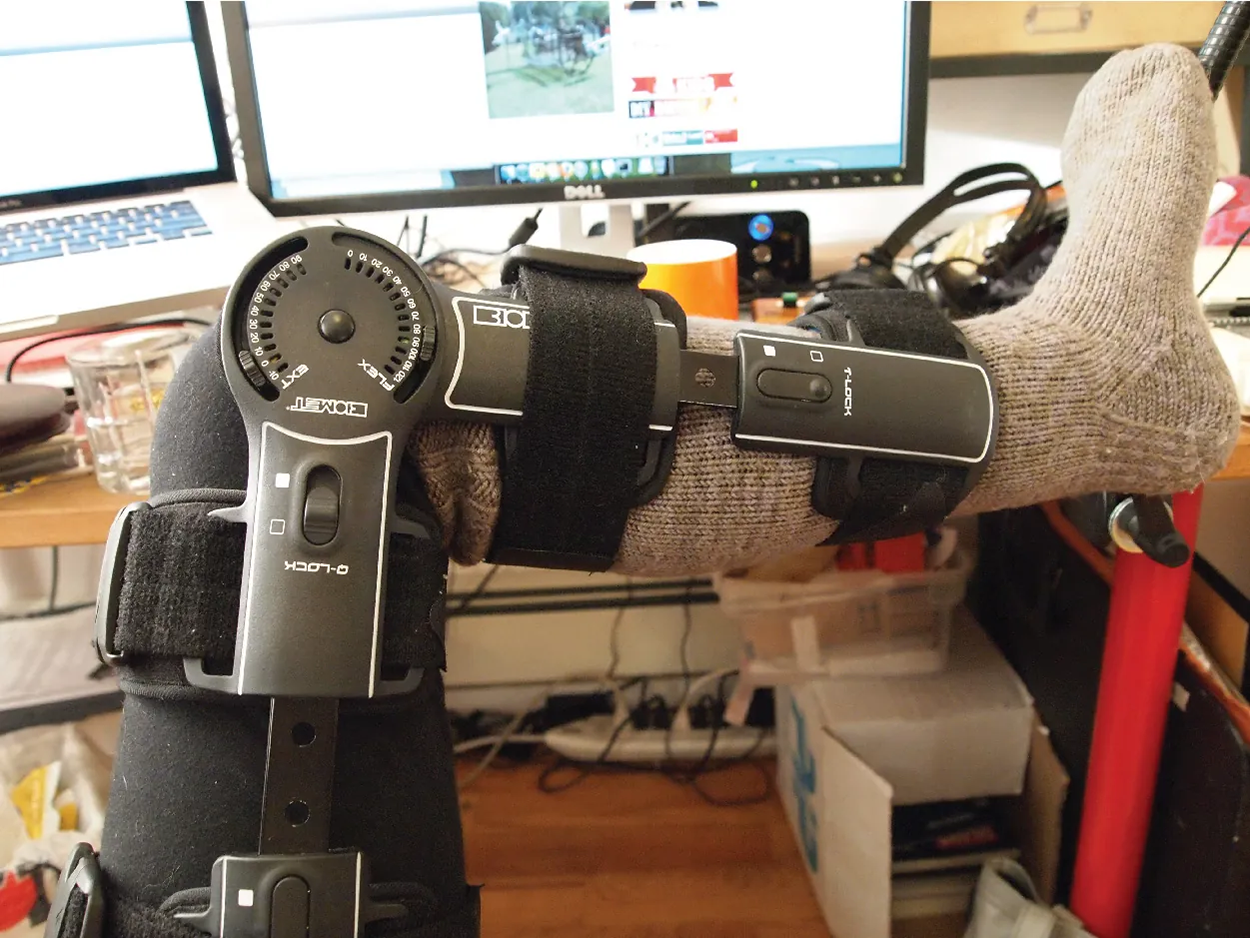
An orthopedist is a doctor who specializes in diagnosing and treating disorders and injuries related to the musculoskeletal system. Some orthopedic problems can be treated with medications, exercises, braces, and other devices, but others may be best treated with surgery.
Orthopedists can have patients who range from pediatric to geriatric. In recent years, orthopedists have even performed prenatal surgery to correct spina bifida, a congenital defect in which the neural canal in the spine of the fetus fails to close completely during embryologic development.
Orthopedists commonly treat bone and joint injuries, but they also treat other bone conditions, including curvature of the spine. The figure below shows examples of spinal curvature, including scoliosis, kyphosis, and lordosis.
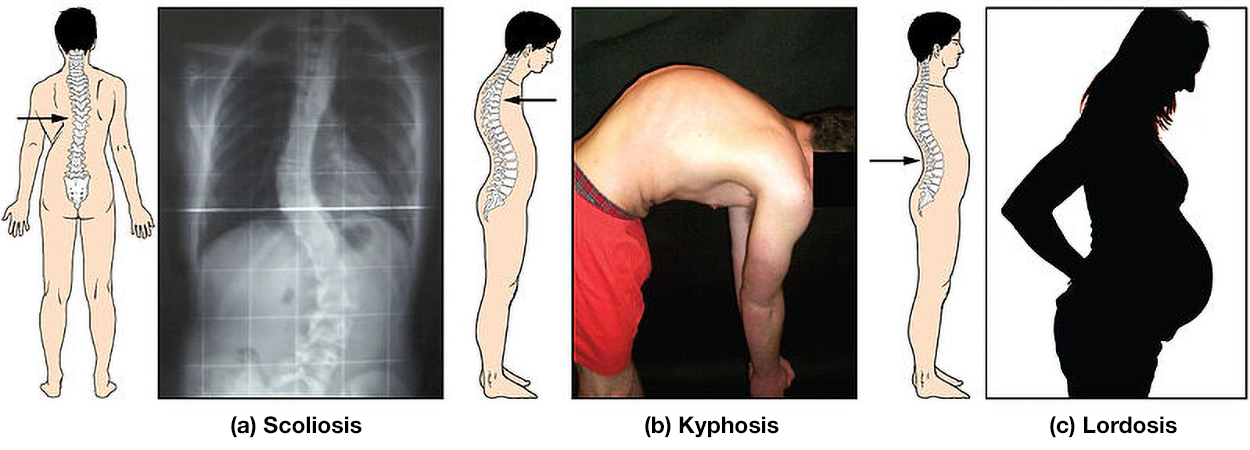
Lateral curvatures (scoliosis) can be severe enough to slip under the shoulder blade (scapula) forcing it up as a hump. Spinal curvatures can also be excessive dorsoventrally (kyphosis), causing a hunched back and thoracic compression. These curvatures often appear in preteens as the result of poor posture, abnormal growth, or indeterminate causes. These cases can often be readily treated by orthopedists. As people age, accumulated spinal column injuries and diseases like osteoporosis can also lead to curvatures of the spine, hence the stooping you sometimes see in the elderly.
Scoliosis is an abnormal lateral curvature, accompanied by twisting of the vertebral column. Scoliosis is the most common vertebral abnormality among girls. When present, scoliosis tends to worsen during adolescent growth spurts. A back brace may be recommended for growing children with scoliosis, and these are typically worn for 13 to 18 hours each day. In severe cases, surgery may be required. As scoliosis is so common, screening is common for adolescents to try to catch the problem early (Mayo Clinic, 2025).
Kyphosis, commonly referred to as humpback, is an excessive posterior curvature of the thoracic region. This can develop when osteoporosis causes weakening and erosion of the anterior portions of the upper thoracic vertebrae, resulting in their gradual collapse.
Lordosis, commonly referred to as swayback, is an excessive anterior curvature of the lumbar region and is most commonly associated with obesity or late pregnancy. The accumulation of weight in the abdominal region results in an anterior shift in the line of gravity that carries the weight of the body. This causes an anterior tilt of the pelvis and a pronounced enhancement of the lumbar curve.
Some orthopedists sub-specialize in sports medicine, which addresses both simple injuries, such as a sprained ankle, and complex injuries, such as a torn rotator cuff in the shoulder. Treatment can range from exercise to surgery.
Note that there are other specialists who may work closely with orthopedists and who also treat musculoskeletal disorders.
EXAMPLE
Rheumatology is the study of inflammatory or infectious conditions of the joints and other parts of the musculoskeletal system.Rheumatologists are physicians who specialize in the diagnosis and treatment of musculoskeletal diseases and systemic autoimmune conditions, commonly referred to as rheumatic diseases. These diseases, such as rheumatoid arthritis, can potentially cause joint deformities.
EXAMPLE
Osteopathy is a branch of medical practice that emphasizes the treatment of medical disorders through the manipulation and massage of the bones, joints, and muscles.You may have encountered doctors of osteopathic medicine (DOs) in varied medical settings working with MDs. Doctors who are MDs are trained in traditional allopathic medicine.
Osteopathic medicine includes the components of allopathic medicine with additional training in the musculoskeletal system. Osteopathic techniques involve physical manipulations to complement traditional approaches. In general, osteopathic medicine emphasizes a whole-person approach to help prevent illness and injury.
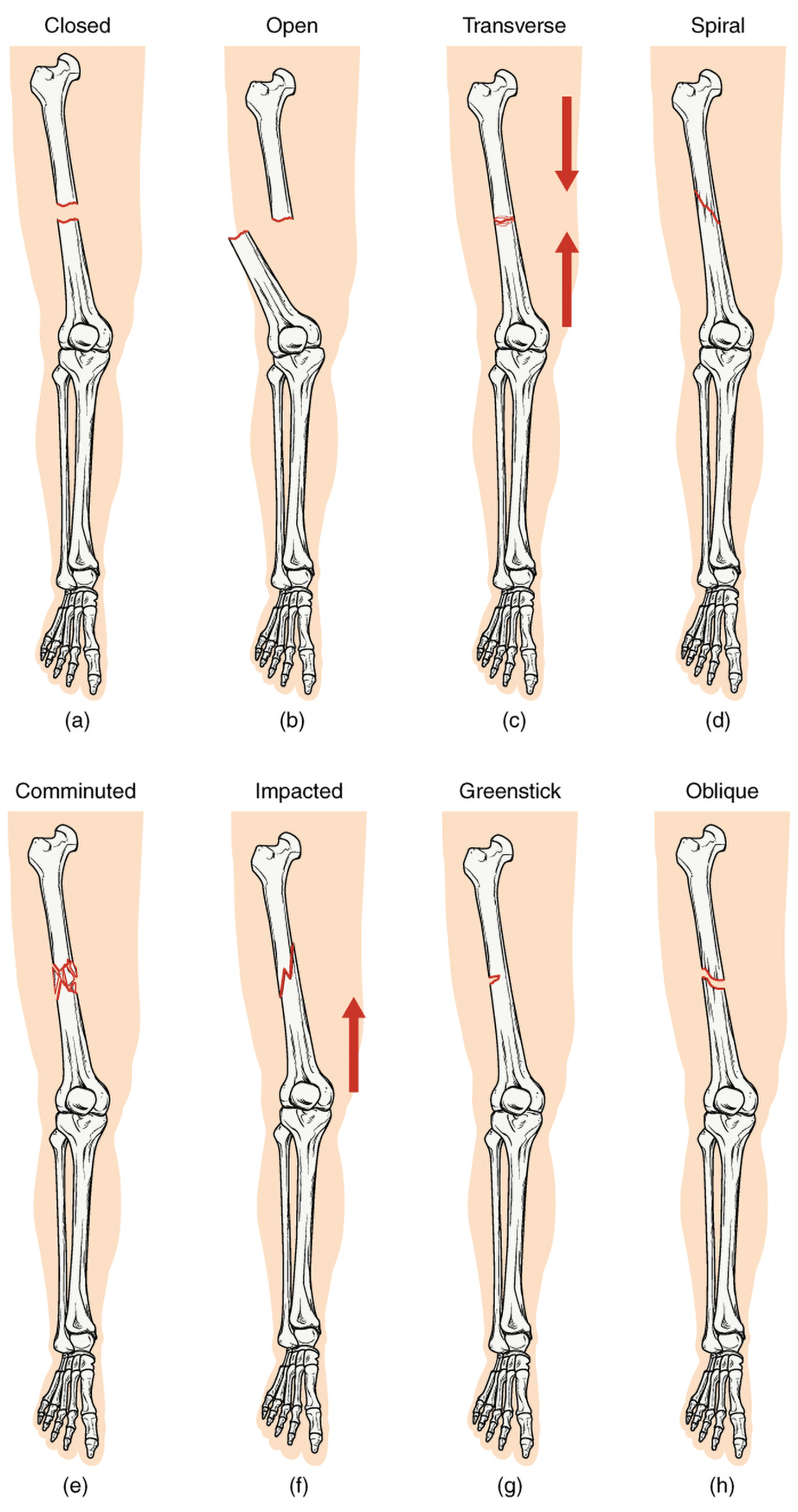
Orthopedists commonly treat fractures. A fracture (fx) is a broken bone. It will heal automatically due to the action of osteoclasts and osteoblasts, but if the bone is not reset and aligned correctly, it will remain in a dislocated position. Fractures are classified by their complexity, location, and other features. Some fractures may be described using more than one term (e.g., an open transverse fracture) because it may have the features of more than one type. You already learned about some types of fractures, but here is a review with a few additional types.
- Closed or simple: Bone is broken but does not protrude the skin.
- Open or compound: Bone is broken and pierces through the skin.
- Transverse: Bone is broken straight across.
- Spiral: Bone has twisted apart.
- Comminuted: A bone is crushed into pieces.
- Impacted: One fragment of the bone is driven into the other, usually as a result of compression.
- Greenstick: Bone is partially broken, a condition that occurs in children.
- Oblique: Bone is broken at an angle.
- Stress: Small crack in a bone.
The figure below shows different types of fractures.
Fractures can be treated using reduction and, if needed, fixation. In reduction, the bone is positioned back into correct alignment. Reduction can be closed (with intact skin) or open (if surgery is required). Fixation means surgically fixing the bones back into the correct position. For example, you already learned about ORIF (open reduction and internal fixation), in which bones are fixed into the correct locations using plates and screws. Traction can be used to help gradually pull the bones into the correct alignment, among other functions.
Surgical interventions include arthroscopy and joint replacement.
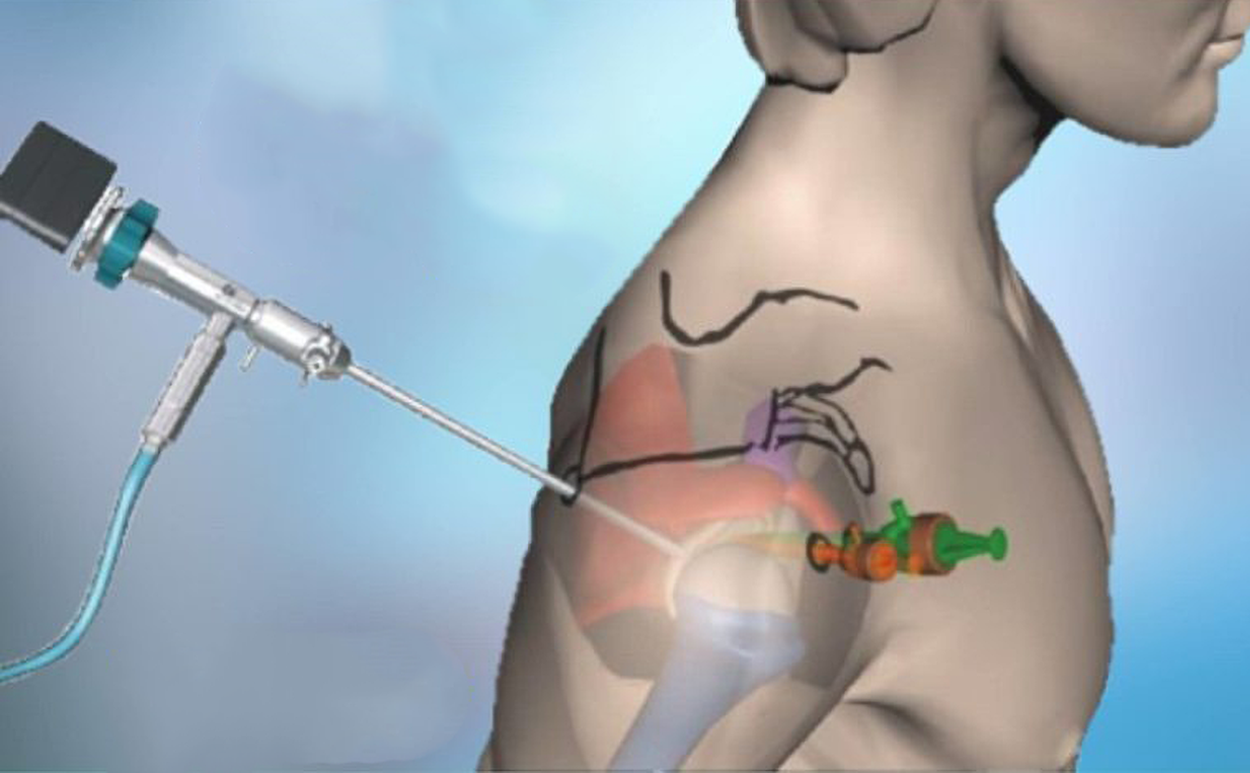
Arthroscopy is a common procedure performed by orthopedic surgeons to view the inside of a joint to diagnose and/or to repair joint problems. The patient is given a local anesthetic, and the surgeon inserts an arthroscope through an incision in the skin. Arthroplasty, surgical repair of a joint, may take place during the procedure.
Arthroplasty refers to the surgical repair or replacement of a joint. Common joint replacement surgeries include hip replacement, knee replacement, and shoulder replacement. During joint replacement surgery, an orthopedic surgeon removes the diseased parts of the joint and replaces them with new, artificial parts that mimic the function of the normal joint.
The figure below shows joint replacement surgery.
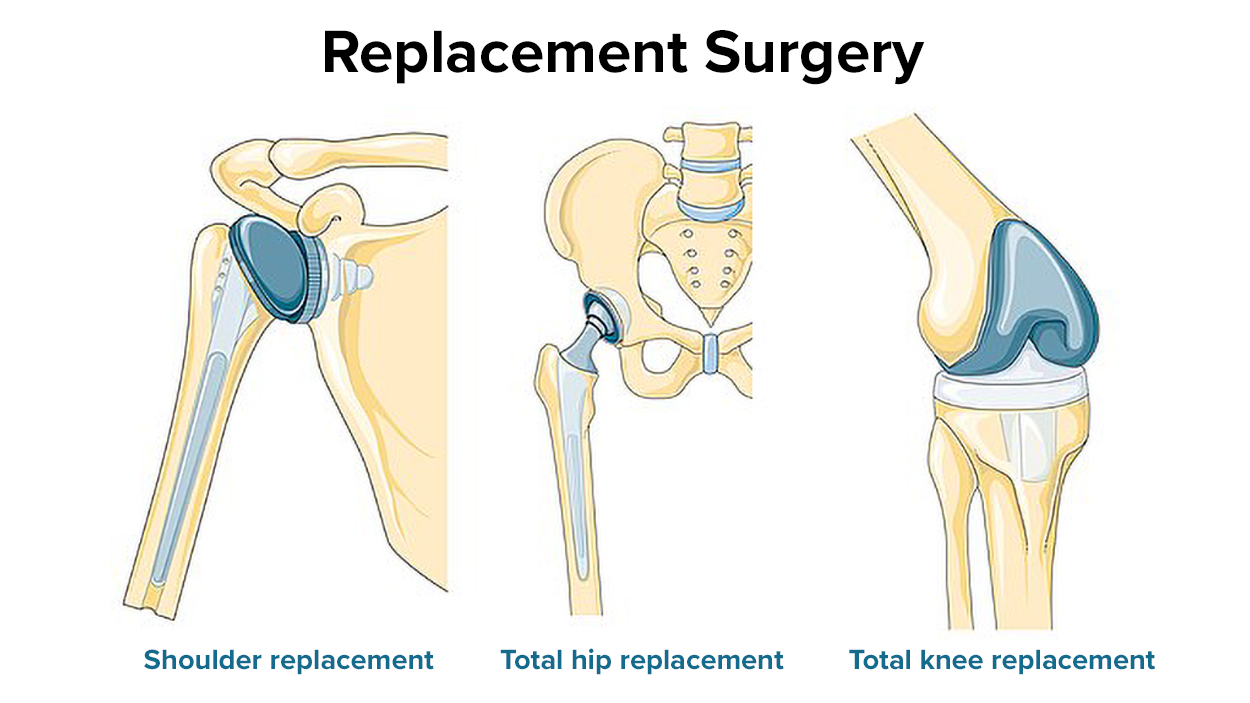
A total hip replacement (THR), also called a total hip arthroplasty (THA), refers to replacement of the head of the femur and acetabulum (where the pelvis articulates with the femur) with replacement parts that are either metal, ceramic, or hard plastic. THR may be required due to osteoarthritis, osteonecrosis (when parts of a bone die due to decreased blood supply), or a hip fracture from an injury or fall.
A total knee replacement (TKR), also called total knee arthroplasty (TKA), refers to the surgical removal of worn surfaces of the knee joint due to severe osteoarthritis. During the surgery, damaged bone and cartilage are replaced with parts made of metal and plastic.
There are many other possible treatments, and casts, braces, and splints are often used. Prostheses, such as prosthetic limbs, may be used. Orthotics, such as arch supports, can be used to help align bones correctly. Ambulatory devices such as canes and walkers can be used long-term or as aides during rehabilitation therapy after an injury. Physical therapy is commonly used for joint rehabilitation as well.
Source: THIS TUTORIAL HAS BEEN ADAPTED FROM “OPEN RN | MEDICAL TERMINOLOGY – 2e” BY ERNSTMEYER & CHRISTMAN AT OPEN RESOURCES FOR NURSING (Open RN). ACCESS FOR FREE AT https://wtcs.pressbooks.pub/medterm/ LICENSING: CREATIVE COMMONS ATTRIBUTION 4.0 INTERNATIONAL.
REFERENCES
Mayo Clinic. (n.d.). Scoliosis. In Mayo Clinic. April 25, 2025, from Scoliosis - Diagnosis and treatment - Mayo Clinic. https://www.mayoclinic.org/diseases-conditions/scoliosis/diagnosis-treatment/drc-20350721 .



