Table of Contents |
Oceania is a geographic region that includes Australia, Papua New Guinea, New Zealand, and the island regions of Melanesia, Micronesia, and Polynesia. People in non-English speaking countries consider Oceania to be a continent, although its main characteristic is being located under the Pacific Ocean.
Oceania comprises around 25,000 islands and 14 countries. Culturally, the people of this area have more in common with each other than they do with other areas, such as Asia or the Americas. People from southeast Asia first settled in New Guinea and Australia about 40,000 to 60,000 years ago, spreading to the other Pacific Islands around 30,000 years ago.
The people of Oceania left behind no written record that we know of and very few artifacts, since most of the work they produced was in perishable materials such as wood and bark. If you visit a museum that has a collection of art from Oceania, you may notice that most of the works in the collection were produced in the last 200 or so years, which is beyond the scope of this course. We will be looking at a few examples of work made in ceramic and stone, rock painting, and architecture that have survived to the present day.
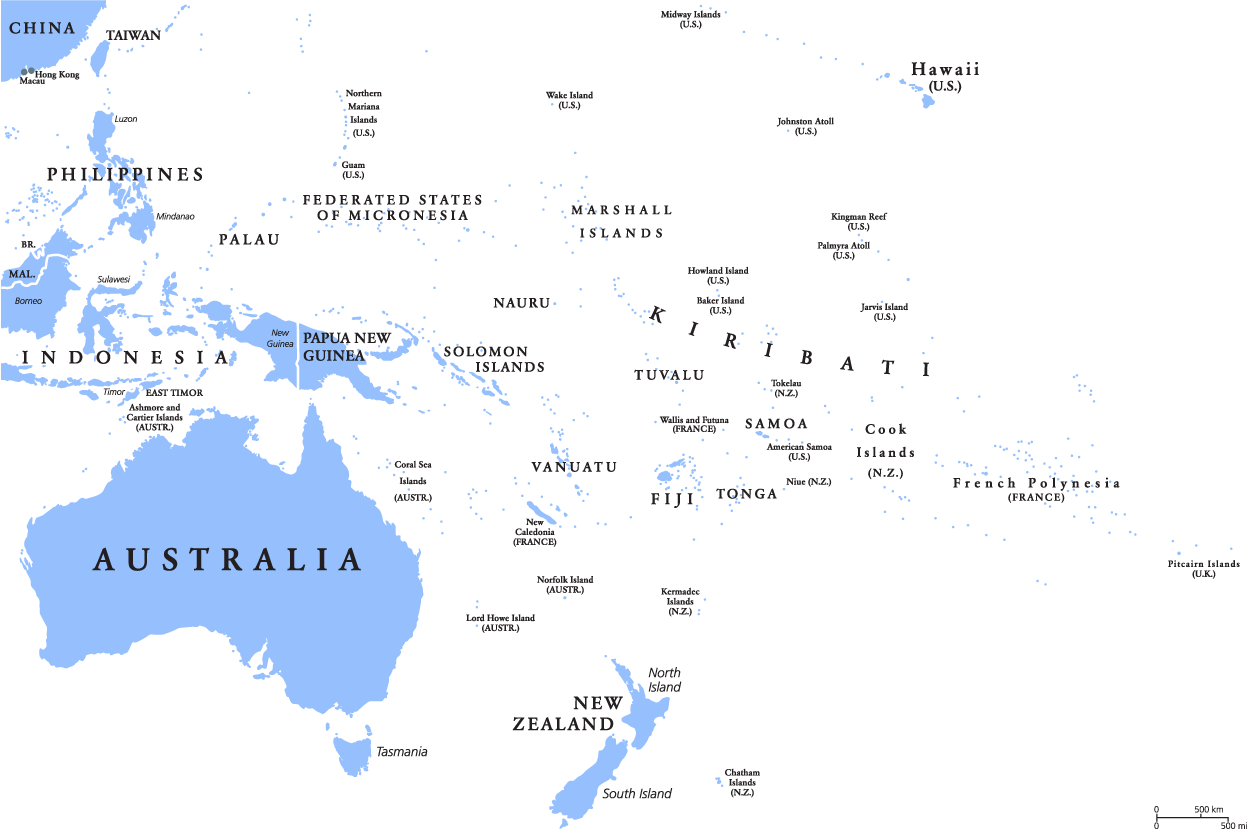
The site of Ubirr in Arnhem Land in northern Australia, also the location of an Aboriginal campsite during the rainy period, is home to the oldest rock art in Oceania. Artists have continuously painted and repainted certain sites in this area for the past 40,000 years. The subject matter includes animals, painted to create magic to increase their numbers for hunting, and mimi, or spirits from the Dreaming, or creation period. Some of the paintings are thought to have been made by mimi and not humans. They were made in red ocher, using the end of a stick as a drawing and painting instrument. Some of the images include those of the thylacine, or Tasmanian tiger, which has been extinct in Australia for the past 2,000 years.
The earliest forms of rock art are called mimi, in reference to the spirits that are the subjects of the paintings and who are also thought to have made them. Aboriginal people believe that the mimi taught them all of their survival skills, including hunting, fishing, and cooking. They resemble stick figures in this stage of rock art.
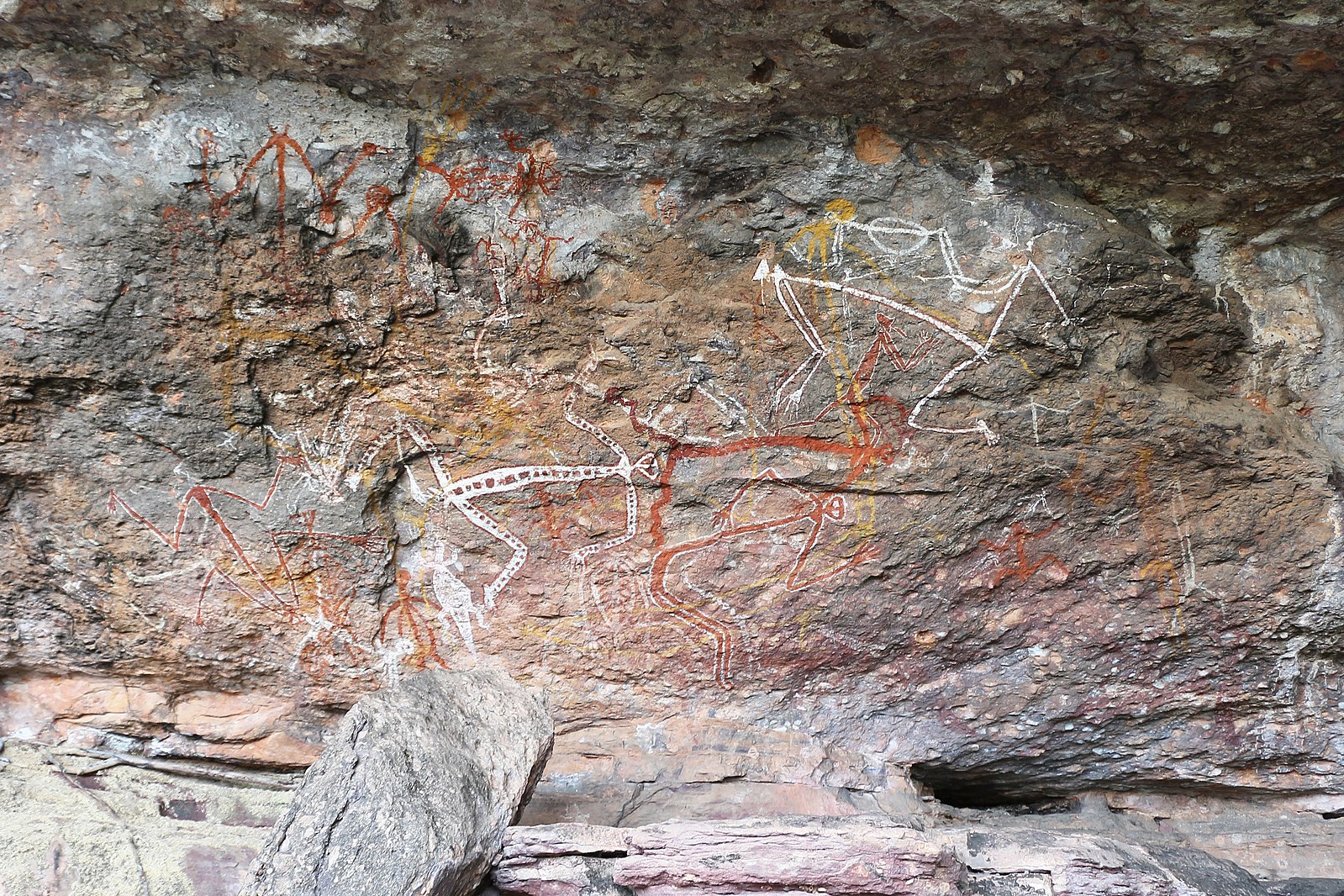
Depiction of mimi spirits in the Anbangbang Shelter
Kakadu National Park, Jabiru. Australia
1963 - 64
Chalk, ochre
Another of the artistic styles that has been identified in Ubirr is known as the X-ray style, which involves depicting animals in a way that it appears that their bones and internal organs are visible. 1. The artist draws the outline of the animal and fills it in with white. 2. The bones and organs of the animal are then drawn on top of the white in darker colors. Although the X-ray style has been found in multiple locations, including Siberia, New Guinea, and North America, it is most commonly associated with Australian rock art.
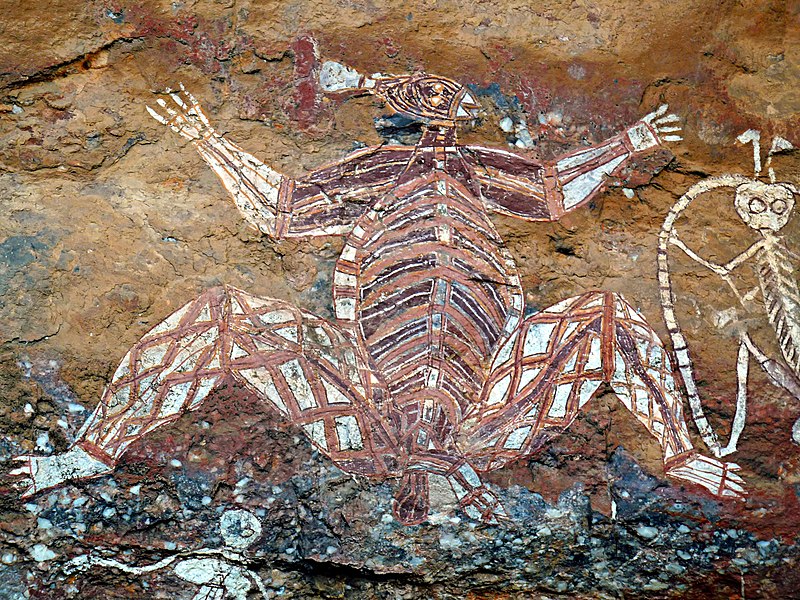
Depiction of Namarndjolg in the Anbangbang Shelter
Kakadu National Park, Jabiru. Australia
1963 - 64
Chalk, ochre
The Lapita people came from the Philippines and settled New Guinea and the islands of Melanesia, including the Solomon Islands east to Samoa. They produced a distinctive style of pottery that they stamped with patterns that we refer to today as dentate, or appearing like a tooth mark. This pottery is so distinctive that archaeologists have used it to map the eastward expansion of the Lapita people from the Philippines and Taiwan, where examples have been found, throughout Melanesia and Polynesia, from 1600 to 500 BCE. Geometric and pattern-based styles of bark painting that closely resemble Lapita pottery are apparent in present-day bark painting from these regions.
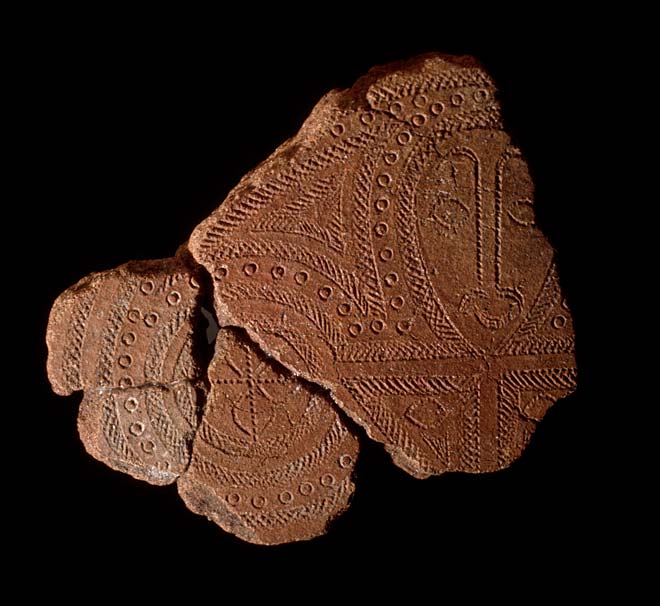
Terracotta fragments, from the Nenumbo site
Reef Islands, Solomon Islands
1000 BCE
Terracotta
The oldest works of art found on the island of New Guinea are a series of sculptures made of stone that depict animals, such as echidnas, birds, or humanoid figures. Other objects include bowls, or mortars, carved out of stone, and pestles. Most of these objects are undated, but one has been radiocarbon-dated to 1500 BCE. We are not totally sure regarding the function of the free-standing sculptures but think that they might depict deities or important ancestors. When people from New Guinea find these objects in the present, they regard them as made by the gods and use them in rituals.
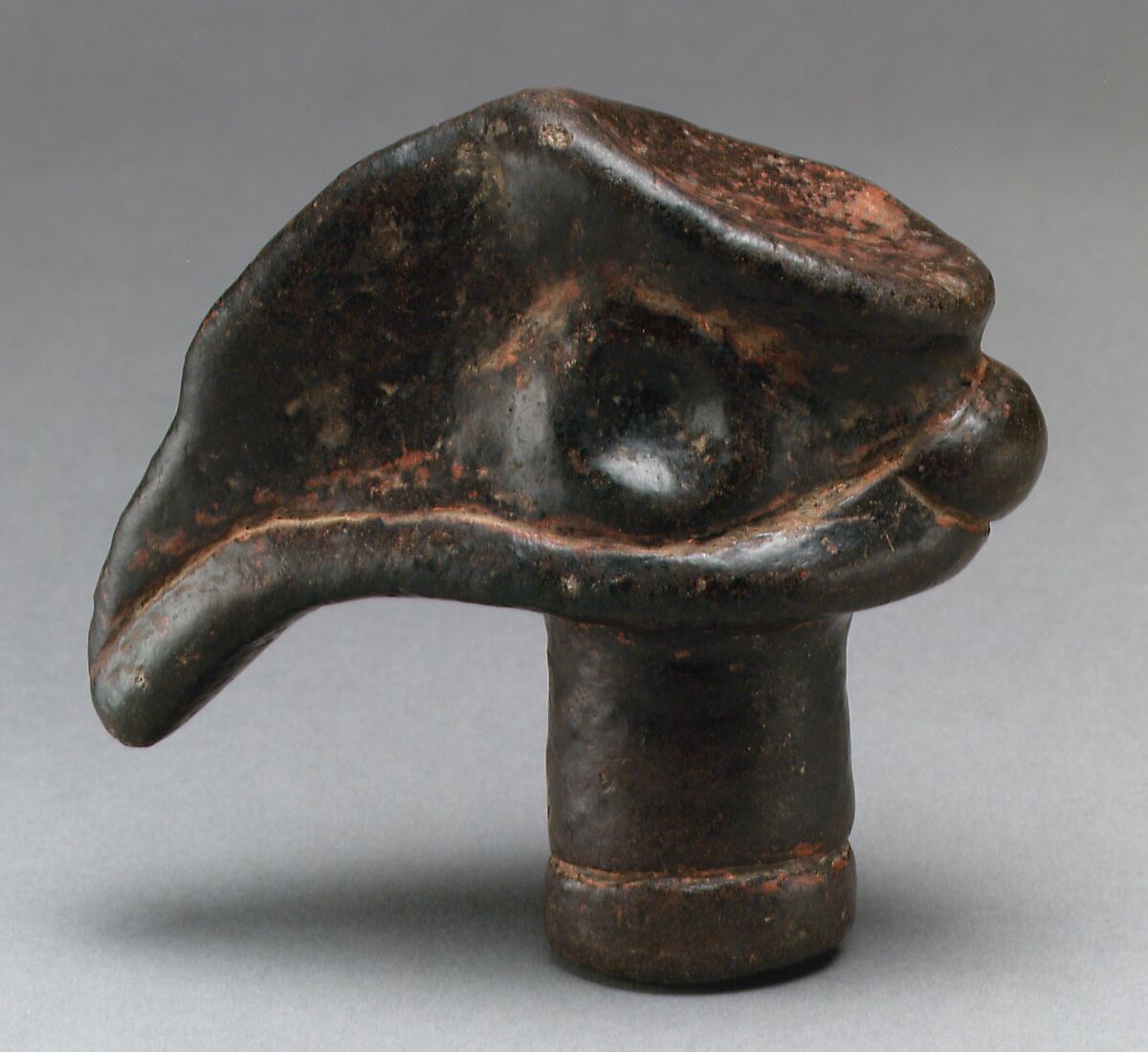
Bird Head
Morobe province, Papua New Guinea
Date unknown
Stone, pigment
Easter Island, also known as Rapa Nui, is home to 887 monolithic sculptures known as moai. They were produced from 1000 to 1600 CE and are made of volcanic tuff, which is a type of stone made of compressed and solidified ash. They consist of oversized heads and bodies with no legs and tiny arms. There is one moai that has a beard and another that has legs and is kneeling, but they are exceptions. Many of the moai were moved from the quarry to the beach and positioned so that their backs are facing the sea. Others were buried up to their necks, preserving their bodies and preventing erosion. Some of the moai have petroglyphs carved into their backs. Three hundred and ninety-four of the moai were moved to stone platforms known as ahu, which are common in Polynesian culture. Many were left unfinished at the quarry where the stone was obtained.
Some of the sculptures are wearing pukao, or hat-like structures made of red volcanic stone and added later. The pukao seem to represent the topknots worn by people of high status.
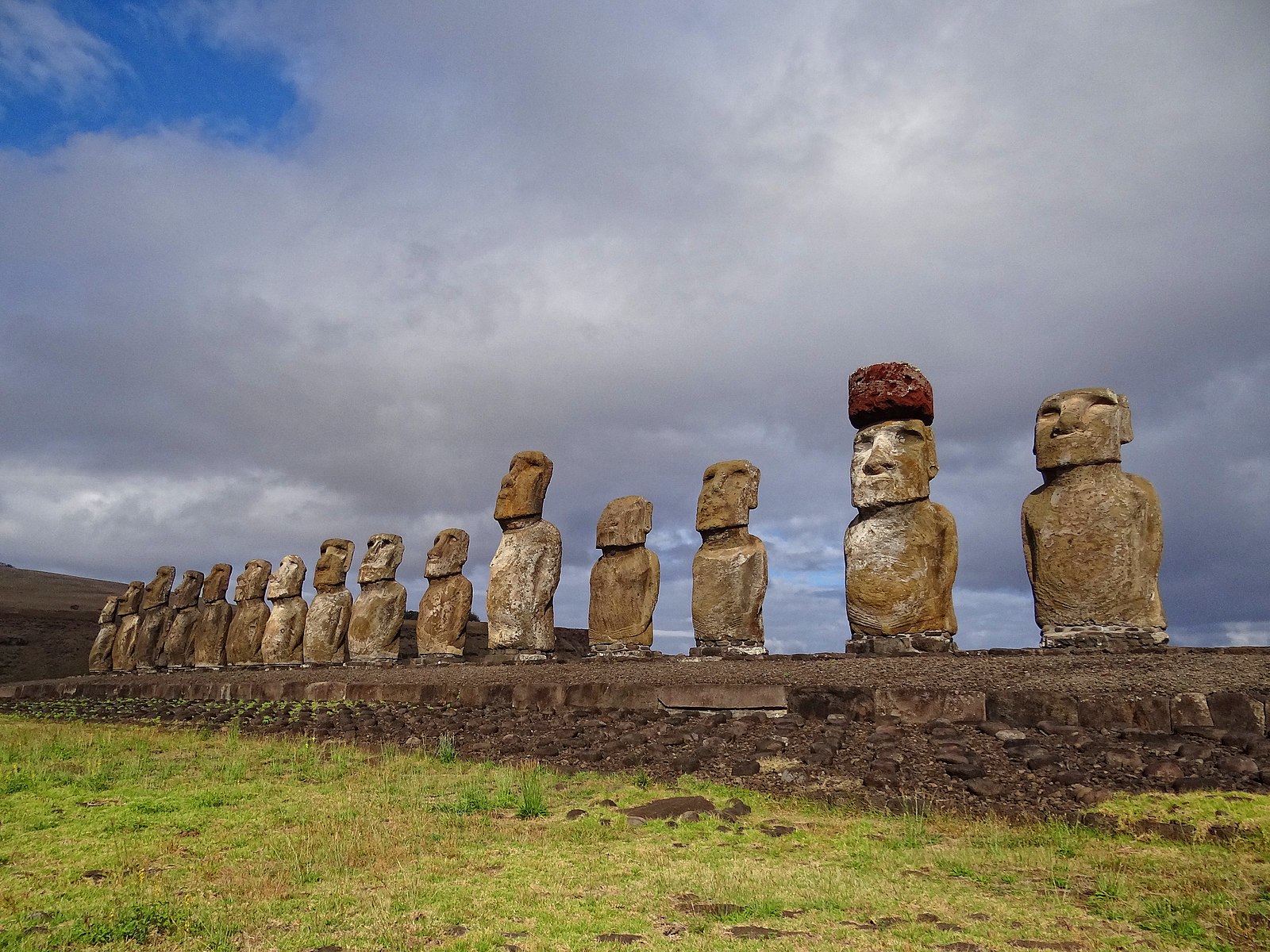
Moai
Easter Island, Polynesia
1250 - 1500 CE
Volcanic tuff (solidified ash)
Archaeologists have also determined that the deep eye indentations were meant to hold eyes made of white coral with pupils made of volcanic stone.
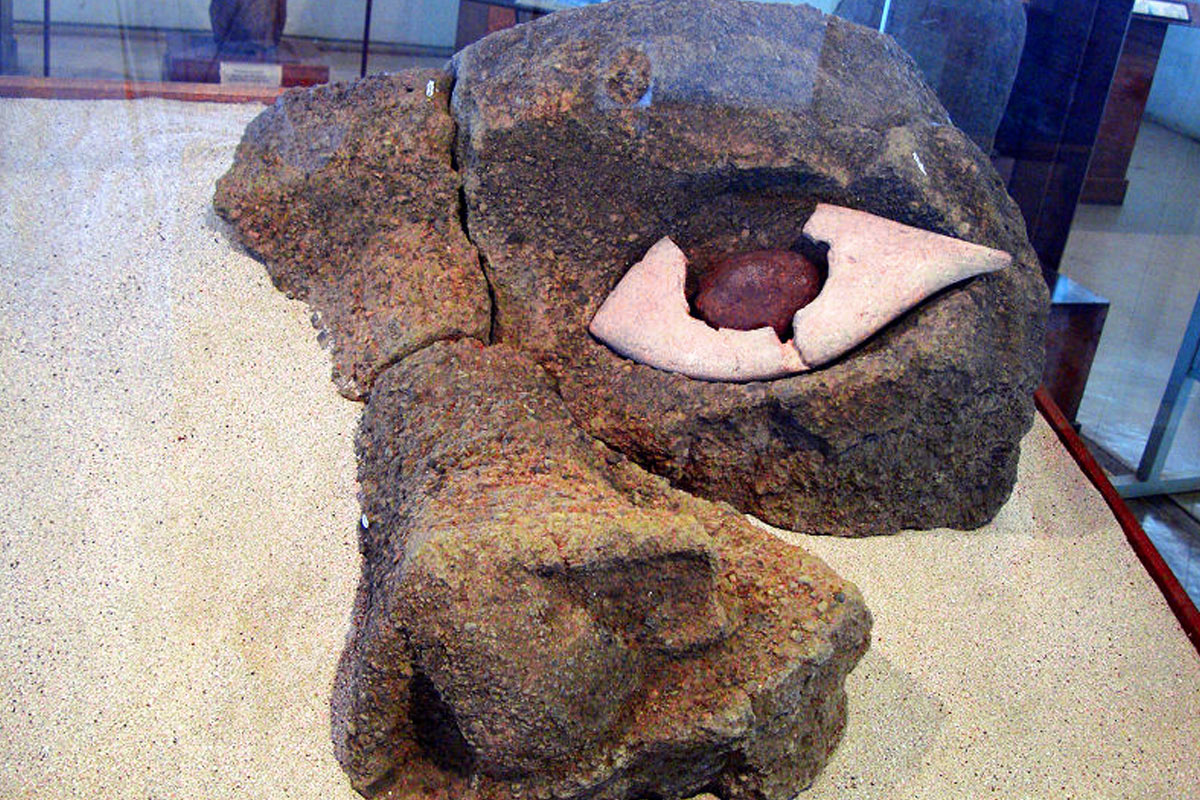
Fragment of a moai with eye, discovered during the restoration of Ahu Nau Nau (1978)
Anakena Beach, Chile
between 1250 and 1500 CE
White coral with a red scoria pupil
Europeans first arrived at Rapa Nui in 1722 and made note of the presence of the moai, which were all still standing. When they returned during the 19th century, they had been toppled. The reasons are unclear and could range from tribal warfare to the arrival of Christianity to the island. Rapa Nui also suffered ecological degradation and collapse when the people cut down almost all of the trees, around 350 years ago. Diseases brought from Europe and the slave trade caused further collapse of the local population.
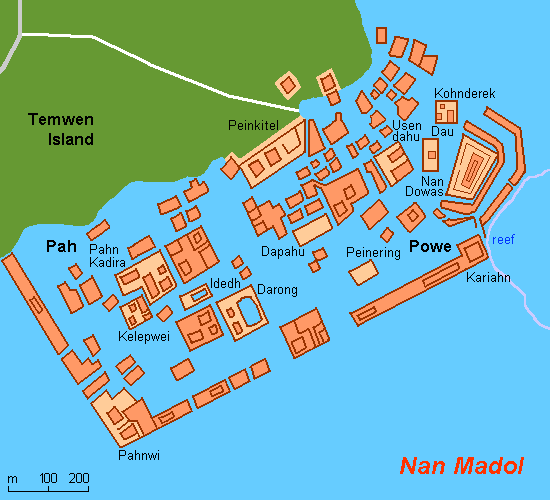
The site of Nan Madol is located in the Federated States of Micronesia, on the island of Temwen, near the larger island of Pohnpei. The name roughly translates to “the spaces between.” It consists of 100 artificial islands made out of rectangular, megalithic stone and spread over 200 acres, creating a settlement that accommodated around 1,000 people at its height. It was occupied from 1200 to 1700 CE and was the center of the Saudeleur dynasty, which controlled a kingdom of 25,000 people. The structures show that they had different functions and that there was social stratification, with higher-status people having better living quarters.
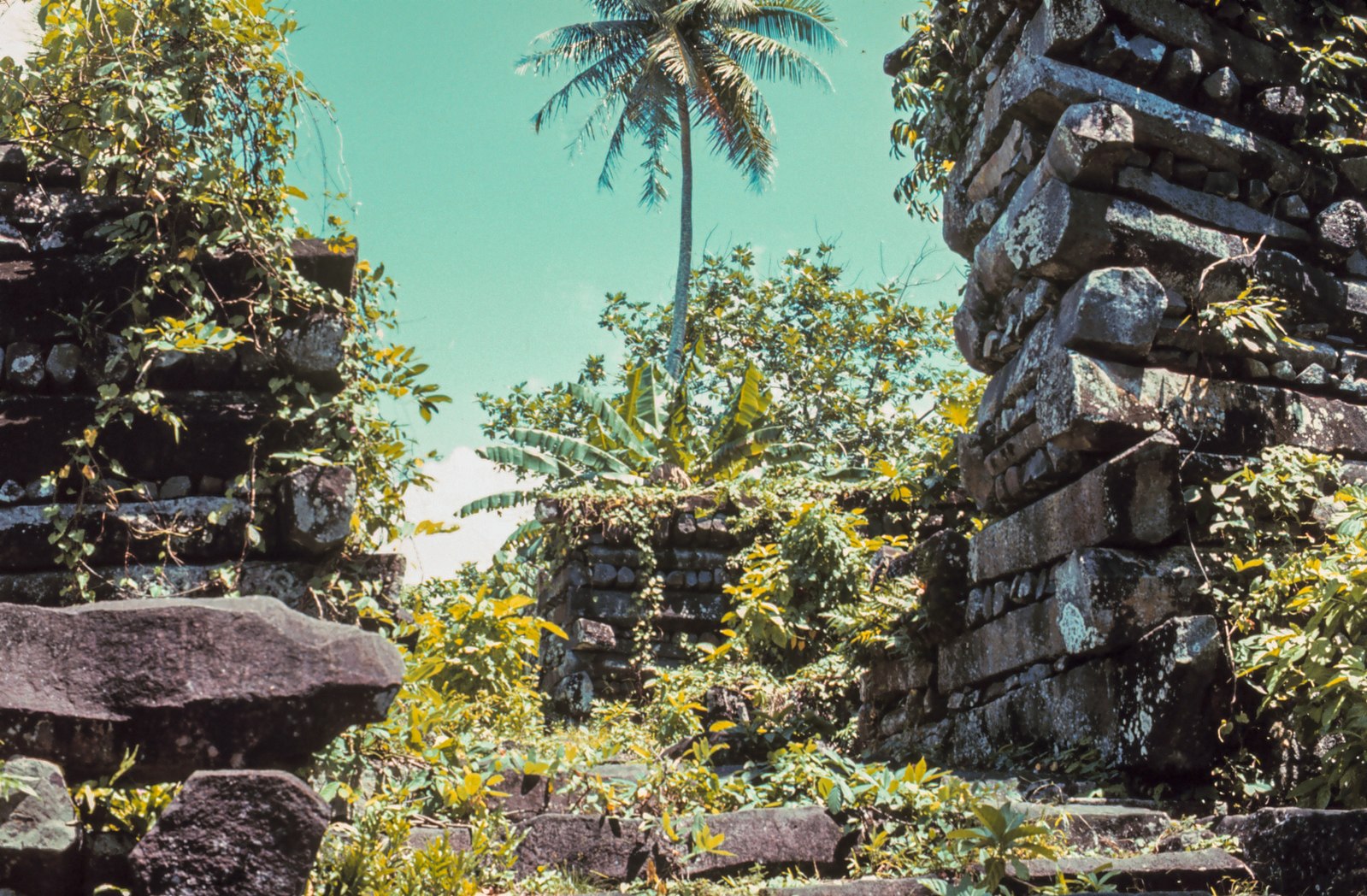
Nan Madol
Temwen Island, Federated States of Micronesia
1180 CE
Basalt
The construction of Nan Madol involved moving thousands of tons of stone and sinking it into the sand. No one knows how the people of this city did it. To this day, the ruins create a series of lagoons and inlets that resemble a floating city and are still structurally sound. It is the only city built on a coral reef and appears to float on top of the water. It has been nicknamed “the Venice of the Pacific.”
Source: THIS TUTORIAL WAS AUTHORED BY SOPHIA LEARNING. PLEASE SEE OUR TERMS OF USE.