Table of Contents |
This lesson covers the time from around 1900 to 1100 BCE, a period of about 800 years. The ancient city of Mycenae lies southwest of Athens and northwest of the island of Crete.
Let’s start with some key terms. Ashlar masonry consists of large, rectangular cut stones fitted together. It’s important to note that these are assembled dry, without using any kind of mortar. These enormous stones were thought to be only movable by the mythical race of Cyclops, which is why this type of construction is called cyclopean construction.
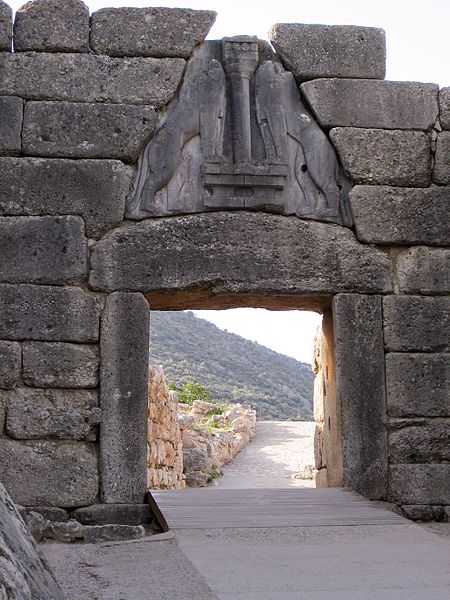
The Lion Gate at Mycenae
Mycenae, Argolis, Greece
1250 BCE
Corbel vaults are a progressive narrowing of step-like elements until they meet at the very top. While it’s a sturdy type of construction, the large blocks are cantilevered inward as the corbeling itself isn’t self-supportive like a true arch would be.
The image shown here, from a tomb of Clytemnestra in the city of Mycenae, is one of many possible variations of a corbel vault.
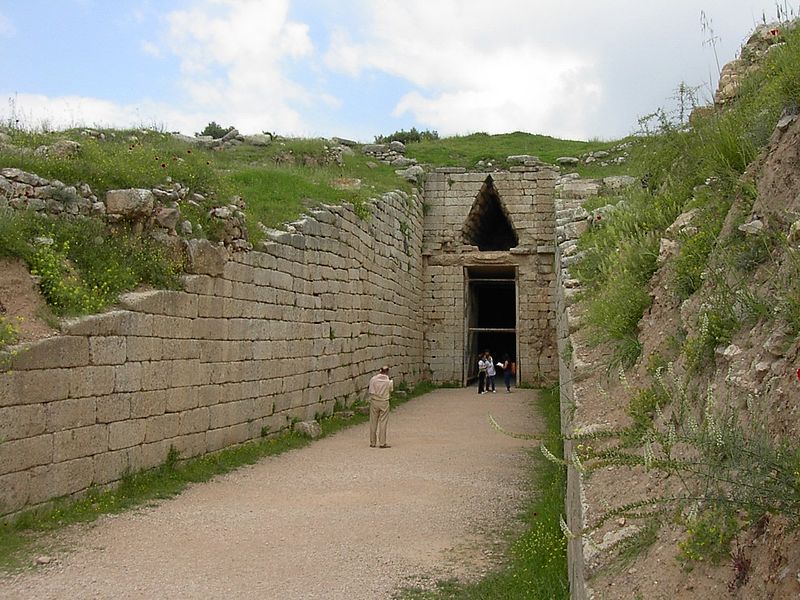
Entrance to the Tomb of Clytemnestra
Mycenae, Argolis, Greece
1400–1200 BCE, Bronze Age
Unlike the palatial architecture seen on Crete, Mycenaean architecture used very thick, sturdy, fortress-like structures, differentiating it from Minoan culture.
The Lion Gate (shown below), so-called because of the carving of the two opposed lions within the corbel vault at the top, rests upon a large post and lintel opening. It was constructed for a specific purpose, as it was part of the fortification serving to funnel any attackers into the narrow space where they would be at a real disadvantage, exposed to the soldiers protecting the fortress from the top of the walls. The gate is made of cut stone and dates from around 1250 BCE.
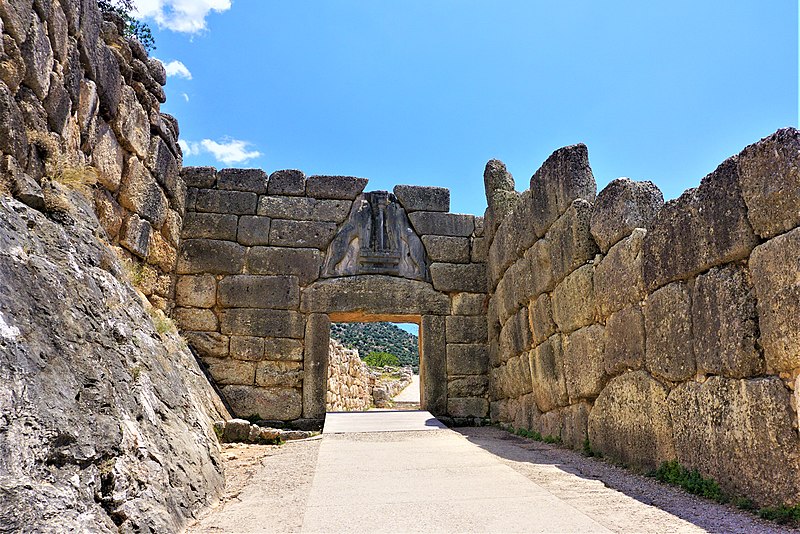
Lion Gate from the Mycenae Citadel
Mycenae, Argolis, Greece
1250 BCE
Here is a close-up of the lion carving at the section where the corbel vaulting was used:
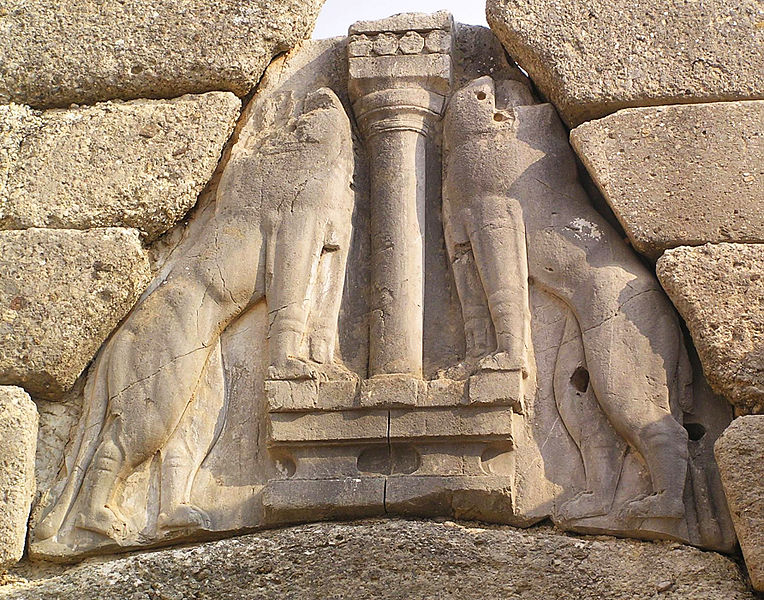
Lion Gate from the Mycenae Citadel (detail)
Mycenae, Argolis, Greece
1250 BCE
The next image is of another corbel vault from Tiryns, which was constructed between 1400 and 1200 BCE.
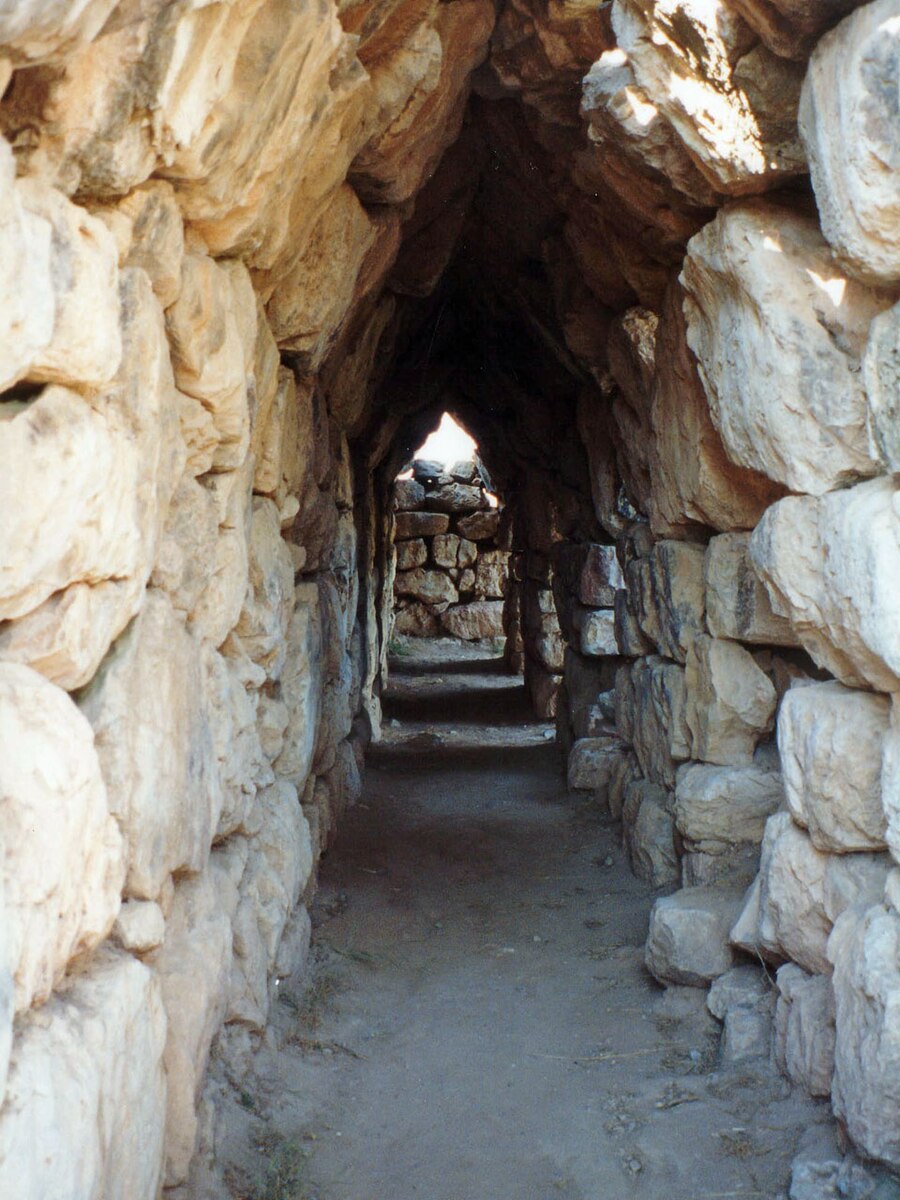
Tunnel from the East Gallery at Tiryns
Argolis, Greece
1400–1200 BCE, Bronze Age
The images you’ve seen of corbeled vaults are from two different Mycenaean art structures. Notice the qualities associated with Mycenaean architecture.
Now compare them with the ruins of the palace complex at Knossos, Crete, below. There’s definitely a sense of airiness and delicacy that isn’t evident in Mycenaean architecture. This reflects the cultural disposition of Minoans as a more peaceful civilization.
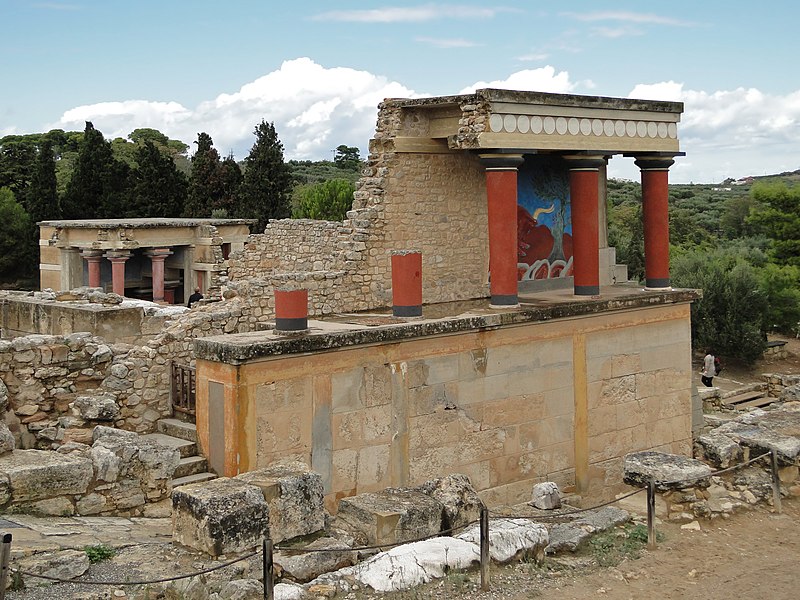
The North Porch from the Palace of Knossos
Crete, Greece
2000-1900 BCE
Limestone on a wooden frame
The architectural elements that we see in Mycenaean royal residences are carried over into their tombs as well. Similar in some ways to Egyptian burials, Mycenaean royals were buried in large tombs with many treasures.
Take a look at the image below of an exterior view of the doorway to a tomb, the so-called Treasury of Atreus.
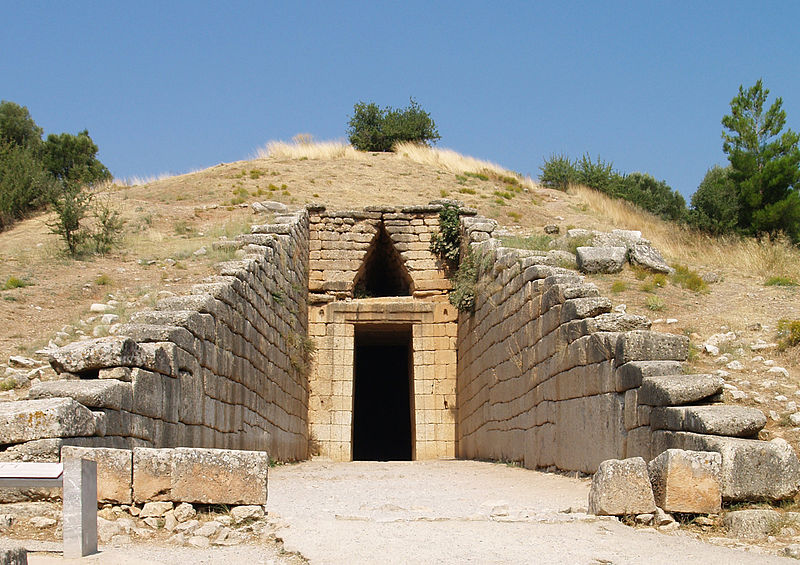
Entrance to the Treasury of Atreus
Mycenae, Greece
c. 1400 – c. 1250 BCE, Late Bronze Age
Poros stone, conglomerate, marble
This structure was built between 1300 and 1200 BCE, and it was mistakenly thought to house the treasury of the King Atreus, the legendary father of the kings Agamemnon and Menelaus, who were brothers.
Here is the interior of the treasury:
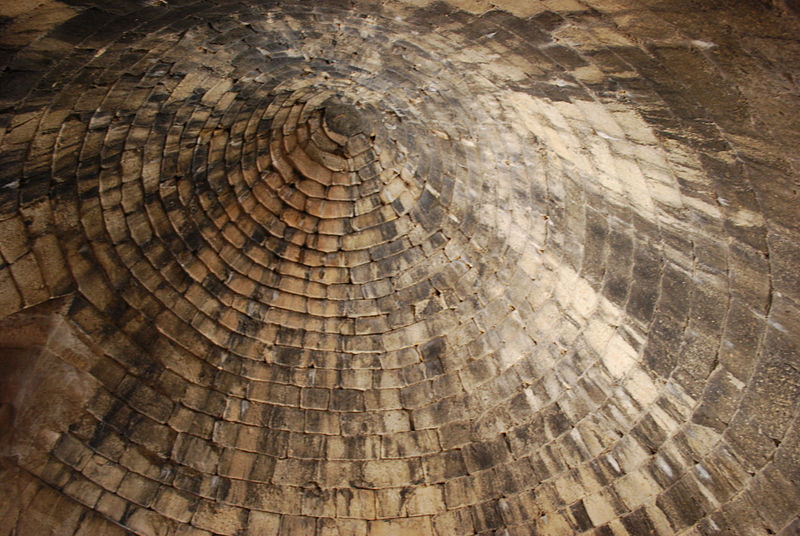
Interior ceiling of the Treasury of Atreus
Mycenae, Greece
c. 1400 – c. 1250 BCE, Late Bronze Age
Poros stone, conglomerate, marble
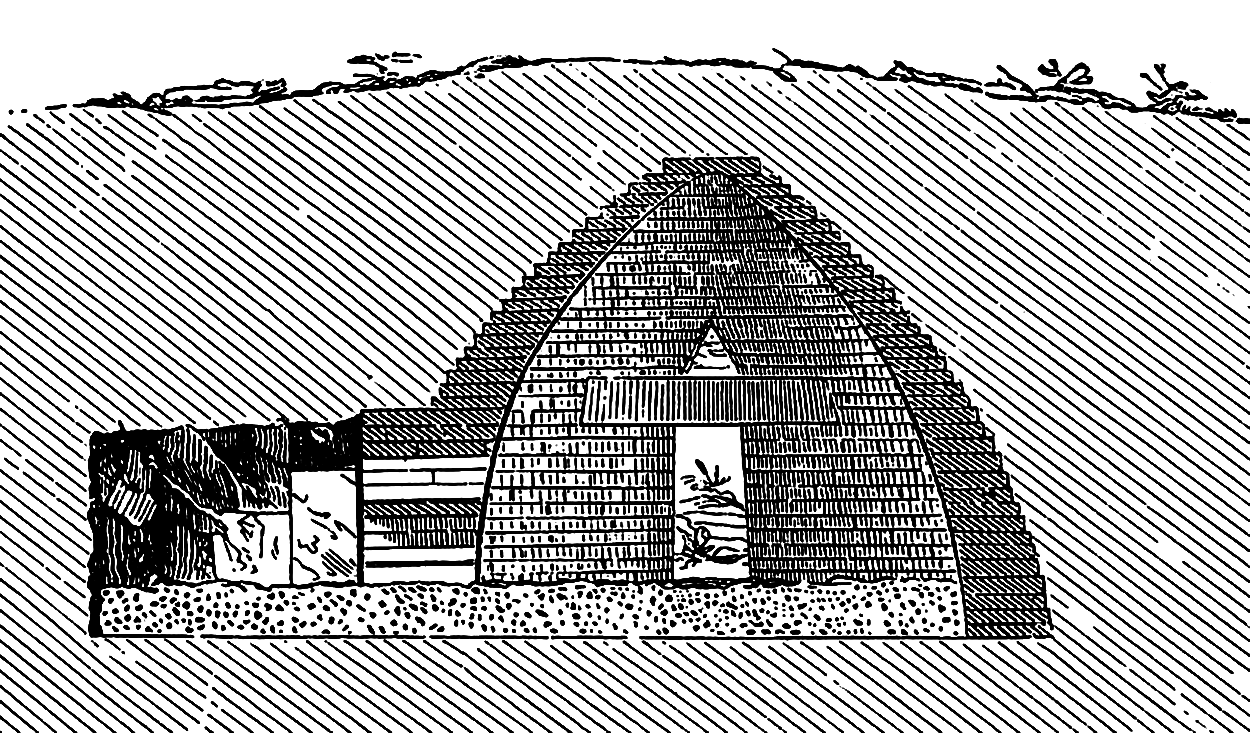
The interior of the treasury is actually a corbel vault buried under a mound of earth. Because of their shape, tombs such as this are referred to as beehive tombs.
For reference, here is a cross-section drawing of the tomb:
According to Homer, the Mycenaeans were known to be rich in gold, and we know that many artists of this time began to work with gold. An example of this is the funerary mask of Agamemnon, shown here. This type of metalwork is called repoussé.
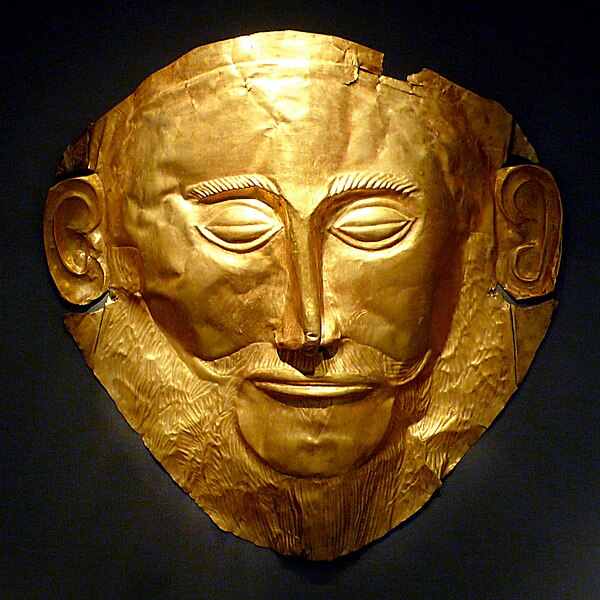
Funerary Mask of Agamemnon
National Archaeological Museum of Athens, Greece
1600 - 1550 BCE
Gold
This gold mask, made between 1600 and 1550 BCE, is an example of Mycenaean funerary artwork commonly laid over the deceased’s body. Although this piece is commonly referred to as the mask of Agamemnon, who was thought to be the king of Mycenae during the Trojan War, its true owner is a mystery. It is not possible that it belongs to Agamemnon, because it dates between 1600 and 1550 BCE, which predates the Trojan War by several hundred years.
The mask does, however, depict some interesting stylistic elements:
Source: THIS TUTORIAL WAS AUTHORED BY SOPHIA LEARNING. PLEASE SEE OUR TERMS OF USE.