Use Sophia to knock out your gen-ed requirements quickly and affordably. Learn more
×

Market Testing and Commercialization

Author: Sophia

what's covered
In this tutorial, you will learn about the final phase of product development, when the new product or service is fully launched. In specific, this lesson will cover:

Table of Contents

1. Market Testing

The final two steps in the new product development process are market testing and commercialization. Since both are ongoing processes through the life cycle of the product, they are highly correlated. Moreover, some may consider these to extend beyond the official “new product development” process, but they are part of that process.

Market testing is not the same as the business analysis, which tested the product itself on a limited basis. Market testing is an ongoing evaluation of how the product sells with different demographics, and which takes further aspects of the product like packaging and store placement into consideration. Some of the goals the company has at this point are to:

  1. Assess the overall workability and effectiveness of the marketing plan
  2. Evaluate alternative allocations of the budget
  3. Determine whether the new product is inspiring users to switch from other brands
Market testing enhances the new product’s probability of success and allows for final adjustment in the marketing mix before the product is introduced on a large scale. In the end, the test market should include an estimate of sales, market share, and financial performance over the life of the product.

EXAMPLE

To continue with the example from a previous tutorial, the cereal company that developed Beety Flakes would not just be determining if people like the product, but who is buying it, the appeal of the box design, and so forth. They may release the product to different stores in different packages, for example, to see which sells best. Perhaps one set of boxes has the face of a senior, and another has the face of a middle-aged person, appealing to customers of different ages.

Running such tests has inherent risks. First, there are substantial costs in buying the necessary plant and machinery needed to manufacture the product or locating manufacturers willing to make limited runs. There are also promotional costs, particularly advertising and any special promotions, such as providing customers with free samples. There are often indirect costs as well. For example, the company may be simply redirecting customers from their other brands. If customers don’t like the product, it may affect brand image and customer loyalty. Although this should have been determined during screening and the business analysis, no system is perfect, and the actual customer reception on a broad level can be different.

EXAMPLE

Perhaps Beety Flakes were test marketed in a region where people grow and eat more beets, and are willing to give the product a try, but other regions are more skeptical of the product.

Because of the special expertise needed to conduct test markets and take on associated expenses, most manufacturers employ independent marketing research agencies with highly trained project directors, statisticians, psychologists, and field supervisors. Such firms assist the product manager in making the remaining test market decisions. These include:

  • Duration of testing: The product should be tested long enough to account for market factors to even out, allow for repeat purchases, and account for deficiencies in any other elements in the new product (3 to 6 months of testing may be sufficient for a frequently purchased and rapidly consumed convenience item).
  • Selection of test market cities: The test market cities should reflect the norms for the new product in such areas as advertising, competition, distribution system, and product usage.
  • Number of test cities: This should be based on the number of variations considered (i.e., price, package, or promotion), representativeness, and cost.
  • Sample size determination: The number of stores used should be adequate to represent the total market.
Even after all the test results are in, adjustments to the product are still made. Additional testing may be required, or the product may be discontinued.

term to know
Market Testing
An ongoing evaluation of how a product sells with different demographics, and which takes aspects of the product like packaging and store placement into consideration.


2. Commercialization

Commercialization means the product is in full release; the machinery is in place to develop the product and disseminate it, the marketing department knows who they are selling it to and how they will sell it, and the company is confident that the product will reap a profit after paying the significant development costs. This is a product that survived the business analysis, found its market, and has promise of a long life cycle.

Recall from the first tutorial in this challenge that few ideas make it to the final stage of an official release. However, few companies would find a single success without dozens (or even hundreds) of failures throughout the process. This process of finding the one success from a lot of possibilities is called the funnel.
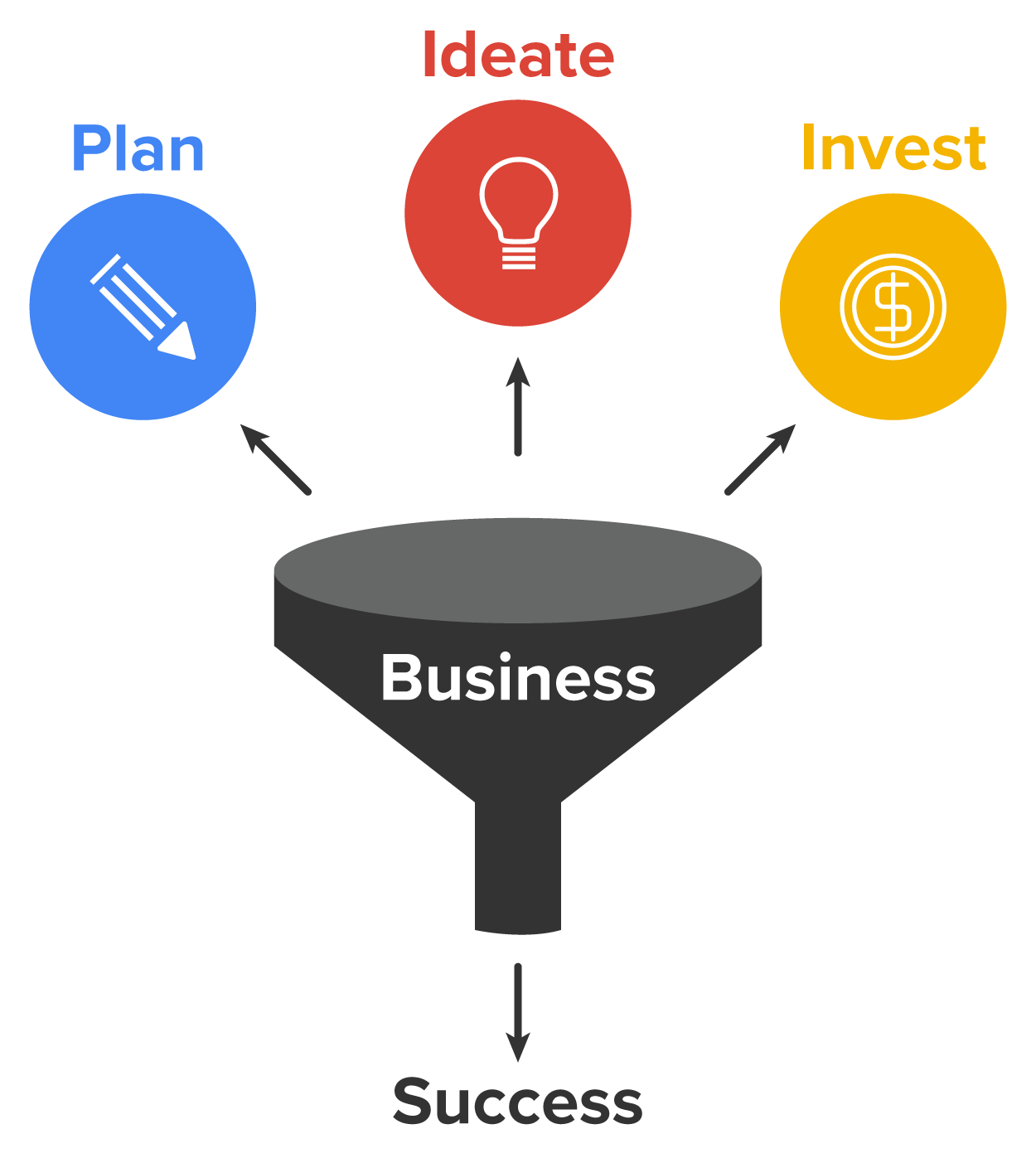
graphic showing ideas, plans, and investments going into a funnel to create one feasible product.

big idea
Companies rely on those successes to not only pay for that product’s own development process, but to help make up for the many ideas that did not turn a profit. For example, movie studios need the “blockbusters” to make up for the many disappointments, and for the more serious projects they know will not turn a profit, but which are more satisfying to the directors and actors to create.

Commercialization of a product will only take place if the following three questions can be answered:

  • When is the appropriate time to introduce the product? When facing the danger of cannibalizing the sales of the company’s other products, if the product can be improved further, or if the economy is down, the launch should be delayed.
  • Where is the appropriate market to launch the product? It can be in a single location, in several regions, or it might be more appropriate for a national or international market. This decision will be strongly influenced by the company’s resources in terms of capital, managerial confidence, and operational capacities. Smaller companies usually launch in attractive cities or regions, while larger companies enter a national market all at once. Global rollouts are generally only undertaken by multinational conglomerates since they have the necessary size and make use of international distribution systems. Other multinationals use the “lead country” strategy by introducing the new product in one country/region at a time.
  • To whom will the product be targeted primarily? These primary consumer groups should consist of innovators, early adopters, heavy users, and/or opinion leaders. This will ensure adoption by other buyers in the marketplace during the product growth period.
The company must decide on an action plan for introducing the product by thinking about the questions above and making informed decisions. It must develop a viable marketing mix and create a respective marketing budget.

IN CONTEXT: BEETY FLAKES

Let’s look at how Beety Flakes undergoes this final phase of product development. First, as we mentioned earlier, the company might test the product in several different stores, in different locations, with different packaging to see which type of packaging sells better. Once they determine this and hone in on the specific demographics purchasing their product, they will revise their marketing plan based on the information they’ve learned throughout the process. For example, if they determine which age group responds best to the product, this will determine where they run ads on radio, TV, and so forth. It is likely to also affect the packaging, and even the product name might change.

The company will also make decisions on where to sell their product. Suppose Beety Flakes did not sell well in the Western United States when they tested it, so they scale back their commercialization to the Midwest and East Coast.

Remember that this process will continue throughout the lifetime of the product. For example, after a few years, the company may reintroduce the product to the West Coast or try broadening its appeal.

terms to know
Commercialization
The full release of a product and all related marketing and research that will continue through its lifetime.
The Funnel
The idea that many ideas are needed to generate one success story; this success helps pay for the ideation and the trial and error throughout the new product development process.

summary
In this lesson, you learned that the final phases of new product development continue through the lifetime of the product. The market testing phase consists of continued experimentation and research on the product’s appeal and the success of advertising, product packaging, and regional tastes on the product’s success. This process is expensive, with both direct costs like advertising and indirect costs like siphoning away customers from other products made by the same company, or the effects of unsuccessful products on brand image and customer loyalty. However, a “funnel” approach to new product development is usually necessary; that is, accepting that it is necessary to try many ideas for one success. Commercialization is the full release of the product, based on the data that has been collected in previous phases about the markets, demographics, and costs.

Source: This tutorial has been adapted from Saylor Academy and NSCC “Operations Management”. Access for free at https://pressbooks.nscc.ca/operationsmanagement2/. License: Creative Commons Attribution 4.0 International.


Terms to Know
Commercialization

The full release of a product and all related marketing and research that will continue through its lifetime.

Market Testing

An ongoing evaluation of how a product sells with different demographics, and which takes aspects of the product like packaging and store placement into consideration.

The Funnel

The idea that many ideas are needed to generate one success story; this success helps pay for the ideation and the trial and error throughout the new product development process.
