Table of Contents |
The function of the male, or testicular, reproductive system is to produce sperm and transfer them to the female reproductive tract. The paired testes are a crucial component in this process, as they produce both sperm and androgens, the hormones that support male reproductive physiology. For people with a penis, several accessory organs and ducts aid the process of sperm maturation and transport the sperm and other seminal components to the penis, which may deliver sperm to the female reproductive tract.
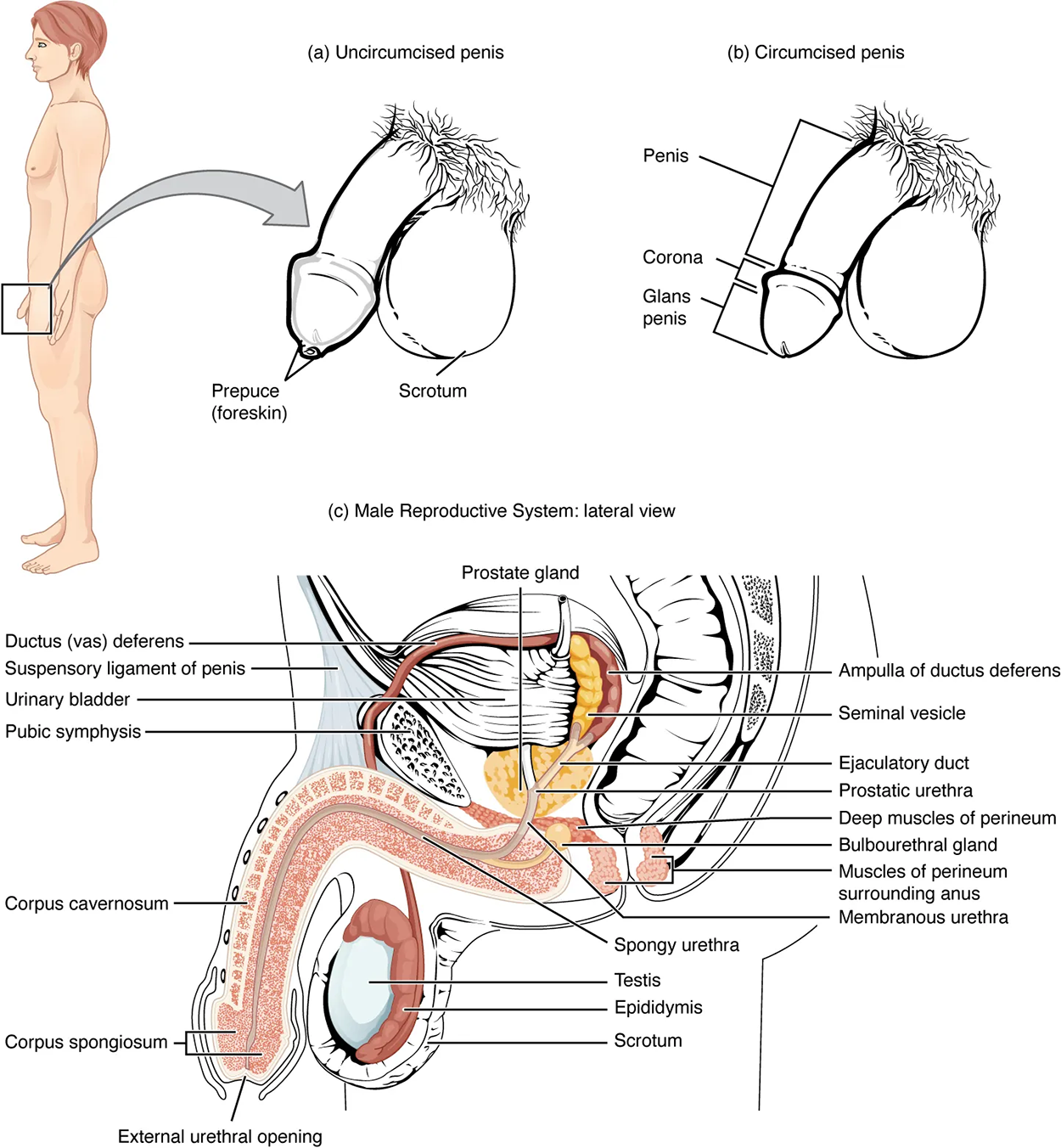
Male reproductive anatomy includes both external (scrotum and penis) and internal (testes, seminal vesicles, prostate gland, and bulbourethral glands) structures. These structures as well as their location and function are summarized in the table below. The remainder of this lesson will explore the external structures in more detail, and a future lesson will explore the internal structures.
| Structure | Location | Function |
|---|---|---|
| Penis | External | Transports urine, copulating organ |
| Scrotum | External | Carry and support testes |
| Testes | Internal | Produce sperm and male hormones |
| Epididymis | Internal | Sperm transport and maturation |
| Ductus Deferens | Internal | Sperm transport |
| Seminal Vesicles | Internal | Contribute to semen production |
| Prostate Gland | Internal | Contribute to semen production |
| Bulbourethral Glands | Internal | Clean urethra at ejaculation |
The penis is the male organ of copulation (sexual intercourse). It is flaccid for non-sexual actions, such as urination, and turgid and rod-like upon sexual arousal. When erect, the stiffness of the organ allows it to penetrate the vagina and deposit semen (ejaculatory fluid, which includes sperm) into the female reproductive tract.
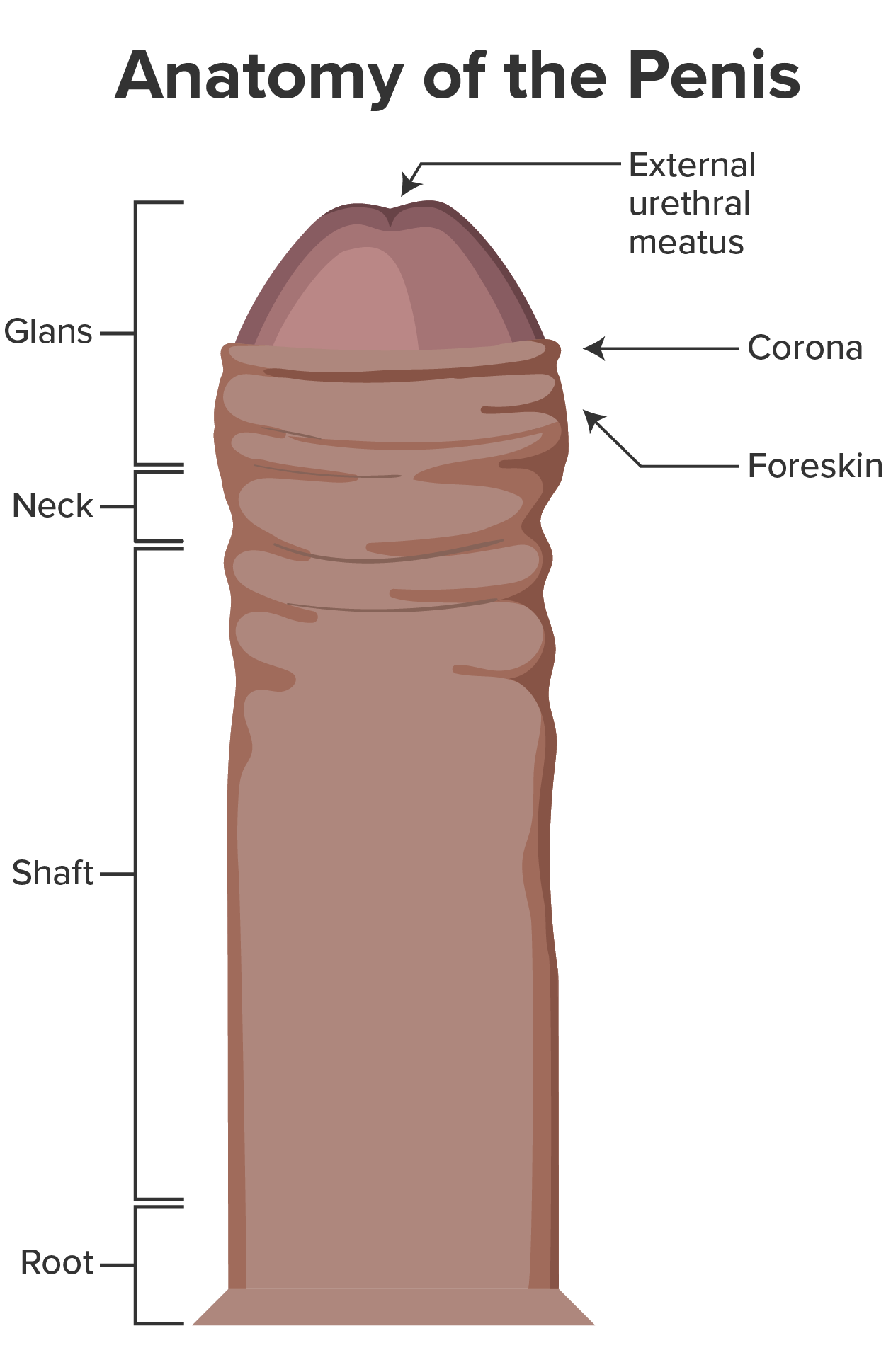
The root of the penis, or radix penis, is the most proximal part of the human penis and is internal, located within the perineum (in males, this is the area between the anus and scrotum). The shaft (or body) of the penis surrounds the urethra. The shaft is composed of three column-like chambers of erectile tissue that span the length of the shaft. Each of the two larger lateral chambers is called a corpus cavernosum (plural = corpora cavernosa). Together, these make up the bulk of the penis. The corpus spongiosum, which can be felt as a raised ridge on the erect penis, is a smaller chamber that surrounds the spongy, or penile, urethra. The corpora cavernosum and spongiosum are composed of erectile tissue that fill with blood during an erection.
The neck separates the shaft from the end of the penis, called the glans penis, which has a high concentration of nerve endings; this results in very sensitive skin that influences the likelihood of ejaculation. The proximal part of the glans penis is a projecting border referred to as the corona. The skin from the shaft extends down over the glans and forms a collar called the prepuce (or foreskin in males). The foreskin also contains a dense concentration of nerve endings, and both lubricate and protect the sensitive skin of the glans penis. At the tip of the glans penis is the external urethral meatus, which is the urethral opening.
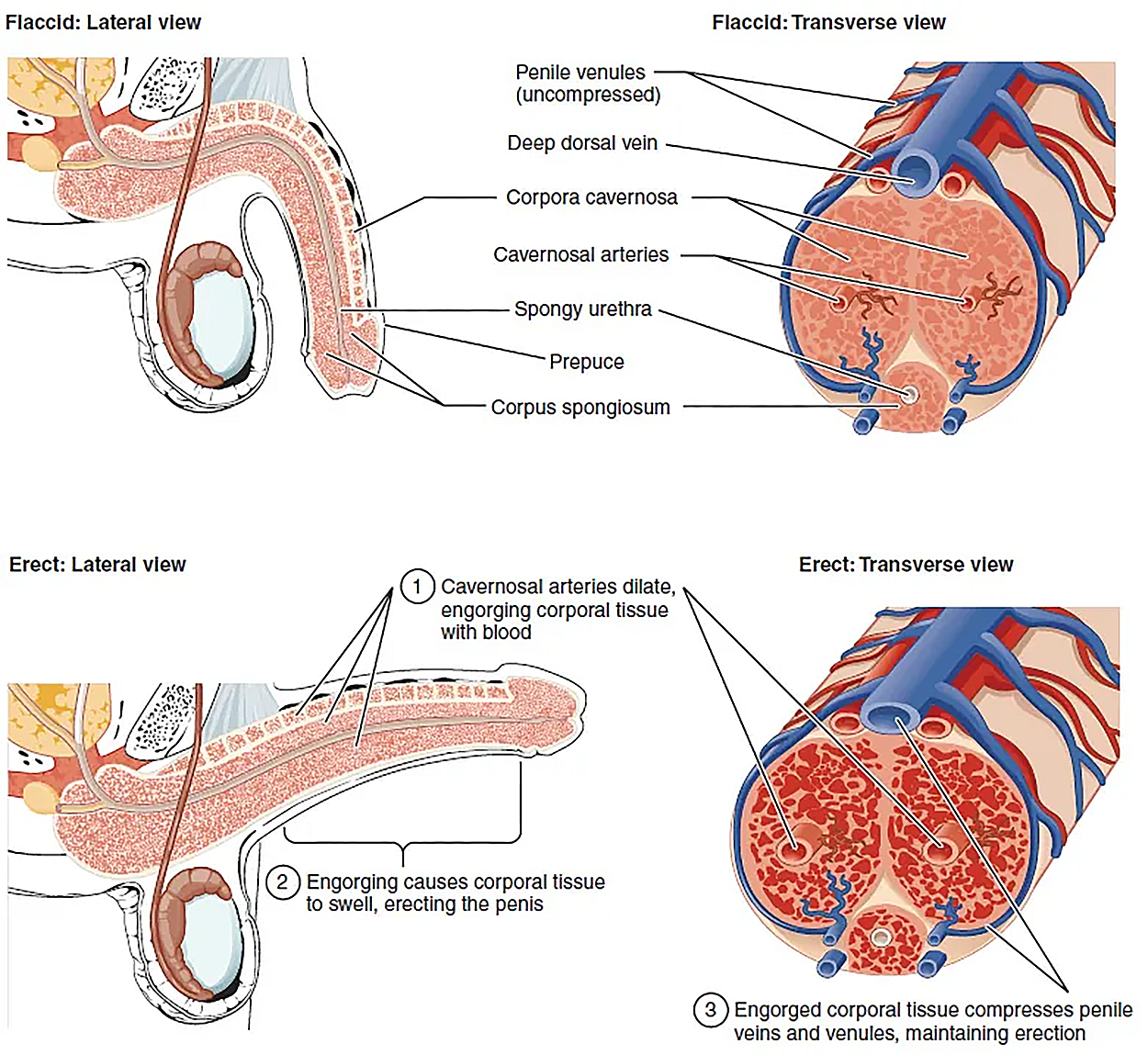
Both sexual arousal and REM sleep (during which dreaming occurs) can induce an erection. Penile erections are the result of vasocongestion, or engorgement of the tissues because of more arterial blood flowing into the penis than is leaving in the veins. During sexual arousal, nitric oxide (NO) is released from nerve endings near blood vessels within the corpora cavernosa and spongiosum. The release of NO activates a signaling pathway that results in the relaxation of the smooth muscles that surround the penile arteries, causing them to dilate. This dilation increases the amount of blood that can enter the penis and induces the endothelial cells in the penile arterial walls to also secrete NO and perpetuate the vasodilation. The rapid increase in blood volume fills the erectile chambers, and the increased pressure of the filled chambers compresses the thin-walled penile venules, preventing venous drainage of the penis. The result of this increased blood flow to the penis and reduced blood return from the penis is erection. Depending on the flaccid dimensions of a penis, it can increase in size slightly or greatly during erection.
EXAMPLE
| Term | Pronunciation | Audio File |
|---|---|---|
| Corpus Cavernosum | cor·pus ca·ver·no·sum |
|
| Corpus Spongiosum | cor·pus spon·gi·o·sum |
|
| Prepuce | pre·puce |
|
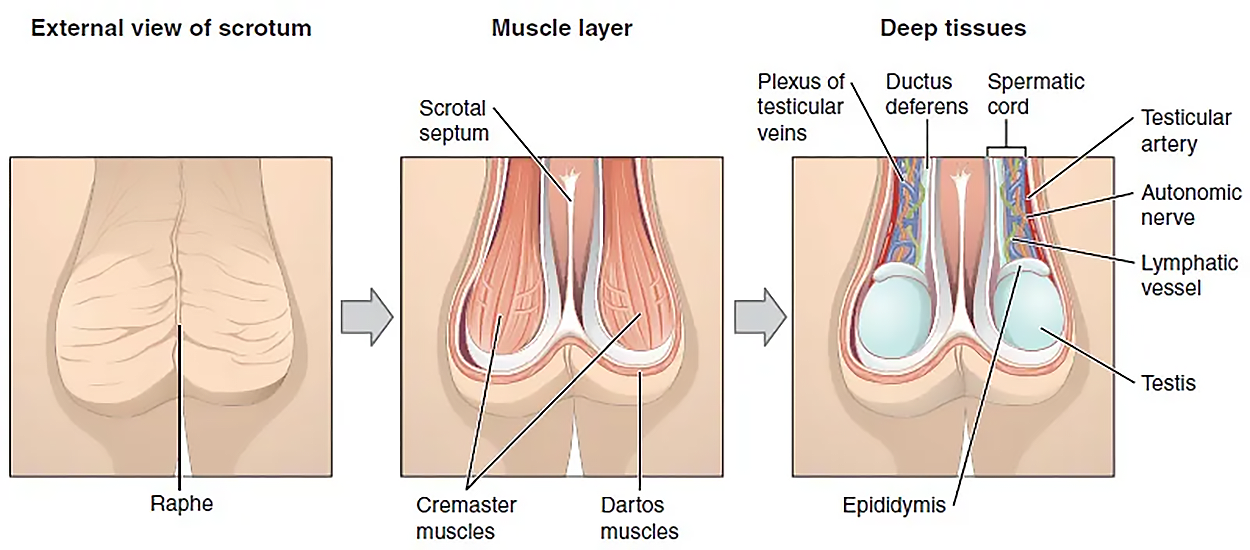
The testes, which you learned produce sperm, are located in a skin-covered, highly pigmented, muscular sack called the scrotum that extends from the body behind the penis. Sperm are immobile at body temperature; therefore, the testes are external to the body so that a correct temperature is maintained for motility. In land mammals, including humans, the pair of testes must be suspended outside the body so the environment of the sperm is about 2 °C lower than body temperature to produce viable sperm.
The dartos muscle makes up the subcutaneous muscle layer of the scrotum. It continues internally to make up the scrotal septum, a wall that divides the scrotum into two compartments, each of which houses one testis. Descending from the internal oblique muscle of the abdominal wall are the two cremaster muscles, which cover each testis like a muscular net. By contracting simultaneously, the dartos and cremaster muscles can elevate the testes in cold weather (or water), moving the testes closer to the body and decreasing the surface area of the scrotum to minimize heat loss. Alternatively, as the environmental temperature increases, the scrotum relaxes, moving the testes farther from the body core and increasing the scrotal surface area, which promotes heat loss. Externally, the scrotum has a raised medial thickening on the surface called the raphae.
| Term | Pronunciation | Audio File |
|---|---|---|
| Scrotum | scro·tum |
|
| Dartos Muscle | dar·tos mus·cle |
|
| Cremaster Muscles | cre·mas·ter mus·cles |
|
Source: THIS TUTORIAL HAS BEEN ADAPTED FROM (1) OPENSTAX "ANATOMY AND PHYSIOLOGY 2E". ACCESS FOR FREE AT OPENSTAX.ORG/DETAILS/BOOKS/ANATOMY-AND-PHYSIOLOGY-2E. (2) OPENSTAX "BIOLOGY 2E". ACCESS FOR FREE AT OPENSTAX.ORG/DETAILS/BOOKS/BIOLOGY-2E. LICENSING (1 & 2): CREATIVE COMMONS ATTRIBUTION 4.0 INTERNATIONAL. Accessed by August 2023.



