In this lesson, you will learn about how the lymphatic system is involved in blood regulation as well as the structures of the lymphatic system. Specifically, this lesson will cover:
In this challenge, you will be exploring how the body protects itself against infection by the lymphatic and immune system. The immune system is the complex collection of cells and organs that destroys or neutralizes pathogens that would otherwise cause disease or death. The lymphatic system, for most people, is associated with the immune system to such a degree that the two systems are virtually indistinguishable. The lymphatic system is the system of vessels, cells, and organs that carries excess fluids to the bloodstream and filters pathogens from the blood. The swelling of lymph nodes during an infection and the transport of lymphocytes via the lymphatic vessels are just two examples of the many connections between these critical organ systems. In this lesson, you will investigate the functions and structures of the lymphatic system.
1. Functions of the Lymphatic System
A major function of the lymphatic system is to drain body fluids and return them to the bloodstream. Blood pressure causes leakage of fluid from the capillaries, resulting in the accumulation of fluid in the interstitial space—that is, spaces between individual cells in the tissues.
In humans, 20 liters of plasma are released into the interstitial space of the tissues each day as a result of capillary filtration. Once this filtrate is out of the bloodstream and in the tissue spaces, it is referred to as interstitial fluid. Of this, 17 liters are reabsorbed directly by the blood vessels. But, what happens to the remaining three liters? This is where the lymphatic system comes into play. It drains the excess fluid and empties it back into the bloodstream via a series of vessels, trunks, and ducts. Lymph is the term used to describe interstitial fluid once it has entered the lymphatic system.
IN CONTEXT
Lymphedema
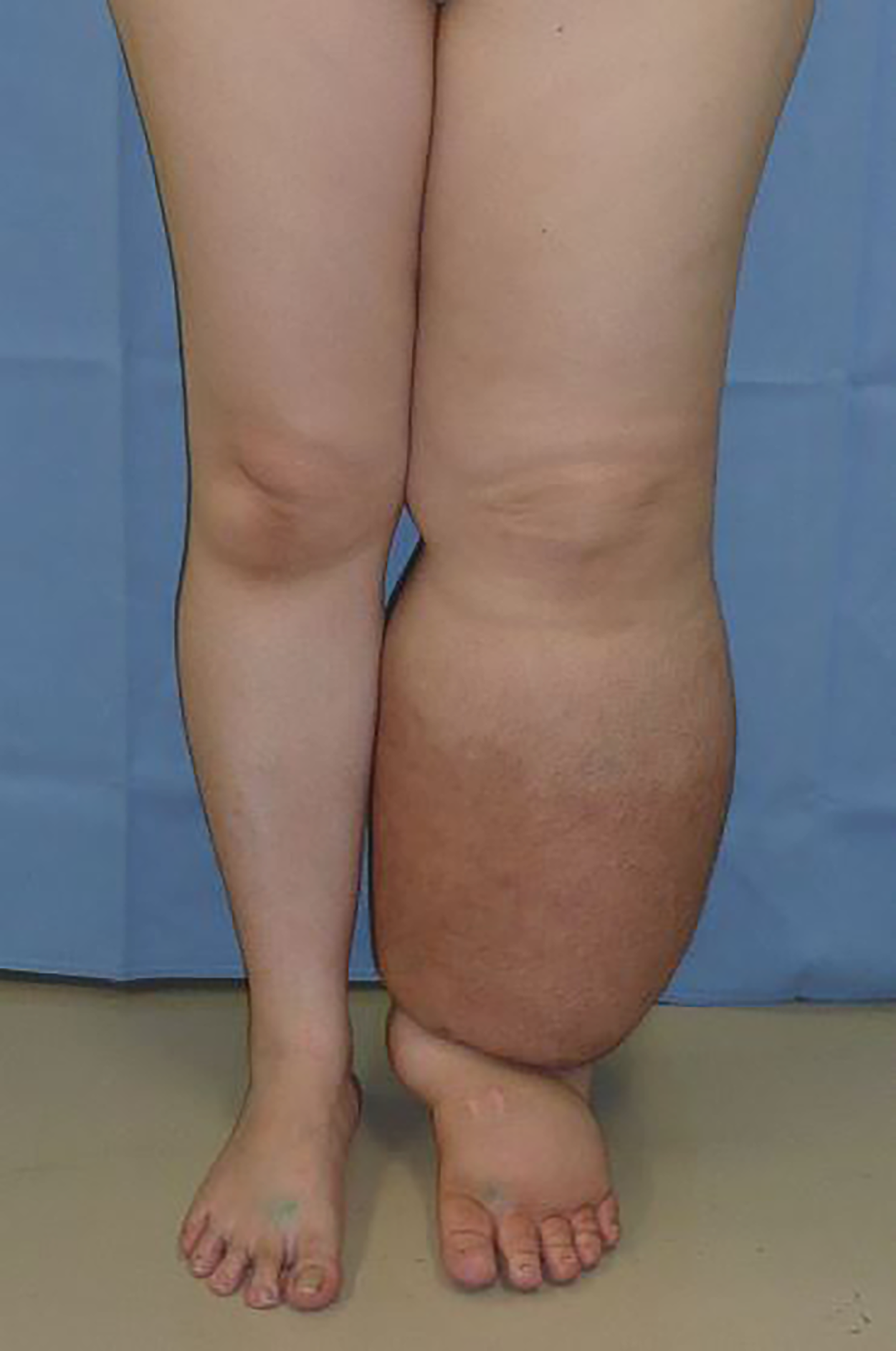
When the lymphatic system is damaged in some way, such as by being blocked by cancer cells or destroyed by injury, protein-rich interstitial fluid accumulates (sometimes “backs up” from the lymph vessels) in the tissue spaces. This inappropriate accumulation of fluid referred to as lymphedema may lead to serious medical consequences. For example, an individual with a severe case may have compromised ability to move the affected limb, they may be at higher risk for skin infections or sepsis, and they may experience skin changes, blistering, and breakdown.
Example of a Lymphedema-Affected Limb.Image source: credit “Medical doctors”, Wikimedia Commons, 4 January 2015, Lymphedema_limbs.JPG at commons.wikimedia.org/wiki/File:Lymphedema_limbs.JPG
Some treatment options for lymphedema include compression bandages or stockings, massage, and the use of a sequential pneumatic pump. In rare cases, surgery may be needed for the removal of swollen tissue or the creation of new drainage routes.
As the vertebrate immune system evolved, the network of lymphatic vessels became convenient avenues for transporting the cells of the immune system. Additionally, the transport of dietary lipids and fat-soluble vitamins absorbed in the gut uses this system.
Cells of the immune system not only use lymphatic vessels to make their way from interstitial spaces back into circulation, but they also use lymph nodes as major staging areas for the development of critical immune responses. A lymph node is one of the small, bean-shaped organs located throughout the lymphatic system.
Term Pronunciation Table
Term
Pronunciation
Audio File
Lymphedema
lymph·ede·ma
terms to know
Lymphatic System
The network of lymphatic vessels, lymph nodes, and ducts that carries lymph from the tissues and back to the bloodstream.
Lymph
Fluid contained within the lymphatic system.
Lymphedema
Localized swelling that results from inappropriate lymph fluid accumulation.
Lymph Node
One of the bean-shaped organs found associated with the lymphatic vessels.
2. Structure of the Lymphatic System
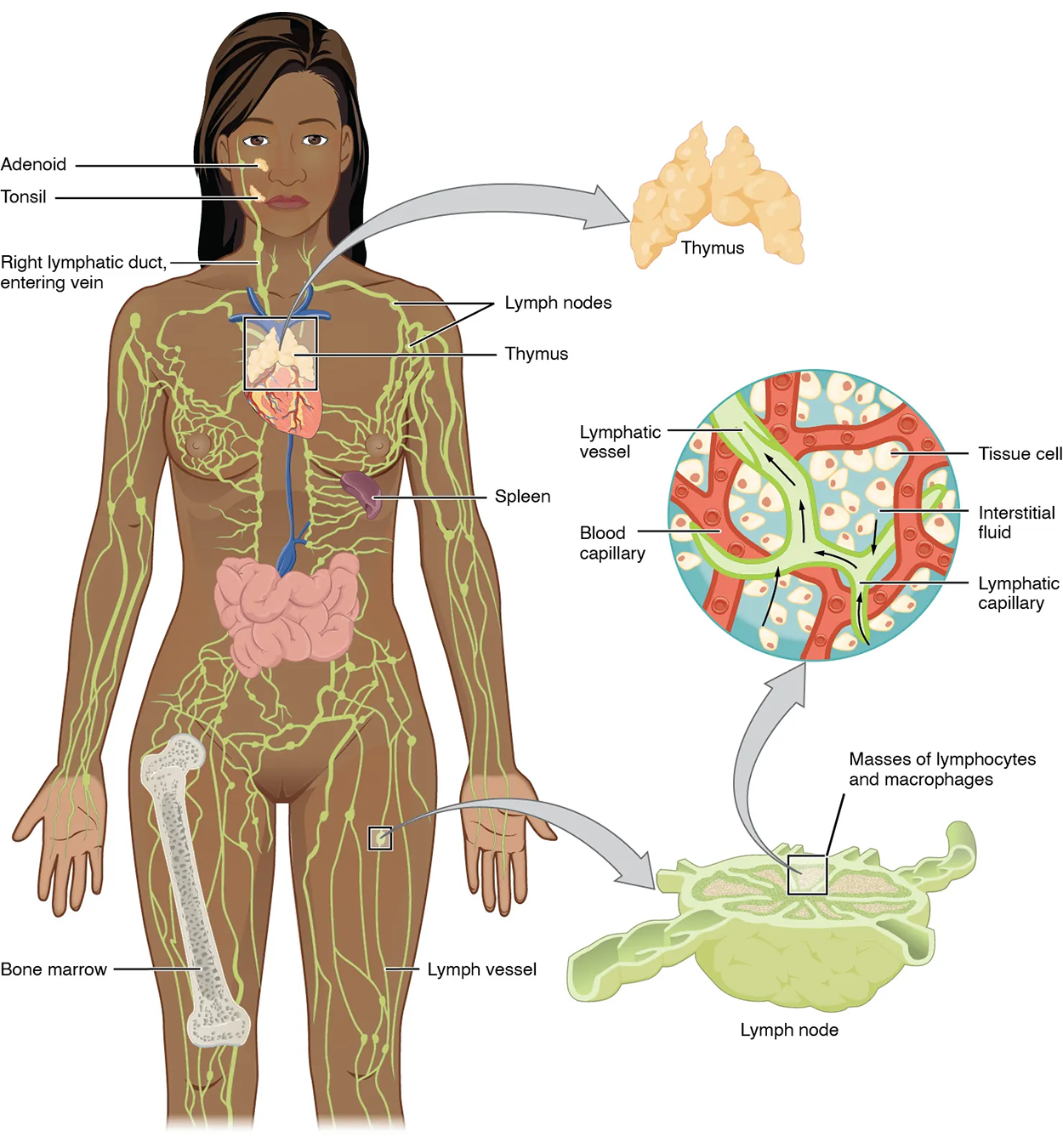
The lymphatic vessels begin as a blind ending (closed at one end), followed by capillaries, which feed into larger and larger lymphatic vessels, and eventually empty into the bloodstream by a series of ducts. Along the way, the lymph travels through the lymph nodes, which are commonly found near the groin, armpits, neck, chest, and abdomen. Humans have approximately 500–600 lymph nodes throughout the body.
Anatomy of the Lymphatic System - Lymphatic vessels in the arms and legs convey lymph to the larger lymphatic vessels in the torso.
A major distinction between the lymphatic and cardiovascular systems in humans is that lymph is not actively pumped by the heart but is forced through the vessels by the movements of the body, the contraction of skeletal muscles during body movements, and breathing. One-way valves (semi-lunar valves) in lymphatic vessels keep the lymph moving toward the heart. Lymph flows from the lymphatic capillaries, through lymphatic vessels, and then is dumped into the circulatory system via the lymphatic ducts located at the junction of the jugular and subclavian veins in the neck.
2a. Lymphoid Organs and Tissues
Remember in a past lesson, you learned about lymphocytes and hematopoietic stem cells. The lymphatic system contains two types of lymphoid organs, which are organs made up of lymphoid tissues that support immune responses. Lymphocytes, which help control immune responses, develop and mature in the primary lymphoid organs, and they mount immune responses from the secondary lymphoid organs.
The primary lymphoid organs include bone marrow and the thymus. Bone marrow contains the hematopoietic stem cells that differentiate and mature into the various types of blood cells and lymphocytes. B cells mature in red bone marrow, and T cells mature in the thymus.
The secondary lymphoid organs include the spleen, lymph nodes, and several areas of diffuse lymphoid tissues underlying epithelial membranes. The spleen is an encapsulated structure that filters blood and captures pathogens and antigens that pass into it and contains specialized macrophages and dendritic cells that are crucial for antigen presentation, a mechanism critical for the activation of T lymphocytes and B lymphocytes. Lymph nodes also contain macrophages and dendritic cells for antigen presentation.
You will learn more about primary and secondary lymphoid organs in future lessons.
2b. Lymphatic Capillaries
Lymphatic capillaries, also called the terminal lymphatics, are vessels where interstitial fluid enters the lymphatic system to become lymph fluid. Located in almost every tissue in the body, these vessels are interlaced among the arterioles and venules of the circulatory system in the soft connective tissues of the body. Exceptions are the central nervous system, bone marrow, bones, teeth, and the cornea of the eye, which do not contain lymph vessels.
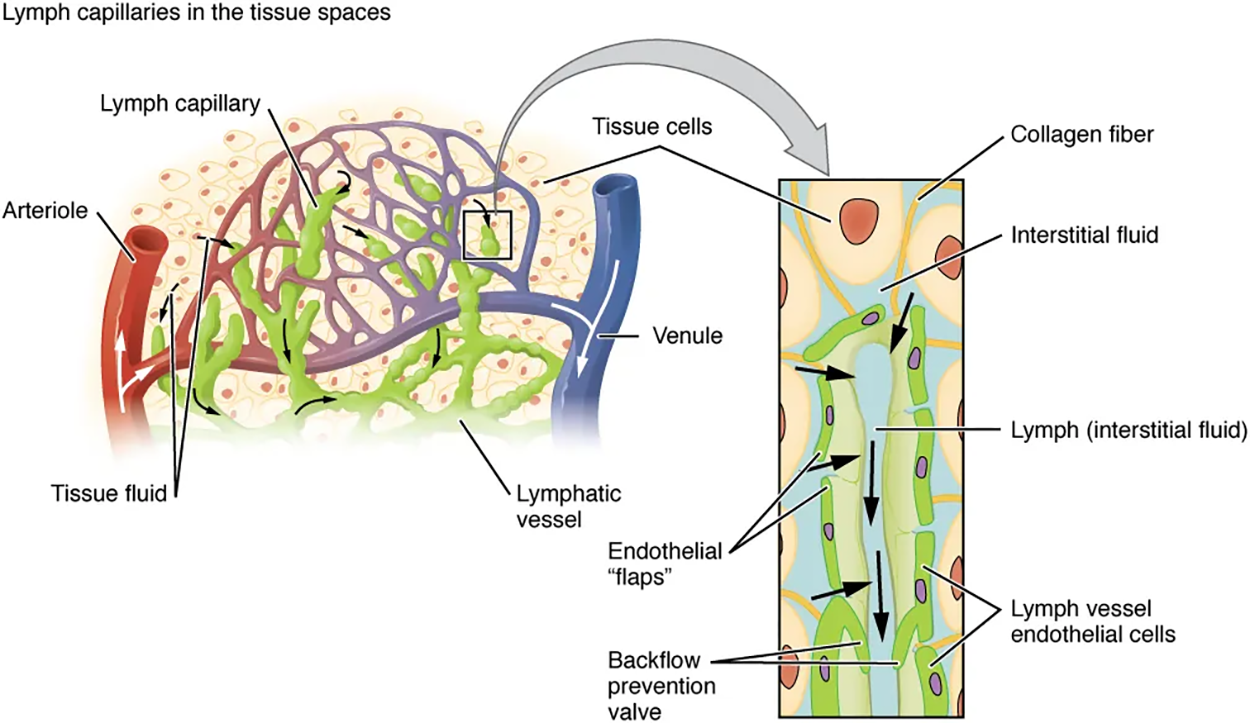
Lymphatic Capillaries - Lymphatic capillaries are interlaced with the arterioles and venules of the cardiovascular system. Collagen fibers anchor a lymphatic capillary in the tissue (inset). Interstitial fluid slips through spaces between the overlapping endothelial cells that compose the lymphatic capillary.
Lymphatic capillaries are formed by a one-cell-thick layer of endothelial cells and represent the open end of the system, allowing interstitial fluid to flow into them via overlapping cells (see the figure above). When interstitial pressure is low, the endothelial flaps close to prevent “backflow.” As interstitial pressure increases, the spaces between the cells open up, allowing the fluid to enter. Entry of fluid into lymphatic capillaries is also enabled by the collagen filaments that anchor the capillaries to surrounding structures. As interstitial pressure increases, the filaments pull on the endothelial cell flaps, opening up them even further to allow easy entry of fluid.
In the small intestine, lymphatic capillaries called lacteals are critical for the transport of dietary lipids and lipid-soluble vitamins to the bloodstream. In the small intestine, dietary triglycerides combine with other lipids and proteins, and enter the lacteals to form a milky fluid called chyle. The chyle then travels through the lymphatic system, eventually entering the bloodstream.
2c. Larger Lymphatic Vessels, Trunks, and Ducts
The lymphatic capillaries empty into larger lymphatic vessels, which are similar to veins in terms of their three-tunic structure and the presence of valves. These one-way valves are located fairly close to one another, and each one causes a bulge in the lymphatic vessel, giving the vessels a beaded appearance (see the figure above).
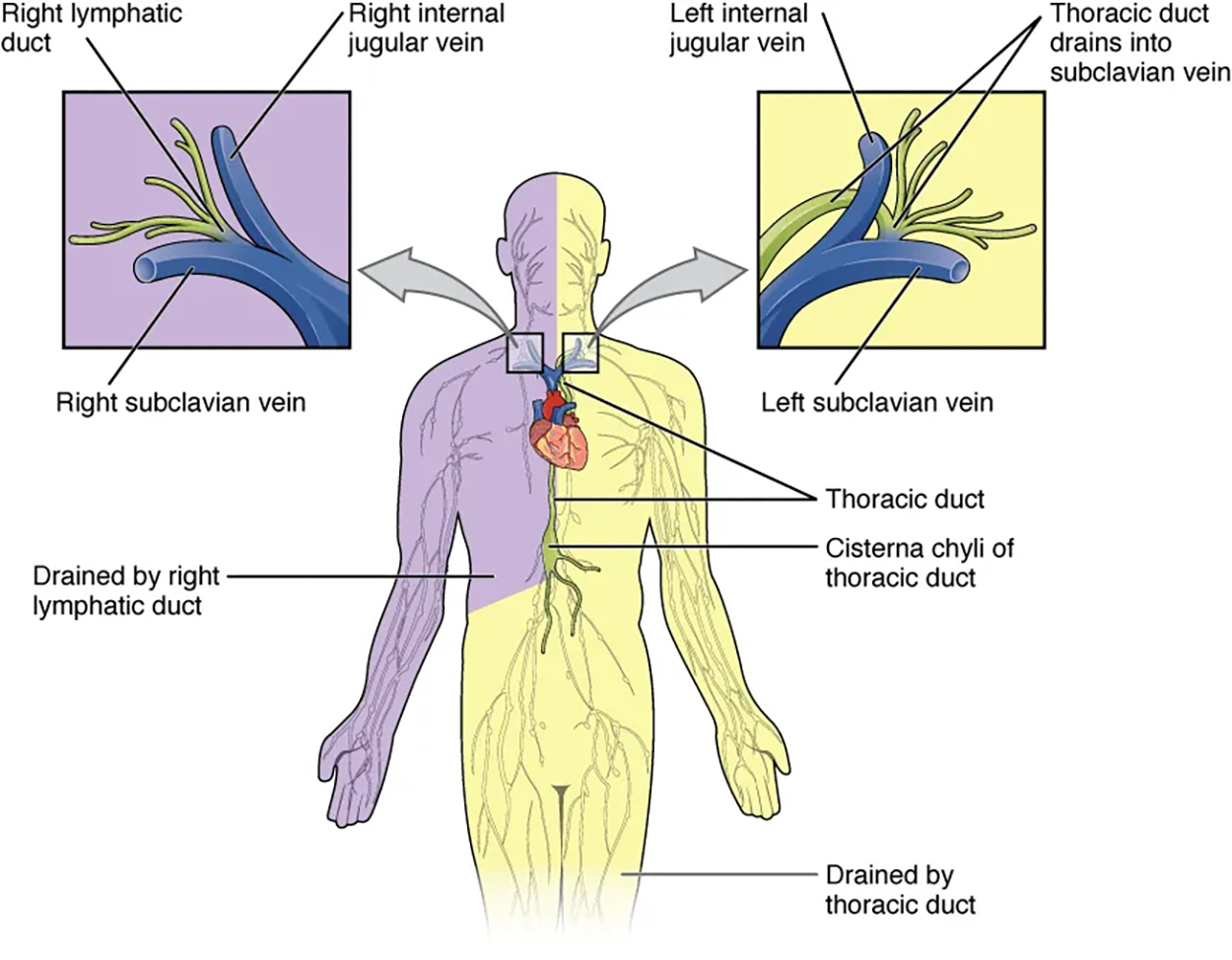
The superficial and deep lymphatics eventually merge to form larger lymphatic vessels known as lymphatic trunks. On the right side of the body, the right sides of the head, thorax, and right upper limb drain lymph fluid into the right subclavian vein via the right lymphatic duct (see the figure below). On the left side of the body, the remaining portions of the body drain into the larger thoracic duct, which drains into the left subclavian vein. The thoracic duct itself begins just beneath the diaphragm in the cisterna chyli, a sac-like chamber that receives lymph from the lower abdomen, pelvis, and lower limbs by way of the left and right lumbar trunks and the intestinal trunk.
Major Trunks and Ducts of the Lymphatic System - The thoracic duct drains a much larger portion of the body than does the right lymphatic duct.
The overall drainage system of the body is asymmetrical. The right lymphatic duct receives lymph from only the upper right side of the body. The lymph from the rest of the body enters the bloodstream through the thoracic duct via all the remaining lymphatic trunks. In general, lymphatic vessels of the subcutaneous tissues of the skin, that is, the superficial lymphatics, follow the same routes as veins, whereas the deep lymphatic vessels of the viscera generally follow the paths of arteries.
Term Pronunciation Table
Term
Pronunciation
Audio File
Lymphoid Organ
lym·phoid or·gan
Cisterna Chyli
cis·ter·na chy·li
terms to know
Lymphoid Organ
Organs of the lymphatic system made up of lymphoid tissues that support immune responses.
Primary Lymphoid Organ
Locations of lymphocyte development and maturation; organs include bone marrow and the thymus gland.
Secondary Lymphoid Organ
Locations where lymphocytes mount an immune response; organs include the spleen, lymph nodes, and areas of diffuse lymphoid tissues underlying epithelial membranes.
Lymphatic Trunks
Large lymphatic vessels that collect lymph from smaller lymphatic vessels and empties into the blood via lymphatic ducts.
Cisterna Chyli
A bag-like vessel that forms the beginning of the thoracic duct.
Right Lymphatic Duct
A duct that drains lymph fluid from the upper right side of the body into the right subclavian vein.
Thoracic Duct
A large duct that drains lymph from the lower limbs, left thorax, left upper limb, and the left side of the head.
summary
In this lesson, you learned about the role of the lymphatic system in blood regulation. You began by learning about the function of the lymphatic system, including an example of what can go wrong when the lymphatic system is damaged. Then, you learned about various structure of the lymphatic system and how lymph flows through the body. Specifically, you learned about the basic structure and function of the lymphoid organs and tissues; lymphatic capillaries; and larger lymphatic vessels, trunks, and ducts.
A bag-like vessel that forms the beginning of the thoracic duct.
Lymph
Fluid contained within the lymphatic system.
Lymph Node
One of the bean-shaped organs found associated with the lymphatic vessels.
Lymphatic System
A network of lymphatic vessels, lymph nodes, and ducts that carries lymph from the tissues and back to the bloodstream.
Lymphatic Trunks
Large lymphatic vessels that collect lymph from smaller lymphatic vessels and empties into the blood via lymphatic ducts.
Lymphedema
Localized swelling that results from inappropriate lymph fluid accumulation.
Lymphoid Organ
Organs of the lymphatic system made up of lymphoid tissues that support immune responses.
Primary Lymphoid Organ
Locations of lymphocyte development and maturation; organs include bone marrow and the thymus gland.
Right Lymphatic Duct
A duct that drains lymph fluid from the upper right side of body into the right subclavian vein.
Secondary Lymphoid Organ
Locations where lymphocytes mount an immune response; organs include the spleen, lymph nodes, and areas of diffuse lymphoid tissues underlying epithelial membranes.
Thoracic Duct
A large duct that drains lymph from the lower limbs, left thorax, left upper limb, and the left side of the head.