Table of Contents |
A child’s vocabulary expands between the ages of 2 to 6 from about 200 words to over 10,000 words through a process called fast mapping. Fast mapping is a strategy that enables children to learn the meaning of a new word after hearing it once or twice based on contextual association and understanding. Words are easily learned by making connections between new words and concepts already known. The parts of speech that are learned depend on the language and what is emphasized.
EXAMPLE
Children speaking verb-friendly languages such as Chinese and Japanese tend to learn verbs more readily, but those learning less verb-friendly languages such as English seem to need assistance in grammar to master the use of verbs.Children learn words that they hear often, that label things and events that interest them, and that they encounter in contexts that are meaningful to them.
They can repeat words and phrases after having heard them only once or twice, but they do not always understand the meaning of the words or phrases. This is especially true of expressions or figures of speech which are taken literally.
EXAMPLE
Two preschool-aged girls began to laugh loudly while listening to a tape recording of Disney’s “Sleeping Beauty” when the narrator reports, “Prince Phillip lost his head!” They imagine his head popping off and rolling down the hill as he runs and searches for it. Or a classroom full of preschoolers hears the teacher say, “Wow! That was a piece of cake!” The children began asking, “Cake? Where is my cake? I want cake!”A child who learns that a word stands for an object may initially think that the word can be used for only that particular object. For instance, only the family’s Irish Setter is a “doggie.” This is referred to as underextension.
More often, however, a child may think that a label applies to all objects that are similar to the original object. Logical extension (also referred to as overextension) is a strategy used to help build vocabulary. It is when children extend the meaning of a word to other objects in the same category. For example, all animals become “doggies.” At about age 3, children demonstrate the mutual exclusivity assumption, where they assume that objects have only one label or name.
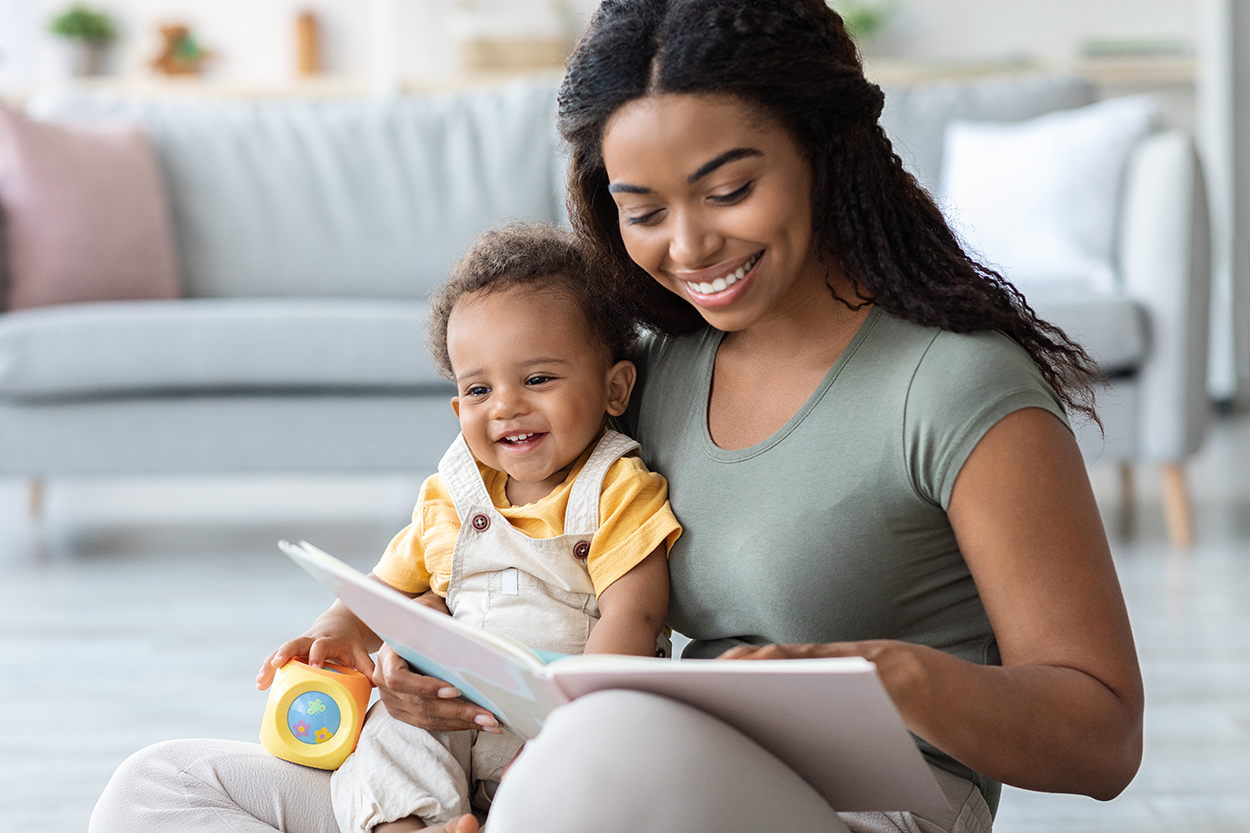
Children learn the rules of grammar as they learn the language. Some of these rules are not taught explicitly, and others are. Often, when learning language intuitively, children apply rules inappropriately at first. But even after successfully navigating the rule for a while, at times, explicitly teaching a child a grammar rule may cause them to make mistakes they had previously not been making.
EXAMPLE
Two- to 3-year-old children may say, “I goed there” or “I doed that,” as they understand intuitively that adding “ed” to a word makes it mean “something I did in the past.” As the child hears the correct grammar rule applied by the people around them, they correctly begin to say, “I went there” and “I did that.”It would seem that the child has solidly learned the grammar rule, but it is actually common for the developing child to revert back to their original mistake. This happens as they overregulate (a process in learning a language where children tend to overgeneralize rules) the rule for either of the following reasons:
Lev Vygotsky, a Russian psychologist, differed with Piaget because he believed that a person not only has a set of abilities but also a set of potential abilities that can be realized if given the proper guidance from others. He believed that through guided participation known as scaffolding, with a teacher or capable peer, a child can learn cognitive skills within a certain range known as the zone of proximal development (ZPD). The ZPD is the range of material that a child is ready to learn if proper support and guidance are given from either a peer who understands the material or by an adult. We can see the benefit of this sort of guidance when we think about the acquisition of language. Children can be assisted in learning language by others who listen attentively, model more accurate pronunciations, and encourage elaboration.
EXAMPLE
If the child exclaims, “I’m goed there!”, then the adult responds, “You went there?”While Piaget’s ideas of cognitive development assume that development through certain stages is biologically determined, originates in the individual, and precedes cognitive complexity, Vygotsky presents a different view in which learning drives development. The idea of learning driving development, rather than being determined by the developmental level of the learner, fundamentally changes our understanding of the learning process and has significant instructional and educational implications (Miller, 2011).
This difference in assumptions has significant implications for the design and development of learning experiences. If we believe as Piaget did that development precedes learning, then we will make sure that new concepts and problems are not introduced until learners have developed innate capabilities to understand them. On the other hand, if we believe as Vygotsky did that learning drives development and that development occurs as we learn a variety of concepts and principles, recognizing their applicability to new tasks and new situations, then our instructional design will look very different.
Children may be hardwired for language development, as Noam Chomsky suggested in his theory of universal grammar, but active participation is also important for language development. Scaffolding provides needed assistance to the child as a new skill is learned.
As an adult, chances are that you talk to yourself when you are struggling with a problem, trying to remember something, or feel very emotional about a situation. Children, however, talk to themselves too. Piaget interpreted this as egocentric speech, or a practice engaged in because of a child’s inability to see things from other points of view. Vygotsky, however, believed that children talk to themselves in order to solve problems or clarify thoughts. As children learn to think in words, they do so aloud before eventually closing their lips and engaging in private speech (speech that a child says aloud, but which is not meant to be part of communication with anyone else). Thinking out loud eventually becomes thought accompanied by internal speech, and talking to oneself becomes a practice only engaged in when we are trying to learn something or remember something, etc. This inner speech is not as elaborate as the speech we use when communicating with others (Vygotsky, 1962).
To accomplish the tremendous rate of word learning that needs to occur during early childhood, it is important that children are learning new words each day. Like all other forms of development, language is influenced by many contexts, but especially the home environment.
Research by Betty Hart and Todd Risley in the late 1990s and early 2000s also indicated that children from less advantaged backgrounds are exposed to millions of fewer words in their first 3 years of life than children who come from more privileged socioeconomic backgrounds. In their research, families’ SES was classified as follows (Hart & Risley, 1995):
Hart and Risley’s research has been criticized by scholars. Critics theorize that the language and achievement gaps are not a result of the number of words a child is exposed to, but rather alternative theories suggest it could reflect the disconnect of linguistic practices between home and school. Thus, judging academic success and linguistic capabilities from SES may ignore bigger societal issues. Critics have also noted methodological issues with a small sample size overall and an even smaller number of children followed until the end of the study.
Early childhood education, preschool, and other similar programs have increased in years to help bridge the gap in language development, as well as other developmental outcomes among young children from different SES backgrounds.
IN CONTEXT
Providing universal preschool has become an important lobbying point for federal, state, and local leaders throughout our country. In President Obama’s State of the Union address in 2013, he called upon Congress to provide high-quality preschool for all children. He continued to support universal preschool in his legislative agenda, and in December 2014, the President convened state and local policymakers for the White House Summit on Early Education (White House Press Secretary, 2014).
However, universal preschool covering all 4-year-olds in the country would require significant funding. Further, how effective preschools are in preparing children for elementary school and what constitutes high-quality early childhood education have been debated. To set criteria for designation as a high-quality preschool, the National Association for the Education of Young Children (NAEYC) identifies 10 standards (NAEYC, 2019). These include:
- Positive relationships among all children and adults are promoted.
- A curriculum that supports learning and development in social, emotional, physical, language, and cognitive areas.
- Teaching approaches that are developmentally, culturally, and linguistically appropriate.
- Assessment of children’s progress to provide information on learning and development.
- The health and nutrition of children are promoted while they are protected from illness and injury.
- Teachers possess the educational qualifications, knowledge, and commitment to promoting children’s learning.
- Collaborative relationships with families are established and maintained.
- Relationships with agencies and institutions in the children’s communities are established to support the program’s goals.
- The indoor and outdoor physical environments are safe and well maintained.
- Leadership and management personnel are well qualified, effective, and maintain licensure status with the applicable state agency.
Parents should review preschool programs using the NAEYC criteria as a guide and template for asking questions that will assist them in choosing the best program for their child.
Selecting the right preschool is also difficult because there are so many types of preschools available. Zachry (2013) identified Montessori, Waldorf, Reggio Emilia, High Scope, Creative Curriculum, and Bank Street as types of early childhood education programs that focus on children learning through discovery, which is considered child-centered or developmental programs. Teachers act as facilitators of children’s learning and development and create activities based on the child’s developmental level. In line with Piaget’s view, children are seen as active explorers in creating their own knowledge. In line with Vygotsky’s view, children are encouraged to play with other children.
In contrast, teacher-directed programs focus more on building academic skills. Teachers introduce new concepts that will prepare children for grade school. For example, they may identify letters, numbers, colors, and shapes. In line with behavioral theories of learning, this approach incorporates repetition, direct instruction, drills, and breaking down tasks into small steps (Parker & Neuharth-Pritchett, 2006). This approach is often driven by accountability demands by local and federal governments.

Source: THIS TUTORIAL HAS BEEN ADAPTED FROM LUMEN LEARNING'S LIFESPAN DEVELOPMENT. ACCESS FOR FREE AT https://courses.lumenlearning.com/wm-lifespandevelopment/. LICENSE: CREATIVE COMMONS ATTRIBUTION 4.0 INTERNATIONAL.
REFERENCES
Newton, R. (2022, October 28). 5.2 cognitive growth in early childhood. Human Growth and Development. Retrieved April 6, 2023, from pressbooks.pub/mccdevpsych/chapter/5-2-cognitive-growth-in-early-childhood/
Vygotskiĭ, L. S. (1962). Thought and language. Cambridge: M.I.T. Press, Massachusetts Institute of Technology.
Wellman, H.M., Cross, D., & Watson, J. (2001). Meta-analysis of theory of mind development: The truth about false belief. Child Development, 72(3), 655-684.
Parker, A., & Neuharth-Pritchett, S. (2006). Developmentally appropriate practice in kindergarten: Factors shaping teacher beliefs and practice. Journal of Research in Childhood Education, 21(1), 63–76.
Zachry, A. (2013). 6 Types of Preschool Programs. www.parents.com/toddlers-preschoolers/starting-preschool/preparing/types-of-preschool-programs/
Professional standards and competencies for early childhood ... - naeyc. (n.d.). Retrieved April 6, 2023, from www.naeyc.org/sites/default/files/globally-shared/downloads/PDFs/resources/position-statements/standards_and_competencies_ps.pdf
White House Press Secretary. (2014). Fact Sheet: Invest in US: The White House Summit on Early Childhood Education. www.whitehouse.gov/the-press-office/2014/12/10/fact-sheet-invest-us-white-house-summit-early-childhood-education
Hart, B., & Risley, T. R. (1995). Meaningful differences in the everyday experience of young American children. Paul H Brookes Publishing.



