Table of Contents |
Before you learn about the various regions of France in detail, it is important to understand two terms that can be used to describe an area of France:
You first learned about the notion of les départements (departments) in the first unit during the lesson La culture: Paris and Ile-de-France, where the départements of Hauts-de-Seine, Seine-Saint-Denis, Val-de-Marne, Val-d’Oise, Yvelines, Essonne, and Seine-et-Marne surround Paris.
The idea of dividing the French territory into departments goes back to the French Revolution, when more than 80 departments were created in 1789. At the time, it became important to establish distinct boundaries, as well as similar geographic sections for fairness purposes and equal representation in government. Un chef-lieu (an administrative center) was centrally located within each department so any resident could access it within half a day by horse ride.
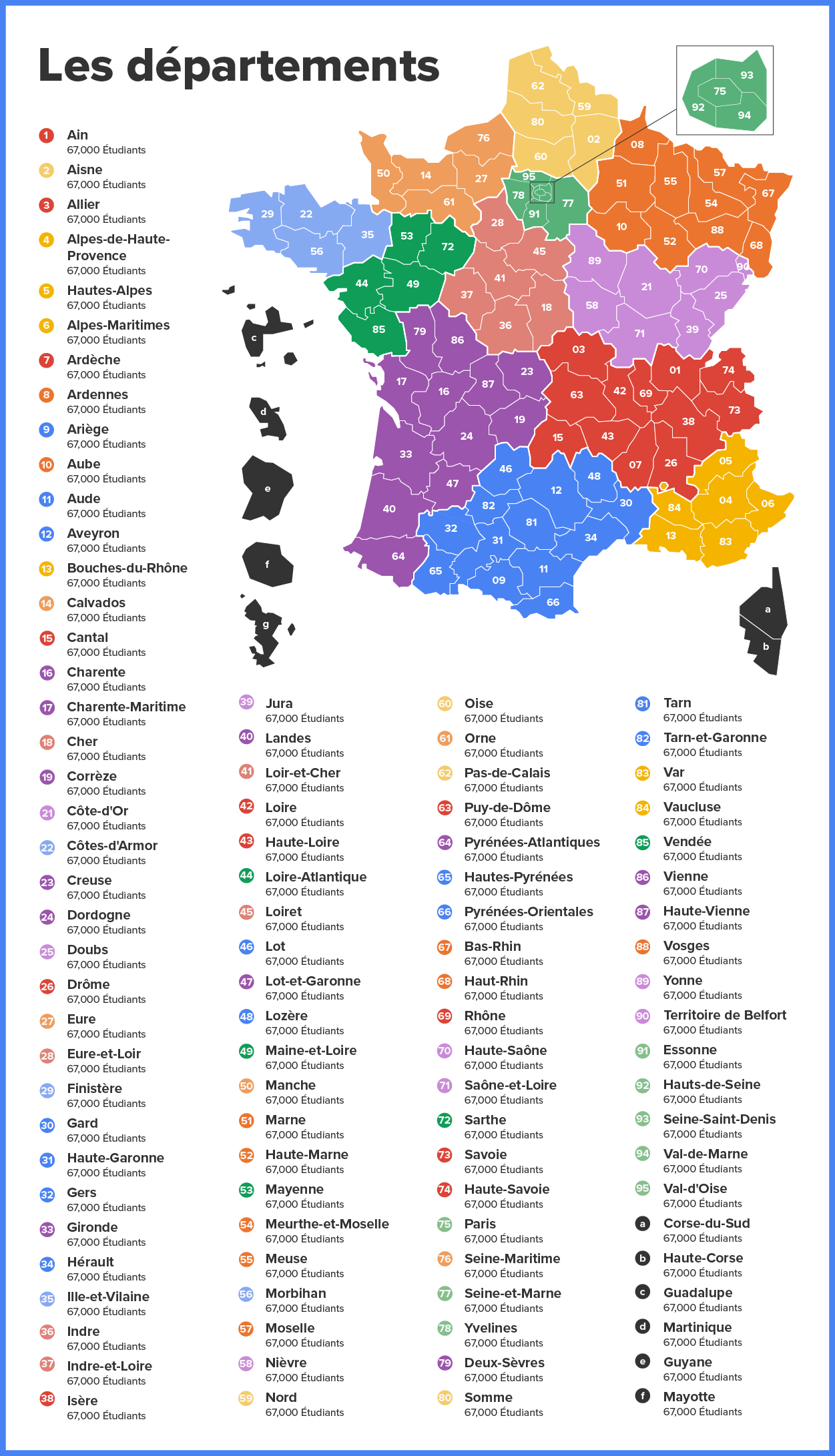
Many department names have remained the same since their creation in 1789. Those names were often chosen to represent a local geographical landmark, such as a waterway (by far the most popular option), a mountain, or a typical landscape.
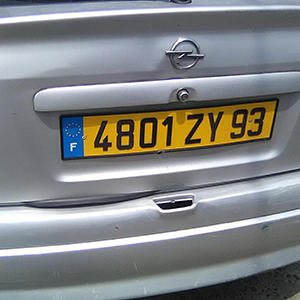 Each department is assigned a two-digit number, which is used both at the beginning of the five-digit zip code and as the last two digits on car license plates. This number used to be an easy way to identify which department a car came from (similar to different state license plates in the U.S.), especially since all license plates in France (and in the European Union) are the same color. However, today’s car owners are allowed to choose which department number they would like displayed on their plate, depending on their preference or maybe where they were born or previously lived.
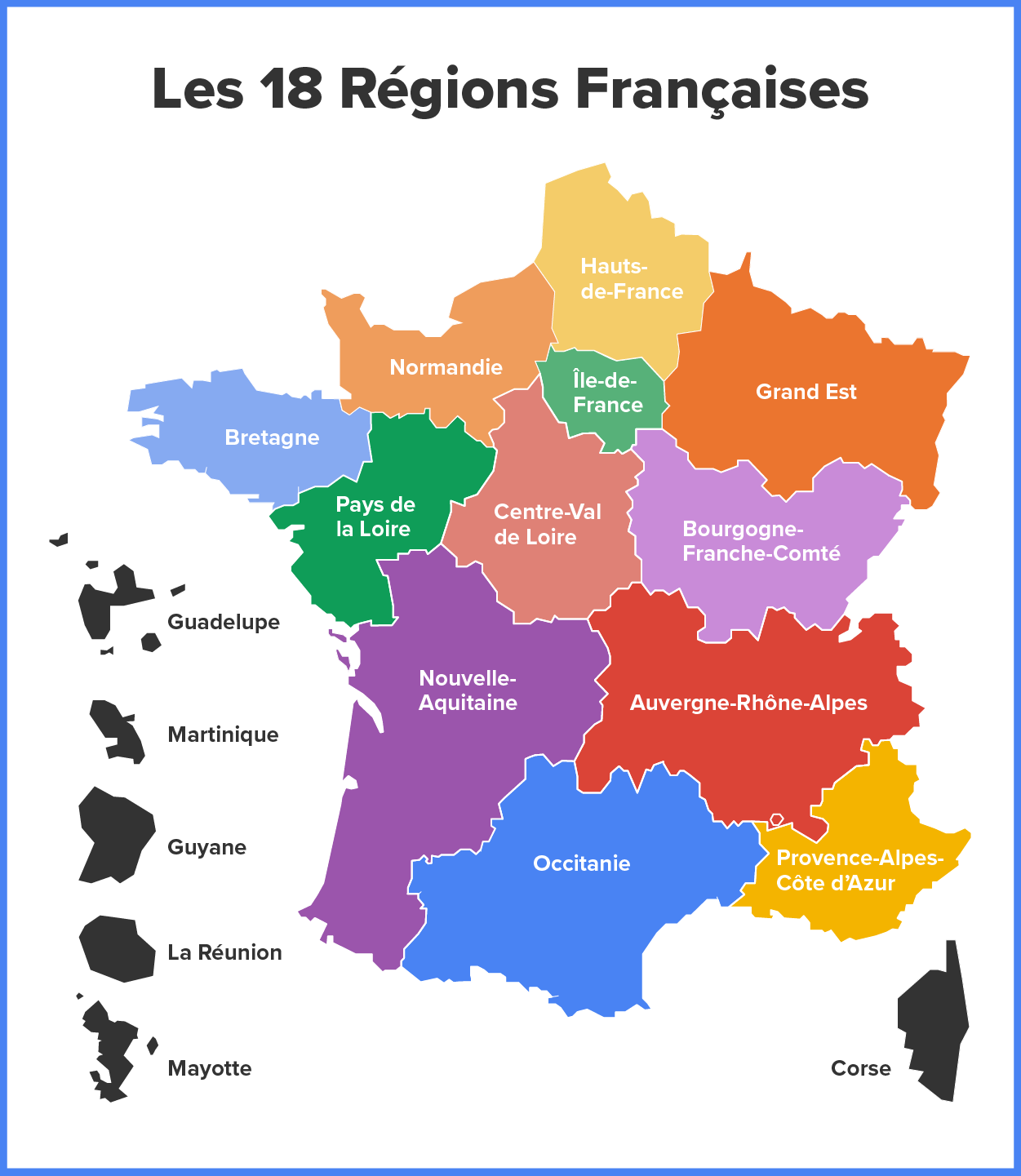 Les régions (regions) are another way France is divided for administrative purposes, and their creation took place in the 1950s to replace former provinces and regions. While there were more than 30 provinces originally, several of them were combined in 2016, and that larger number was reduced to 18 regions. Of these 18 regions, 13 are in Metropolitan France. The remaining five are overseas, and we will focus on those in our lesson La culture: Overseas France in the next unit.
Each department consists of the exact same administrative structure:
While city laws may vary a bit from town to town, all departments follow the same rules and regulations established by the French government. However, the government provides all departments some flexibility in how to handle their affairs, such as road maintenance as well as local residential and commercial construction.
The fact that each department abides by the same government regulations makes it easy for people to move from one department to another without jumping through too many administrative hoops:
Now that you understand how France is divided into various départements and régions, we are going to explore the regions of France located in the north and west and highlight what each is famous for, including famous cities, places to visit, regional foods, regional languages and accents, etc. For instance, while the French Parisian accent is considered “neutral” French, you will hear people all over France speak French with various different accents depending on the region, and even speak regional languages.
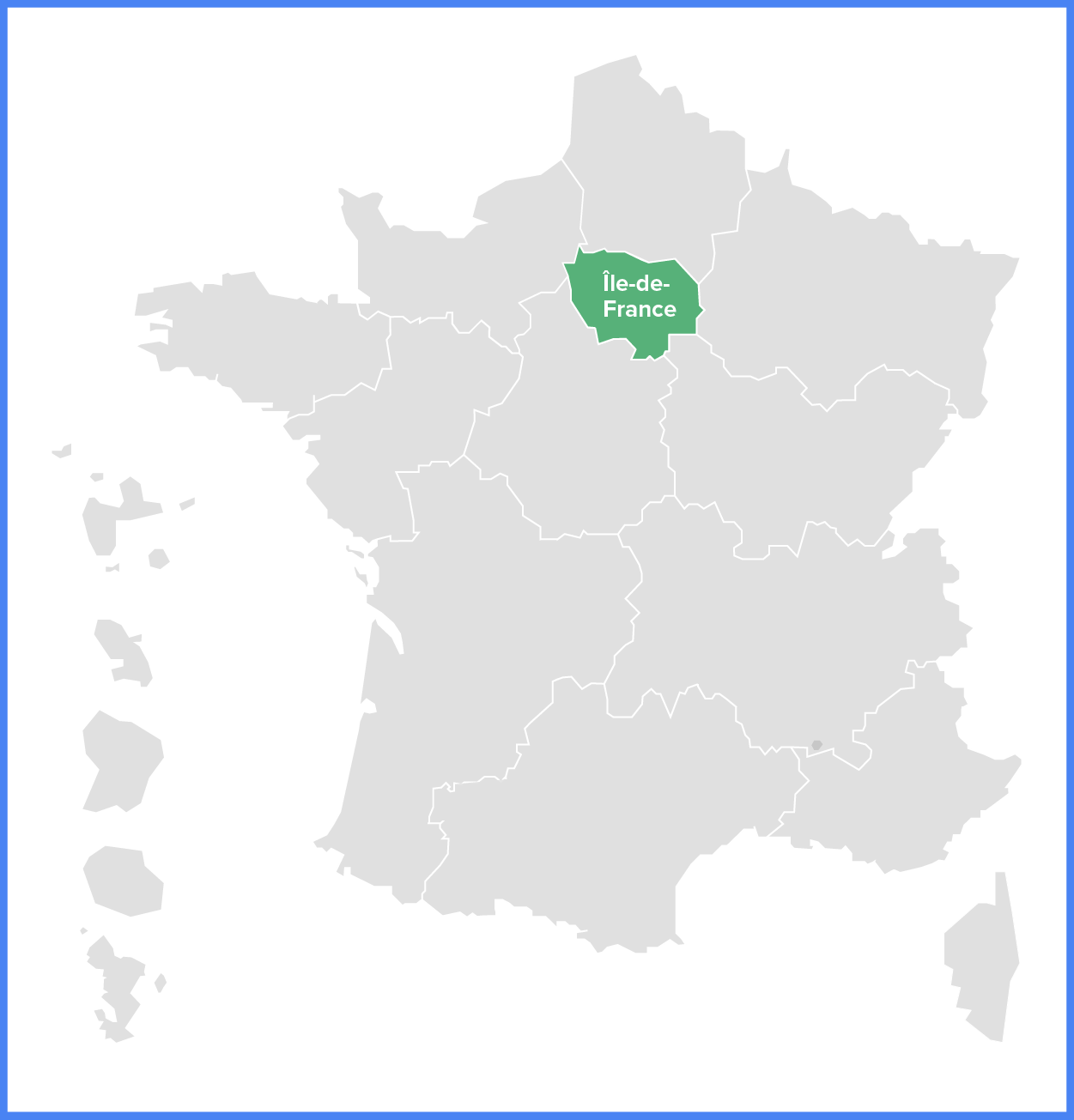 Since we already explored the region of Île-de-France in our lesson La culture: Paris and Ile-de-France in the first unit, we will not mention it again, but here is a reminder of where it is located within France.
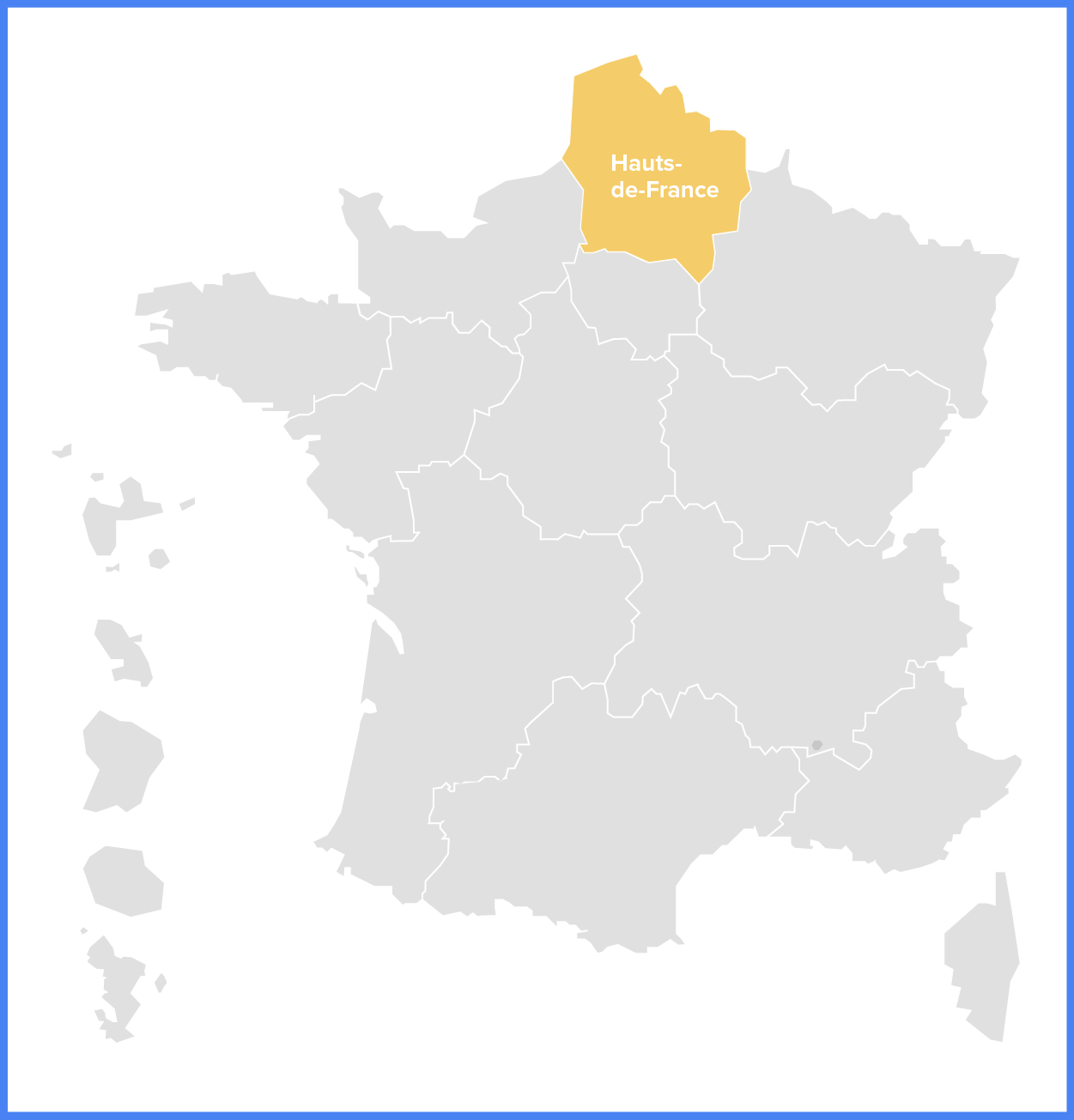 Located at the northern tip of France, Hauts-de-France is a large and densely populated region that borders Belgium and is the region most closely located to the United Kingdom. Its southern border touches l’Île-de-France, with easy access by road or train. While its mining industry has been hit the hardest in the past 50 years, les Hauts-de-France agriculture is a very large part of the region’s economy.
Famous Cities:
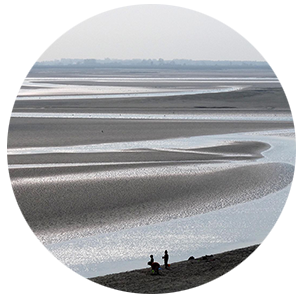 La baie de Somme (Somme Bay) is a UNESCO World Heritage Site and a large natural preserve, where thousands of migratory birds stop every year.
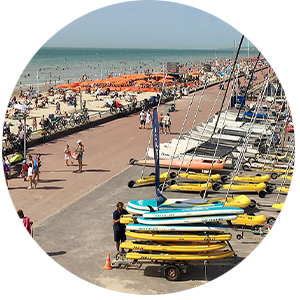 Le Touquet-Paris-Plage, or le Touquet, is a highly popular seaside resort area with a large beach and natural forest preserve, as well as many hotels, restaurants, nightclubs, and historical monuments that attract hundreds of thousands of tourists every year.
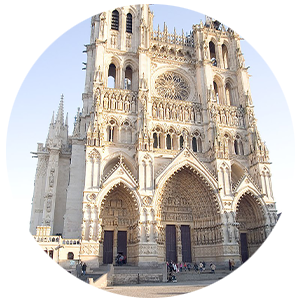 La cathédrale Notre-Dame d'Amiens (Notre-Dame d'Amiens Cathedral) has the largest Gothic nave in France.
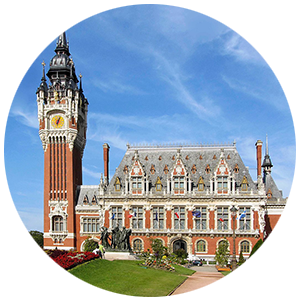 Le beffroi de Calais (the Belfry of Calais), which was added to l’Hôtel de Ville (City Hall) after its original construction, features a famous four-faced clock and carillon that rings every hour.
Famous Foods and Dishes:
| Audio | Foods and Dishes | Picture |
|---|---|---|
|
|
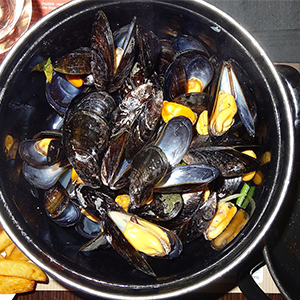
Les moules-frites (mussels and fries), originally from Belgium but just as popular in this region |
|
|
|
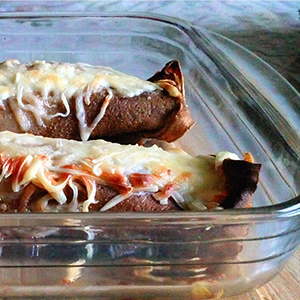
La ficelle picarde, a crepe stuffed with ham, mushrooms, and shallots in a cream and white wine sauce, then covered with cheese and oven-grilled |
|
|
|
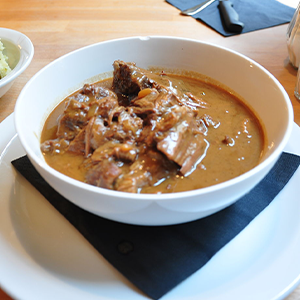
La carbonnade flamande, a stew similar to bœuf bourguignon but made with beer instead of red wine |
|
|
|
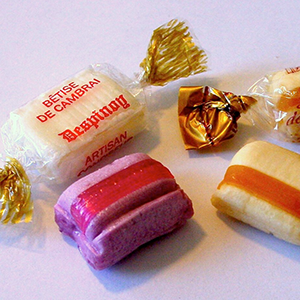
Les bêtises de Cambrai, a famous mint-flavored candy, which was originally created as a mistake (une bêtise) |
|
Regional Languages:
Le picard, also called le ch’ti, is un patois (a dialect) that has been immortalized in the movie Bienvenue chez les ch’tis (Welcome to the Sticks). Le flamand occidental (Western Flemish) is also spoken in this region.
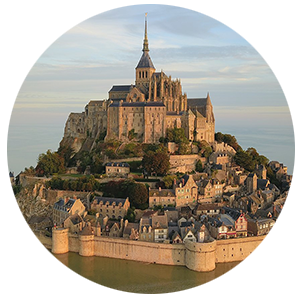
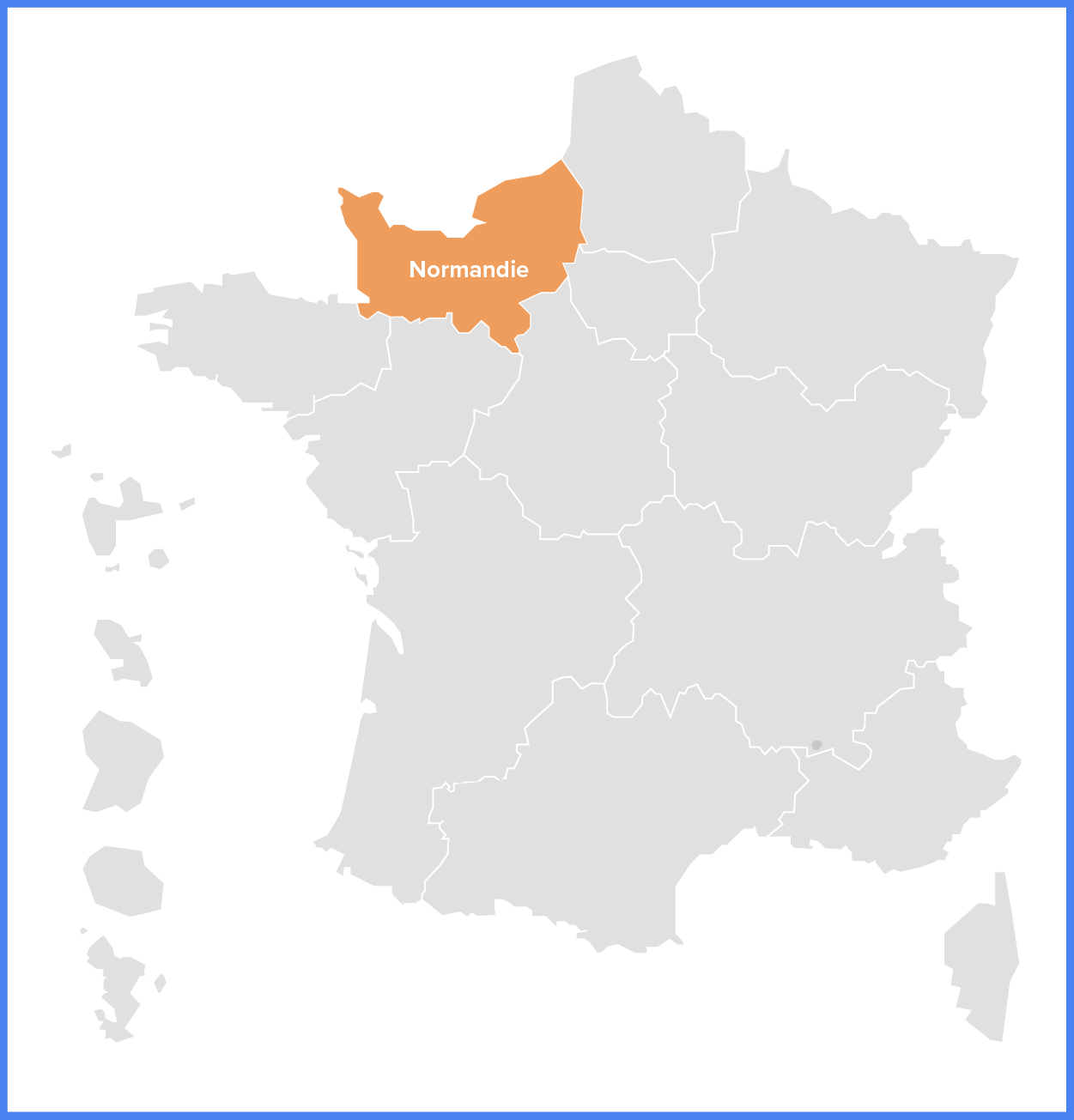 Southeast of les Hauts-de-France is la Normandie (Normandy), which is the largest producing region of cow milk-based cheeses and cream, as well as apples and cider. For this reason, many Normand dishes are butter or cream-based. This is also where the Allied Normandy landing took place on several beaches on June 6, 1944.
Famous Cities:
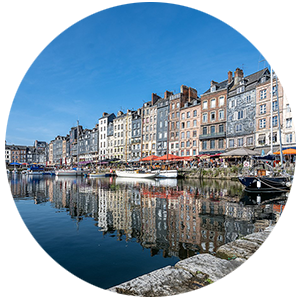 Honfleur is a harbor city with highly-recognizable tall and narrow homes.
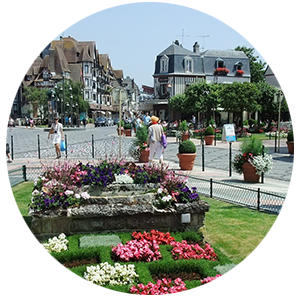 Deauville is a seaside resort town famous for its hotels, restaurants, beaches, and American film festival.
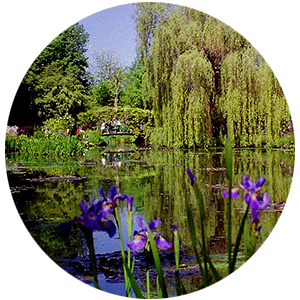 Les jardins de Monet (Monet’s gardens) in Giverny is where the painter Claude Monet lived most of his life and found inspiration for many of his paintings.
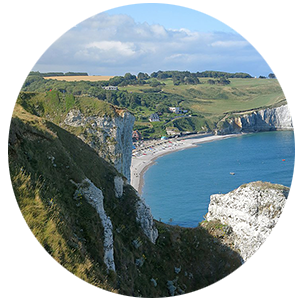 Les falaises d’Étretat (Etretat cliffs) were immortalized by Monet in a series of paintings.
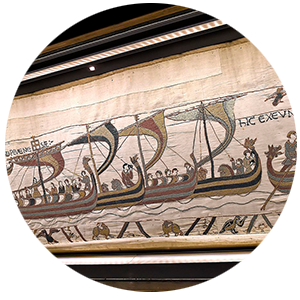 La tapisserie de Bayeux (the Bayeux tapestry) is almost 230 feet long and retells the Norman conquest of England by Guillaume le conquérant (William the Conqueror).
Famous Foods and Dishes:
| Audio | Foods and Dishes | Picture |
|---|---|---|
|
|
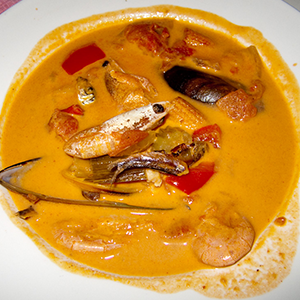
La marmite dieppoise, a fish and seafood stew in a creamy broth |
|
|
|
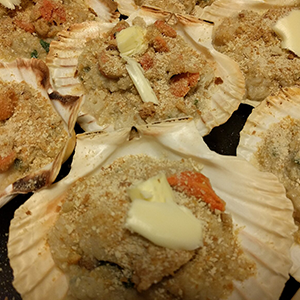
Les coquilles Saint-Jacques (sea scallops), native to the Normandy shores and typically eaten as an appetizer baked in their shells in a cream sauce, often covered with breadcrumbs |
|
|
|
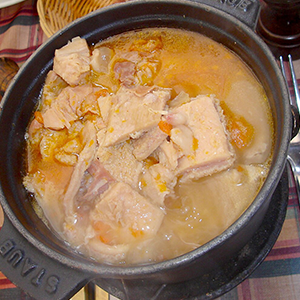
Les tripes à la mode de Caen, a creamy stew made with beef stomach |
|
|
|
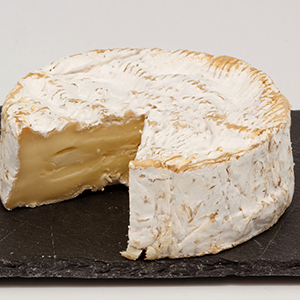
Le camembert, named after the town this cheese originates from |
|
|
|
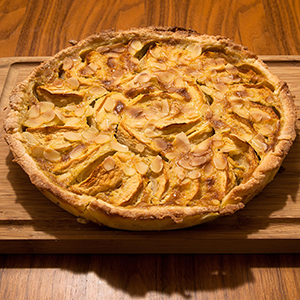
La tarte normande aux pommes, a type of apple tart |
|
|
|
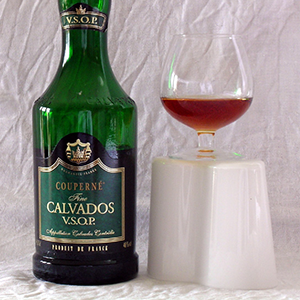
Le calvados and le cidre, apple cider that typically has alcohol in it |
|
Regional Languages:
Le normand, a dialect of la langue d’oïl, a Roman language that used to be spoken in a large area of northern France, is considered an endangered language. It had a large influence on the English language during the Norman Conquest.
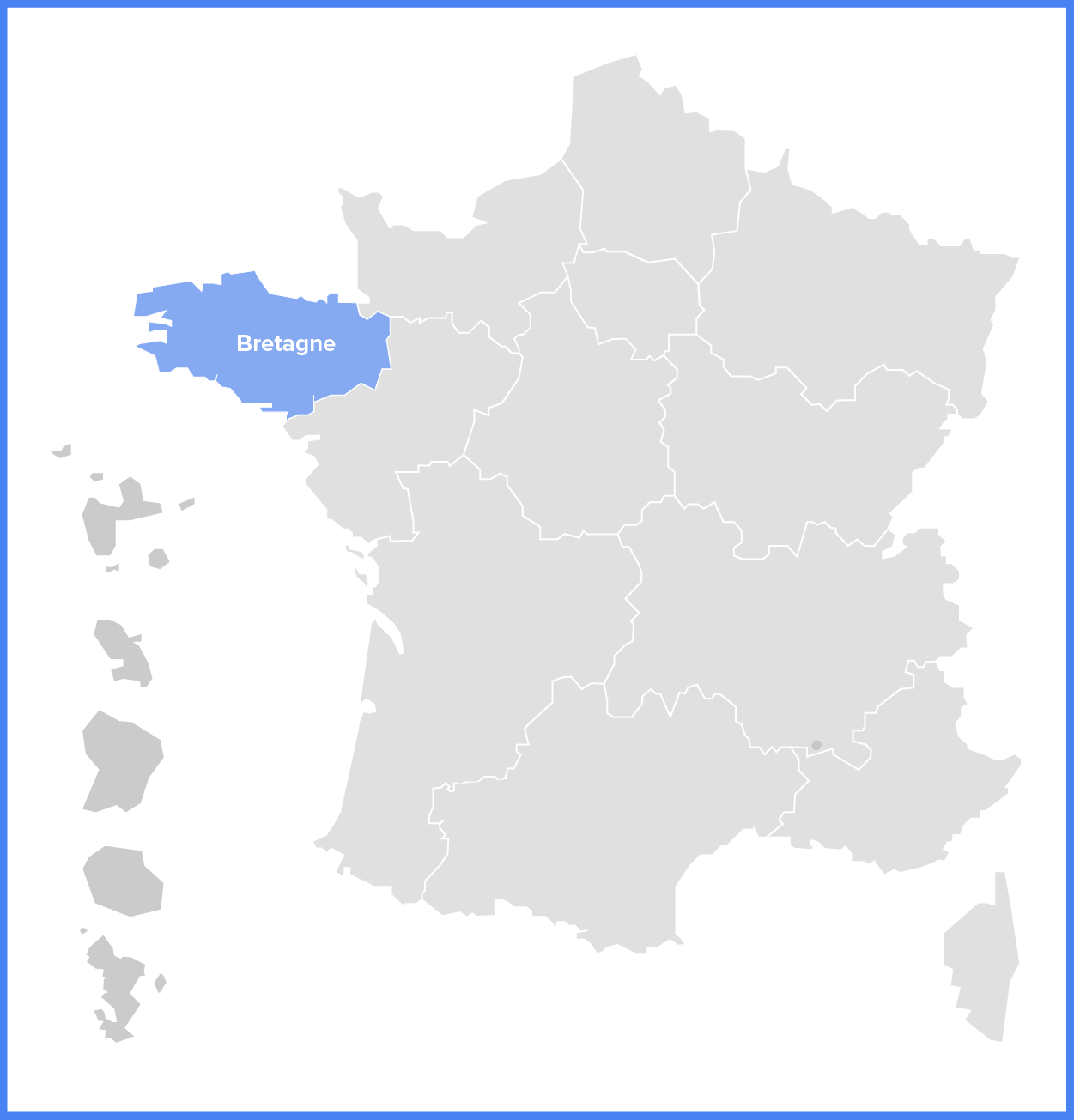 La Bretagne (Brittany) is the westernmost region in France and features the longest shoreline of all the regions. Its moderate climate, beaches, and cultural attractions make it a very popular destination for tourists. It has a strong fishing industry, as well as large areas dedicated to agriculture and cattle breeding.
Famous Cities:
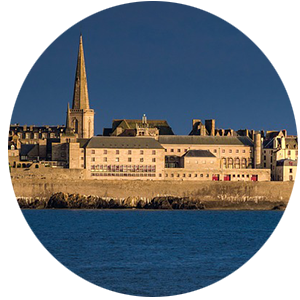 Saint-Malo, a very popular destination, features an old town and an old fortress with tall stone walls around part of the city. During World War II, Saint-Malo was occupied by the Germans and was greatly damaged in August, 1944. The Americans thought the city still harbored a large German garrison, and thus bombed a large part of the town and its fortress for 10 days, even though the French military had disproved that assumption. In turn, 80% of the old town was destroyed in these bombings, and French architects did their best to rebuild the old city after the war. Saint-Malo and this part of its history is retold in Anthony Doerr’s novel All The Light We Cannot See.
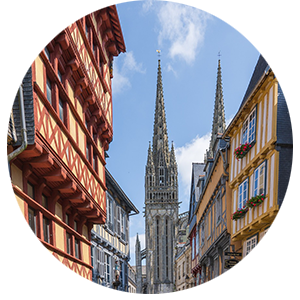 La vieille ville de Quimper (Quimper’s old town) is where you can view many maisons à colombages (half-timbered houses), which are typical of Brittany architecture.
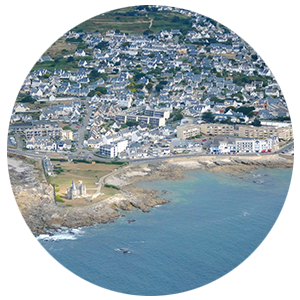 La presqu’île de Quiberon (The peninsula of Quiberon) has many beaches and wild areas, making this seaside resort town a popular tourist destination and surfing spot.
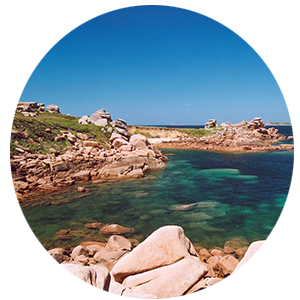 La Côte de Granit Rose is a shoreline featuring famous pink granite formations.
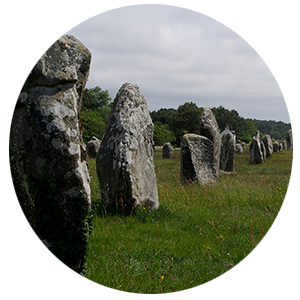 Les menhirs de Carnac are tall, man-made stones that were placed in fields as single standing stones during the Bronze Age. Menhirs were made famous by the comic strip Astérix, in which the character Obélix likes to carry a menhir on his back.
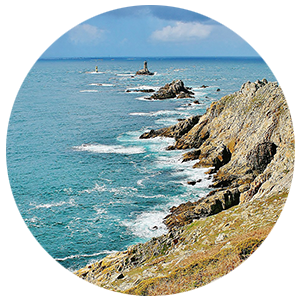 La pointe du raz, the westernmost point of Brittany, features a large ecological preserve. On clear days, you can see the Ar Men lighthouse on a small, nearby island.
Famous Foods and Dishes:
| Audio | Foods and Dishes | Picture |
|---|---|---|
|
|
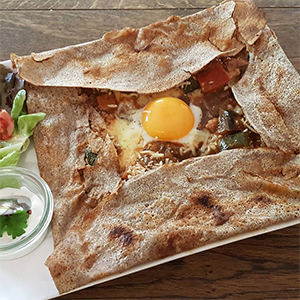
La Bretagne (Brittany) is most famous for its crêperies, where you can buy des galettes au blé noir, savory crepes made with buckwheat flour, or des crêpes (made with white flour) for dessert. |
|
|
|
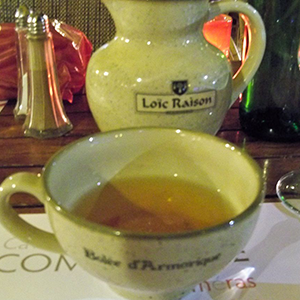
It is customary to drink du cidre, hard apple cider, during your meal, served in une bolée (a bowl made with sandstone). |
|
|
|
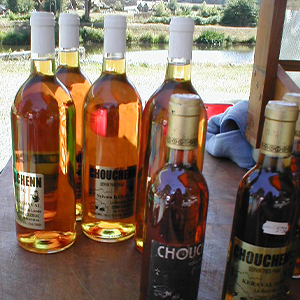
Another popular drink in the region is le chouchen, a drink similar to mead. |
|
|
|
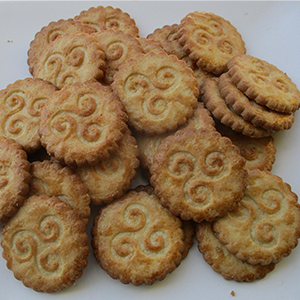
In Brittany, the word galette is also used to describe les galettes bretonnes, the most famous biscuits from the region, made with flour, sugar, egg yolk, and salted butter. |
|
|
|
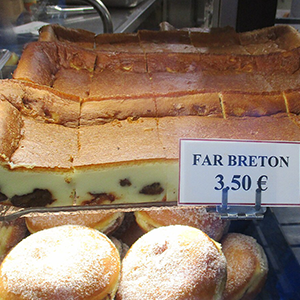
Le far breton, a type of flan which is often made with des pruneaux (prunes) |
|
|
|
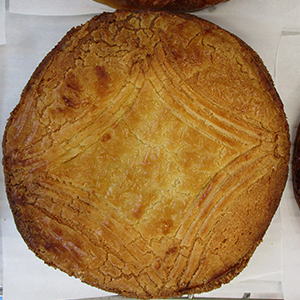
Le gâteau breton, a very rich cake with a delicate texture that crumbles easily |
|
|
|
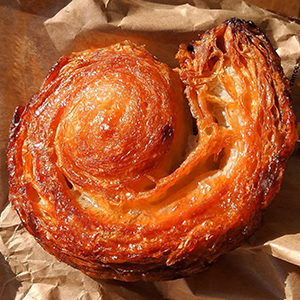
Le kouign-amann is probably the most famous Breton (from Brittany) baked good around the world and is made with puff pastry, sugar, and a lot of salted butter. |
|
|
|
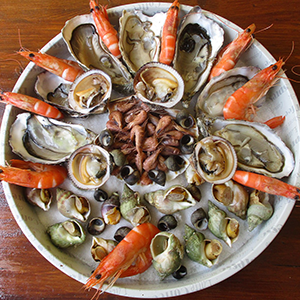
One of the most traditional dishes is le plateau de fruits de mer (seafood platter), where you can find des huîtres (raw oysters) and other shellfish (served either raw or cooked), along with several types of shrimp. |
|
|
|
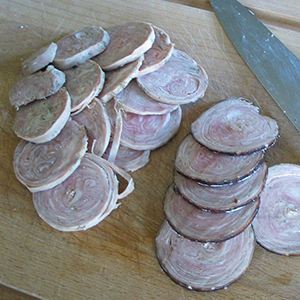
L’andouille de Guémené is a sausage made with pork intestines threaded around each other, which gives it its particular appearance. |
|
Regional Languages:
Le breton (a Celtic language) and le gallo (a Roman language) are the main regional languages of Brittany. Once endangered due to pressure from the French government to only teach French, both languages have slowly reentered schools, where many students now learn le breton as a second language. Les Bretons, people living in Brittany, are very proud of their historical and cultural heritage, and many of them consider themselves both français and bretons.
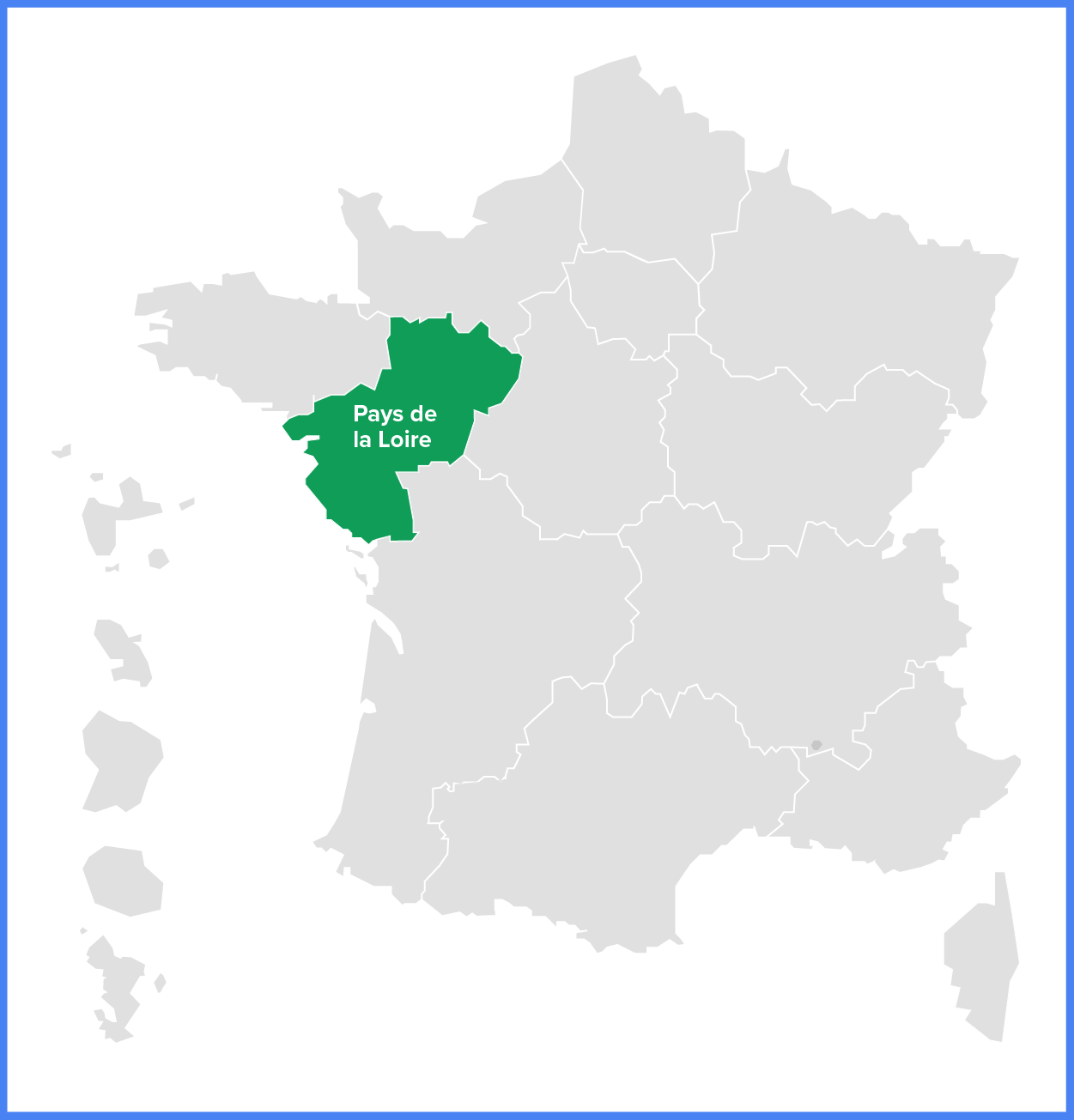 Le Pays de la Loire and le Centre Val-de-Loire are the two French regions named after the Loire river, the longest river in France (more than 1,000 km / 625 miles). Both regions are known for their agricultural resources, as well as their industrial activities, such as the naval and aeronautic industry.
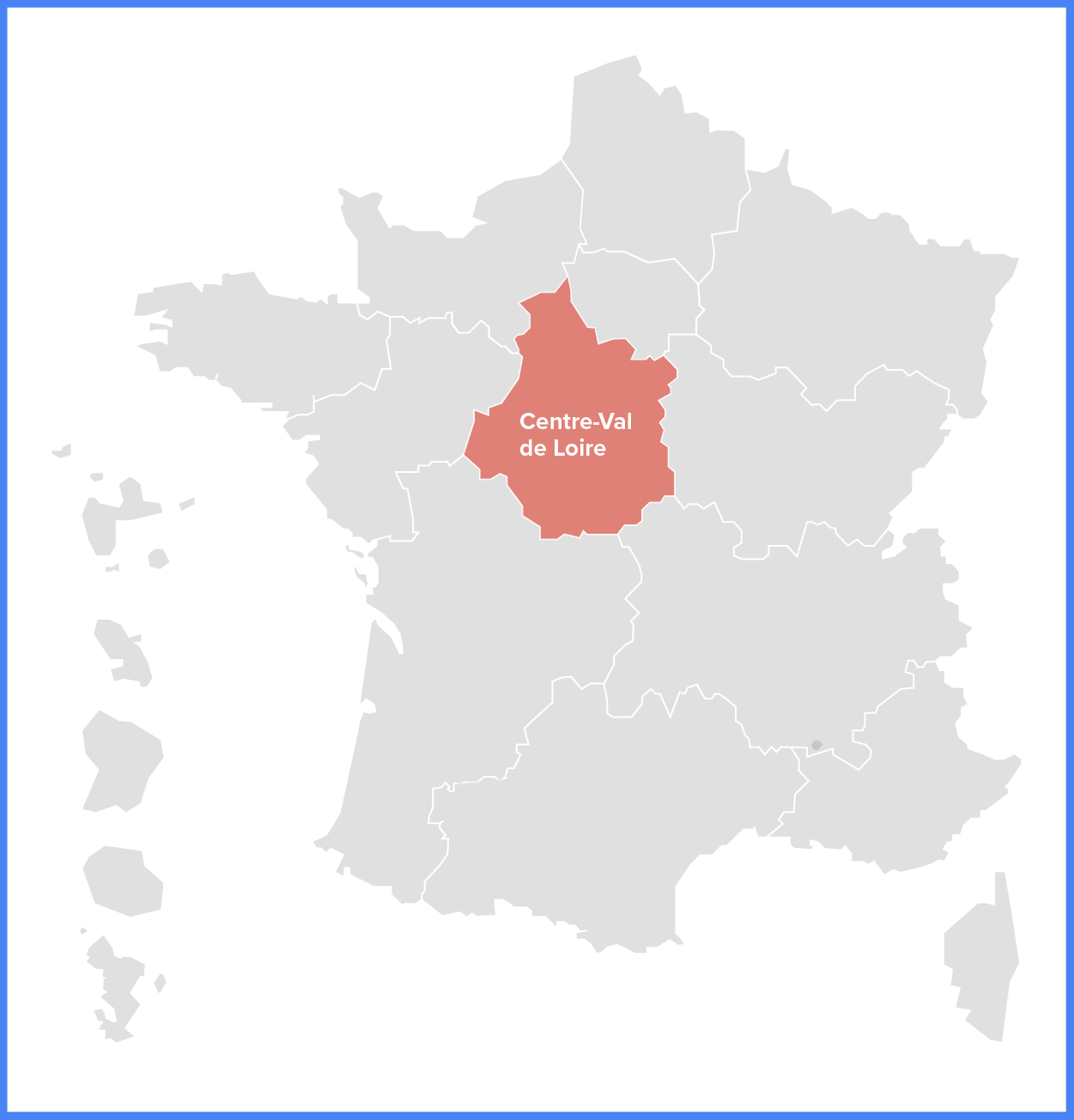 These regions are extremely popular with tourists, either with the shorelines and seaside resort towns of le Pays de la Loire, or the many chateaux of le Centre Val-de-Loire that were built during the Renaissance period.
Famous Cities:
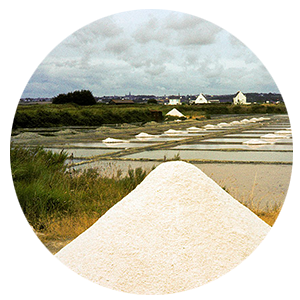 La ville de Guérande is where you will find salt marshes to make the famous sel de Guérande (salt) and the old fortified city.
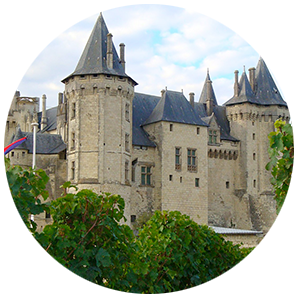 Today, le château de Saumur is a UNESCO World Heritage site and a museum, but it was originally un château fort (castle) first built in the 10th century.
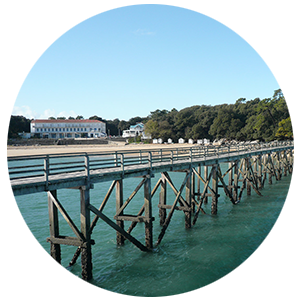 L’île de Noirmoutier (the Island of Noirmoutier) is famous for its natural preserves, salt marshes, château, and many sandy beaches.
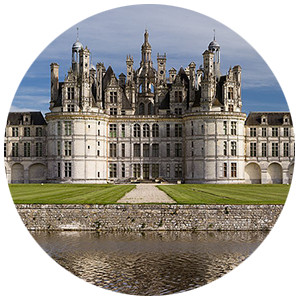 In le Centre Val-de-Loire, you will find many former royal châteaux built during la Renaissance (literally, “rebirth”), along the Loire River, such as Chambord, Chenonceau, Amboise, and Cheverny. Together, they are called les châteaux de la Loire.
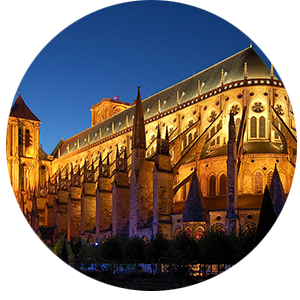 The old city of Bourges is another place to view des maisons à colombage (half-timbered houses) and visit la Cathédrale Saint-Étienne.
Famous Foods and Dishes:
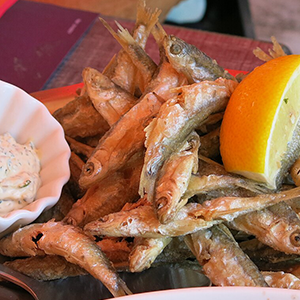
The Loire River is famous for its many types of fish, such as le brochet (pike) and le sandre (zander), l’anguille (eel), and the many dishes that can be made with them, including les fritures de Loire.
| Audio | Foods and Dishes | Picture |
|---|---|---|
|
|
Les fritures de Loire, small fried fish |
|
|
|
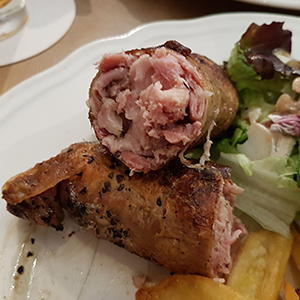
L’andouille and l’andouillette, sausages made with pork intestines |
|
|
|
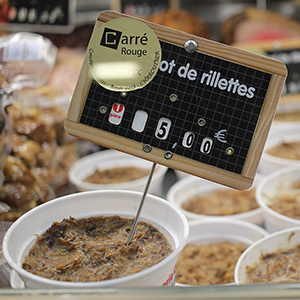
Les rillettes, a meat delicacy (often pork) cooked for a long time in its own fat, and then shredded and seasoned, most often eaten on bread |
|
|
|
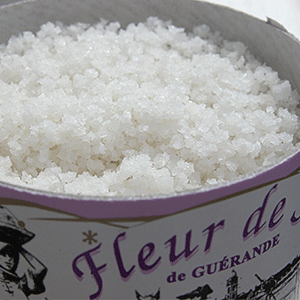
La fleur de sel de Guérande (literally, “the salt flower of Guérande”), the name given to sea salt collected from salt marshes |
|
|
|
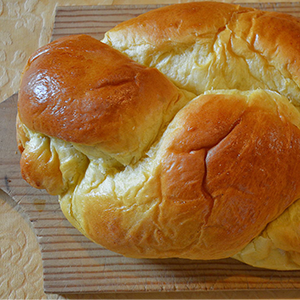
La brioche vendéenne, from the department of la Vendée, as well as la gâche de Vendée, a denser type of brioche, are very popular to eat at breakfast time or for le goûter (afternoon snack). |
|
|
|
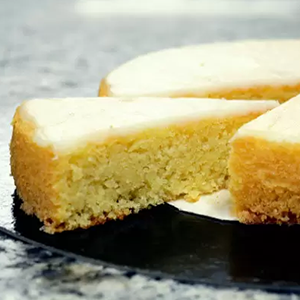
Le gâteau nantais, a type of pound cake soaked with a rum and lemon mixture, and covered with white icing |
|
Regional Languages:
Le gallo, which is also spoken a bit in areas of Brittany, and le poitevin are the regional languages that can sometimes be heard in le Pays de la Loire.
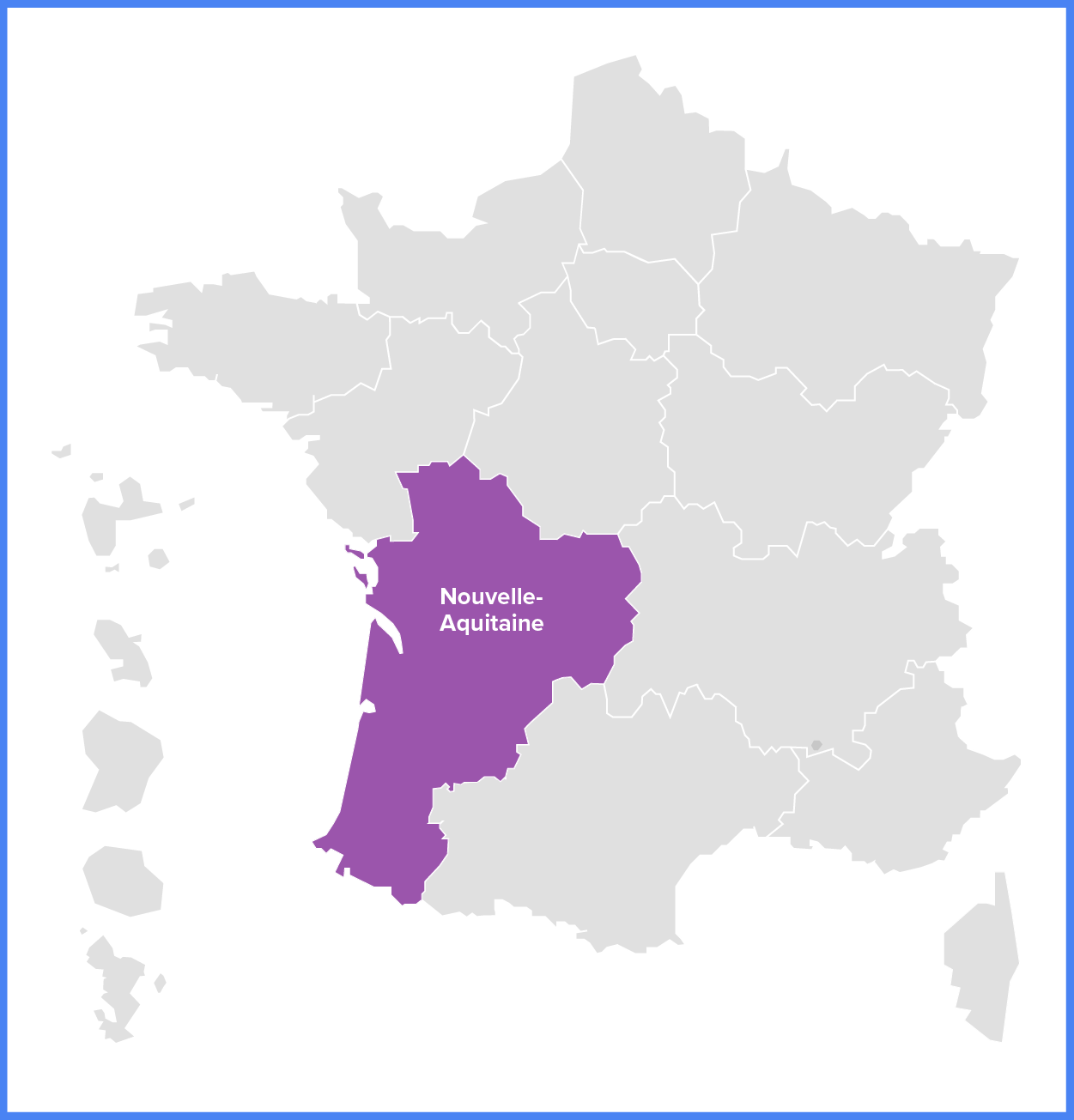 La Nouvelle-Aquitaine is France’s largest region, with a long shore along the Atlantic coast. It shares a border with Spain on its southern side. Its climate of mild winters and warm summers contributes to the region’s agricultural richness, where many fruits and vegetables are grown. There are also many vineyards, and it is a very attractive region for tourists. While the region features many forests, a number of them have been heavily damaged by wildfires in recent years.
Famous Cities:
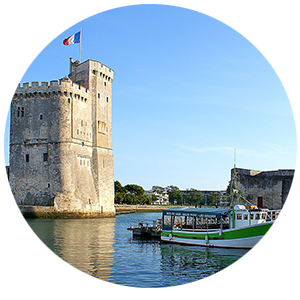 La Rochelle is a town in the northwestern part of the Nouvelle Aquitaine region, on the Atlantic shore. Its old town and old harbor, half-timbered houses and lighthouses, as well as its bridge leading to the Île de Ré are very popular spots to visit.
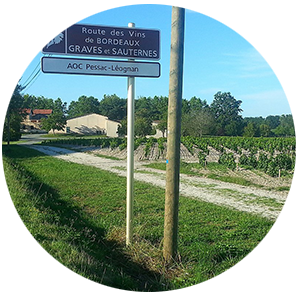 La route des vins (the wine route) allows people to visit the region’s abundant vineyards, which include world-famous wines such as Bordeaux, Cognac, Pomerol, Saint-Emilion, Sauterne, and Margaux.
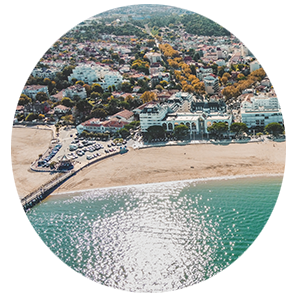 Le bassin d’Arcachon (Arcachon Basin or Arcachon Bay) is a large bay south of Bordeaux on the Atlantic shore and a very popular destination for tourists, thanks to its warm, sunny summer weather and its calm, warm waters.
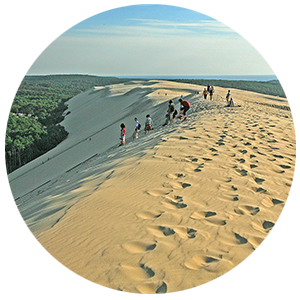 At 360 feet, la dune du Pilat is one of the highest dunes in Europe and sits between a pine forest and the Atlantic Ocean, with a great view of le bassin d’Arcachon. Millions of visitors come every year, which is affecting the preservation of this natural wonder.
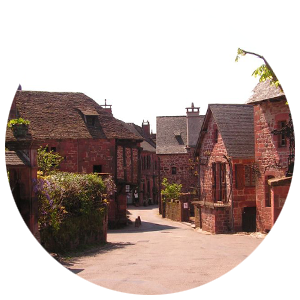 South of Limoges, Collonges-la-Rouge is a well-preserved medieval village that owes its name to the red sandstone that was used to make the buildings.
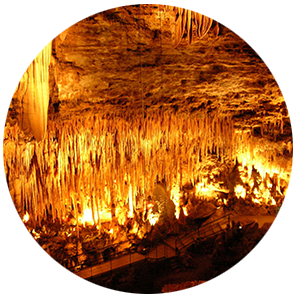 Le Gouffre de Proumeyssac (chasm of Proumeyssac), nicknamed la cathédrale de cristal (the crystal cathedral) because of its many stalactites and stalagmites, is a large cave in le département de la Dordogne, in the Périgord area.
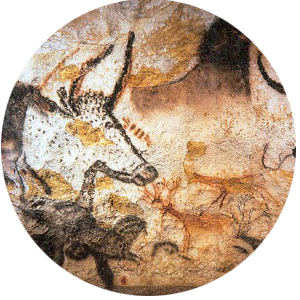 The most famous cave in that area is la grotte de Lascaux, a cave discovered by teenagers during World War II, which contains the largest amount of prehistoric paintings ever found (more than 600). In the 1970s, after the paintings were found decaying because of the flow of outside air and millions of tourists visiting every year, the cave was permanently closed and its many paintings were replicated so that tourists can still enjoy the art today.
Famous Foods and Dishes:
Since la Nouvelle Aquitaine is a very large region, it is home to many different types of traditional foods and dishes. Seafood and fish like les huîtres (oysters) are very popular on the Atlantic coast, while the inland areas are famous for foods like foie gras and confit de canard.
| Audio | Foods and Dishes | Picture |
|---|---|---|
|
|
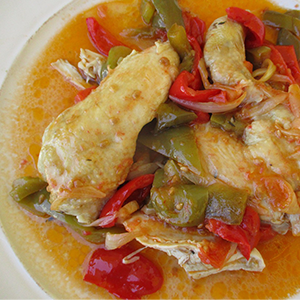
Le poulet basquaise is a chicken dish from the Basque area that is cooked with peppers, tomatoes, onions, garlic, olive oil, and white wine. |
|
|
|
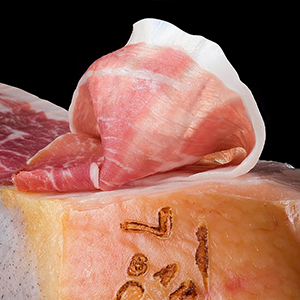
In the same area, le jambon de Bayonne (Bayonne ham) is a ham cured for up to 12 months and salted with salt from a local river basin. |
|
|
|
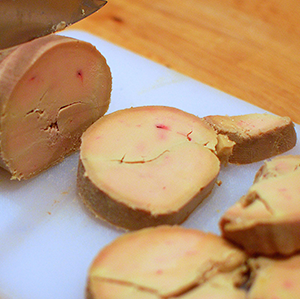
Le foie gras (fat liver) often raises ethical issues regarding the treatment of geese and ducks to obtain the delicacy, but it is still a very popular food in France. |
|
|
|
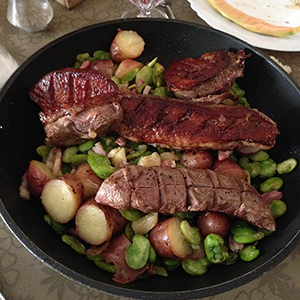
Le filet de canard (filet of duck) and le magret de canard (another type of filet but from a force-fed duck) are often roasted and cooked medium-rare to medium. |
|
|
|
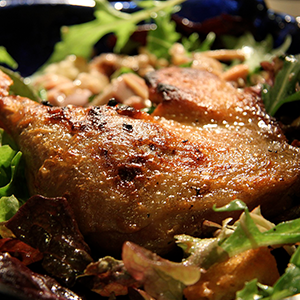
Le confit de canard (duck confit) is a dish aimed at preserving meat for weeks. The duck leg is first salt-cured, then slowly cooked, and then preserved in a thick layer of fat. It can later be served with vegetables or potatoes. |
|
|
|
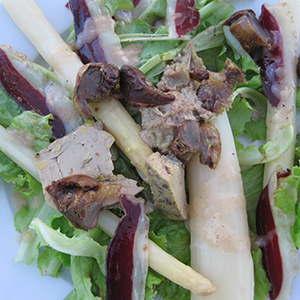
La salade landaise features a bed of lettuce and other vegetables, topped with du jambon de Bayonne, pieces of magret de canard, and sometimes du foie gras. |
|
|
|
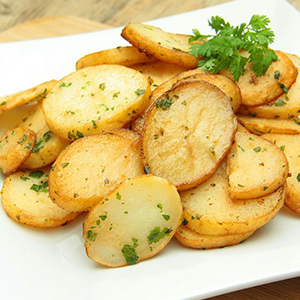
Les pommes sarladaises, from the town of Sarlat, are pommes de terres (potatoes) sautéed in garlic and goose fat. |
|
|
|
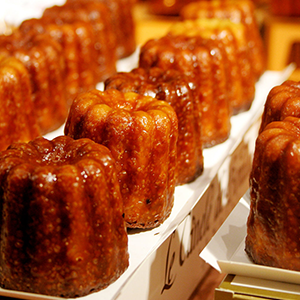
Les cannelés de Bordeaux are little cakes very recognizable by their cannelé (ridged) shape. Because they are baked quickly at high heat, the outside is crispy while the inside has the consistency of custard. |
|
|
|
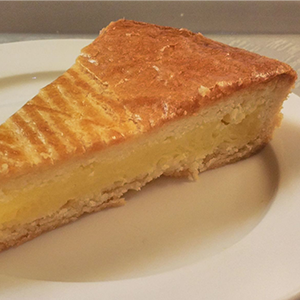
Le gâteau basque consists of pastry cream between two layers of pastry dough that is then baked in the oven. |
|
Regional Languages:
The most prominent regional language in la Nouvelle Aquitaine is le basque, spoken in the Basque area of the Pyrenees, at the border between France and Spain. Other regional languages in la Nouvelle Aquitaine include le gascon and le limousin, which are spoken much less than le basque.
Here are some French words you encountered during this lesson on the northern and western French regions. In this list, many proper nouns like languages, sites, and regions remain in French. Take some time to practice listening to and repeating them at your own pace.
| Audio | French | English |
|---|---|---|
|
|
un département | a department |
|
|
une région | a region |
|
|
un chef-lieu | an administrative center |
|
|
un préfet | a prefect |
|
|
un conseil général | a general council |
|
|
la préfecture | the prefecture |
|
|
les Hauts-de-France | northernmost region of France |
|
|
la baie de Somme | Somme Bay |
|
|
le Touquet-Paris-Plage | a town south of Calais, in the Pas-de-Calais department in northern France |
|
|
la cathédrale Notre-Dame d'Amiens | Notre-Dame of Amiens Cathedral |
|
|
le beffroi de Calais | the belfry of Calais |
|
|
l’Hôtel de Ville | City Hall |
|
|
le picard | a langue d'oïl of the Romance language family spoken in the northernmost part of France and Hainaut province in Belgium |
|
|
le ch’ti | Northern French dialect synonym of le picard |
|
|
un patois | a dialect |
|
|
Bienvenue chez les ch’tis | Welcome to the Sticks |
|
|
le flamand occidental | Western Flemish |
|
|
la Normandie | Normandy |
|
|
le Mont Saint-Michel | a tidal island and mainland town in Normandy, France |
|
|
Honfleur | a seaside town in the department of Calvados |
|
|
Deauville | a seaside resort south of Honfleur |
|
|
les jardins de Monet à Giverny | Monet’s gardens in Giverny |
|
|
les falaises d’Étretat | Etretat cliffs |
|
|
la tapisserie de Bayeux | the Bayeux tapestry |
|
|
Guillaume le conquérant | William the Conqueror |
|
|
le normand | a langue d'oïl spoken in continental and island Normandy |
|
|
la langue d’oïl | forerunner of modern French |
|
|
la Bretagne | Brittany |
|
|
Saint-Malo | a historic French port in northern Brittany |
|
|
la vieille ville de Quimper | Quimper’s old town |
|
|
une maison à colombages | a half-timbered house |
|
|
la presqu’île de Quiberon | the peninsula of Quiberon |
|
|
la Côte de Granit Rose | the Pink Granite Coast |
|
|
les menhirs de Carnac | Carnac’s menhirs |
|
|
la pointe du raz | promontory that extends into the Atlantic from western Brittany |
|
|
une crêperie | a crepe restaurant |
|
|
le breton | the main regional language in Brittany |
|
|
le gallo | a regional language of Brittany |
|
|
les Pays de la Loire | a region in western France |
|
|
le Centre Val-de-Loire | a region around the Loire Valley |
|
|
la ville de Guérande | the town of Guérande |
|
|
le château de Saumur | castle in Saumur, France |
|
|
un château fort | a castle |
|
|
l’île de Noirmoutier | the Island of Noirmoutier |
|
|
la Renaissance | the Renaissance |
|
|
Chambord, Chenonceau, Amboise, Cheverny | cities |
|
|
les châteaux de la Loire | the Loire castles |
|
|
la Cathédrale Saint-Étienne | Saint-Étienne’s Cathedral |
|
|
le poitevin | a langue d'oïl spoken in Western France |
|
|
la Nouvelle-Aquitaine | region in southwestern France |
|
|
La Rochelle | a coastal city in southwestern France and capital of the Charente-Maritime department |
|
|
l’Île de Ré | the Island of Ré |
|
|
la route des vins | the wine road |
|
|
Bordeaux, Cognac, Pomerol, Saint-Émilion, Sauterne, Margaux | cities |
|
|
le bassin d’Arcachon | Arcachon Bay |
|
|
la dune du Pilat | Pilat Dune |
|
|
Collonges-la-Rouge | a village in the Corrèze department in the Nouvelle-Aquitaine region |
|
|
le Gouffre de Proumeyssac | Chasm of Proumeyssac |
|
|
la cathédrale de cristal | the crystal cathedral |
|
|
le département de la Dordogne | the Dordogne department |
|
|
le Périgord | an inland area in the region of Nouvelle-Aquitaine |
|
|
la grotte de Lascaux | Lascaux cave |
|
|
le basque | a regional language spoken in the Basque region |
|
|
le gascon | a regional language spoken in Southwestern France |
|
|
le limousin | a regional language spoken the Limousin area |
Source: THIS TUTORIAL WAS AUTHORED BY SOPHIA LEARNING. PLEASE SEE OUR TERMS OF USE.
REFERENCES
Française, R. (2023). S'installer - où vivre en France ? Welcome to France. Retrieved from www.welcometofrance.com/nos-regions
Hauts-de-France, R. (2023). Carte d'identité - région Hauts-de-France. RÉGION HAUTS-DE-FRANCE. Retrieved from www.hautsdefrance.fr/categorie/carte-identite/
YouTube. (2018). Different French Accents w/ French Native Speaker. StreetFrench.org. Retrieved April 10, 2023, from www.youtube.com/watch?v=YfQlz_bbpzw.
YouTube. (2021). Linguistic treasures: Exploring France's regional languages. FRANCE 24 English. Retrieved from www.youtube.com/watch?v=tq7QsB_v8dc.